
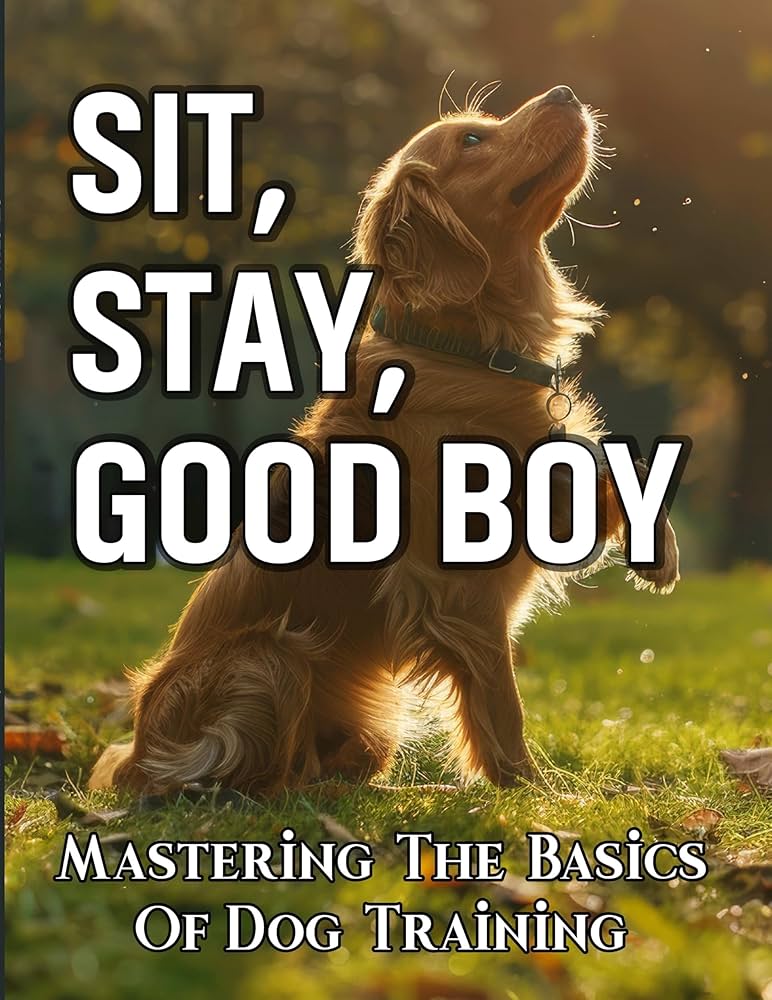
Training your dog is a rewarding journey that strengthens your bond and ensures a well-behaved companion. Essential commands like “sit” and “stay” form the bedrock of effective communication with your dog, paving the way for more advanced training and a harmonious life together. This guide will walk you through the foundational steps of teaching these crucial commands, ensuring your dog becomes a responsive and confident member of your family.
Teaching Your Dog to Sit
The “sit” command is a fundamental building block in dog training, serving as a precursor to many other commands and behaviors. A dog that can sit reliably is less likely to engage in undesirable actions such as jumping, excessive barking, or displaying dominant postures. Teaching your dog not to jump up can be significantly easier when they already understand the “sit” command.
Training Steps for “Sit”
- Lure with a Treat: Begin with your dog in front of you. Hold a treat in your hand and move it slowly from your dog’s nose upwards over his head. Your dog’s natural inclination will be to follow the treat with his eyes, which will likely cause his rear end to lower. Ensure the treat is not held so high that your dog attempts to jump for it.
- Reward Success: As soon as your dog’s rear touches the ground, say “yes!” enthusiastically and immediately give him the treat. This positive reinforcement is key to his understanding.
- Assisted Sit (if needed): If your dog doesn’t automatically sit, you can gently assist him. While on a leash, use a slight upward and backward pull to help guide his hindquarters down. Once he sits, praise and reward him.
- Introduce the Command: Once your dog reliably sits with the lure, begin introducing the verbal cue “sit” just before you use the treat lure. As he becomes proficient, gradually reduce your reliance on the treat lure, eventually fading it out completely.
- Hand Signal: You can also teach a hand signal. A common one is raising your fist as if lifting a dumbbell, or you can simply point to his rear end as you give the verbal command.
Teaching Your Dog to Stay
The “stay” command is a powerful tool for managing your dog’s behavior and ensuring their safety. It’s invaluable for preventing them from running out an open door, chasing other animals, or breaking other commands. Mastering this command can give you significant control and peace of mind. When combined with other positive training methods, training your dog not to jump on people becomes a more achievable goal.
Training Steps for “Stay”
- Basic “Sit/Stay”: Ask your dog to sit in front of you. Give the “stay” command. Take one step backward, then immediately step back towards your dog. If he remained in the sit position, praise him with “yes!” and reward him with a treat.
- Increase Distance Gradually: Repeat Step 1, progressively increasing the number of steps you walk away from your dog. Crucially, always return to your dog to give praise and reward before releasing him from the “stay.” Avoid calling him to you, as this can teach him that “stay” means “stay for a bit, then come.”
- Troubleshooting: If your dog breaks the stay, it usually means you are progressing too quickly. Reduce the distance and time you expect him to hold the position and gradually build it back up.
- Extended Stays: With consistent practice, your dog will be able to maintain the “stay” command even when you are across the room.
- Out-of-Sight Stays: Once your dog is reliable with you in sight, introduce the out-of-sight stay. Give the “stay” command, take one step out of the room (out of his line of sight), and immediately step back. Reward him if he held his position.
- Increase Duration Out of Sight: Gradually increase the amount of time you are out of sight while he remains in the “stay” position. Eventually, your dog will be able to hold a stay for extended periods, even when you are not visible.
- Other Positions: For “down/stay” or “stand/stay,” teach the initial position command first, then apply the same “stay” training steps with your dog in that learned position.
Both “sit” and “stay” are foundational commands that contribute to a well-trained and manageable dog. Consistent practice, positive reinforcement, and understanding your dog’s learning pace are essential for success. For more advanced techniques and to address specific behavioral challenges, consider exploring resources on how to train a dog.
Janice Biniok, a respected author and trainer with over 35 years of experience, emphasizes the incredible capacity of dogs to learn human commands. Her insights, honed through extensive work with companion animals and canine musical freestyle, underscore the effectiveness of patient and structured training methods. Learn more about dog training to build a stronger partnership with your canine companion.
