
Working horses have played an indispensable role throughout human history, shaping our societies, economies, and landscapes. From agricultural endeavors to transportation and forestry, these powerful and versatile animals have been instrumental in human progress. This guide delves into the world of working horses, exploring their characteristics, the advantages of their use, and the practical considerations for those interested in incorporating them into modern practices.
Understanding Working Horses
Working horses, often referred to as draught or draft horses, are typically breeds with substantial build, developed for tasks requiring strength and endurance. Historically, they have been employed in a wide array of activities, including plowing fields, sowing seeds, harvesting crops, and hauling timber. Their energy can be harnessed directly for pulling loads or indirectly through machinery.
The domestication of horses dates back to around 4000 BCE, marking a turning point in human civilization. These highly social animals, naturally living in herds with a defined hierarchy, possess a remarkable ability to form strong bonds with humans, other animals, and their own kind. Their communication primarily relies on intricate body language, a trait that contributes to their appeal and trainability. While horses are naturally predisposed to flee from danger, selective breeding has cultivated a more docile temperament in working breeds, essential for safe and effective collaboration with humans.
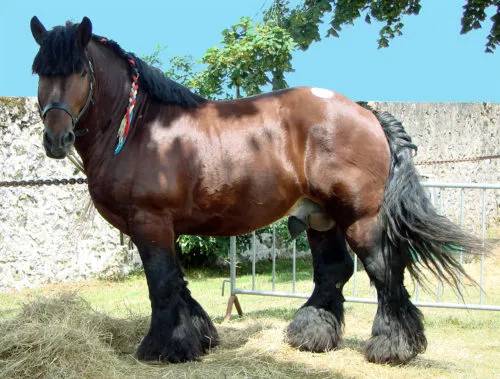 The muscular Ardennes horse, from which all heavy horse breeds originate.
While traditionally associated with large, heavy breeds like the Shire, horses and ponies of various sizes have served as working animals for centuries. Common characteristics include a stocky build, with conformation optimized for pulling and carrying, featuring short, broad backs and powerful hindquarters. A calm, docile, and cooperative nature is paramount for successful working horses. Notable British heavy breeds include the Shire, Clydesdale, and Suffolk Punch. Other countries boast their own breeds, with some smaller varieties like the Austrian Haflinger also being utilized. In the UK, smaller traditional working breeds, often termed ‘Cobs,’ such as the Fell and Dales ponies, offer a more economical option. Even the diminutive Shetland pony, relative to its size, possesses immense strength and has historically been used for work.
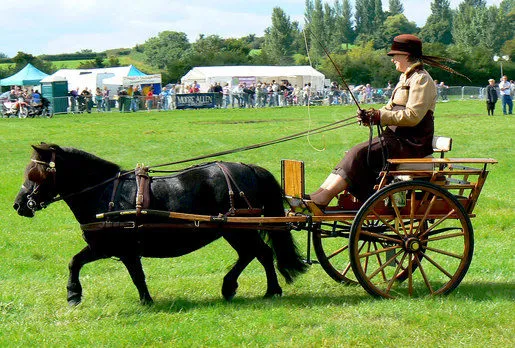 A Shetland pony in harness. Shetlands are stronger, relative to their body weight, than even Shire horses
The Benefits of Working Horses
The resurgence of interest in working horses is largely driven by their significantly lower environmental impact compared to heavy machinery. They cause less immediate and long-term damage to soil structure and the delicate balance of flora and fauna, making them ideal for use in sensitive ecosystems such as ancient woodlands, meadows, and archaeological sites. Their ability to navigate boggy terrain or work early in the season when the ground is too wet for tractors is another distinct advantage. Furthermore, their maneuverability allows them to access steeper and less open sites than conventional machinery.
Working horses are powered by renewable resources – grass and other plants, which can often be sourced locally or even grown on-site, contributing to a sustainable cycle. As a byproduct, they provide valuable manure for fertilization and can even contribute to milk and meat production. The breeding and training of working horses can also present an additional income stream. Engaging in work with horses promotes physical fitness and can transform a passion for these animals into a sustainable lifestyle. The inherent fascination with working horses also opens avenues for demonstrations, training, and community engagement.
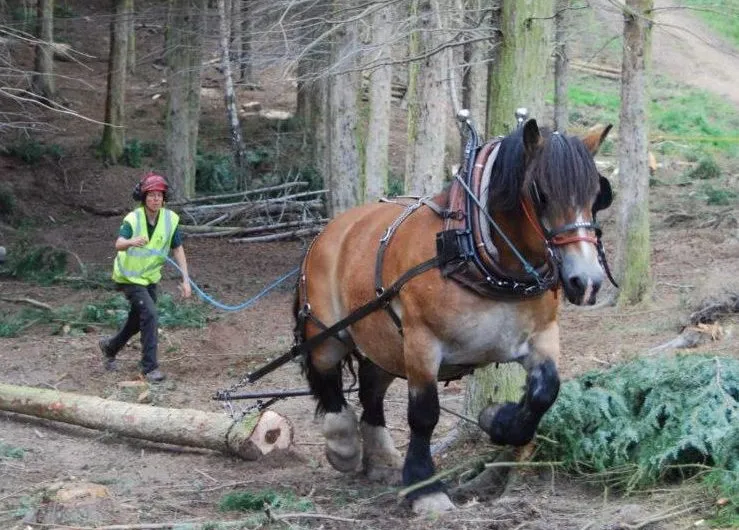 Logging with a horse
While tractors offer speed, a system-wide shift in economic and planning policies is necessary to enable farmers and others to adopt a slower, more natural pace of work without facing financial ruin. This includes recognizing the efficiency of horses; for instance, a hectare of grain can fuel two horses capable of cultivating ten hectares, without the pollution associated with tractors and with the added benefit of manure production.
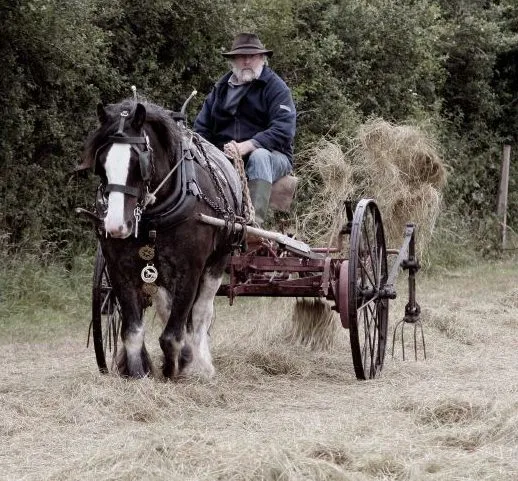 Making hay the old fashioned way
Practicalities of Working with Horses
Embracing working horses is a lifestyle choice that offers both personal and environmental well-being. For those new to working with horses, seeking practical experience through courses or volunteering on farms utilizing these animals is highly recommended. Understanding their sensitive nature and reliance on clear body language is crucial for effective communication and training.
Acquiring and Keeping Horses
When considering acquiring working horses, it’s essential to assess your available space and the specific tasks the horses will undertake. Larger breeds generally incur higher purchase and upkeep costs. It is advisable to observe the chosen breed in action and consult with experienced owners. It’s typically recommended to keep at least two horses, as they are social animals.
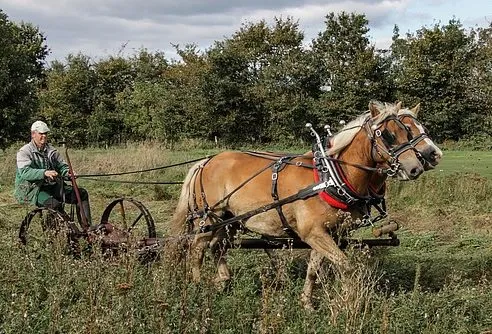 A pair of Haflinger horses pulling a mower.
When purchasing horses, seek advice from experienced owners and check local listings. Always bring an experienced individual to inspect potential horses, checking their health, temperament, and suitability for work. Investing in an experienced working horse as your first will provide invaluable learning opportunities.
Adequate grazing is crucial, with at least one acre recommended for two horses, allowing for pasture rotation. Fencing should be robust and at least 4 feet 6 inches high, avoiding materials that could cause injury. While post and rail fencing is ideal, it can be costly.
Most working horse breeds are hardy and can live outdoors year-round, provided they have access to a suitable shelter that offers protection from the elements. A designated stable or a field shelter with a partial fourth wall is advisable for times when the horse needs to be kept in.
Feeding and Health
A diet rich in roughage is vital for horses, supplemented with good quality hay or haylage, especially during winter. Continuous access to grazing or hay is important for both their physical and mental health. Depending on the horse’s workload and metabolism, good quality grass and hay may suffice, possibly with added energy sources like sugar beet or alfalfa in winter. Concentrated feeds, if necessary, should be given in small, frequent amounts. Clean drinking water and a mineral lick should always be available.
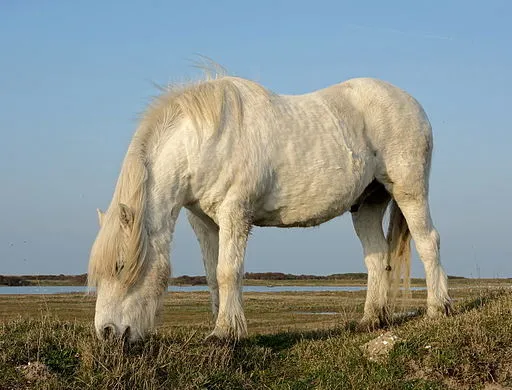 The Highland pony is a hardy pony native to Scotland.
Regular grooming is important for maintaining coat condition and checking for any health issues like lice. Cleaning hooves with a hoof pick is also essential. Many working horses in the UK are shod, particularly for work on hard surfaces, with specialist shoes available for slippery conditions. Shoeing incurs regular costs and requires replacement every 6-8 weeks. The alternative of keeping horses “barefoot,” involving specialized hoof trimming, aims to promote natural hoof health and movement, though it still requires regular attention from an experienced trimmer.
Pasture management, including resting grazing areas and removing dung, is key to controlling intestinal parasites. While routine worming was once common, it’s now advised to monitor parasite levels through fecal egg counts and treat only when necessary to prevent medication resistance.
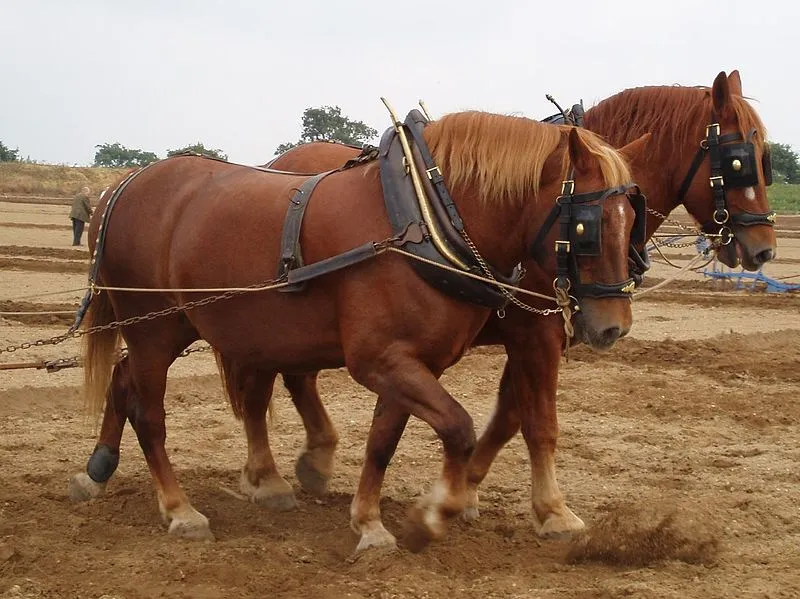 A pair of Suffolk Punch horses pulling a plough
Establishing a relationship with a veterinarian experienced with horses is crucial. Daily observation for signs of common ailments like laminitis and colic is recommended. Vaccinations against diseases such as tetanus and equine influenza are important.
Training and Working with Horses
Training working horses is a complex and time-consuming endeavor. It is highly recommended to have the guidance of an experienced individual. Initial training focuses on basic commands like walking, halting, and turning, followed by the introduction of implements or machinery, starting with tasks the horse is familiar with.
Working with horses carries inherent risks, which can be mitigated through experience, common sense, and physical fitness. Building layers of experience gradually and seeking help from more experienced individuals when unsure is paramount.
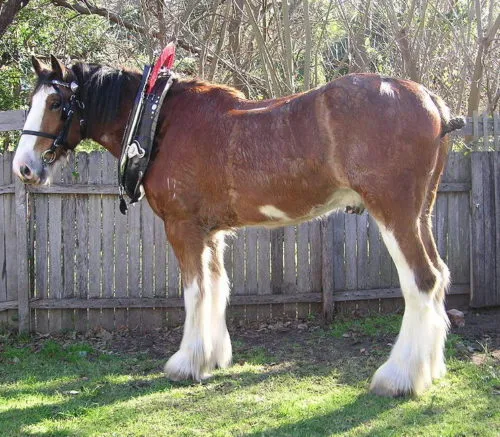 A young Clydesdale.
A basic harness set can range from approximately £350 for horse logging equipment to £1200-1500 for more complex jobs or pairs of horses. Those with leatherworking skills may consider making their own harnesses. For off-site work, insurance, risk assessments, and safety gear, including steel-toecap boots and hard hats, are necessary. Specific certifications, such as chainsaw certification for horse logging, may also be required.
Specialist(s): Ben May of Forest Crafts and Ellie and Mike Paddock of Hitch In Farm Working Horses.
