
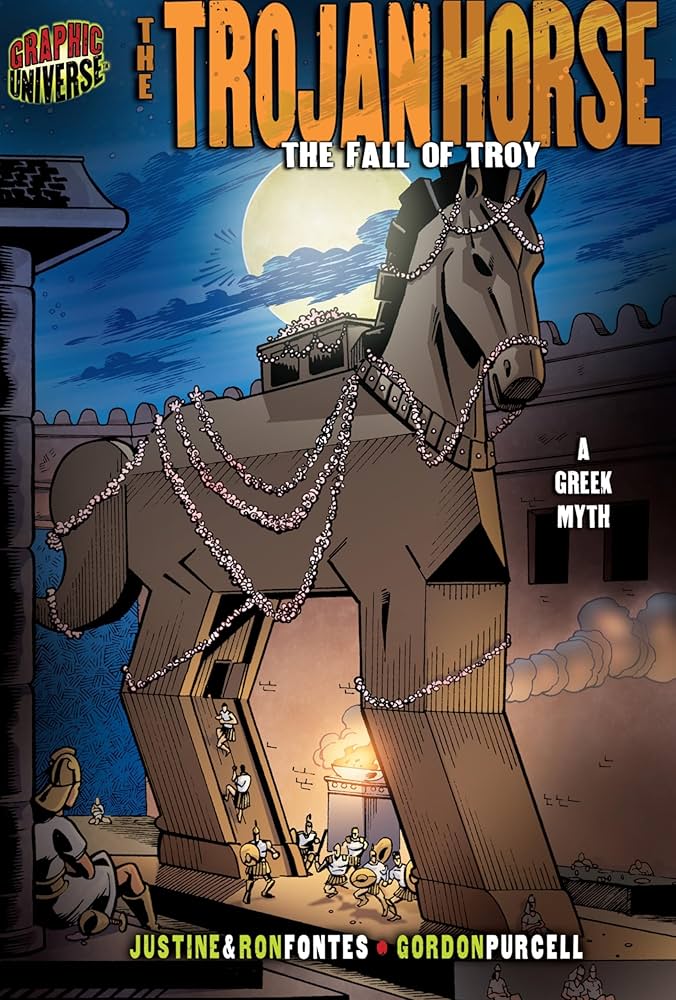
The story of the Trojan Horse is one of the most enduring and iconic narratives from ancient Greek mythology. It’s a tale of cunning, deception, and the dramatic conclusion of a long and bloody war. While often depicted as a historical event, it’s crucial to understand its place within the realm of myth and legend. Nevertheless, the narrative has captivated audiences for centuries, offering profound insights into strategy, human nature, and the consequences of conflict.
Origins and Mythological Context
The primary source for the Trojan Horse narrative comes from Virgil’s epic poem, the Aeneid. While Homer’s Iliad details much of the Trojan War, it ends before the fall of Troy and does not extensively feature the horse. Virgil, writing centuries later, used the story to connect the founding of Rome to the glory of the Greek heroes. The tale explains how the seemingly impenetrable walls of Troy were finally breached after a decade of siege.
The Greeks, frustrated by their inability to conquer the city, devised a plan. Led by Odysseus, they constructed a colossal wooden horse, ostensibly as an offering to the goddess Athena to ensure their safe passage home. However, this was a masterful ruse. Inside the hollow belly of the horse, a select group of Greek warriors, including Odysseus himself, hid.
The Deception and Fall of Troy
The Greeks then sailed away, feigning a complete withdrawal from the war. They left the giant wooden horse on the plains outside Troy. The Trojans, seeing the abandoned horse and the departing Greek fleet, rejoiced. They believed the war was finally over and that the horse was a spoil of war or a divine gift.
Despite warnings from figures like Laocoön, a priest who famously declared, “I fear the Greeks, even when they bring gifts,” the Trojans decided to bring the horse inside their city walls. Laocoön’s skepticism was tragically ignored, and his pleas were silenced by serpents that emerged from the sea, a sign interpreted by many Trojans as divine punishment for his impiety.
That night, while the Trojans celebrated their supposed victory, the hidden Greek soldiers emerged from the horse. They opened the city gates, allowing the rest of the Greek army, which had secretly sailed back under the cover of darkness, to enter Troy. The city was overwhelmed, and the Trojan War came to a brutal end.
The Trojan Horse in Greek Mythology and Symbolism
The story of the Trojan Horse has transcended its mythological origins to become a powerful symbol. It represents:
- Cunning and Deception: The horse is a prime example of strategic deception winning a conflict where brute force had failed.
- The Peril of Hubris: The Trojans’ overconfidence and belief in their own invincibility led to their downfall.
- The Dangers of Accepting Gifts Uncritically: The phrase “Beware of Greeks bearing gifts” (or variations thereof) originates from this story, warning against accepting seemingly benign offers that may hide malicious intent.
- A Turning Point: The horse marked the decisive moment that led to the end of a protracted war and the subsequent diaspora of Trojan survivors, most notably Aeneas, whose journey is central to the Aeneid.
Was the Trojan Horse Story Real?
The question of whether the Trojan Horse event was a literal historical occurrence remains a subject of debate among historians and archaeologists. While archaeological evidence at the site of ancient Troy (modern-day Hisarlik in Turkey) confirms that the city was indeed destroyed by fire and conflict around the estimated time of the Trojan War, there is no definitive physical proof of a giant wooden horse.
Many scholars believe the story likely evolved from a memory of a military strategy, perhaps involving a battering ram shaped like a horse, or a siege engine used to breach walls. The epic scale and dramatic elements were likely added over time through oral tradition and poetic embellishment. Regardless of its literal historical accuracy, the narrative’s enduring power lies in its compelling human drama and timeless themes.
The story of the Trojan Horse continues to resonate today, serving as a cautionary tale and a testament to the power of strategic thinking, even when employed through deceit. It remains a cornerstone of Western literature and a powerful metaphor for hidden dangers and unexpected strategies.
