
Have you ever wondered about the names of famous horse racing venues? From the historic Epsom Downs in England to the iconic Churchill Downs in the United States, the term “downs” appears frequently. It’s a word that evokes a sense of tradition and prestige, but its origins are simpler and more connected to the land than you might imagine. The answer to why horse racing tracks are called downs lies not in modern design, but in the rolling hills of the English countryside where the sport first found its footing.
This naming convention is a direct nod to the very geography that shaped modern horse racing. Understanding its origin is a journey back in time, to an era before manicured ovals and grandstands, when the sport was a raw and thrilling spectacle played out across the open landscape. Understanding what age do race horses start training is complex, but understanding the tracks they run on is a fascinating piece of history.
The Geographic Origins: What Exactly Are “Downs”?
Before “downs” was associated with thundering hooves and cheering crowds, it was a geographical term. The word itself is derived from the Old English word “dūn,” which simply means “hill.” Specifically, it came to describe the distinctive landscapes of southern and southeastern England: vast, rolling, treeless uplands, often with chalky soil.
These areas, like the North and South Downs, were characterized by their wide-open spaces and undulating terrain. Primarily used for grazing sheep and cattle, their unique topography made them unintentionally perfect for a different kind of animal: the racehorse. The excellent drainage of the chalk soil meant the ground was often firm and suitable for running, while the natural slopes and valleys created challenging courses and provided spectators with elevated viewing points.
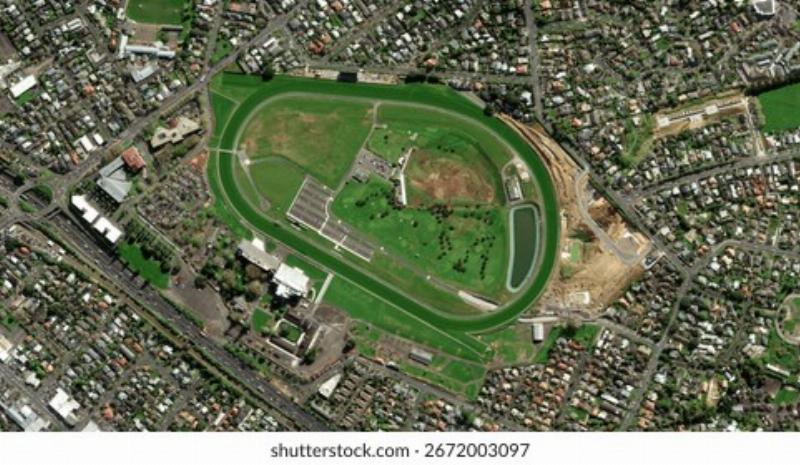 A panoramic view of horse racing on the rolling green hills of Epsom Downs, illustrating why horse racing tracks are called downs.
From Rolling Hills to Galloping Horses
The link between these hills and horse racing began to solidify in the 16th and 17th centuries. Early horse races were not the organized, regulated events we know today. They were often match races between two owners, contested over long distances across the countryside. The downs provided the ideal setting. There were no formal tracks—just miles of open, unfenced land where horses could run freely.
One of the most famous examples is Epsom Downs in Surrey, England. Racing is recorded there as early as the 1660s, and its fame grew exponentially with the establishment of two of England’s classic races: the Oaks in 1779 and the Derby in 1780. The course wasn’t built so much as it was claimed from the existing landscape. The natural challenges of the terrain, including the famous Tattenham Corner, became legendary parts of the race. Because the races were literally run on the downs, the venue became known as Epsom Downs.
Why the “Downs” Name Galloped Across the Globe
As horse racing became more formalized and spread globally, the terminology came with it. The association between the prestigious English races and the “downs” moniker was so strong that new tracks adopted the name as a way to borrow some of that history and prestige, even if they weren’t located on geographical downs.
This is most evident in the United States. When Meriwether Lewis Clark Jr. founded a racetrack in Louisville, Kentucky, in 1875, he named it Churchill Downs. The track was not built on a vast, treeless upland, but the name was a clear homage to the English traditions he sought to emulate. It was a marketing masterstroke, instantly connecting the new Kentucky Derby with the heritage of the Epsom Derby. This use of tradition is also seen in other aspects of the sport, such as the evolution of wagering systems, which can be explored when looking into a historic horse racing machine.
The success of Churchill Downs inspired many other American tracks to follow suit, turning “downs” into a synonym for “racetrack” in the American equestrian lexicon. Names like Oaklawn, Arlington, and even tracks for other types of racing, like Dover Downs for harness racing, adopted the term to signify a premier racing venue. While some tracks like those seen in golden gate fields horse racing chose different naming conventions, the “Downs” legacy remains powerful.
Dr. Sarah Miller, an expert in equestrian history, notes: “The adoption of ‘Downs’ in America was about importing a legacy. It was a signal to the public that this wasn’t just any track; it was a venue that respected the deep and aristocratic traditions of the sport of kings, born on the hills of England.”
Frequently Asked Questions (FAQ)
What does “downs” mean in horse racing?
In horse racing, the term “downs” refers to a racetrack. It originates from the geographical term for the rolling, treeless hills in southern England where the first organized horse races were held.
Is Churchill Downs built on a hill?
While the area has some elevation changes, Churchill Downs is not built on the type of large, rolling chalk hills known as “downs” in England. The name was chosen to honor the tradition and history of English racing venues like Epsom Downs.
Are all horse racing tracks called downs?
No, not all horse racing tracks are called downs. While many famous tracks use the name to evoke a sense of tradition, others are named using terms like “Park” (Belmont Park), “Race Course” (Ascot Racecourse), or are named after their location or a historical figure.
Where did the term “downs” for racecourses originate?
The term originated in England. Early horse races were run across open country, and the ideal landscapes for these events were the large, grassy, rolling hills known as the downs. Tracks established in these areas, such as Epsom Downs, took their name from the landscape itself.
What is the most famous “Downs” racetrack?
While Epsom Downs in England is arguably the most historically significant, Churchill Downs in Louisville, Kentucky, is likely the most famous “Downs” racetrack worldwide, primarily because it hosts the Kentucky Derby, one of the most famous horse races in the world.
A Tradition Etched in the Landscape
So, the next time you hear the name of a track ending in “downs,” you’ll know it’s more than just a name—it’s a piece of living history. It’s a tribute to a time when the sport was wilder, the courses were carved by nature, and the race was run across the windswept hills of the English countryside. The answer to Why Are Horse Racing Tracks Called Downs is a simple story of how a landscape gave its name to a sport, a tradition that has galloped across centuries and oceans to become a hallmark of horse racing culture today.
