
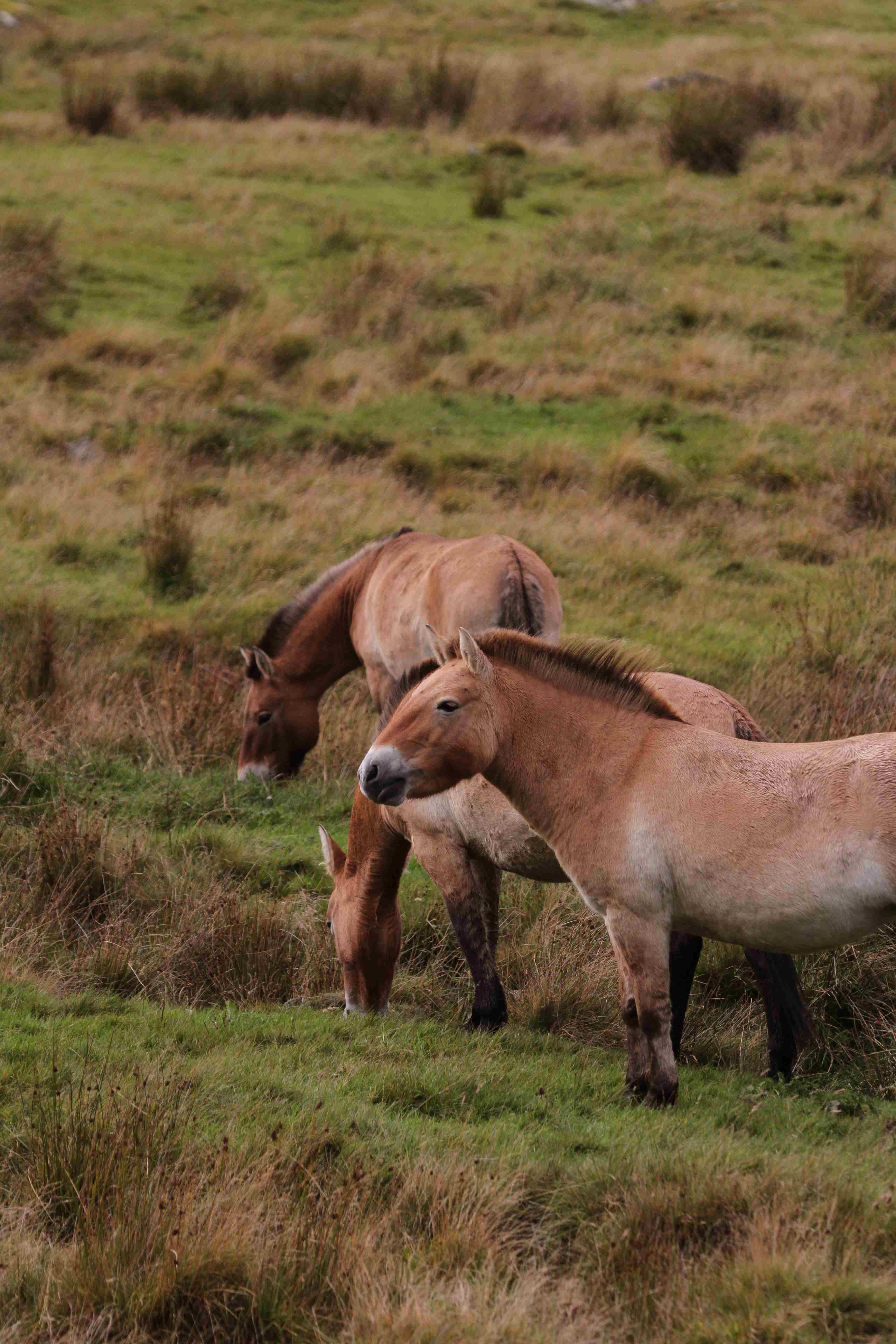
The Przewalski’s horse, native to the steppes of Central Asia, stands as the sole surviving lineage of truly wild horses. Named after Russian explorer Nikolai Przewalski, who first documented them in the late 19th century, these equids possess a distinct genetic makeup, diverging from domestic horses an estimated 38,000 to 72,000 years ago. Characterized by their stocky build, upright manes without forelocks, dun coats, and primitive leg stripes, the entire modern population of Przewalski’s horses descends from a mere twelve individuals captured in the wild. This genetic bottleneck has created significant challenges for the species, yet dedicated captive breeding and reintroduction programs have seen global numbers now exceed 2,500 individuals. These reintroduced herds are establishing themselves in Mongolia, China, and semi-wild European reserves, offering a beacon of hope for this ancient species. However, low genetic diversity, disease susceptibility, and the harsh realities of their environment continue to present ongoing challenges to their survival.
A Glimpse into History
Throughout history, Przewalski’s horses remained untamed, even as their domesticated counterparts became integral to human civilization. These rare horses roamed the steppes for millennia, largely unknown to the wider world until their formal scientific description in the 19th century. Today, Przewalski’s horses are classified as critically endangered, making their conservation a global priority. Their importance is underscored by their status as the last remaining type of wild horse; unlike the feral Mustangs and Brumbies of North America and Australia, which are descended from domesticated horses, Przewalski’s horses represent a unique, unbroken wild lineage.
Taxonomy and Naming
The species bears the name of Russian Colonel Nikolai Przhevalsky, whose surname is pronounced “sheh-VAHL-skee.” In 1881, Western scientists used his descriptions and specimens from the modern Chinese-Mongolian border to classify these wild horses as Equus przewalskii. Variations in spelling, such as Przhevalski, Przewalski, Prejevalsky, and Prjevalsky, are commonly encountered. The American Society of Mammalogists classifies them as a subspecies of Equus ferus, the scientific name for undomesticated horses, thus Equus ferus przewalskii. In Mongolia, they are revered and known as “takhi,” a name deeply embedded in the region’s culture and ecosystem.
Evolutionary Divergence and Domestication Debates
Research, including DNA analysis from ancient horse bones and whole genome sequencing, suggests that domesticated horses and Przewalski’s horses share a common ancestor, with their lineages diverging between 38,000 and 72,000 years ago, with more recent estimates placing this divergence around 45,000 years ago. Horse domestication itself traces back to approximately 3500 BC in northern Kazakhstan, evidenced by archaeological findings of harnessing, milking, and corralling practices among the Botai people. Intriguingly, a 2018 genomic study revealed that ancient Botai horses shared genetic markers with the modern Przewalski’s lineage, while domestic breeds showed only minimal Botai-related ancestry (around 2.7%). This has led to speculation that Przewalski’s horses might descend from horses domesticated by the Botai.
However, alternative perspectives exist. One study proposed that dental wear found in horse remains from Botai settlements was likely caused by natural factors rather than bridle equipment, suggesting the Botai may have primarily used these horses for consumption rather than riding or draft purposes. This ongoing debate questions whether a truly wild horse lineage, as distinct from domesticated or feral populations, still exists.
Historical Range and Habitat
Archaeological evidence indicates that horses from the Przewalski’s lineage inhabited Central Asia between the 5th and 3rd millennia BC. They were mentioned by the Buddhist Monk Bodowa in the 9th century AD and reportedly encountered by Genghis Khan during his Mongolian conquests in the 13th century. Scottish doctor John Bell claimed to have seen these wild horses in present-day Siberia in the early 18th century. By the time of their first scientific characterization, wild Przewalski’s horses were confined to the Dzungarian Basin of the Gobi Desert.
The last known wild Przewalski’s horses in this region disappeared by the late 1960s. Research suggests that hunting and habitat loss due to agricultural grazing forced these horses from their natural steppe habitat into the more inhospitable desert environment.
Distinctive Characteristics
Przewalski’s horses retain more wild and primitive traits compared to their domesticated relatives, a testament to their unique genetic origin shaped by natural selection rather than selective breeding.
Physical Appearance
These horses are characterized by stockier builds and shorter legs than domestic horses, typically standing between 12 and 14 hands tall and weighing 550 to 800 pounds. They possess a large head and a thick neck. Their manes are erect and lack forelocks. A key distinguishing feature is their primitive markings, including a dark dorsal stripe and leg stripes. Most Przewalski’s horses display a dun coat with dark manes, tails, and lower legs, contrasted by pale areas on the muzzle, flanks, and belly, known as pangarè or mealy markings. Their hooves are notably longer and possess significantly thicker soles than those of domestic horses, providing enhanced integrity, with studies even identifying seasonal variations in hoof horn firmness.
Genetic Makeup
The current Przewalski’s horse population originates from a small founding group of twelve wild-caught horses, resulting in a significant genetic bottleneck and increased inbreeding within the species. Genetic studies have identified domestic alleles in Przewalski’s horses, likely introduced through interbreeding during early captive breeding programs.
Hybrids and Chromosomes: Domestic horses (Equus ferus caballus) possess 64 chromosomes, while Przewalski’s horses have 66 chromosomes. When they interbreed with domestic horses, they produce fertile hybrids with 65 chromosomes. Unlike most equid hybrids with an odd number of chromosomes, these hybrids can reproduce, suggesting that the chromosomal differences do not impede sex cell production.
Social Structure and Behavior
Due to their extinction in the wild before extensive scientific observation, the natural social structure of Przewalski’s horses is inferred from studies of captive and reintroduced populations. Their social organization closely resembles that of feral horses, typically forming two types of social groups: harems (consisting of one stallion, mares, and foals) and bachelor groups (males living without mares).
In captivity, male Przewalski’s horses tend to be more active, dedicating more time to defense and mare acquisition, while females prioritize foraging to meet the energy demands of pregnancy and lactation. Time budget studies indicate that grazing occupies the majority of their time, and their social communication and behaviors are similar to those of domestic horses. Aggression within social groups is infrequent, though it can increase with proximity.
It is crucial to understand that Przewalski’s horses are wild animals and cannot be handled like domesticated horses due to their lack of accustomedness to close human contact. Caretakers minimize interactions to reduce stress and preserve their natural behaviors. Management of captive individuals often involves specialized techniques that minimize direct handling for husbandry tasks, such as training them to place their hooves on blocks for trimming without haltering, thus maintaining their wild disposition.
Diet Adaptations
Like their domestic counterparts, Przewalski’s horses are adapted to constant grazing on roughage, spending 60-70% of their time foraging on various grasses and plants in their natural habitat. However, research into their historical diet reveals an adaptation to a mixed browsing and grazing strategy during winters when grass is scarce. This involved consuming parts of woody plants and shrubs, such as leaves, tender shoots, and twigs, demonstrating dietary flexibility for survival in challenging environments. Human activities, including competition for pasture land, further influenced their historical dietary habits by displacing them from traditional grazing areas. Interestingly, reintroduced Przewalski’s horses in modern times primarily consume grass and do not exhibit browsing behaviors.
Conservation Efforts and Population Recovery
The 1970s marked the beginning of a concerted effort to restore genetic diversity and conserve the Przewalski’s horse population. An exchange program successfully reduced inbreeding, leading to a significant increase in their numbers.
Population Dynamics
The demand for Przewalski’s horses in Western countries for captive breeding programs inadvertently contributed to their extinction in the wild. Dozens of foals were trafficked to the West before 1930. Post-World War II, only 31 Przewalski’s horses remained in Western zoos and parks, with only nine capable of breeding. The last wild individuals were captured in 1947, and by 1969, expeditions failed to locate any, leading to their declaration as extinct in the wild.
Today, the global population is estimated at approximately 2,500, with around 900 horses in European zoos and wildlife parks, and over 120 in North American captive breeding programs. Thanks to these conservation initiatives, hundreds of Przewalski’s horses have been successfully reintroduced to the wild at reintroduction sites across Central Asia.
Captive Breeding Challenges and Innovations
Captive breeding programs have been instrumental in saving Przewalski’s horses from extinction. However, the conditions of captivity and the inherent issue of limited genetic diversity present ongoing challenges. Modern reproductive technologies are playing a crucial role in addressing these issues.
Health Concerns in Captivity: Captive Przewalski’s horses can suffer from common equine health problems, such as laminitis. Stress induced by poor captive conditions can negatively impact their growth, disease resistance, and reproductive capabilities. To maintain healthy captive herds, enclosures must mimic their natural habitat, allow for normal feeding patterns, and provide ample space to minimize aggressive behavior.
Reproductive Success: Captive Przewalski’s horse populations often exhibit a low foaling rate, potentially linked to reduced fertility in mares due to a lack of gene diversity. Conservation programs are employing advanced reproductive techniques, developed for domestic horses, to enhance breeding success and genetic variability. The first Przewalski’s horse foal produced via artificial insemination was born in 2013. Furthermore, in 2020, scientists successfully produced the first cloned Przewalski’s horse using a cryopreserved cell line from a deceased stallion, with a second clone born in 2023, both carried to term by domesticated surrogate mares. Cloning offers a promising avenue for reviving lost genetic diversity and supporting the resilience of reintroduced populations.
Reintroduction and Wild Population Dynamics
Reintroduction programs are essential for re-establishing a wild population of Przewalski’s horses in their native environments. The European Conservation Project established semi-reserves in Europe to prepare horses for their return to the wild. Notably, a population of over 100 free-roaming Przewalski’s horses now inhabits the Chernobyl exclusion zone. Extensive research on the free-ranging population at Hortobagy National Park in Hungary has significantly improved conservation and reintroduction strategies implemented in China, Mongolia, and Russia.
The Przewalski’s Horse Reintroduction Project in China commenced in 1985. Through collaborations between captive breeding programs and Mongolian scientists, successful reintroductions into Mongolia began in 1986.
Mortality Factors in the Wild
The success of captive breeding programs in producing robust Przewalski’s horses is vital for reducing mortality rates among those reintroduced to the wild. Extreme weather and predation pose significant threats. Wolves are natural predators in their native habitat, and common equine infectious diseases can weaken horses, making them vulnerable. Studies of reintroduced herds have identified strangles lesions, with several deaths linked to wolf predation.
Other identified causes of death in reintroduced Przewalski’s horses include tick-borne diseases, trauma, exhaustion, wasting syndrome, pneumonia, abortion, and stillbirth. One study reported a substantial mortality rate of 26.6% in a free-roaming population during a year characterized by extreme cold and heavy snowfall.
Shifting Human Perceptions and Protection
Historically, human activities presented a greater threat to wild horse populations than natural predators. Farmers often viewed wild horses as unwelcome pasture competitors for their livestock, leading to their displacement from the steppes and even hunting for sustenance. However, a significant shift in local attitudes towards wild horses has been pivotal in enabling reintroduced populations to thrive.
Today, Przewalski’s horses are legally protected in Mongolia, with hunting prohibited since 1930. They are now considered a national flagship animal. These protections have allowed reintroduced herds to coexist with local communities and their livestock on shared pasture lands in the Gobi Desert, a crucial factor for the survival of wild Przewalski’s horse populations. The collaborative preservation efforts of local communities and dedicated scientists have been instrumental in helping these last surviving wild horses rebound from the brink of extinction and return to the wild, ensuring a promising future through continued collaboration.
References
Equus ferus przewalskii. (n.d.). Integrated Taxonomic Information System.
Orlando, L., et al. (2013). Reconstructing ancient equine genomes with 18 ancient horse DNA sequences. PNAS, 110(17), 6737-6742.
Rubin, C. J., et al. (2012). Whole genome sequencing of a wild horse (Equus ferus przewalskii) genome. BMC Genomics, 13(1), 71.
Outram, A., et al. (2009). A 5,500-year-old horse from the Eurasian Steppe and the initial domestication of horses. Science, 323(5914), 894-897.
Jang, Y., et al. (2018). Ancient Botai genome shows evidence of early selection for horse utilization traits. Nature Communications, 9(1), 3787.
Moody, R. T., et al. (2018). Reassessing the role of horses in the Botai culture of northern Kazakhstan. Journal of Archaeological Science, 91, 1-8.
Bennett, D. K. (1994). Stratigraphic distribution of Pleistocence and Holocene equids. Journal of Vertebrate Paleontology, 14(3), 315-330.
Ryder, O. A. (1986). Przewalski’s horse: The last wild horse. In The Evolution of Domesticated Animals (pp. 220-231). Longman Scientific & Technical.
Horgan, B. T., et al. (2013). Seasonal variations in hoof horn firmness in Przewalski’s horses (Equus ferus przewalskii). Equine Veterinary Journal, 45(6), 710-713.
Bowling, A. T., et al. (1991). Cytogenetic conservation of Przewalski’s horse and its hybrid offspring. Zoo Biology, 10(4), 337-345.
Fehér, A., et al. (2007). Cytogenetic analysis of Przewalski’s horse (Equus ferus przewalskii) and domestic horse (Equus ferus caballus) hybrids. Veterinary Research Communications, 31(S1), 303-306.
Liu, J., et al. (2016). Population dynamics and conservation of Przewalski’s horse in China. Global Ecology and Conservation, 7, 262-271.
Kownacki, P. J. (1993). Social behavior of Przewalski’s horses in a semi-wild enclosure. Applied Animal Behaviour Science, 38(2), 151-162.
Houseknecht, C. K., & Harris, J. M. (1986). Foraging behavior of horses and their utilization of prairie vegetation. Journal of Range Management, 39(1), 20-24.
Vereschagin, N. K., & Baryshnikov, G. F. (1982). The Mammalian fauna of the former USSR. Nauka.
European Association of Zoos and Aquaria (EAZA) Przewalski’s Horse Studbook. (2024).
Smith, B. P. (2007). Diseases of the equine foot. In Equine Internal Medicine (pp. 801-818). W.B. Saunders.
Cothran, E. G., & Fehér, A. (1998). Genetic diversity and conservation of Przewalski’s horse. In Population Management for Survival (pp. 80-91). Springer.
Sidorov, V. E., et al. (2017). Przewalski’s horses in the Chernobyl Exclusion Zone: ecology, demography and conservation. In Ecology and Conservation of Large Mammals in Disturbed Ecosystems (pp. 199-216). Springer.
L. A. K. Van der Lugt, et al. (2009). Morbidity and mortality in reintroduced Przewalski’s horses (Equus ferus przewalskii). Veterinary Record, 164(23), 710-716.
