
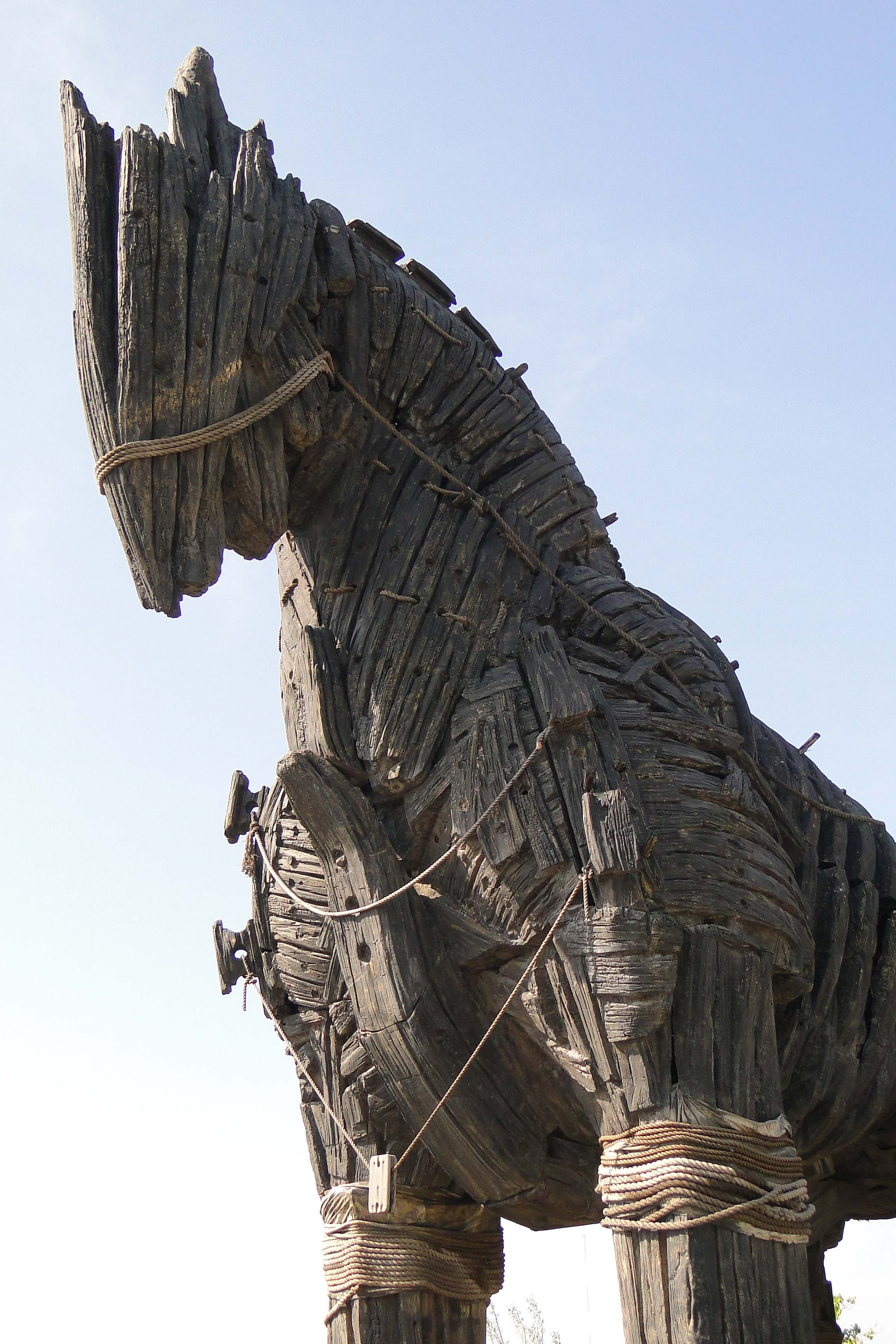
The tale of the Trojan Horse is one of the most famous stories to emerge from ancient Greece, a gripping narrative of cunning, deception, and the fall of a great city. For centuries, it has captured the imagination, but many are surprised to learn that the full, detailed account is not where they expect to find it. So, Where Does The Story Of The Trojan Horse Come From? The answer lies not in a single text, but woven through several key pieces of ancient literature that built upon a rich oral tradition. To truly understand its origins, we must look beyond a single text and explore the literary puzzle, a narrative that is more complex than just the trojan horse full story.
The Main Source: Virgil’s Epic, The Aeneid
Surprisingly for many, the most complete and dramatic telling of the Trojan Horse story comes not from a Greek author, but from the Roman poet Virgil. Written between 29 and 19 BC, Virgil’s epic poem, The Aeneid, was crafted to be the Roman equivalent of Homer’s masterpieces. The poem follows the journey of the Trojan hero Aeneas, who escapes the fallen city of Troy and eventually travels to Italy, where his descendants would found Rome.
The most vivid account of Troy’s demise is in Book II of The Aeneid. Here, Aeneas recounts the final, tragic days of the city to Dido, the queen of Carthage. He tells the story from a Trojan’s perspective, filled with pathos and a sense of doom. It is Virgil who gives us the famous details:
- The Mastermind: The Greek warrior Odysseus (Ulysses in Roman texts) is credited with devising the plan.
- The Construction: A colossal wooden horse is built, hollow on the inside, and presented as a religious offering to the goddess Minerva (Athena) to ensure a safe voyage home for the Greeks.
- The Deceiver: A Greek spy named Sinon is left behind. He spins a tale of woe, claiming the Greeks have abandoned him and that the horse is a sacred object. He convinces the Trojans that bringing the horse into their city will grant them Minerva’s divine protection.
- The Warning: The Trojan priest Laocoön famously warns his people, “I fear the Greeks, even when they bring gifts.” In a dramatic turn, two giant sea serpents emerge from the ocean to kill Laocoön and his sons, which the Trojans interpret as a sign of divine displeasure with his warning.
- The Infiltration: Convinced by Sinon and the omen, the Trojans tear down a section of their impenetrable walls to bring the massive horse inside. They celebrate their apparent victory, unaware of the Greek soldiers, led by Odysseus, hidden within the horse’s belly.
- The Fall: Under the cover of night, the soldiers emerge, open the city gates for the returned Greek army, and the city of Troy is sacked and burned.
Virgil’s account is powerful because it is a first-person narrative filled with the emotion and terror of a survivor, making it the definitive version of the story that has been passed down through history.
Homer’s Clues: The Odyssey’s Crucial Mentions
While Virgil provides the most detail, he was drawing from stories that had circulated for centuries. The earliest literary evidence for the Trojan Horse comes from Homer’s Odyssey, which was composed around the 8th century BC, long before Virgil’s time.
Homer’s epic poem, The Iliad, famously details the final year of the ten-year Trojan War, focusing on the wrath of Achilles. However, the poem ends with the funeral of the Trojan hero Hector, before the city falls. The Trojan Horse and the actual sack of Troy are not part of The Iliad.
Instead, Homer references the event in his next epic, The Odyssey, which follows the hero Odysseus’s long journey home from the war. The story is mentioned on two key occasions:
- In Book IV: Helen of Troy recounts how she walked around the horse, calling out the names of the Greek heroes hidden inside, even mimicking the voices of their wives to try and trick them into revealing themselves. She recalls that Odysseus was the one who kept the men silent and saved the mission.
- In Book VIII: A blind bard named Demodocus sings a song at the court of King Alcinous. The song is about the Trojan Horse, describing how the Greeks poured out of the wooden effigy to conquer the city. Odysseus, who is present but in disguise, weeps as he hears the story of his own greatest triumph retold.
These mentions are significant because they confirm that the story of the Trojan Horse was already a well-known part of the Trojan War tradition long before Virgil wrote The Aeneid. Homer didn’t need to tell the whole story because his audience already knew it. He used it as a known backstory to develop his characters.
Is the Trojan Horse a Real Story?
This is the ultimate question for historians and archaeologists. For centuries, the Trojan War itself was considered pure myth. However, in the 1870s, archaeologist Heinrich Schliemann began excavations at Hisarlik in modern-day Turkey, a site he claimed was the historical location of Troy. Today, scholars largely agree that Hisarlik is indeed the site of ancient Troy. Archaeological evidence shows that the city was destroyed and rebuilt multiple times, and one of the layers of destruction (known as Troy VIIa) dates to the Late Bronze Age (around 1200 BC), the time period historians associate with the Trojan War. The debate over is the trojan horse a real story continues to fascinate historians.
But what about the horse itself? There is no direct archaeological evidence of a giant wooden horse. Most historians and classicists believe the horse was likely a literary embellishment of a more plausible historical event. Several theories exist:
“The most popular theory is that the ‘horse’ was a metaphor for a siege engine. Ancient armies often used large, wooden structures, sometimes covered with dampened horse hides to prevent them from being set on fire, to ram city gates or allow soldiers to scale walls. It’s possible that such a device was given the nickname ‘the horse’ by the soldiers who used it.” – Dr. Eleanor Vance, Classical Historian.
Another theory suggests the Trojan Horse could be a metaphor for an earthquake that destroyed Troy’s walls. The god Poseidon was the god of both horses and earthquakes, so an earthquake that breached the walls could have been poetically described as a gift from the “Earth-Shaker” in the form of a horse. The entire trojan war horse story serves as a powerful narrative, whether literal or metaphorical.
The Legacy and Meaning of the Trojan Horse
Whether fact or fiction, the story of the Trojan Horse has had a profound and lasting impact on Western culture. It is a timeless lesson about the dangers of underestimating an enemy and the importance of looking past outward appearances to see the true nature of a threat. This differs slightly from the overall war horse story line which focuses on broader events.
The phrase “Trojan horse” has entered our lexicon as a term for any trick or strategy that causes a target to invite a foe into a securely protected bastion or place. Most famously, it is used in the digital age to describe “Trojan horse” malware—malicious software that disguises itself as legitimate to persuade a victim to install it on their computer.
The story’s endurance comes from its powerful themes:
- Deception vs. Trust: The Trojans’ fatal flaw was their willingness to trust a beautiful offering over the stark warnings of their own people.
- Ingenuity in Warfare: The horse represents the idea that cunning and intellect can triumph over brute force, even against seemingly insurmountable defenses.
- The Price of Victory: The story is not just a celebration of Greek cleverness but also a somber tale about the brutal and total destruction of a magnificent city.
Frequently Asked Questions (FAQ)
Where is the Trojan Horse story first mentioned?
The earliest known literary mentions of the Trojan Horse story are in Homer’s Odyssey, composed around the 8th century BC. However, the most detailed and influential account is found in Book II of Virgil’s The Aeneid, written in the 1st century BC.
Was the Trojan Horse a real event?
There is no archaeological evidence to prove the Trojan Horse existed as described in the poems. Most historians believe the story is either a complete fabrication or, more likely, a poetic metaphor for a real-world siege engine or a natural disaster like an earthquake that breached Troy’s walls.
Who came up with the idea for the Trojan Horse?
According to the ancient texts, the cunning Greek hero Odysseus (known as Ulysses to the Romans) was the mastermind behind the Trojan Horse stratagem. It was his idea to use deception to get inside the city’s impenetrable walls.
Why did the Trojans accept the horse?
The Trojans accepted the horse due to a combination of factors. A Greek spy, Sinon, convinced them it was a sacred offering to the goddess Minerva. The death of the priest Laocoön, who warned against it, was seen as a sign of divine will. Ultimately, pride and a desire to believe the war was over led them to accept the gift.
What does a “Trojan Horse” mean today?
Today, the term “Trojan horse” refers to any form of trickery where a threat is disguised as something harmless or desirable and is willingly brought into a secure environment. It is most commonly used to describe a type of computer malware.
Conclusion
In the end, tracing where the story of the Trojan Horse comes from reveals a fascinating journey through literary history. It begins with tantalizing hints in Homer’s Odyssey, confirming its place in ancient Greek oral tradition, and culminates in the dramatic, fully-realized narrative in Virgil’s Aeneid. While the historical reality of the horse remains a tantalizing mystery, its power as a story is undeniable. It has survived for millennia as a potent symbol of cunning, deception, and the critical importance of looking a gift horse in the mouth, solidifying its place as one of the most enduring tales of all time.
