
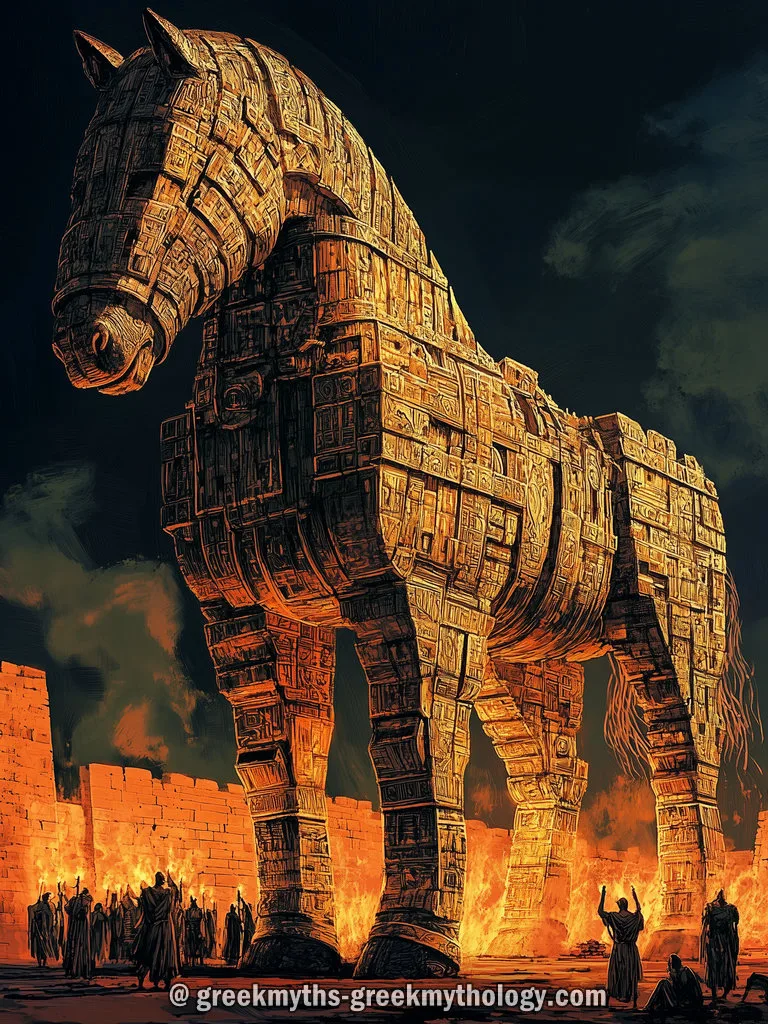
The tale of the Trojan Horse is one of the most iconic and enduring narratives in Western literature, a story of cunning, deception, and the dramatic fall of a mighty city. But where did this captivating story come from? Its roots lie deep within ancient Greek mythology, primarily recounted in the epic poems attributed to Homer and later elaborated upon by other classical authors. The narrative centers around the final, decisive act of the Trojan War, a conflict that had raged for ten long years between the Achaeans (Greeks) and the city of Troy.
The Trojan War: A Decade of Stalemate
The Trojan War itself was sparked by the abduction of Helen, the wife of Spartan King Menelaus, by the Trojan prince Paris. This act ignited the wrath of the Greeks, who, led by Menelaus’s brother Agamemnon, assembled a massive fleet and army to sail to Troy and reclaim Helen. For ten years, the two sides clashed on the plains outside the formidable walls of Troy. Despite numerous battles, heroic deeds, and the deaths of many great warriors on both sides, including the mighty Achilles for the Achaeans and Hector for the Trojans, the Greeks could not breach the city’s defenses. The war had reached a bitter stalemate, and a sense of despair began to settle over the Achaean camp.
Odysseus’s Ingenious Plan
It was in this climate of frustration and desperation that the brilliant strategist Odysseus, King of Ithaca, conceived of a daring and unprecedented plan. Recognizing that a direct assault on Troy’s impenetrable walls was futile, Odysseus proposed a strategy of deception. The idea was to feign a retreat, leaving behind a massive wooden horse as a supposed offering to the goddess Athena, a gift to ensure their safe passage home. However, this seemingly benevolent gift was a Trojan within a Trojan horse, concealing a select group of the Achaean’s bravest warriors within its hollow belly.
The Construction of the Deceptive Gift
The construction of the colossal wooden horse is often attributed to the master craftsman Epeius, under the guidance of Odysseus. Timber was felled from the surrounding forests, and skilled hands meticulously crafted the enormous effigy. The horse was designed to be large enough to house a significant number of soldiers, yet also appear as a religious offering. Once completed, the elite warriors, including Odysseus himself, Menelaus, and Neoptolemus (Achilles’ son), were hidden inside. The rest of the Greek army then sailed away, staging a visible, albeit deceptive, retreat.
The Deception and the Fall of Troy
When the Trojans awoke the next morning, they were met with an astonishing sight: the Greek camp was empty, their ships gone. Before them stood the colossal wooden horse. Confused but relieved, they debated its meaning. Some, like the seer Laocoön, were deeply suspicious, famously exclaiming, “Do not trust the horse, Trojans! Whatever it is, I fear the Greeks even when they bring gifts.” He even hurled a spear at the horse’s side, which was met with the sound of clanging armor from within, a warning tragically ignored.
Another crucial figure in the saga was Sinon, a Greek left behind as part of the deception. He presented himself to the Trojans as a deserter, fabricating a tale of betrayal by Odysseus and explaining that the horse was indeed an offering to Athena, left behind because it was too large to be brought into the city and was intended to appease the goddess. His convincing performance, coupled with the desire to believe the war was finally over, swayed the Trojans. Against the warnings of Cassandra, who was cursed never to be believed, and Laocoön, who was subsequently killed by sea serpents sent by the gods (a sign interpreted by many Trojans as divine punishment for his disrespect towards the horse), the Trojans celebrated their apparent victory and brought the massive wooden horse into their city.
That night, under the cover of darkness and revelry, the Achaean warriors emerged from the horse. They opened the city gates, allowing the returning Greek army to pour in. The unsuspecting Trojans, exhausted from years of war and caught off guard by the sudden infiltration, were overwhelmed. The city of Troy, after its decade-long resistance, fell to the Achaeans in a brutal and devastating sacking.
Literary Origins and Evolution
The primary source for the story of the Trojan Horse is not found in Homer’s Iliad, which famously concludes before the fall of Troy, focusing instead on the wrath of Achilles and the events of a few crucial weeks in the tenth year of the war. Instead, the detailed account of the horse and the fall of Troy comes from later works, most notably the Odyssey, also attributed to Homer. In Book IV of the Odyssey, Helen herself describes the event, recounting how Odysseus, hidden within the horse, was almost discovered by the Trojan women.
The epic poem Aeneid by Virgil provides another significant and influential retelling. In Book II, the Trojan hero Aeneas recounts the fall of Troy to Dido, describing the arrival of the horse, the suspicion of Laocoön, and the subsequent destruction of his city. Virgil’s vivid and dramatic portrayal has had a profound impact on how the story has been understood and retold throughout history. Other ancient sources, such as the Epic Cycle (a collection of poems now largely lost, but known through summaries), also contributed to the legend.
The story of the Trojan Horse has resonated through the ages, becoming a powerful metaphor for deception and a symbol of a brilliant, albeit morally ambiguous, military stratagem. Its origins are firmly planted in the rich soil of ancient Greek mythology, a testament to the enduring power of storytelling and the human fascination with tales of war, wit, and downfall.
