
Bringing a new puppy home is an exciting time, filled with cuddles and playful moments. However, it also comes with the essential task of house-training. Whether you call it housebreaking or potty training, the goal remains the same: teach your new furry friend not to eliminate inside your home. The most effective way to achieve this is by establishing a clear timeline and a consistent routine for outdoor potty breaks. Understanding when to start potty training a puppy outside is crucial for success, setting your puppy up for a lifetime of good habits and making your home a cleaner, happier place.
Understanding Your Puppy’s Potty Training Readiness
Starting outdoor potty training early and understanding your puppy’s physical and behavioral cues are fundamental. Most puppies begin to grasp the concept of outdoor elimination between 8 to 16 weeks of age, though individual progress can vary. The key is consistency from the moment they arrive home.
The “Month-Plus-One” Rule and Bladder Control
One helpful guideline for young puppies is the “month-plus-one” rule. Take your puppy’s age in months and add one to determine the maximum number of hours they can comfortably hold their bladder during the day. For example, a 3-month-old puppy can typically hold it for about 4 hours. This rule is especially useful for planning potty breaks when you need to be away or for managing overnight expectations. Keep in mind that puppies often need to relieve themselves more frequently than this general rule suggests, especially after waking up, eating, or playing.
Key Signs Your Puppy Needs to Go Out
Learning to read your puppy’s body language is vital for successful outdoor potty training. Watch for subtle cues that indicate they need to relieve themselves. These can include sniffing the floor or carpet, circling, whining, barking at the door, becoming restless, or wandering away from family members to a secluded spot. Sometimes, overexcitement, like “zoomies,” can also trigger an urge. If you observe any of these signs, immediately take your puppy outside to their designated potty spot. Early intervention prevents accidents and reinforces the desired behavior.
Establishing a Consistent Potty Training Schedule Outside
Consistency is the cornerstone of effective outdoor potty training. A predictable schedule helps your puppy understand when and where they are expected to eliminate. Always take your puppy out through the same door to the same designated area, keeping them on a leash, even in a fenced yard. This routine helps them associate that specific spot and action with going potty. For tips on encouraging specific outdoor behavior, learn how to get my dog to pee in the backyard.
First Thing in the Morning
Every day should start with an immediate trip outside. As soon as your alarm goes off, or you hear your puppy stir, take them out of their crate and directly to their potty spot. Avoid distractions like checking emails or making coffee; their bladder control is weakest right after sleep. This immediate outdoor break sets a positive tone for the day’s training.
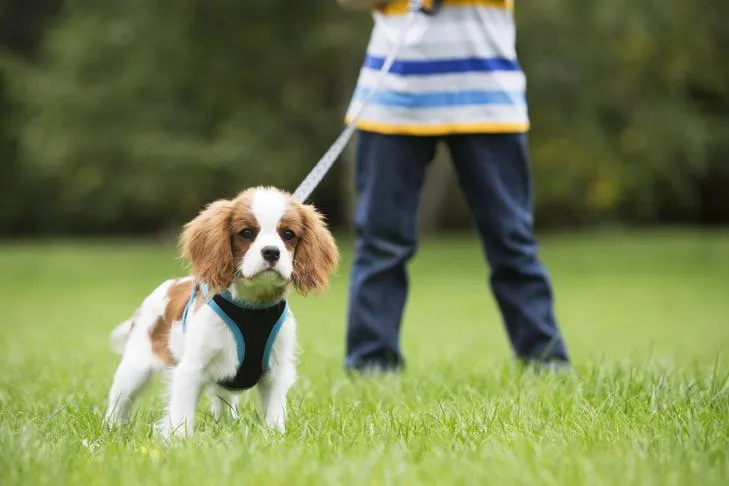 Young boy taking a King Charles Cavalier Spaniel puppy for an outdoor potty break in a grassy field.
After Every Meal and Water Break
Another critical time for outdoor potty breaks is after meals and when your puppy drinks water. Puppies typically need to eliminate within 5 to 30 minutes after eating, with younger puppies needing to go out sooner. Schedule meals at consistent times each day to help regulate their digestive system, making potty times more predictable. Treat water breaks similarly; a full bladder after drinking means an imminent need to go outside. Choosing a puppy food that aids digestion can also contribute to a more predictable schedule.
Post-Naps and Playtime
Beyond morning and meal breaks, young puppies also require outdoor trips after naps and periods of active playtime. Naps are like mini-versions of the morning routine; the moment your puppy wakes up, they should be taken outside. During playtime, the excitement and physical activity can stimulate their digestive tract, creating an urgent need for a potty break. Remain vigilant for any of the subtle signs mentioned earlier, and be ready to escort them outside immediately.
Effective Outdoor Potty Training Techniques and Tools
Once you’re outside, the techniques you employ are just as important as the frequency of your trips. Reinforcing the desired behavior and using appropriate tools can significantly speed up the potty training process.
Choosing a Designated Potty Spot
Select a specific “potty spot” in your yard or designated area and consistently take your puppy there. The familiarity of the spot helps them understand its purpose. When you arrive, stand quietly and wait. As they begin to eliminate, you can use a consistent verbal cue like “go potty” or “do your business.” This command can eventually prompt them to go on cue, even when you’re in a new environment.
Using Commands, Praise, and Treats
The moment your puppy successfully eliminates in the designated outdoor spot, offer immediate, enthusiastic praise (“Good boy/girl!”) and a high-value treat. This positive reinforcement creates a strong association between going potty outside and receiving a reward. After they’ve finished, spend a few minutes playing with your puppy before going back inside. This makes the outdoor experience more enjoyable and less like a chore, encouraging them to want to go outside for future breaks. If your puppy doesn’t go, take them back inside and try again in 10-15 minutes, remaining vigilant for any signs of needing to go.
Leveraging Crates and Bell Training
Crate training can be an invaluable tool for outdoor potty training. Dogs naturally avoid soiling their sleeping areas, so a properly sized crate can help them develop bladder control. For safety and comfort while walking to the designated spot, it’s also helpful to train a dog from pulling when walking. Another effective technique is bell training. Attach a bell to the door handle you use for outdoor potty breaks and ring it yourself every time you take your puppy out. Soon, your puppy will learn to ring the bell themselves to signal their need to go, offering a clear way to teach a dog to bark to go outside or use another signal. Be sure to praise them profusely when they start ringing it on their own.
Handling Accidents and Maintaining Progress
Accidents are an inevitable part of puppy potty training, but how you handle them is crucial for your puppy’s learning and confidence.
What to Do When Accidents Happen Indoors
If you catch your puppy in the act indoors, calmly interrupt them with a gentle noise like “uh-oh” or a clap to get their attention. Then, immediately pick them up and carry them outside to their designated potty spot to finish. When they do, offer praise and a treat. Never punish your puppy for an indoor accident, as this can make them fearful of eliminating in front of you, even outside. Thoroughly clean soiled indoor areas with enzymatic pet stain removers to eliminate odors that might attract them back to the same spot. If your puppy often jumps on you in excitement, consider tips on [how to keep your dog from jumping on people](https://dogcarestory.com/how-to-keep-your dog-from-jumping-on-people/) to maintain calm during these transitions.
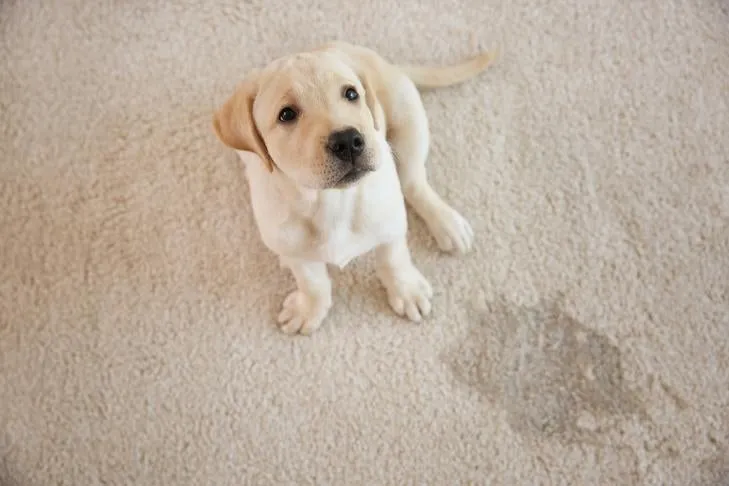 A Yellow Labrador Retriever puppy sitting on a carpet next to an indoor potty accident, highlighting the challenge of house training.
Managing Potty Breaks During Your Absence and Overnight
When you must leave your puppy alone for several hours, planning ahead is essential. Use the “month-plus-one” rule to gauge how long they can comfortably hold it in their crate. For longer absences, arrange for a trusted person to let your puppy out. Before bedtime, always take your puppy out for one last potty break. Puppies can typically hold their bladder for longer periods when they are sleeping. Keeping their crate near your bedroom allows you to hear whimpers or whines, signaling an urgent need to go out during the night. For smaller puppies, carrying them directly outside from the crate can prevent accidental stops on the way to the door. Once outside, ensure you’ve practiced how to get your dog to come inside when called for a smooth return.
Realistic Expectations and Troubleshooting Potty Training
Potty training is a journey, and every puppy learns at their own pace. Patience and persistence are your most valuable assets.
How Long Does Potty Training Take?
According to Dr. Jerry Klein, AKC Chief Veterinarian, “When it comes to how long potty training takes, it depends on the puppy and the schedule you keep.” If training begins early and consistently, a 6-month-old puppy is usually quite reliable about eliminating outside. However, some puppies may take longer. Celebrate small victories and avoid frustration.
When to Consult a Veterinarian
If you feel your puppy isn’t making adequate progress despite consistent training efforts, or if they suddenly start having frequent accidents after being reliably house-trained, it’s wise to consult your veterinarian. There might be an underlying health issue, such as a urinary tract infection (UTI) or another medical condition, causing the delay or regression in house-training. A vet check-up can rule out medical causes and provide peace of mind.
Conclusion
Successfully potty training your puppy outside requires dedication, consistency, and a deep understanding of their needs and cues. By establishing a predictable schedule for outdoor breaks after waking, eating, and playing, utilizing positive reinforcement with commands, praise, and treats, and handling accidents gracefully, you’re paving the way for a well-behaved companion. Remember that patience is key, and every puppy’s journey is unique. With these strategies, you’ll not only achieve a clean home but also strengthen the bond with your beloved furry friend, creating a foundation for a happy life together.
References
- AKC. “How to Potty Train a Puppy.” American Kennel Club, www.akc.org/learn/akc-training/how-to-potty-train-a-puppy/.
- AKC. “Setting Schedules and Developing a Routine for Your New Puppy.” American Kennel Club, www.akc.org/content/dog-care/articles/setting-schedules-and-developing-a-routine-for-your-new-puppy/.
- AKC. “Why Crate Training Is Great for Your Dog.” American Kennel Club, www.akc.org/expert-advice/training/why-crate-training-is-great-for-your-dog/.
- AKC. “The Ins and Outs of Potty Pad Training.” American Kennel Club, www.akc.org/expert-advice/training/the-ins-and-outs-of-potty-pad-training/.
- AKC. “How Much Do Puppies Sleep?” American Kennel Club, www.akc.org/expert-advice/health/how-much-do-puppies-sleep/.
- AKC. “What are Zoomies?” American Kennel Club, www.akc.org/expert-advice/lifestyle/what-are-zoomies/.
- AKC. “Why Does My Puppy Keep Peeing in the House?” American Kennel Club, www.akc.org/expert-advice/puppy-information/why-does-my-puppy-keep-peeing-in-the-house/.
- AKC. “Teach Your Dog to Ring a Bell to Go Outside.” American Kennel Club, www.akc.org/expert-advice/training/teach-dog-ring-bell-go-outside/.
- AKC. “How Long Can You Leave a Puppy Alone?” American Kennel Club, www.akc.org/expert-advice/training/how-long-leave-puppy-alone/.
- AKC. “Urinary Tract Infections (UTI) in Dogs.” American Kennel Club, www.akc.org/expert-advice/health/urinary-tract-infections-uti-in-dogs/.
- AKC. “Puppy Feeding Fundamentals.” American Kennel Club, www.akc.org/expert-advice/nutrition/puppy-feeding-fundamentals/.
- AKC. “Best Dog Food: Choosing What’s Right for Your Dog.” American Kennel Club, www.akc.org/expert-advice/nutrition/best-dog-food-choosing-whats-right-for-your-dog/.
- AKC. “How Much Playtime Do Dogs Need?” American Kennel Club, www.akc.org/expert-advice/health/how-much-playtime-do-dogs-need/.
- AKC. “Best Dog Treats.” American Kennel Club, www.akc.org/expert-advice/nutrition/best-dog-treats/.
- AKC. “Dog Urine Stains: How to Remove Pet Pee Stains and Odor.” American Kennel Club, www.akc.org/expert-advice/home-living/dog-urine-stains/.
- AKC. “Choosing the Right Dog Leash.” American Kennel Club, www.akc.org/expert-advice/lifestyle/choosing-right-dog-leash/.
