

Bringing a new puppy into your home is an exciting experience, filled with boundless energy and budding affection. While your new furry friend will quickly develop a strong bond with you and likely follow your every move indoors, navigating the great outdoors on a leash is an entirely different skill set. Teaching a puppy to walk properly on a lead is a fundamental aspect of responsible dog ownership, a crucial life skill they’ll rely on daily. So, the question often arises: exactly When Should You Start Walking A Puppy On A Leash, and how do you ensure it’s a positive and effective experience? Knowing how to walk my dog without pulling is just one piece of the puzzle; establishing good habits from an early age is key to a happy, well-adjusted companion.
This comprehensive guide will delve into the ideal timing for leash training, provide step-by-step instructions, and address common questions and challenges to help you confidently teach your puppy to walk politely on a leash.
When to Start Leash Training Your Puppy
One of the most frequent questions new puppy owners have is about the optimal age to begin leash training. Generally, leash training can start as early as 8 weeks old. At this stage, your puppy should be taking short, confident steps and be receptive to new experiences. However, readiness can vary significantly between individual puppies. Factors such as a puppy’s overall growth, developmental stage, how quickly they’ve bonded with you, and their inherent confidence levels can all play a role. If your puppy seems hesitant or shows signs of anxiety, it’s always best to wait a little longer until they feel completely secure and comfortable. A confident puppy will be much more receptive to training, making the process smoother and more effective for both of you.
Understanding Loose-Lead Walking
At its core, loose-lead walking means teaching your dog to walk calmly beside you, or slightly ahead, without pulling or straining against the leash. It’s a vital, routine skill that contributes significantly to your dog’s daily life and overall well-being. Walking a dog off-leash without proper training, no matter how docile they appear, can pose risks not only to your own pet but also to other dogs and people. An untrained dog might dart into traffic, approach other dogs aggressively, or simply run away. Therefore, instilling the habit of happily walking on a leash from a young age is incredibly important for their development, fostering a calm, well-behaved adult dog that can enjoy regular, stress-free walks.
Essential Equipment for Puppy Leash Training
Before you embark on your training journey, having the right equipment is crucial for success and your puppy’s comfort.
- Harness: Invest in a high-quality, well-fitting harness that is snug but not tight. Your puppy should not be able to back out of it easily. Avoid harnesses that tighten when your dog pulls, as these can be counterproductive during the training phase.
- Lead: A solid, 4-6 foot training lead is ideal. Retractable leads, while useful for experienced walkers, are not recommended for initial training as they don’t teach consistent leash pressure. Ensure your lead has an easy-to-use clip that attaches securely to the harness.
- Collar with ID Tag: Your puppy should also wear a comfortable, flat collar with an identification tag. The collar should be snug enough to prevent slipping but loose enough for you to fit two fingers underneath. In many places, it’s legally required for dogs to wear an ID tag when in public, displaying your name and address.
- Treats: Training is heavily reliant on positive reinforcement! Have plenty of small, tasty, healthy dog treats on hand. These incentives will help your puppy understand when they’ve performed well and encourage them to repeat desired behaviors.
Considering whether to use a harness or a collar for your walks is important. While harnesses are often preferred for training to avoid strain on a puppy’s delicate neck, understanding the pros and cons of each can help you make an informed decision for long-term walks. Can a dog be indoor and outdoor potty trained might seem unrelated, but proper potty training often goes hand-in-hand with establishing a consistent outdoor routine, where leash manners become paramount.
Step-by-Step Guide to Training Your Puppy on a Leash
Leash training requires patience and consistency, but the process is straightforward. With a willing puppy and a positive attitude, you’ll see great progress.
Teach Your Puppy to Come to Your Side:
The foundation of leash training is having your puppy understand the command to come to you. Indoors, during playtime, establish a ‘cue’ – perhaps a word like “here” or a distinct sound. When your puppy looks at you or comes closer, immediately reward them with a treat. Once they consistently respond to this cue when you’re close, start practicing from a few steps away, encouraging them to come to your side for their reward. This teaches them to focus on you, even amidst distractions.Acclimate Them to the Harness and Lead:
Before attempting to walk, your puppy needs to be comfortable wearing the harness and lead. Introduce them gradually. Let your puppy wear the harness for short periods while playing indoors, always associating it with positive experiences and treats. Once comfortable, attach the lead and let them drag it around the house (under supervision). Practice your “come to my side” cue while they’re wearing the gear, offering treats as rewards. The goal is for them to view the harness and lead as precursors to good things, not restrictive items.Practice Short Walks on the Leash Indoors:
With your puppy comfortable in their gear, start practicing short walks inside. Hold the training lead loosely. As your puppy walks a few steps beside you without pulling, offer praise and a treat. If they pull, immediately stop moving. Stand completely still and wait for the lead to slacken before resuming. You can also use your “come to me” cue to re-engage their focus. The key is to teach them that pulling gets them nowhere, while a loose lead allows them to move forward.Move to a Secure Outdoor Area:
Once your puppy is consistently walking well indoors, it’s time to introduce them to the outside world. Start in a secure, low-distraction environment, like your backyard. The aim is to replicate the indoor training, gradually exposing them to new sights, sounds, and smells. Continue to reward a loose lead and stop when they pull. A golden coloured cocker-mix puppy, taking a treat, against a salmon pink coloured background
Consistency is Key to Success:
It can be tempting to rush outdoor walks once your puppy shows some progress. However, the world outside is full of overwhelming distractions. Consistency in your training is paramount. Regular, short training sessions will reinforce the desired behaviors and prepare your puppy for the many sensory triggers they’ll encounter on a public walk. With consistent positive reinforcement, your puppy will quickly learn to associate their harness and lead with exciting, enjoyable outings, making future attachments much easier.
Overcoming Common Leash Training Challenges
Even with the best intentions, you might encounter a few hurdles during leash training. Here are some common issues and how to address them.
How to Stop a Puppy Pulling on the Leash
Pulling on the leash is one of the most common and frustrating behaviors. It makes walks unpleasant and can be dangerous, especially as your puppy grows larger. The goal is for your puppy to trot calmly beside or slightly ahead of you. To tackle pulling, consistently apply the “stop when they pull” method. The moment your puppy strains against the leash, stop moving completely. Wait patiently until the leash slackens, then resume walking. This teaches them that pulling immediately halts their progress. You can also use verbal cues to reinforce the desired behavior, like “heel” or “loose leash,” paired with a treat when they get it right. For more in-depth strategies, explore guides on how to get my dog not to pull on leash.
How to Prevent Puppy Leash Biting
Many puppies, especially during teething, enjoy biting and wrestling with the leash. To stop your puppy from biting the leash, redirection is your best tool. The moment they start nipping, redirect their attention to a suitable chew toy or offer a high-value treat. Reward them immediately when they stop biting the leash and focus on the alternative. Over time, they will learn that the leash is not a toy and that ignoring it leads to rewards.
Optimizing Your Training Approach
Beyond the basic steps, certain attitudes and techniques can significantly enhance your leash training efforts. Understanding how to train dog not to tug on leash delves deeper into gentle lead control methods.
How to Use a Training Lead Effectively
For puppy training, a fixed-length training lead (up to 6 feet) is far more appropriate than an extendable lead. When walking, loop the lead once in your hand initially to maintain some control, but ensure there’s enough slack so that it’s not taut. Avoid yanking or jerking the lead to control your puppy, especially given their sensitive necks during growth. Instead, rely on your body language, verbal cues, and positive reinforcement to guide them. The lead should be a communication tool, not a means of force.
The Importance of Attitude and Energy
Your demeanor plays a crucial role in training success. Be calm, patient, and consistent, but also exude encouraging and positive energy. You want your puppy to associate the leash and harness with security, routine, and positive excitement for an adventure. Approaching training with a cheerful, rewarding attitude will be far more effective in the long run than a commanding or frustrated one. This positive association strengthens your bond and makes training a more enjoyable experience for both of you.
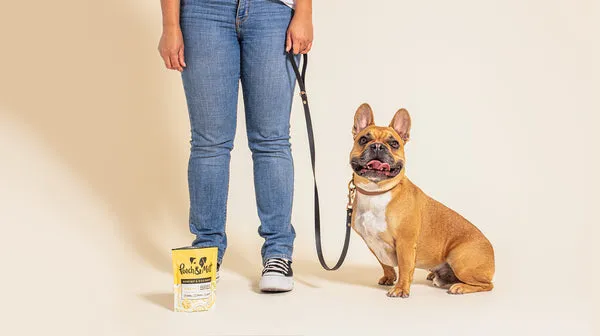 A French Bulldog, on a lead with their owner, against a cream coloured background
How Long Does Leash Training Take?
The duration of leash training can vary widely among puppies. Some may pick it up quickly, consistently remembering their lessons after just a few tries. Others might take longer, especially if they are naturally anxious, easily distracted, or have encountered negative experiences. Typically, you can expect to see consistent progress over a period ranging from a few weeks to a few months. Remember that patience is a virtue, and consistency will eventually lead to lasting results. While leash training is often a primary focus, it’s worth remembering that other commands, like how to teach your dog to shake, also build a strong bond and reinforce positive learning habits.
Leash training your new puppy is a rewarding journey that not only makes walks more enjoyable but also significantly strengthens the bond and sense of safety between you and your young companion. By understanding when to start walking a puppy on a leash, coupled with patience, warmth, and consistent encouragement, your puppy will soon be trotting happily and politely at your side.
