
When you think about training pets, dogs and cats often come to mind. But did you know that birds can be incredibly intelligent and trainable companions? If you’re looking for a feathered friend that’s a joy to interact with and teach new tricks, you’ve come to the right place. We’re diving deep into the world of avian intelligence to find out what’s the easiest bird to train.
Understanding Bird Intelligence and Trainability
Before we get to the “easiest,” it’s important to understand what makes a bird trainable. It’s not just about mimicry; it’s about cognitive ability, social interaction, and a willingness to engage with their environment and their human flock. Several factors contribute to a bird’s trainability:
- Species: Different bird species have varying levels of intelligence and natural aptitudes. Some are hardwired for complex problem-solving, while others are more content with simpler interactions.
- Individual Personality: Just like people, each bird is an individual. Some birds are naturally more curious, bold, and eager to please, making them quicker learners. Others might be more shy or independent.
- Socialization: Birds are highly social creatures. Those that are well-socialized from a young age, both with other birds and with humans, tend to be more receptive to training.
- Motivation: What motivates your bird? Is it a favorite treat, a specific type of praise, or a favorite toy? Understanding your bird’s motivators is key to successful training.
- Training Methods: Positive reinforcement is the golden rule. Using rewards like treats, praise, and head scratches for desired behaviors is far more effective and humane than any form of punishment.
The Top Contenders: Easiest Birds to Train
While many bird species can be trained to some extent, some stand out for their natural intelligence, eagerness to interact, and ability to learn a variety of commands and tricks. When asking what’s the easiest bird to train, these species consistently top the list:
1. Budgerigars (Budgies)
Often called budgies or parakeets, these small, colorful birds are incredibly popular for a reason. They are highly intelligent, social, and can learn to talk, whistle, and perform simple tricks.
- Why they’re easy: Budgies are known for their inquisitive nature and their desire to be part of the family activities. They can be trained to step up onto your finger, come when called, and even retrieve small objects. Their small size also makes them manageable for new bird owners.
- Training tips: Start early with socialization. Talk to your budgie often, offer treats for desired behaviors, and keep training sessions short and fun. They respond well to consistency and repetition.
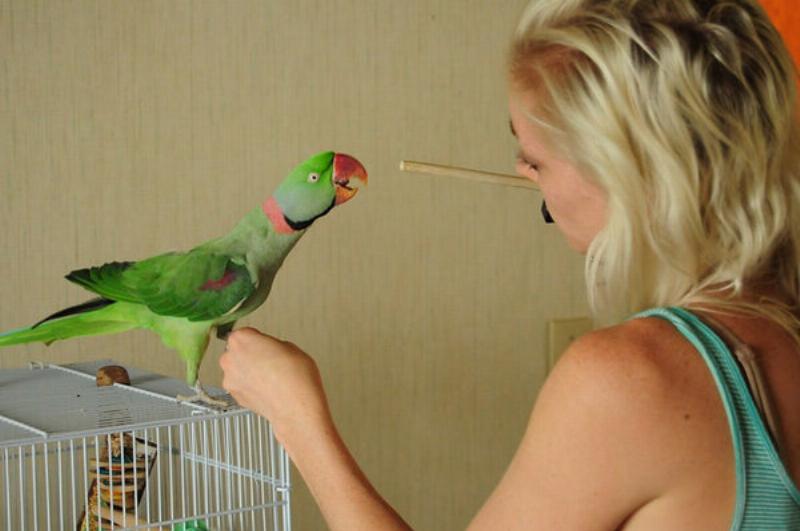 Best budgie for training
2. Cockatiels
Cockatiels are another fantastic choice for beginners and experienced bird owners alike. These medium-sized birds are known for their sweet disposition, their distinctive crests, and their ability to whistle complex tunes and mimic sounds.
- Why they’re easy: Cockatiels form strong bonds with their owners and enjoy interactive play. They can be trained to whistle specific melodies, do simple tricks like “wave” or “spin,” and even come to your call. Their gentle nature makes them a pleasure to train.
- Training tips: Like budgies, positive reinforcement is key. Use millet spray or small seeds as rewards. Whistling is a great way to communicate and train them; try whistling a tune and rewarding them when they attempt to copy it.
3. Indian Ringneck Parakeets
These larger parakeets are renowned for their intelligence and their remarkable ability to speak clearly. If you’re looking for a bird that can truly converse with you, the Indian Ringneck is a strong contender.
- Why they’re easy: While they might be a bit more independent than budgies or cockatiels, Indian Ringnecks are incredibly smart and excel at mimicking human speech and sounds. They can also learn tricks and be trained to perform routines.
- Training tips: Patience and consistency are crucial. Because they are highly intelligent, they can also become bored easily, so varied and engaging training sessions are important. They respond well to clear commands and positive reinforcement.
4. African Greys
When it comes to intelligence, the African Grey parrot is in a league of its own. Often considered the Einstein of the bird world, these birds possess incredible cognitive abilities, including understanding concepts, problem-solving, and an astonishing capacity for speech.
- Why they’re easy (with a caveat): While their intelligence makes them highly trainable, they also require a significant commitment. They can learn an extensive vocabulary, understand the meaning of words, and perform complex tasks. However, their intelligence means they need constant mental stimulation to prevent boredom and behavioral issues.
- Training tips: Focus on teaching them not just words, but also the context in which to use them. Engage them in puzzles and problem-solving games. Positive reinforcement, especially with praise and their favorite treats, is essential.
5. Amazona Parrots (e.g., Yellow-Naped, Double Yellow-Headed)
Amazon parrots are known for their vibrant personalities, their sense of humor, and their impressive talking abilities. They are intelligent, social, and can learn a wide range of words, phrases, and tricks.
- Why they’re easy: These parrots are very interactive and enjoy being the center of attention. They can be trained to sing songs, dance, and perform various simple tricks. Their playful nature makes training sessions enjoyable.
- Training tips: Socialization from a young age is vital. Amazons respond well to consistent training routines and positive reinforcement. They also thrive on interaction, so include them in your daily activities as much as possible.
Beyond the Easiest: Other Trainable Birds
While the species above are often considered the easiest, many other birds can be trained with dedication and the right approach:
- Quaker Parrots (Monk Parakeets): Known for their chatter and ability to mimic sounds and words.
- Conures: Especially the larger conure species, can learn tricks and some vocabulary. They are very social and energetic.
- Canaries and Finches: While not typically trained for tricks or speech, they can be trained to respond to certain calls or come for food.
Essential Tips for Training Any Bird
No matter which bird you choose, remember these universal training principles:
- Start Young: It’s generally easier to train a bird when it’s young, as it’s more adaptable and open to new experiences.
- Be Patient: Training takes time. Don’t get discouraged if your bird doesn’t learn a trick immediately. Celebrate small successes.
- Keep it Positive: Always use positive reinforcement. Never punish your bird, as this can lead to fear and behavioral problems.
- Short, Frequent Sessions: Birds have short attention spans. Aim for 5-10 minute training sessions multiple times a day rather than one long session.
- Consistency is Key: Use the same commands and reward the same behaviors consistently.
- Know Your Bird’s Limits: Don’t push your bird too hard. If it seems stressed or uninterested, end the session on a positive note and try again later.
- Provide Mental Stimulation: Training is a great form of enrichment, but also provide a variety of toys, puzzles, and opportunities for exploration to keep your bird mentally stimulated.
Conclusion: Finding Your Perfect Feathered Trainee
So, what’s the easiest bird to train? For beginners and those seeking a straightforward training experience, budgerigars and cockatiels are excellent starting points. Their intelligence, social nature, and eagerness to interact make them incredibly rewarding companions. For those ready for a deeper challenge with incredible rewards, African Greys and certain Amazon parrots offer unparalleled opportunities for complex learning and communication.
Ultimately, the “easiest” bird to train is one that you connect with, understand, and are willing to invest time and positive reinforcement into. Every bird has the potential to learn and form a special bond with its human. Happy training!
