
The genus Equus stands as the sole survivor of a once diverse family of equines. Domesticated around 3,000 years ago, horses have indelibly shaped human history, influencing migration, agriculture, warfare, sport, communication, and travel. This article delves into the world of Equus, exploring its living species, fossil record, and distinctive characteristics.
Where and When Did Equus Exist?
Species within the Equus genus have roamed the Earth from approximately 5 million years ago to the present day. The living members of this genus include horses, asses, and zebras. Fossil evidence of Equus has been discovered on every continent except Australia and Antarctica.
How Many Living Species of Equus Are There?
According to Walker’s Mammals of the World, there are seven recognized living species of Equus. This classification encompasses the domestic horse (Equus ferus caballus) and its wild relative, Przewalski’s horse (Equus przewalskii). Additionally, there are three species of asses and three species of zebras.
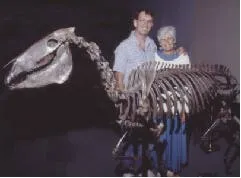 A skeleton of an Equus species is displayed.*An Equus skeleton from the Leisey locality in Florida, created by Steve and Sue Hutchins.*
The diverse array of living equines includes:
- Zebras: Equus quagga, Equus grevyi, and Equus zebra. These striped equines are exclusively found in Africa.
- Asses: Equus africanus (African wild ass), Equus hemionus (Onager or Asiatic wild ass), and Equus kiang (Tibetan wild ass). Wild asses inhabit parts of Asia and Africa.
- Horses: The domestic horse (Equus ferus caballus) and Przewalski’s horse (Equus przewalskii).
A notable distinction exists between wild and domesticated equines: wild species generally possess short manes, whereas domesticated horses are characterized by their long manes. Przewalski’s horse is the only truly wild horse species, residing in the grasslands of Central Asia. Other populations referred to as “wild horses” are typically feral animals, meaning they are descendants of domesticated horses that have escaped into the wild.
While horses thrived in North America for millions of years, they became extinct on the continent approximately 10,000 years ago.
Fossil Evidence and Identification
Fossil teeth of Equus provide valuable insights into the evolutionary history of these animals. By comparing fossil teeth to illustrations of typical Equus tooth characteristics, paleontologists can identify the species they most closely resemble. For instance, a fossil tooth exhibiting a deep ectoflexid and a V-shaped linguaflexid is indicative of a zebra.
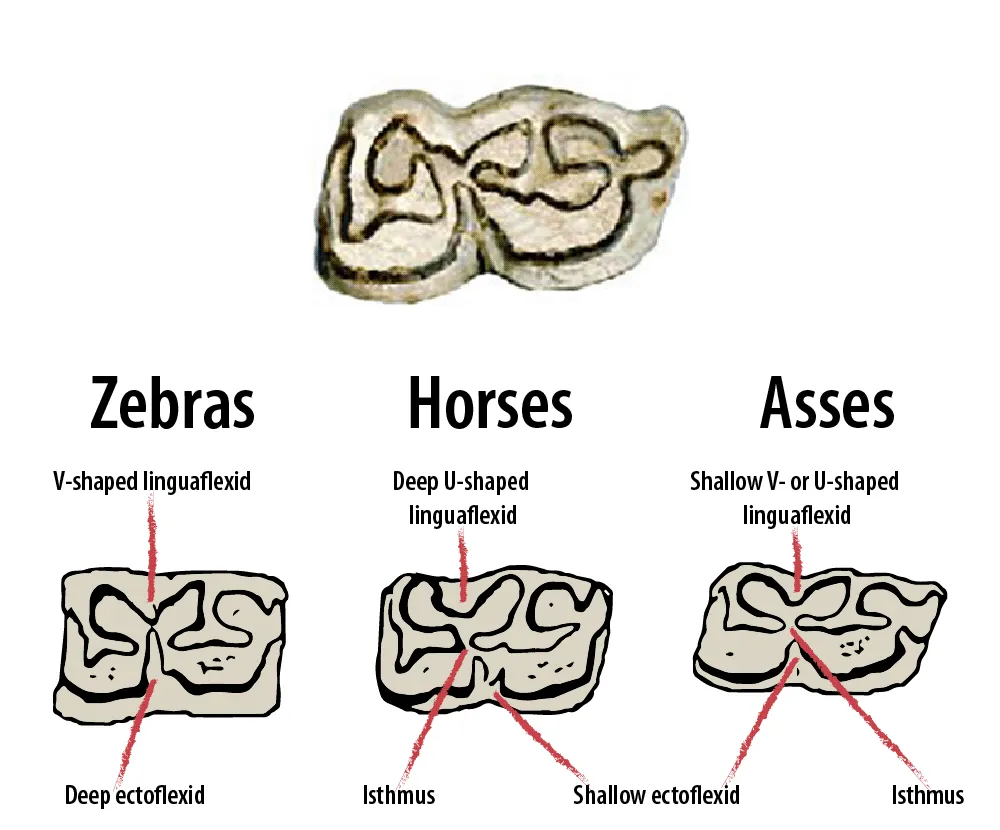 A comparison of fossil teeth, with one resembling a zebra's.*This fossil tooth comparison shows similarities to zebra dentition.*
The study of Equus fossils, such as those unearthed from the Leisey locality in Florida, contributes significantly to our understanding of equine evolution and distribution. These discoveries, often brought to life through the skilled craftsmanship of individuals like Steve and Sue Hutchins, are vital for museum exhibits and scientific research.
Understanding the Equus Species
Equus quagga is the plains zebra, characterized by its distinctive stripes.
Equus kiang, the Tibetan wild ass, is a large wild ass native to the Tibetan plateau.
Equus grevyi, Grevy’s zebra, is the largest living wild equid, known for its narrow stripes and large ears.
Equus zebra, the mountain zebra, is found in southwestern Africa.
Equus africanus, the African wild ass, is the ancestor of the domestic donkey.
Equus przewalskii, Przewalski’s horse, is the last truly wild horse.
Equus ferus caballus, the domestic horse, has been a companion to humans for millennia.
Equus hemionus, the onager or Asiatic wild ass, inhabits arid and semi-arid regions of Asia.
The fossil record and the study of living species continue to illuminate the fascinating lineage and diversity of the Equus genus.
