
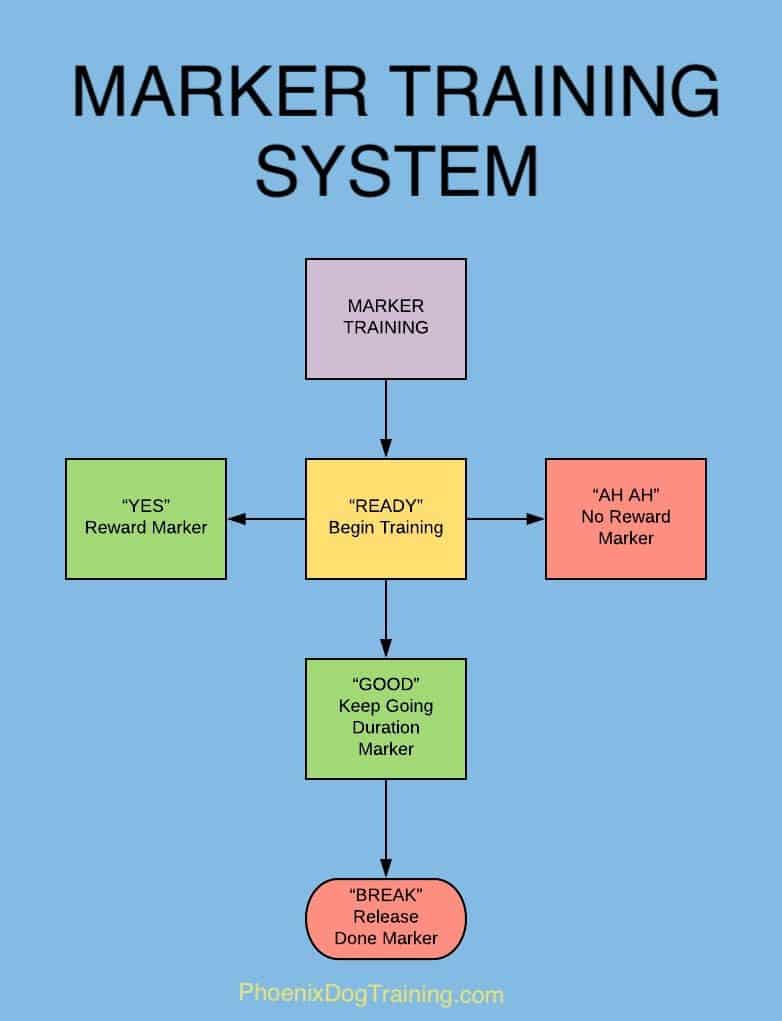
Understanding the nuances of dog training can unlock a deeper bond with your canine companion. While clicker training is widely recognized for its effectiveness, marker words offer a flexible and equally powerful alternative. This guide delves into the core of what a marker word is in dog training, exploring its purpose, how to establish one, and why it’s such a valuable tool in your training arsenal.
The Essence of a Marker Word
At its heart, a marker word in dog training is a consistent, distinct sound or word that signals to your dog, “Yes! That’s exactly what I wanted!” It’s a bridge between a desired behavior and the reward that follows. Think of it as a verbal clicker. Just like a clicker produces a sharp, clear sound, a marker word, when used correctly, provides an unambiguous cue that bridges the gap between the action and the reinforcement. This clear communication is crucial for effective learning, helping your dog understand precisely what behavior earned them a treat, praise, or toy.
Why Use a Marker Word?
The effectiveness of a marker word lies in its ability to provide immediate feedback. Dogs live in the moment, and the sooner they understand which action led to a positive outcome, the faster they learn.
- Clarity and Precision: A well-chosen marker word is short, distinct, and easy for your dog to differentiate from everyday speech. This prevents confusion and ensures your dog is focusing on the specific behavior you’re reinforcing.
- Bridging the Gap: Often, there’s a slight delay between your dog performing a behavior and you delivering the reward. The marker word bridges this gap, clearly communicating that the moment the marker was given is what the dog should repeat. This is especially helpful in situations where delivering the reward immediately might be difficult, like during dog training for walking.
- Building Associations: Through consistent pairing with rewards, the marker word becomes a conditioned reinforcer. Your dog learns to associate the word itself with good things, often eliciting an enthusiastic response even before the reward is seen.
- Versatility: Unlike a clicker, a marker word doesn’t require any equipment. This makes it incredibly versatile, allowing you to train your dog anywhere, anytime, using just your voice. Whether you’re practicing basic obedience in the park or working on more complex behaviors, your marker word is always at hand.
How to Establish a Marker Word
Creating a reliable marker word involves a simple yet consistent process. The key is to establish a strong, positive association.
Step 1: Choose Your Word
Select a short, unique word that you don’t use in everyday conversation. Common choices include “Yes,” “Good,” “Okay,” or even a distinct sound like “Bup.” Avoid words that might be part of your regular vocabulary, as this can dilute their meaning for your dog. For instance, if you frequently praise your dog with “good boy!” throughout the day, “good” might not be the best choice for a marker.
Step 2: Load the Marker Word
This is the crucial step where you teach your dog that the marker word predicts a reward.
- Say the word: In a calm, neutral tone, say your chosen marker word (e.g., “Yes”).
- Immediately reward: Within one second, give your dog a high-value treat or a quick toss of a favorite toy.
- Repeat: Do this in short, frequent sessions (a few minutes at a time) throughout the day. Aim for 10-20 repetitions per session.
During this phase, your dog doesn’t need to perform any specific action. You are simply building the association between the word and the reward. Pay attention to your dog’s body language; they should start to perk up, show interest, or anticipate the treat as soon as they hear the marker word. This indicates the association is forming.
Step 3: Using the Marker Word During Training
Once your dog reliably responds to the marker word with anticipation, you can begin using it to reinforce specific behaviors.
- Cue the behavior: Ask your dog to perform a known cue (e.g., “Sit”).
- Mark the moment: The instant your dog performs the desired action (their bottom hits the floor), say your marker word.
- Reward: Immediately follow the marker word with a reward.
- Repeat: Continue this process consistently.
The sequence is always: Cue -> Behavior -> Marker Word -> Reward.
Common Mistakes to Avoid
Even with a straightforward process, some common pitfalls can hinder your progress. Being aware of these can help you troubleshoot and maintain effective training.
- Inconsistent Use: Using the marker word sporadically or for different meanings can confuse your dog. Stick to one word and one clear purpose: marking a correct behavior.
- “Talking” Too Much: Avoid adding extra words or chatter around the marker word. Saying “Yes, good boy, yes, sit, yes, good dog” dilutes the impact of the marker. Keep it clean: Cue -> Behavior -> “Yes” -> Reward.
- Marker Word as Praise: Don’t use your marker word as general praise. Reserve it for marking specific behaviors that earn a reward. General praise can come before or after the marker and reward.
- Delayed Marking: The timing is critical. If you mark too late, your dog might not associate the marker with the correct behavior. This is where the quick, consistent sound of a clicker can be advantageous, but with practice, verbal markers can be just as precise. This precision is key to techniques like how to clicker train dog and also applies to verbal markers.
- Using Everyday Words: As mentioned, choosing a word you use frequently will lead to confusion. Your dog won’t understand when you’re marking a behavior versus just talking to them.
Marker Words vs. Clicker Training
Both marker words and clickers serve the same fundamental purpose: to precisely mark a behavior and signal an upcoming reward. The choice between them often comes down to personal preference and training context.
- Clicker: Offers a distinct, unchanging sound that is easy for dogs to discern. It’s a tool you must carry. Some trainers find it easier to maintain precise timing with a clicker.
- Marker Word: Requires no equipment, making it incredibly convenient. It relies on your voice’s tone and consistency. However, the human voice can vary, and if not used carefully, the marker word can be less distinct than a click.
Many trainers use a combination of both, perhaps using a clicker for in-home training and a marker word for outdoor or spontaneous training opportunities. If you’re just starting, consider trying both to see which feels more natural and effective for you and your dog. For those who prefer a verbal cue, understanding how to properly train a dog involves mastering such communication tools.
Beyond Basic Obedience: Advanced Applications
The utility of marker words extends far beyond basic commands like “sit” or “stay.” They are invaluable for shaping complex behaviors, teaching tricks, and modifying unwanted habits.
- Shaping: This involves reinforcing successive approximations of a desired behavior. For instance, if you’re teaching your dog to fetch a specific toy, you might first mark and reward them for looking at the toy, then for moving towards it, then for touching it, and so on, gradually building up to the full fetch.
- Trick Training: Teaching intricate tricks often involves breaking them down into smaller steps, each of which can be marked and rewarded.
- Problem Behavior Modification: Marker words can be used in conjunction with counter-conditioning and desensitization techniques to help change a dog’s emotional response to triggers, such as the sound of the doorbell or the sight of another dog.
Essentially, any time you want to communicate clearly and precisely with your dog about a specific action they’ve performed, a marker word can be your go-to tool. It’s a foundational element for many effective training methodologies, including those discussed in little rock dog training contexts where clear communication is paramount.
Conclusion: The Power of a Simple Word
A marker word is more than just a training gimmick; it’s a powerful communication tool that fosters clear understanding between you and your dog. By consistently and accurately using a chosen marker word, you can accelerate your dog’s learning, build a stronger training relationship, and open the door to teaching a vast array of behaviors and tricks. Whether you’re a seasoned trainer or just embarking on your dog’s training journey, mastering the art of the marker word is a rewarding endeavor that will benefit both you and your four-legged friend. Remember, the goal is always to build a positive, trusting relationship, and effective communication is the cornerstone of that connection.
