
Crate training a dog is a method of house-training and management that utilizes a dog’s natural denning instincts. Essentially, it means teaching your dog to view a crate as a safe, comfortable den rather than a cage. This process involves gradually accustoming your dog to spending time in the crate, associating it with positive experiences, and using it as a tool for potty training, preventing destructive behaviors when unsupervised, and providing a secure space for your canine companion. It’s a foundational aspect of responsible dog ownership, fostering a harmonious relationship between you and your pet.
Understanding the Denning Instinct
Dogs, much like their wolf ancestors, have an innate instinct to seek out and maintain a den – a safe, enclosed space to rest and feel secure. A crate taps into this natural behavior, offering a private sanctuary for your dog. When done correctly, crate training doesn’t involve punishment; instead, it’s about building a positive association with the crate, making it a place your dog wants to be. This understanding is crucial for successful implementation.
Why Crate Training is Beneficial
The benefits of crate training extend far beyond simple house-training. It can be an invaluable tool for:
- Potty Training: Dogs are naturally reluctant to soil their sleeping area. A properly sized crate helps prevent accidents indoors by encouraging your dog to hold it until they are let outside.
- Preventing Destructive Behaviors: Boredom, anxiety, and excess energy can lead to chewing, digging, and other destructive habits. A crate provides a safe confinement when you can’t supervise your dog, preventing them from damaging your home.
- Creating a Safe Haven: For dogs who may be anxious, fearful, or recovering from surgery, a crate can be a personal retreat where they can relax without feeling overwhelmed.
- Travel: A crate can make traveling with your dog much easier and safer, whether by car or air, as it provides a familiar and secure space.
- Management During Introductions: When introducing a new dog to your home or to existing pets, a crate can help manage the transition safely.
How to Introduce Your Dog to the Crate
The key to successful crate training is patience and positive reinforcement. Rushing the process or forcing your dog into the crate can create negative associations.
Choosing the Right Crate
- Size Matters: The crate should be just large enough for your dog to stand up, turn around, and lie down comfortably. If the crate is too large, your dog may use one end as a potty area and the other as a sleeping space. Many crates come with dividers to adjust the size as your puppy grows.
- Type of Crate: Wire crates offer good visibility and ventilation, while plastic or “den-style” crates can provide a more den-like feel. Consider your dog’s personality and your living situation.
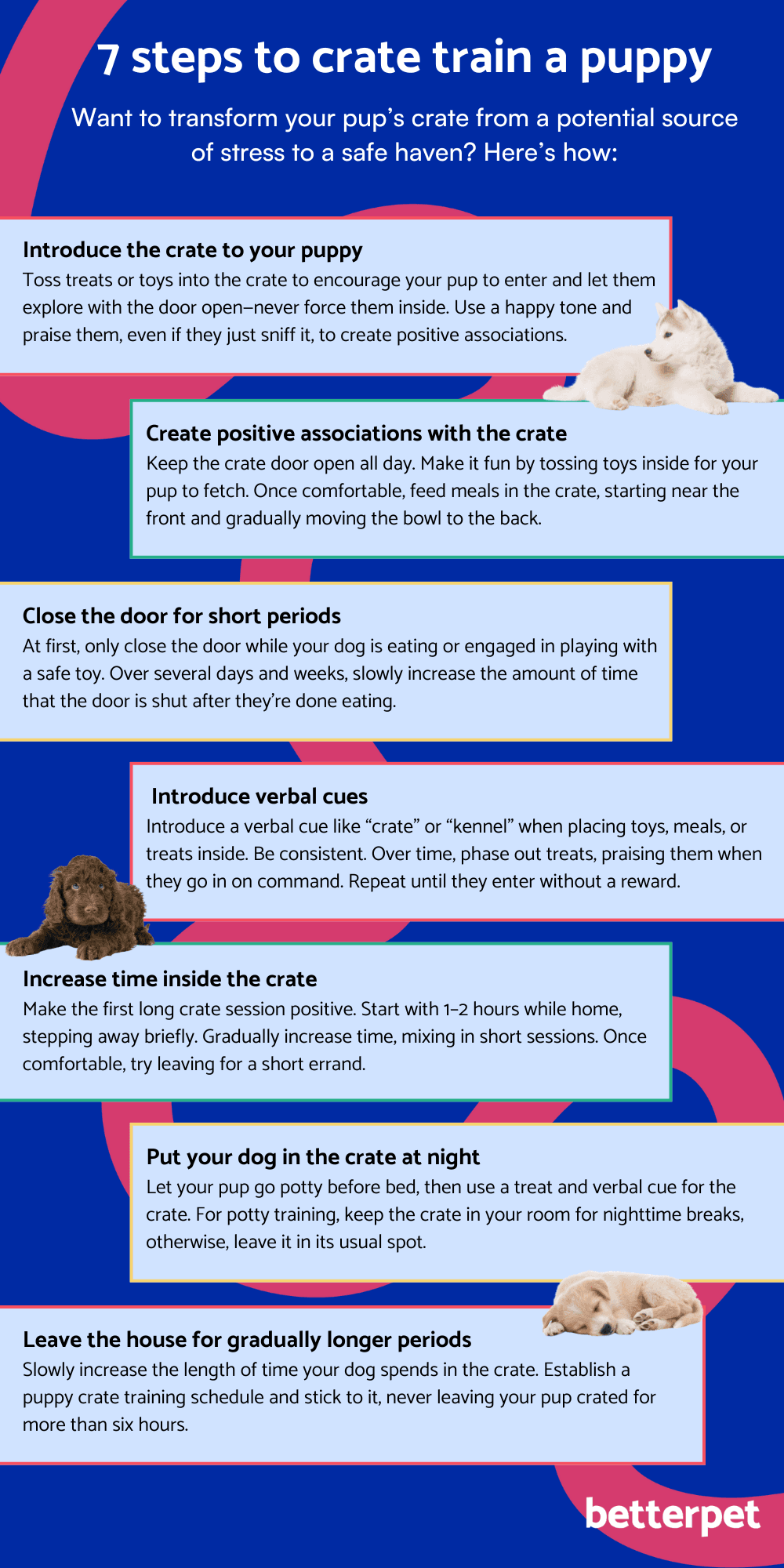
Step-by-Step Crate Introduction
- Make it Inviting: Place comfortable bedding, a few favorite toys, and perhaps a treat-filled KONG inside the crate. Leave the crate door open initially.
- Positive Associations: Toss treats or small, high-value food rewards into the crate. Encourage your dog to go in on their own to retrieve them. Feed your dog their meals inside the crate.
- Short Durations: Once your dog is comfortable going in and out, start closing the door for very short periods – just a few seconds at first. Gradually increase the time as your dog remains calm and relaxed.
- Associate with Calmness: When your dog is inside the crate and quiet, offer praise. If they begin to whine or bark excessively, wait for a brief pause in the noise before responding. You want to reward quiet behavior.
- Gradual Increase in Time: As your dog becomes more accustomed to the crate, you can leave them for longer periods, such as while you run a short errand. Never leave a young puppy crated for more than a few hours at a time.
Training a dog to come when called is a separate but related skill that benefits from a dog’s overall obedience and comfort with commands.
Common Crate Training Challenges and Solutions
Even with the best intentions, some dogs may resist crate training. Here’s how to address common issues:
Crate Anxiety or Panic
If your dog shows signs of distress (pacing, excessive barking, drooling, destructive attempts to escape), they may be experiencing crate anxiety.
- Solution: Revisit the initial introduction steps. Make the crate an even more positive place. Ensure the crate is not too large. Consider a plastic or den-style crate if a wire crate seems too open. Consult with a professional dog trainer or a veterinarian if anxiety is severe.
Refusal to Enter the Crate
Some dogs are simply hesitant to enter a confined space.
- Solution: Use high-value treats and toys to entice them. Practice “101 Downs” with your dog, a positive reinforcement method that can help build confidence. Never force or drag your dog into the crate, as this will reinforce their fear.
Accidents in the Crate
This often indicates the crate is too large, or the dog is being left in for too long.
- Solution: Ensure the crate is the appropriate size. If your dog is having accidents, you may need to shorten the duration they are crated and take them out more frequently for potty breaks. Clean any soiled bedding thoroughly to remove odors.
Whining or Barking
While some whining is normal as a dog adjusts, persistent barking can be disruptive.
- Solution: Teach your dog that barking doesn’t immediately get them let out. Wait for a moment of silence before opening the door. Ensure your dog has had sufficient exercise and mental stimulation before crating.
For issues like dog on dog aggression, which may stem from anxiety or lack of socialization, professional guidance on managing and correcting the behavior is essential, and crate training can be a component of that management.
Crate Training for Puppies vs. Adult Dogs
The principles of crate training are similar for puppies and adult dogs, but there are some key differences:
Puppies
- Potty Training: Puppies have very small bladders and need frequent potty breaks, typically every 1-3 hours, depending on their age.
- Supervision: Puppies require more supervision and shorter crate durations to prevent accidents and separation anxiety.
- Growth: You may need to adjust the crate size using dividers as the puppy grows.
Adult Dogs
- Previous Experiences: Adult dogs may have pre-existing negative associations with crates from previous experiences. Patience and positive re-introduction are crucial.
- House-Training: If the adult dog is not house-trained, crate training can be a highly effective tool, but it requires consistency and understanding of their previous habits.
- Behavioral Issues: For dogs with separation anxiety or other behavioral problems, crate training may be part of a broader behavior modification plan developed with a professional.
When considering how to train a waterfowl dog, understanding their need for clear boundaries and positive reinforcement is key, and crate training can contribute to this foundation of discipline.
Is Crate Training Always Necessary?
While highly recommended by many trainers and veterinarians, crate training is not mandatory for every dog. Some dogs adjust perfectly well to home life without a crate. However, for dogs with certain behavioral issues, or for owners who need a reliable method for potty training and management, it’s an invaluable tool.
Ultimately, What Does Crate Training A Dog Mean? It means committing to a process that builds trust, security, and a deeper bond with your canine companion, using their natural instincts to create a positive and structured environment. It requires understanding, patience, and consistent positive reinforcement.
The Importance of Positive Reinforcement in Dog Training
Positive reinforcement is the cornerstone of effective and humane dog training, including crate training. This approach focuses on rewarding desired behaviors, making it more likely that those behaviors will be repeated. For crate training, this means:
- Treats and Praise: Using high-value treats, enthusiastic praise, and gentle petting to reward your dog for calm behavior in the crate.
- Toys: Offering special toys or long-lasting chews (like a stuffed KONG) that are only available when the dog is in the crate.
- Verbal Encouragement: Using a calm, happy tone of voice when encouraging your dog to enter the crate or when they are settled inside.
This method not only makes the crate a pleasant experience but also strengthens the bond between you and your dog, as they learn to associate you with positive outcomes.
When discussing good dog dog training practices, the integration of positive reinforcement, clear communication, and understanding the dog’s individual needs are paramount, with crate training being one aspect of a holistic approach.
Conclusion: Building a Foundation of Trust with Your Dog
Crate training, when approached with understanding and patience, is far more than just a containment method. It’s a powerful tool for building trust, encouraging independence, and ensuring your dog’s safety and well-being. By tapping into their natural denning instincts and using positive reinforcement, you can transform the crate into a cherished sanctuary for your furry friend. Remember, consistency and a focus on positive experiences are key to unlocking the many benefits of crate training, leading to a happier, more well-adjusted dog and a more harmonious life together.
