
It’s a common worry for any pet parent: your beloved canine, usually eager for mealtime, suddenly turns their nose up at food. Just like humans, dogs can experience a loss of appetite, especially when they’re feeling under the weather. While a single missed meal might not be cause for alarm, prolonged refusal to eat can be a serious indicator of underlying issues, leaving you wondering, “What Can I Do To Make My Dog Eat?” This comprehensive guide from Dog Care Story will walk you through understanding why your dog might not be eating, effective strategies to encourage them, appropriate foods for a sensitive stomach, and crucial signs that warrant a visit to the veterinarian.
Understanding Why Your Dog Won’t Eat
When your dog stops eating, it’s natural to feel concerned. Understanding the potential reasons behind their loss of appetite is the first step in addressing the problem.
Common Reasons for Loss of Appetite
Several factors can lead to a dog refusing to eat. These can range from minor issues to more serious health concerns:
- Illness or Infection: This is one of the most frequent culprits. Many illnesses, from minor infections to more serious diseases, can cause nausea, discomfort, or general malaise, leading to a reduced desire to eat.
- Disease: Chronic conditions like kidney disease, liver disease, or even dental problems can significantly impact a dog’s appetite. Pain, inflammation, or the systemic effects of the disease can make eating unappealing.
- Post-Surgery Recovery: Dogs often experience decreased appetite as they recover from surgery, due to pain, medication side effects, or general disorientation.
- Emotional Stress or Trauma: Dogs are sensitive creatures. Stressors such as mourning the loss of a companion, changes in routine, a new pet or family member, or even loud noises can cause anxiety that suppresses appetite.
- Aging: As dogs age, their metabolism, sense of smell, and overall energy levels can decrease, leading to a natural reduction in food intake. Dental issues common in older dogs can also make chewing painful.
- Picky Eating Habits: Some dogs are simply picky eaters. This might be a learned behavior if they’ve been offered too many table scraps or if their diet frequently changes.
- Medication Side Effects: Certain medications can cause nausea or reduce appetite as a side effect. Always check the instructions for any drugs your dog is taking.
- Environment or Food Quality: A sudden change in environment, a new food brand they dislike, or even spoiled food can make your dog reluctant to eat.
When to Seek Veterinary Attention: Symptoms to Watch For
While a temporary loss of appetite can be normal, certain accompanying symptoms signal an urgent need for professional veterinary care. If your dog exhibits any of the following alongside not eating, contact your veterinarian as soon as possible for an examination and potential testing:
- Vomiting: Especially if it’s persistent, contains blood, or is accompanied by abdominal pain.
- Lethargy: Significant decrease in energy levels, appearing tired, weak, or unresponsive.
- Weight Loss: Noticeable reduction in body mass over a short period.
- Diarrhea: Particularly if severe, bloody, or prolonged.
- Gagging or Difficulty Swallowing: Could indicate an obstruction or pain in the throat.
- Wheezing or Coughing: May point to respiratory issues or aspiration.
- Changes in Drinking Habits: Refusal to drink water or excessive thirst.
- Changes in Behavior: Hiding, increased aggression, or unusual restlessness.
- Abdominal Pain or Swelling: May indicate an internal injury or condition.
Early detection and intervention are critical for a speedy recovery.
Practical Strategies to Encourage Your Dog to Eat
Once you’ve ruled out immediate emergencies or while awaiting veterinary advice, there are several methods you can try at home to encourage your dog to eat. Which method works best will depend on your dog’s individual personality and the cause of their reluctance. Remember, patience is key.
Give It Time: The “Wait and See” Approach
Sometimes, the simplest approach is the most effective. If your dog won’t eat their current meal, the first step is often to allow them some time. Healthy adult dogs can typically go for a day or two without eating anything, as long as they are consistently drinking water. It’s normal for a dog to occasionally turn down a meal, much like people aren’t always hungry.
Consider leaving your dog’s food out for a short period (e.g., 15-30 minutes) and then removing it. This establishes a feeding routine and discourages picky eating. If they still don’t eat, try offering it again at the next scheduled mealtime. Just be sure they are drinking water consistently, as dehydration is a much more immediate concern than a skipped meal.
Tempting with Special Treats or “Human” Food
If your dog hasn’t been feeling well or simply needs an incentive, you could try treating them with foods they don’t normally get, or highly palatable options. A small amount of plain, cooked human food can be so irresistible that your dog might actually eat something.
Start with just a tiny portion to see if they show interest. If so, you might try mixing a small amount with their existing dry food to encourage them to consume their regular diet. Remember, moderation is crucial to avoid upsetting their stomach further or creating an expectation for human food.
For more insights on what human foods are generally safe for your canine companion, you can read our article on what can we give dogs to eat.
Changing Up Their Regular Diet
If your dog consistently has a hard time eating their dry food, the brand or type might not be a good fit. Dogs can get bored with the same food, or a particular formulation might not appeal to them.
- Try a New Brand or Flavor: Look for sample packs at your local pet store to see if a different brand or flavor stimulates their appetite.
- Introduce Wet Food: Many dogs find wet food far more appealing than dry kibble. Its stronger aroma and softer texture can be very enticing and can help stimulate a reluctant appetite. Wet food also offers the added benefit of increasing their hydration.
- Mix It Up: A common strategy is to mix a small amount of wet food with their regular dry kibble. This can make the dry food more palatable without completely overhahauling their diet.
Enhancing Palatability: Warming Food & Adding Broth
A sick dog’s senses of smell and taste can be dulled, making food less appealing. Enhancing the food’s aroma and flavor can often make a big difference.
- Heat Up Your Dog’s Food: Gently warming your dog’s food (make sure it’s not too hot!) increases its smell and can make it more palatable. A more fragrant meal can help entice your dog to take that first bite, and improved taste will encourage them to continue eating.
- Add Broth: Adding warm, unsalted bone broth or chicken broth to your dog’s food not only helps with smell and palatability but also adds a boost of flavor and hydration. If your dog has grown tired of their current food’s taste, broth can provide the novel flavor needed to get them eating again. Ensure any broth used is low-sodium and free of onions, garlic, or other dog-toxic ingredients.
The Comfort of Hand-Feeding
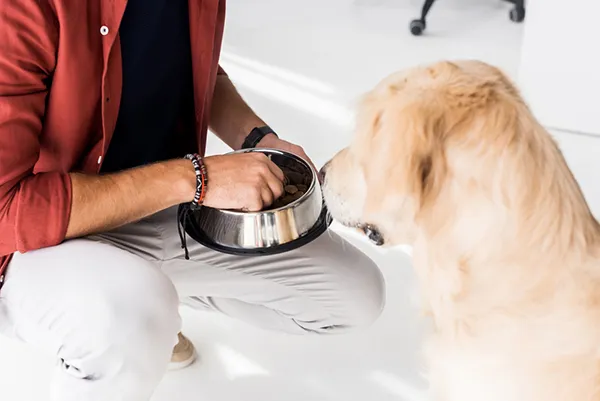 An owner gently hand-feeding small kibble pieces to their dog
Sometimes, a dog who isn’t feeling well just needs a little extra comfort and encouragement. Try hand-feeding individual pieces of your dog’s food to them. The physical closeness and gentle interaction can be very reassuring for a sick pet and may make them more willing to eat. This process might take a while, but with your encouragement, your dog may eventually feel comfortable enough to eat from their bowl on their own.
Considering Medication’s Impact on Appetite
If your dog is currently on medication, it’s essential to consider whether the drugs might be contributing to their loss of appetite. Some medications, particularly antibiotics, can cause nausea or reduce hunger as a side effect.
Carefully read all instructions for any medications your dog is taking. Some medications are best given on an empty stomach, while others should be given with food to minimize side effects. If the medication is causing stomach upset, your vet might recommend waiting at least fifteen minutes after administering it before offering food. This allows the medicine to settle in their stomach and coat it fully before any food arrives, potentially reducing nausea. Never alter your dog’s medication schedule or dosage without consulting your vet.
The Instinctive Act of Eating Grass
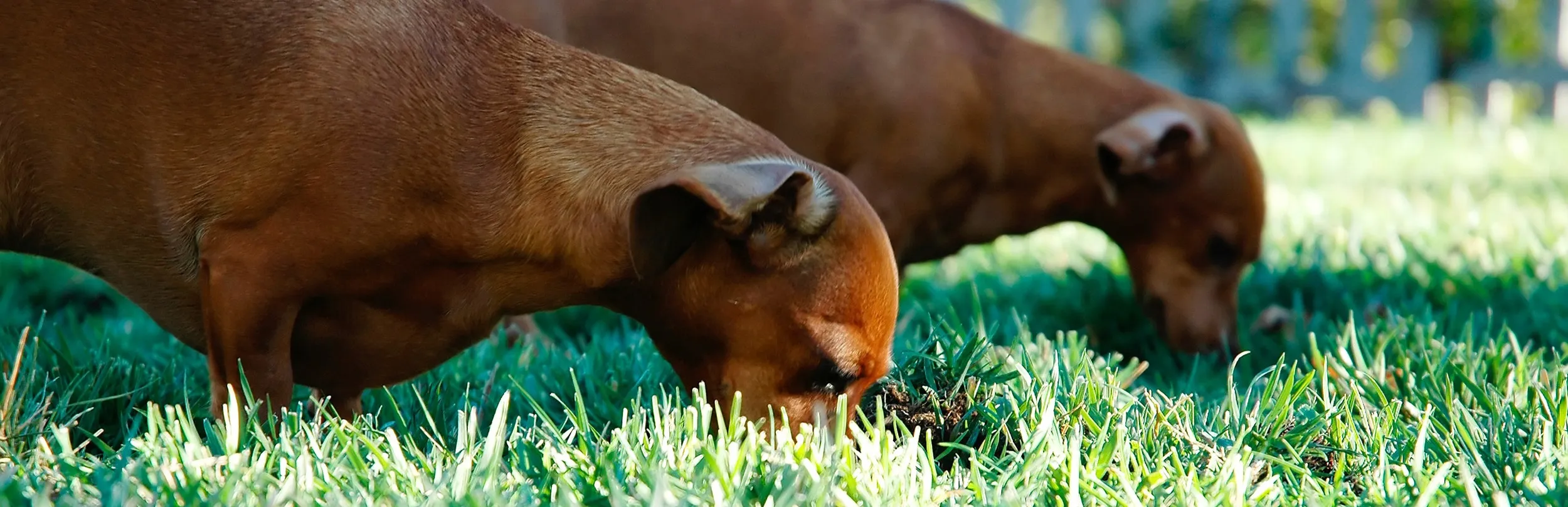 Two brown dachshunds intently eating grass in a yard
If your dog refuses their normal food but keeps trying to eat grass, you should generally let them. Eating grass can sometimes make a dog vomit, which, in certain situations, might actually be a good thing if it helps them expel whatever is upsetting their stomach. Your dog’s instincts might be guiding them to eat grass for this purpose. Just make sure to keep your dog well-hydrated, especially if they do vomit.
However, if your dog vomits more than twice, or consistently eats grass every time they are outside, this could be a sign of a more serious underlying issue, and you should take them to the vet. Excessive grass eating coupled with loss of appetite could indicate a range of problems from gastric upset to nutritional deficiencies.
When Professional Help is Needed (Vet Visit)
Taking your dog to the vet is always a good idea if they are sick and won’t eat, especially if home remedies aren’t working or if other symptoms are present. Your veterinarian is best equipped to:
- Diagnose the Ailment: They can perform an examination and recommend diagnostic tests (blood work, X-rays, ultrasound) to pinpoint what is causing your dog’s loss of appetite.
- Provide Treatment: They can prescribe appropriate medications to address the underlying illness, pain, or nausea.
- Recommend Appetite Stimulants: If your dog has refused food for a prolonged period, or if they have a health condition that suppresses appetite, your vet can prescribe or recommend a medicinal appetite stimulant. These can work by reducing nausea or by mimicking the hormones that make your dog feel hungry. The correct stimulant will depend on the specific cause of your dog’s anorexia.
Stimulating Appetite with Veterinary Prescriptions
For dogs with persistent appetite issues due to chronic conditions, post-surgical recovery, or ongoing illnesses, your veterinarian might recommend appetite stimulants. These medications are designed to either reduce nausea that’s preventing eating or to directly stimulate hunger signals. There are various types available, and your vet will choose the most appropriate one based on your dog’s specific health needs and diagnosis. This method requires a vet consultation to ensure the correct stimulant is prescribed and administered safely.
Syringe Feeding: A Last Resort
Syringe feeding is a more drastic measure and should only be considered if other methods have failed and always under veterinary guidance. If your dog hasn’t eaten in two days and is showing signs of weakness or severe weight loss, your vet might recommend trying to feed them liquids via a syringe. This could include water, broths, or watered-down wet food designed for sick animals.
It’s crucial to speak with a vet before attempting syringe feeding, as it needs to be done correctly to prevent aspiration pneumonia (food entering the lungs) or causing further stress to your pet. Your veterinarian can demonstrate the proper technique during an examination to ensure your pet’s safety.
What to Feed a Sick Dog: Gentle & Appealing Options
When your dog is sick and refusing their regular food, offering bland, easily digestible, and highly palatable options can make a big difference. These foods are generally gentler on an upset stomach and more enticing.
Wet Food: A Hydrating Alternative
If your dog typically eats dry kibble, introducing wet food can be an excellent strategy. For many dogs, wet food is a highly appealing treat due to its strong aroma and softer texture. As a bonus, its high water content can help keep your dog hydrated, which is crucial when they are not feeling well. Choose high-quality wet food formulations designed for sensitive stomachs if possible, and ensure it’s free from common allergens or irritants.
Safe Baby Food Choices
Plain, meat-based baby food can be easy to eat, tasty, and nutritious for dogs. Look for baby foods that contain only meat (like chicken, lamb, or turkey) and are free from onion, garlic, or any other seasonings. These ingredients are toxic to dogs and must be avoided. Always double-check the ingredient list. Its smooth consistency makes it easy to swallow, even for dogs with sore mouths or throats.
Nourishing Broths (Bone and Chicken)
Broths are an excellent way to provide some nutrients and hydration when a dog has a suppressed appetite or an upset stomach.
- Bone Broth: Very mild, yet nutritious, bone broth is often well-tolerated by an upset stomach. It can provide essential minerals and amino acids, making it a good way to get some much-needed nourishment into your dog.
- Chicken Broth: Unsalted chicken broth tastes good to most dogs and is typically easy on the stomach. If the cause of the loss of appetite is gastric upset, plain chicken broth can be a soothing and palatable option. Ensure it’s low in sodium and free of any additives like onions or garlic.
Shredded Chicken & Chicken and Rice: Bland & Digestible
These two options are classic go-to foods for dogs with sensitive stomachs, often recommended by veterinarians.
- Shredded Chicken: Plain, boiled, unseasoned shredded chicken is a big incentive for most dogs to eat. It’s easy to digest and very palatable. Ensure it’s thoroughly cooked and cut into small, manageable pieces to prevent choking. Avoid any seasonings, as these can further upset a dog’s stomach.
- Chicken and Rice: This bland diet is a staple for a reason. White rice (not brown, which is harder to digest) and boiled, unseasoned chicken are gentle on the digestive system. Most commercial dog foods even use these as base ingredients. Make sure the chicken is boiled thoroughly and cut into small pieces. The blandness helps calm an irritated gut while still providing some energy.
The Benefits of Pumpkin
Pure, canned pumpkin (not pumpkin pie filling!) is a fantastic source of fiber and contains numerous vitamins (A, C, iron, magnesium). It’s excellent for regulating a dog’s digestion, whether they’re experiencing diarrhea or constipation. For a sick dog, a few tablespoons of unseasoned canned pumpkin can be a gentle way to introduce nutrients and support gut health. Always avoid pumpkin pie filling, which contains sugars and spices that can further upset your dog’s stomach.
Beyond Food: The Critical Importance of Hydration
While your focus might be on getting your dog to eat, water intake is arguably even more crucial. Dogs can survive several days without food, but their tolerance for not drinking water is much shorter, typically only three days at most. Dehydration can quickly worsen any underlying illness.
It’s important to get your dog medical attention as soon as possible if they are not eating or drinking for 48 hours or more. However, never force your dog to drink, as this can lead to aspiration pneumonia if water enters their lungs.
Encouraging Water Intake
If your dog isn’t showing interest in their water bowl, try these tricks to encourage them to drink:
- Offer Ice Cubes: Many dogs find licking ice cubes intriguing and refreshing.
- Water on Your Fingers: Gently offer small amounts of water from your fingers, which can be less intimidating than a bowl.
- Pedialyte (Vet-Approved): If recommended and approved by your vet, Pedialyte (unflavored) can help replenish electrolytes, but it should only be given under professional guidance due to its sugar content.
- Add Ice to Water Bowl: Cold water can be more appealing.
- Multiple Water Sources: Place several water bowls around the house in quiet, easily accessible spots.
- Use a Water Fountain: Some dogs prefer running water.
Recognizing Signs of Dehydration
Keep a close eye on your dog for any signs of dehydration, as it can escalate rapidly and be life-threatening. Common symptoms to familiarize yourself with include:
- Loss of Appetite: This is often an early sign.
- Panting: Excessive panting can indicate dehydration.
- Lethargy and Weakness: Reduced energy and general weakness.
- Loss of Skin Elasticity: Gently pinch the skin between your dog’s shoulder blades. If it doesn’t snap back quickly, they may be dehydrated.
- Dry and Sticky Gums: Healthy gums should be moist and slick.
- Dry Nose: A typically moist nose may appear dry.
- Sunken, Dry-Looking Eyes: The eyes may appear less bright and somewhat sunken.
Seek immediate veterinary attention if your pet shows signs of severe dehydration. Your veterinarian can provide subcutaneous fluids or intravenous fluids to rehydrate them rapidly while also addressing the original cause of their sickness.
Foods to Avoid: What Not to Feed Your Dog (Especially When Sick)
When your dog is unwell, their digestive system is already compromised. It’s crucial to be extra vigilant about what they consume, as certain foods can exacerbate their condition or be toxic. Avoid anything too rich or heavily seasoned, as these can upset an already sensitive stomach. If your dog is sick, check that they haven’t had access to any of the following common household items or human foods:
| Don’t Feed Your Dog: | Because… |
|---|---|
| Xylitol | A sugar substitute highly toxic to dogs, causing a rapid drop in blood sugar (hypoglycemia) and liver failure. |
| Avocado | Contains persin, which can be toxic to some animals. The large pit is also a choking hazard and can cause an intestinal obstruction. |
| Grapes or Raisins | Can cause acute kidney failure in dogs, even in small amounts. The exact toxic component is unknown. |
| Caffeine | Found in coffee, tea, soda, and energy drinks. Can cause hyperactivity, vomiting, heart palpitations, tremors, and can be fatal. |
| Onions or Garlic | Members of the allium family, they contain compounds that can cause red blood cell damage, leading to anemia or poisoning. |
| Alcohol | Even small amounts can cause vomiting, diarrhea, central nervous system depression, tremors, breathing problems, coma, and potentially death. |
| Milk or Other Dairy | Many dogs are lactose intolerant, leading to digestive issues like diarrhea, vomiting, and stomach upset. |
| Human Medication | Over-the-counter or prescription human medications can be toxic and even fatal to dogs due to different metabolic processes and dosages. |
| Chocolate | Contains theobromine, which dogs metabolize slowly. Can cause vomiting, diarrhea, hyperactivity, seizures, and heart problems, potentially leading to death. |
| Sugar | Sugary foods can lead to weight gain, dental problems, and can contribute to conditions like diabetes and pancreatitis. |
| Macadamia Nuts | Can cause temporary weakness, muscle tremors, vomiting, fever, and central nervous system depression. |
| Raw Eggs | Carry a risk of salmonella or E. coli bacteria. Raw egg whites also contain avidin, which can interfere with biotin absorption over time. |
| Raw Fish or Meat | Can contain parasites, bacteria (like salmonella and E. coli), and in some fish, thiaminase, which breaks down thiamine (Vitamin B1). |
| Uncooked Yeast Dough | Can expand in the dog’s stomach, causing painful bloating and potentially a life-threatening bloat (gastric dilation-volvulus). The yeast fermentation also produces alcohol, which can cause alcohol poisoning. |
| Fat Trimmings | Can be difficult to digest and may lead to pancreatitis, a painful inflammation of the pancreas. |
| Spices, Baking Powder, or Baking Soda | Many common spices and leavening agents can be toxic to dogs or cause severe gastrointestinal upset. |
| Bones | Cooked bones can splinter and cause choking or internal injuries to the digestive system. Raw bones also carry bacterial risks and can cause dental damage. |
| Fruits with Seeds or Pits | Seeds and pits (like those from apples, cherries, apricots, peaches) can contain cyanide and pose a choking hazard or cause intestinal obstruction. |
| Salt | Too much salt can lead to sodium ion poisoning, causing excessive thirst, urination, vomiting, diarrhea, tremors, seizures, and potentially death. |
For more specific information on potentially harmful foods, you can refer to our detailed articles: what is the one meat that dogs should avoid, what meat should u never feed your dog, and what meat you should not feed your dog. Always consult your vet about your dog’s dietary needs, especially when they are unwell. Our guide on what can dogs eat when sick offers safe options.
Frequently Asked Questions (FAQs)
When Should I Not Feed My Sick Dog?
If your dog has been vomiting or has had diarrhea, it’s generally best to withhold food for at least 12 hours after the last episode. Feeding them too soon could further upset their stomach and trigger more vomiting or diarrhea. Always ensure they have access to fresh water during this time. If vomiting or diarrhea persists for two days or more, or if your dog seems weak or dehydrated, consult your vet immediately.
How Much Should I Feed My Sick Dog?
 A serene Golden Retriever laying on a comfortable bed
The amount you should feed a sick dog depends on their size, the type of sickness, and their recovery stage. It’s often best to start with very small, frequent meals rather than large ones. For example, offer a tablespoon or two of bland food every few hours initially, gradually increasing the amount as they tolerate it. Consult with your veterinarian for specific guidance, but also let your dog guide you. If they eat a small amount and then refuse more, wait a while before offering food again. The goal is to get some nutrients in without overwhelming their digestive system.
Do Sick Dogs Lose Their Sense of Smell?
Smell is a dog’s most powerful sense, and its keenness can be influenced by various factors. While illness itself doesn’t necessarily cause a loss of smell, conditions like allergies, respiratory infections (e.g., kennel cough), or chronic nasal issues can impair it. Additionally, a dry nose can decrease olfactory sensitivity, and some medications can affect it. If your dog’s sense of smell is reduced, this can make food less appealing, which is why warming food to enhance its aroma can be effective.
What Else Can I Do to Help My Dog Feel Better?
Beyond food, ensuring your dog’s overall comfort and well-being is vital for recovery:
- Provide a Comfortable Resting Spot: Make sure they have a quiet, warm, and comfortable bed to rest on, away from household commotion.
- Gentle Exercise (If Appropriate): If your dog is up to it, short, gentle walks might stimulate their appetite and improve their mood. Avoid strenuous activity.
- Stay Calm: Dogs are incredibly perceptive and can pick up on human emotions. If you are nervous or stressed, your dog will likely feel stressed too. Maintain a calm, reassuring demeanor around them.
- Maintain Routine (Where Possible): Sticking to a somewhat normal routine for walks and quiet time can provide a sense of security.
- Offer Affection: Gentle petting and reassuring words can be very comforting.
How Long Can a Dog Go Without Food?
Healthy adult dogs can typically go for three to five days without food, though this is far from ideal and should not be tested. If your dog has gone two days without food, it is strongly recommended to contact a veterinarian if you haven’t already. More critical than food intake is water intake; dogs cannot survive long without water. Always prioritize hydration.
Should I Feed My Dog Immediately After Vomiting?
No, it is best to withhold food from your dog for at least a few hours (typically 6-12 hours) after they throw up. This allows their stomach to rest and recover. Observe your dog’s behavior during this period for any further vomiting or other concerning symptoms. Once the waiting period is over and they seem stable, you can offer a small amount of bland food and gradually reintroduce their regular diet. Always ensure fresh water is available, even after vomiting.
Should You Force-Feed a Sick Dog?
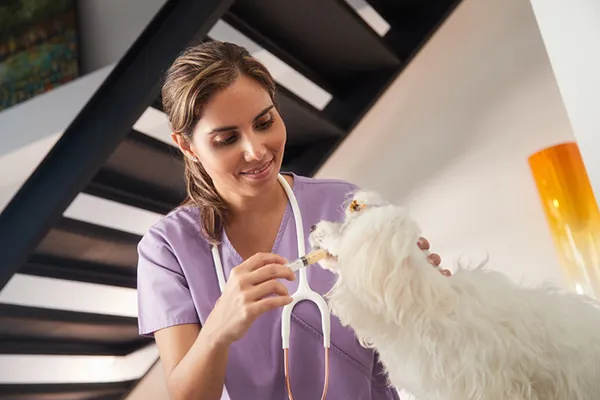 A veterinary technician carefully syringe-feeding a dog during an examination
Force-feeding, particularly with a syringe, should only be attempted as a last resort and only after your veterinarian has examined your pet and specifically recommended or approved it. If your dog has not eaten in more than 48 hours and is becoming weak, a vet might suggest syringe feeding. It’s crucial to learn the correct technique from your veterinarian to prevent aspiration (food entering the lungs), which can lead to serious complications like pneumonia. Your vet can demonstrate how to safely administer liquids or a thin gruel during an examination.
What to Do If Your Dog Still Refuses Food After 48 Hours
If your dog is still refusing food after a full 48 hours, it’s a clear signal that immediate veterinary care is essential. Prolonged anorexia can quickly lead to dehydration, malnutrition, and a worsening of any underlying health condition. An expert team of veterinary professionals can diagnose the root cause of your furry friend’s lack of appetite, provide appropriate treatment, and implement supportive care such as fluid therapy or appetite stimulants, before their condition becomes critical. Do not delay seeking professional help.
