
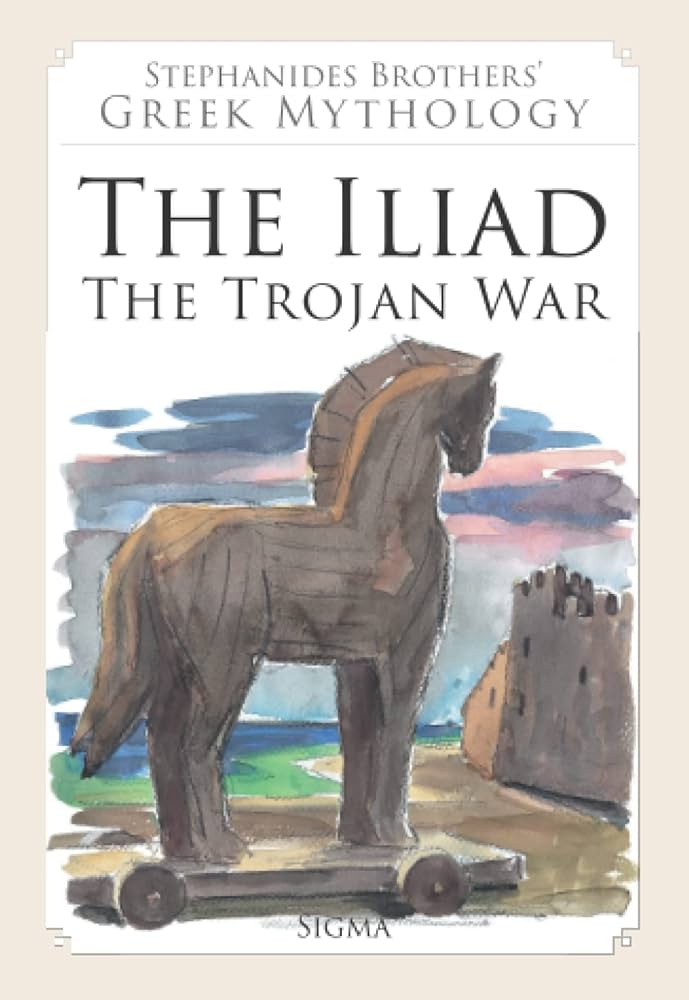
The image of a colossal wooden horse, a cunning gift hiding a deadly secret, is one of the most enduring tales from antiquity. For centuries, it has captivated our imagination as the ultimate symbol of deception and strategic genius. But if you want to read the original account of this brilliant subterfuge, you might ask: What Book Tells The Story Of The Trojan Horse? The answer is surprisingly complex and far more interesting than a single title.
The story isn’t neatly contained in one definitive book from the ancient world. Instead, this legendary tale is pieced together from several epic poems, with different authors focusing on different moments of the saga. The most famous poem about the Trojan War, Homer’s Iliad, famously ends before the horse is ever built. To get the full picture, we must look to other foundational texts of Western literature. This journey through scattered accounts reveals how ancient stories were told and preserved. For a deeper dive into the origins and variations of this legend, the trojan horse myth story offers a comprehensive overview.
The Surprising Truth: It’s Not Just One Book
Contrary to popular belief, there is no single, standalone “Book of the Trojan Horse” written by an ancient author. The tale was part of a grand, sprawling collection of stories known as the Epic Cycle, which detailed the entire Trojan War. Unfortunately, most of these poems are lost to time, surviving only in fragments or summaries by later writers.
The story’s survival depends on two main epic poems that have come down to us, not as the central plot, but as powerful flashbacks and recounted tales within a larger narrative. These are Homer’s Odyssey and, most importantly, Virgil’s Aeneid.
Homer’s Epics: The Foundation of the Myth
Homer is the name most associated with the Trojan War, and for good reason. His two epic poems, the Iliad and the Odyssey, are the cornerstones of Greek mythology. However, they cover different aspects of the saga, and their treatment of the Trojan Horse is very specific.
The Iliad: The War, But Not the Horse
Many people assume the Iliad is the place to find the story of the Trojan Horse. After all, it is the quintessential epic of the Trojan War. The poem is a masterful account of the final year of the decade-long siege of Troy, focusing on the wrath of the Greek hero Achilles and his feud with King Agamemnon. It is filled with dramatic battles, heroic deeds, and the meddling of gods.
However, the Iliad concludes with the funeral of the Trojan hero Hector. It ends before the city falls. The poem details the human cost and brutal reality of the war but leaves the conflict unresolved. There is no mention of the wooden horse, the sack of Troy, or the ultimate Greek victory.
The Odyssey: The First Glimpses of the Horse
The first surviving literary accounts of the Trojan Horse appear in Homer’s second epic, the Odyssey. This poem follows the Greek hero Odysseus on his perilous ten-year journey home after the war. The story of the horse is not told directly but is recounted by characters reflecting on their past glories and traumas.
Two key moments stand out:
- In Book 4, Helen, now back with her husband King Menelaus, recalls the horse. She tells of how she walked around the great wooden structure, calling out the names of the Greek warriors hidden inside, even mimicking the voices of their wives to trick them into revealing themselves. Odysseus, however, kept the men silent and saved the mission.
- In Book 8, at the court of King Alcinous, a blind singer named Demodocus performs a song about the Trojan Horse at Odysseus’s request. The song vividly describes how the Greeks, led by Odysseus, emerged from the horse to open the city gates, leading to Troy’s brutal and tragic downfall. Hearing this tale, the typically stoic Odysseus breaks down in tears, overwhelmed by the memory of the carnage.
These references in the Odyssey are the earliest and most significant accounts we have from a Greek perspective, confirming the story’s place in ancient tradition. They frame the event as a masterstroke of cunning, perfectly fitting for a poem about the clever hero who conceived it, an aspect further explored in the tale of the trojan horse odysseus story.
Virgil’s Aeneid: The Most Detailed Account
While the Odyssey gives us crucial glimpses, the most complete and dramatic telling of the Trojan Horse story comes from the Roman poet Virgil in his epic, the Aeneid. Written centuries after Homer, around 20 B.C., the Aeneid tells the story of the Trojan hero Aeneas and his journey to found Rome after the fall of Troy.
Aeneas’s Harrowing Tale
The entire story of the Trojan Horse is narrated in Book 2 of the Aeneid. Aeneas, having found refuge in the city of Carthage, recounts the final, horrific days of his homeland to Queen Dido. This perspective—from the side of the vanquished Trojans—gives the story a tragic and terrifying weight.
Aeneas’s account includes all the famous elements we know today:
- The Deception: The Greeks pretend to sail for home, leaving the giant wooden horse on the beach as a supposed offering to the goddess Minerva for a safe return.
- The Warning: The Trojan priest Laocoön frantically warns his people not to trust the gift, famously declaring, “Timeo Danaos et dona ferentes” (“I fear the Greeks, even bearing gifts”). In a dramatic scene, giant sea serpents emerge from the ocean to devour Laocoön and his sons, which the Trojans tragically misinterpret as a sign of divine displeasure with his warning.
- The Infiltration: The Trojans, convinced the horse is a sacred object, tear down a section of their own impenetrable walls to bring it into the city. They celebrate their apparent victory late into the night.
- The Fall: Under the cover of darkness, the Greek soldiers, led by Odysseus, emerge from the horse’s belly. They kill the sentries, open the city gates for the returned Greek army, and unleash a night of fire and slaughter upon the sleeping city.
Virgil’s version is so powerful and detailed that it has become the definitive account. When we think of the Trojan Horse, we are most often picturing the story as told by Virgil. The themes of deception and hidden threats have resonated through time, even inspiring modern terminology like the trojan horse virus story, which describes malicious software disguised as a legitimate program.
Why Is the Story So Fragmented?
The reason the story of the Trojan Horse isn’t in a single book lies in the nature of ancient storytelling. The tales of the Trojan War were part of a rich oral tradition long before they were ever written down. Poets and singers would perform different episodes for different audiences, much like a modern TV series with multiple spinoffs.
The Iliad focuses on a specific theme—the rage of Achilles. The Odyssey centers on the journey of Odysseus. The Aeneid serves a foundational purpose for Rome. The Trojan Horse was a famous episode that writers could weave into their narratives where it served their story best, often as a dramatic flashback to showcase a character’s history or a pivotal moment in their past.
Frequently Asked Questions (FAQ)
Does the Iliad describe the Trojan Horse?
No, it does not. The Iliad is an epic poem about the Trojan War, but its narrative concludes with the funeral of Hector, before the war ends and well before the construction of the Trojan Horse.
Who tells the story of the Trojan Horse in the Odyssey?
The story is told in flashbacks, not as a direct narrative. Helen recounts a portion of it to her husband Menelaus in Book 4, and a court bard named Demodocus sings the tale of the horse and the sack of Troy in Book 8, causing Odysseus to weep.
What is the most famous book about the Trojan Horse?
The most famous and detailed account is found in Book 2 of the Aeneid by the Roman poet Virgil. He tells the story from the perspective of the Trojan hero Aeneas as he describes the fall of his city.
Did the Trojan Horse really exist?
There is no archaeological evidence that the Trojan Horse existed as described in the poems. Many historians speculate that the story may be a poetic metaphor for a siege engine that breached Troy’s walls or perhaps an earthquake that damaged the city’s defenses, which was mythologized over time.
What does “Beware of Greeks bearing gifts” mean?
This famous warning comes from Virgil’s Aeneid. The Trojan priest Laocoön says it as he tries to convince his people not to trust the giant wooden horse left by the Greeks. Today, the phrase means that one should be suspicious of an enemy who suddenly appears to be offering a gift or acting generously.
The Enduring Power of a Fragmented Tale
So, what book tells the story of the Trojan Horse? The answer is not one, but several. We find its earliest mentions in Homer’s Odyssey and its most complete, dramatic telling in Virgil’s Aeneid. While it is not a singular text, its scattered nature across different epic poems is a testament to its importance in the ancient world.
This legendary stratagem has transcended its fragmented origins to become a universal symbol of cunning and betrayal. It reminds us that appearances can be deceiving and that victory can be achieved through intellect as much as through strength. The story’s power is such that it continues to be told and retold, a myth that feels both ancient and eternally relevant, though it should be noted that unlike some tales, there is no version of a trojan horse story in the bible. The search for the book of the Trojan Horse reveals not a single volume, but a fascinating literary puzzle and a timeless lesson in human ingenuity and vulnerability.
