
Bringing a new puppy home is an incredibly exciting time, filled with cuddles, playtime, and the beginning of a lifelong friendship. However, it also comes with the daunting task of house-training. Puddles on the carpet and unexpected accidents are a reality for most new dog owners. If you’re wondering What Are The Easiest Dogs To Potty Train, you’re in the right place. While every dog is an individual, certain breeds have traits that make them quicker studies in the art of the potty break, making the training process smoother for everyone involved.
Understanding the factors that contribute to easy potty training can set you up for success. It often comes down to a combination of intelligence, a desire to please, and sometimes even size. Breeds known for their smarts, like Border Collies and Poodles, tend to grasp concepts like “outside is for potty” much faster. Similarly, dogs bred to work closely with humans, such as Labrador Retrievers, are often so eager to make you happy that they’ll quickly learn the rules. For a deeper dive, exploring the characteristics of the easiest dogs to potty train can provide a comprehensive overview. Let’s explore some of the top breeds that consistently prove to be star pupils in house-training.
Top Breeds Known for Easy Potty Training
When it comes to housebreaking, some breeds just seem to get it faster than others. Their innate intelligence, cleanliness, or eagerness to please gives them a head start.
Bernese Mountain Dog
These gentle giants are more than just a pretty face; they are intelligent and remarkably eager to please their families. Bernese Mountain Dogs are known for their calm and good-natured temperament, which translates well to training. They are sensitive and respond best to positive, gentle guidance. Their intelligence allows them to quickly connect the command to the action, and their desire for praise makes them motivated to get it right.
Poodle
Whether Standard, Miniature, or Toy, the Poodle is one of the brightest stars of the canine world. Their high intelligence is a massive asset in potty training. Poodles learn routines quickly and are generally clean dogs that prefer not to soil their living space. Their combination of brains and a desire to please makes them highly receptive to consistent training methods like crate training and scheduled potty breaks.
Labrador Retriever
It’s no surprise that the Labrador Retriever, one of America’s most popular breeds, is also one of the easiest to train. Labs are famously food-motivated and eager to please, two traits that trainers love. They respond exceptionally well to positive reinforcement—a handful of treats can go a long way! Their friendly and patient nature means they handle the occasional training mistake with grace, ready to try again.
German Shepherd
Renowned for their work ethic and sharp minds, German Shepherds are built to learn. This is the same intelligence that makes them excellent police and service dogs, and it also makes them quick to house-train. They thrive on structure and routine, so a consistent potty schedule is key. Once they understand the rules, their loyalty and drive to please ensure they stick to them. This breed is a great example of how consistent guidance, like that found in doberman pinscher dog training, can yield fantastic results.
Shiba Inu
The Shiba Inu is a fascinating case. While known for their independent and sometimes stubborn nature, they are also instinctively clean animals. From a very young age, Shiba puppies will actively try to avoid soiling their sleeping and living areas. This natural fastidiousness makes them incredibly quick to potty train, as they are essentially pre-programmed to want to “go” outside. They often teach themselves with just a little guidance from their owners.
Miniature Schnauzer
Don’t let their small size fool you; Miniature Schnauzers are bright, alert, and very trainable. They are people-pleasers at heart and catch on to new rules quickly. Because they are often alert and social, they will typically let you know when they need to go out. Their intelligence and motivation make them a fantastic choice for owners who want a smaller dog without the notorious potty-training challenges some other small breeds present. When considering smaller breeds, it’s helpful to compare them with other easy to potty train small dogs.
Universal Tips for Successful House-Training
Even with the easiest breeds, success isn’t guaranteed without the right approach. Your role as a patient and consistent teacher is the most critical factor.
As veterinary behaviorist Dr. Sarah Miller often says, “Consistency is the golden rule of potty training. Your puppy is learning a new language and a new set of rules. Every time you stick to the routine, you are making the lesson clearer.”
Here are essential strategies that work for any dog:
- Establish a Strict Routine: Puppies thrive on predictability. Take them out first thing in the morning, last thing at night, and after every meal, nap, and playtime. A consistent schedule teaches them when to expect a potty break.
- Use Positive Reinforcement: Always reward your puppy with praise, affection, or a small treat the moment they finish their business outside. This creates a positive association with pottying in the correct spot. Never punish a dog for an accident indoors; this only creates fear and anxiety, which can make training harder.
- Master Crate Training: Dogs are den animals and instinctively avoid soiling where they sleep. A properly sized crate is an invaluable tool. It provides a safe space for your puppy and helps them learn bladder control when you can’t supervise them directly.
- Learn Your Dog’s Signals: Pay close attention to your puppy’s behavior. Whining, circling, sniffing the ground intently, or heading for the door are all common signs they need to go out. Recognizing these cues is crucial for preventing accidents.
- Manage Their Diet: A consistent feeding schedule leads to a predictable potty schedule. Avoid letting your dog “free-feed” all day. Knowing when they eat will help you anticipate when they’ll need to go out. This is a foundational principle taught in many programs, including 4 paws dog training.
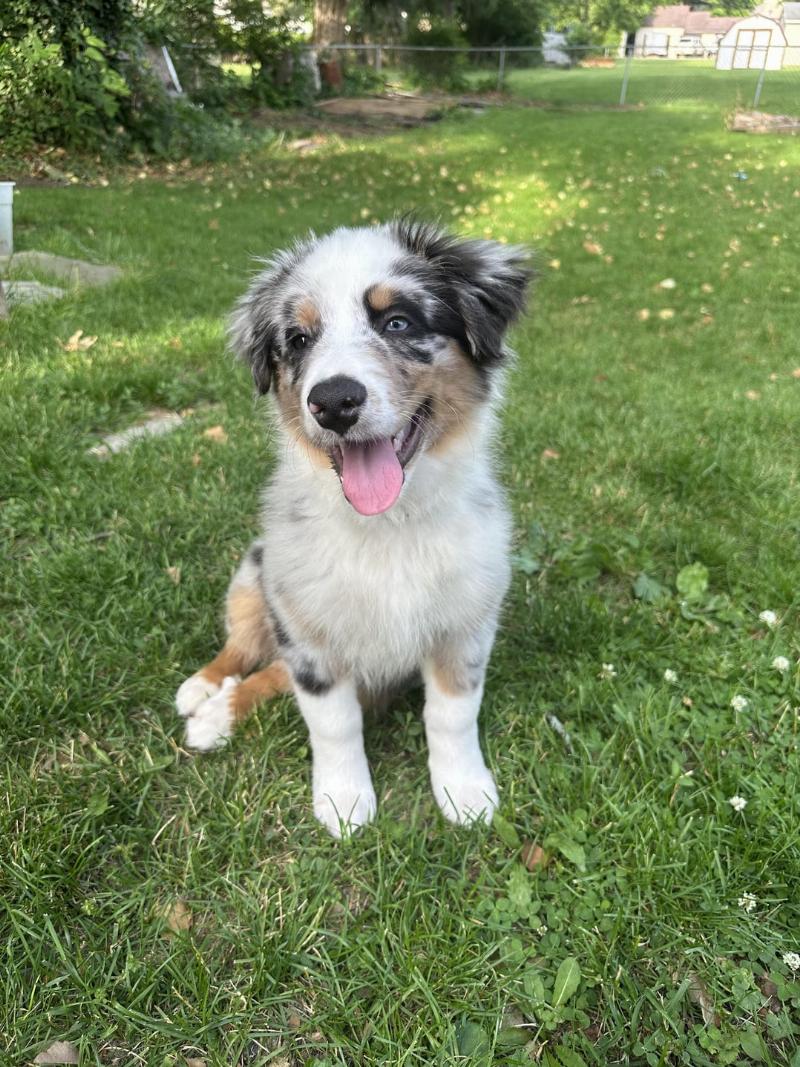 An owner's hand giving a small treat to a happy Australian Shepherd puppy outdoors, reinforcing a successful potty training moment.
Common Potty Training Questions
How long does it take to potty train a puppy?
This varies greatly depending on the breed and the individual dog, but most puppies can be reliably house-trained in 4 to 6 months. However, for some, it might take up to a year. Consistency from the owner is the biggest factor in speeding up the process.
Why is my puppy having accidents in their crate?
If a puppy is soiling their crate, the crate may be too large. It should be just big enough for them to stand up, turn around, and lie down comfortably. If it’s too big, they may designate one corner as a potty spot and the other for sleeping.
Can you potty train an older dog?
Absolutely! The process is largely the same as with a puppy: establish a routine, use positive reinforcement, and be patient. With an older dog, you may also be working to untrain previous habits, so it might require a bit more time.
Should I use puppy pads?
Puppy pads can be a useful tool, especially for apartment dwellers or those who cannot take their dog out frequently. However, they can sometimes confuse a puppy, teaching them that it’s okay to go potty indoors. If you use them, have a clear plan to eventually transition to going outside exclusively. This process can be similar to other specific programs like australian cattle dog training.
What if my dog regresses in their training?
Potty training regression is common, especially during adolescence (around 6-12 months). It can also be caused by stress, changes in routine, or underlying medical issues. If regression occurs, go back to basics with a stricter schedule and more frequent potty breaks. If it persists, consult your veterinarian to rule out any health problems.
Your Partner in Potty Training Success
Choosing a breed that is predisposed to quick learning can certainly make your life easier, but remember that every dog is unique. The key to success lies in your patience, consistency, and positive attitude. By understanding your dog’s needs and providing clear guidance, you can navigate the challenges of house-training and build a strong, trusting bond. Exploring what are the easiest dogs to potty train is a great starting point, but the journey you take with your new best friend is what truly matters.
