
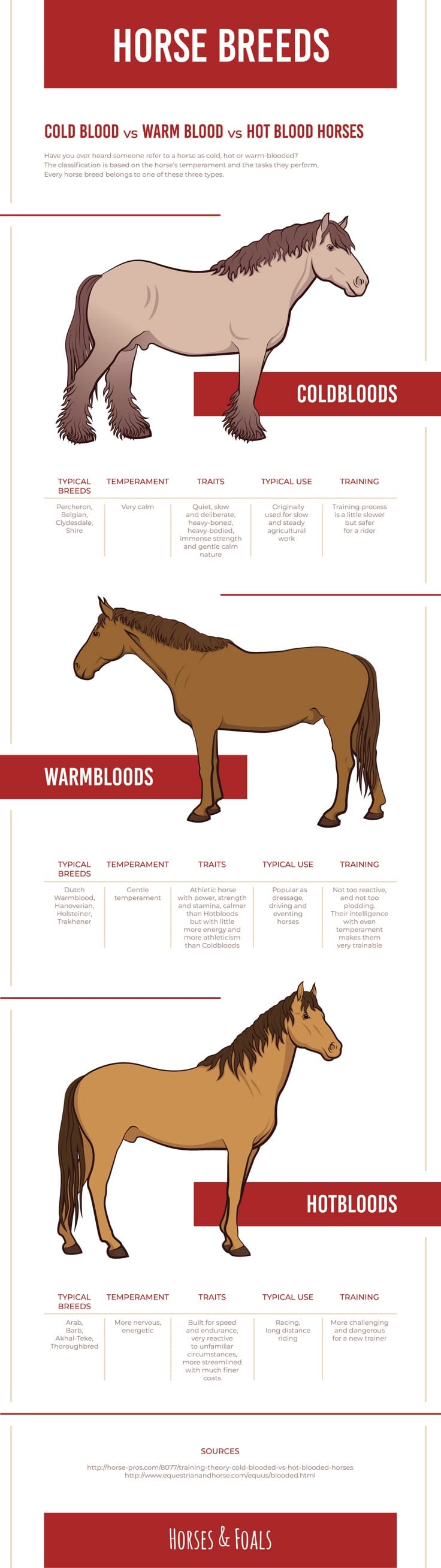
Choosing the right horse involves understanding not just their physical attributes but also their temperament. Traditionally, horses have been categorized into three groups based on their inherent disposition and build: hot-blooded, cold-blooded, and warm-blooded. These classifications, while not based on actual body temperature, provide valuable insights into a horse’s potential behavior, suitability for different disciplines, and management needs. Understanding these distinctions can significantly aid in finding a horse that aligns with your riding goals and experience level.
The terms “hot-blooded,” “cold-blooded,” and “warm-blooded” have been used by horsemen for centuries to describe different types of horses, stemming from their historical breeding and perceived temperaments. It’s crucial to note that these terms have no scientific basis related to a horse’s actual body temperature; all mature horses maintain a normal temperature range of 99-101.5 degrees Fahrenheit. Historically, “blood horse” initially referred to horses of good lineage, eventually becoming associated with breeds like the English Thoroughbred. The concept evolved, with French breeders crossing Thoroughbreds with heavier native horses to create demi-sang, or half-blood horses, laying the groundwork for modern warmbloods.
Hot-Blooded Horses: Energy and Athleticism
Hot-blooded horses, such as Arabians, Thoroughbreds, and Standardbreds, are characterized by their sensitive, energetic, and athletic natures. These breeds often exhibit a higher degree of reactivity and sensitivity, sometimes referred to as “hot” behavior. They typically possess refined physical characteristics, including fine coats, delicate heads, and lighter conformations. Known for their intelligence and quick learning abilities, many hot-blooded breeds trace their origins to North Africa and the Middle East.
Prominent Breeds and Disciplines
Notable hot-blooded breeds include the Arabian, Thoroughbred, Akhal Teke, Barb, and Standardbred. These breeds excel in disciplines that demand agility, speed, and stamina. Arabians, Akhal Tekes, and Barbs are ideally suited for endurance riding, mirroring their ancestors’ ability to travel long distances. Thoroughbreds are globally renowned for racing and demonstrate exceptional athleticism in eventing, with Anglo-Arabians (crosses between Arabian and Thoroughbreds) also competing at high levels. Standardbreds are primarily known for harness racing but are also valued as reliable saddle horses.
Management Considerations for Hot-Blooded Horses
The high energy and intelligence of hot-blooded horses necessitate management practices that provide ample mental and physical stimulation. Prolonged confinement or insufficient exercise can lead to boredom and undesirable behaviors. Consequently, these breeds may not be the best choice for novice riders. Originating from warmer climates, they have fine coats and might require blanketing during colder seasons, especially if they don’t develop a thick winter coat. Adequate shelter from inclement weather is essential. Additionally, the refined facial structure of breeds like the Arabian can predispose them to dental issues, requiring more frequent dental check-ups. Nutritional needs can vary; while Thoroughbreds are often “hard keepers,” many Arabians are “easy keepers,” though genetic factors have been linked to equine metabolic syndrome in this breed.
Cold-Blooded Horses: Strength and Serenity
Cold-blooded horses are typically large, heavy breeds with calm, kind, and easy-going temperaments, coupled with a strong work ethic. They are often referred to as the “gentle giants” of the equine world. Research comparing startle responses has shown that cold-blooded horses maintain a lower heart rate and recover more quickly from startling stimuli than their hot-blooded counterparts. Physically, they possess stocky conformations with large heads, shorter legs, and muscular builds. They are hardy animals with thicker coats than hot-blooded breeds, and some exhibit feathering on their legs.
Breeds and Their Origins
The quintessential cold-blooded horses are draft breeds, such as the Shire, Belgian, Percheron, and Clydesdale. Heavy cob horses are also sometimes categorized as cold-blooded. These breeds originated in Europe’s fertile regions, where their size and strength were developed for heavy farm work and pulling loads. This history ingrained a steady temperament and strong work ethic, which remain defining characteristics of cold-blooded horses today.
Suitable Disciplines and Management
While draft breeds are still utilized in agriculture and logging in some areas, many are now popular for recreational driving. Cob breeds, resembling smaller drafts, are robust riding horses suitable for adult riders who prefer a more compact mount. Breeds like the Haflinger and Icelandic horse also fall into this category. Their less reactive nature makes them safer options for beginner or timid riders. Cold-blooded horses are generally hardy and can live outdoors in colder climates, provided they have access to shelter. Their lower energy levels mean they typically don’t require intense exercise to maintain good behavior. However, some draft breeds are prone to muscle disorders and “stocking up,” making ample free exercise and turnout crucial for circulation. Many cold-blooded horses are easy keepers and can easily become obese, increasing their risk of metabolic disorders. Consulting an equine nutritionist is recommended to manage their diet effectively and maintain a healthy weight.
Warm-Blooded Horses: The Best of Both Worlds
Warm-blooded horses emerge from the crossbreeding of hot-blooded and cold-blooded bloodlines, resulting in horses that exhibit a blend of attributes from both types. They generally possess calmer temperaments than hot-blooded horses while retaining more energy and athleticism than cold-blooded breeds. The ideal warm-blood is characterized by balanced conformation and athletic movement, making them strong, agile, intelligent, and cooperative partners.
Defining Warmblood Breeds and Crosses
The term “warmblood” encompasses not only established warmblood breeds like the Hanoverian, Dutch Warmblood, and Oldenburg but also other riding breeds with mixed hot and cold bloodlines. A direct cross between a cold-blooded and a hot-blooded parent, such as an Irish Draught and a Thoroughbred to produce an Irish Sport Horse, also results in a warm-blooded horse. European breeders developed many warmblood breeds by crossing imported hot-blooded horses with heavier native breeds. Registries for these breeds often adhere to strict standards for producing ideal sport horses, including inspections of breeding stock and stallion approvals.
Applications and Management
Warm-blooded horses are the most common choice for recreational riding today, offering a desirable balance of temperament and physical capabilities for various riding disciplines. European warmblood breeds are particularly dominant in Olympic equestrian sports, including dressage, show jumping, and eventing. While high-performance competition horses may have hotter temperaments, many warmbloods possess calmer dispositions, making them excellent mounts for amateur riders. Management for warm-blooded horses should align with their lifestyle; athletic breeds thrive on regular training that includes daily mental stimulation and exercise. While less prone to problematic behaviors than hot-blooded horses, they still require consistent handling. Horses with intense training schedules may face increased risks of gastric ulcers and stress-related issues, making ample turnout and adequate forage intake important management strategies. Nutritional needs vary based on workload and metabolism, and a balanced diet is crucial to prevent obesity, especially when feeding energy-dense grains.
Finding Your Ideal Equine Partner
The preference for a hot-blooded, cold-blooded, or warm-blooded horse ultimately depends on individual goals, experience, and the specific personality of the horse. Hot-blooded horses appeal to riders seeking athleticism and intelligence, particularly those with experience who can provide regular exercise and confident handling. Cold-blooded horses, with their reliable temperament and kind nature, are excellent partners for timid riders or those seeking a more relaxed riding experience. Warm-blooded horses offer a middle-ground temperament, making them a popular choice for a wide range of riders, including those with advanced competitive aspirations.
It is vital to remember that individual personalities can significantly differ from breed norms. Factors such as handling, health, and nutrition play a crucial role in shaping a horse’s behavior. Consistent, knowledgeable training reinforces desirable behaviors, while pain or illness can lead to sudden changes in demeanor. Similarly, a horse’s diet directly impacts energy levels and behavior; high-glycemic feeds can contribute to excitability. Therefore, a holistic approach to management, considering all these influencing factors, is essential for fostering a positive partnership with any horse, regardless of its perceived type.
Frequently Asked Questions
What is the fundamental difference between warm-blooded and cold-blooded horses?
The distinction lies in their lineage and general type. Warm-blooded horses result from crossing hot-blooded and cold-blooded lines, offering moderate energy and athleticism. Cold-blooded horses descend from heavy European draft and cob breeds developed for strength and steady work, exhibiting a naturally calm demeanor and powerful build. Warm-blooded horses represent a balanced middle-ground without the heavy conformation of cold-bloods.
Why are warm-blooded horses so popular among riders?
Warm-blooded horses are favored for blending agility with a cooperative temperament. They inherit athleticism and intelligence from their hot-blooded ancestors while retaining the calmer disposition of cold-blooded breeds. Their balanced movement and willingness to work make them suitable for disciplines like dressage, show jumping, and eventing, and they remain approachable for recreational riders seeking a responsive partner.
What are the primary feeding concerns for cold-blooded breeds?
Feeding cold-blooded breeds often focuses on preventing weight gain, as they have lower energy requirements and can easily become obese on calorie-dense rations. Smaller cobs are at a higher risk of metabolic disorders. Therefore, a carefully managed diet emphasizing ample forage is crucial for maintaining their health and a steady weight.
Besides breed, what other factors influence a horse’s behavior?
Key factors influencing a horse’s behavior include handling, health, and nutrition. Consistent, knowledgeable training helps maintain good manners, while pain or illness can cause sudden behavioral changes. Diets high in rapidly digestible energy may increase excitability. Therefore, thoughtful management across these areas supports a horse’s natural disposition.
Summary
- Warm-blooded, cold-blooded, and hot-blooded are informal terms used to describe groups of horses with similar temperaments and breeding.
- These terms do not have a scientific origin but are linked to historical names for horses with specific bloodlines.
- Hot-blooded horses possess sensitive and reactive temperaments, exemplified by breeds like Arabians, Thoroughbreds, and Barbs.
- Cold-blooded horses exhibit quieter, less-reactive temperaments, with draft breeds being prime examples.
- Warm-blooded horses combine the temperament traits of both cold-blooded and hot-blooded horses, including established warmblood breeds and crosses like Irish Sport Horses.
- The most suitable horse type depends on individual goals and preferences, as every horse is an individual, and several factors influence temperament.
References
https://dogcarestory.com/medieval-horse-breeds/
https://dogcarestory.com/interesting-horse-breeds/
https://dogcarestory.com/battle-horse-breeds/
https://dogcarestory.com/breeding-friesian-horses/
https://dogcarestory.com/top-10-most-beautiful-horse-breeds/
https://dogcarestory.com/thoroughbred-horse-breed-profile/
https://dogcarestory.com/arabian-horse-breed-profile/
https://dogcarestory.com/selle-francais-breed-profile/
https://dogcarestory.com/equine-metabolic-syndrome/
https://dogcarestory.com/why-horse-is-hot/
https://dogcarestory.com/draft-horse-breed-guide/
https://dogcarestory.com/feed-horse-in-winter/
https://dogcarestory.com/stocking-up-in-horses/
https://dogcarestory.com/irish-draught-horse-breed-profile/
https://dogcarestory.com/turnout-for-horses/
https://dogcarestory.com/horse-enrichment-activities/
https://dogcarestory.com/equine-gastric-ulcers/
https://dogcarestory.com/how-to-calm-a-stressed-horse/
https://dogcarestory.com/pain-management-in-horses/
