
What makes a hero? In the thunderous cavalry charges of old and the quiet, steadfast supply lines of more recent conflicts, some of the greatest heroes were not men, but horses. These magnificent animals were more than mere transportation; they were partners, soldiers, and for many, saviors. But their courage was not a matter of chance. It was the result of careful selection and generations of breeding, a living testament to their War Story Horse Pedigree. This is the story of how bloodlines were forged in the crucible of battle, creating legends whose echoes still resonate in the equine world today. The strength, stamina, and spirit required to face the chaos of a battlefield were meticulously cultivated, passed down from sire to dam in a chain of bravery.
Understanding the history of these incredible animals is much like appreciating the rich narrative in a classic story of a horse, where every chapter reveals deeper layers of character and heritage. The pedigree of a war horse is not just a list of names; it is a blueprint for valor, a genetic map of heroism that turned ordinary animals into icons of military history. We will explore how specific traits were sought, how legendary horses embodied their lineage, and how their legacy continues to influence the horses we know and love today.
The Blueprint of Bravery: What Makes a War Horse?
Not every horse is suited for the rigors of warfare. The ideal military mount required a unique combination of physical prowess and mental fortitude. Breeders and military leaders spent centuries identifying and refining these traits, creating a living blueprint for the perfect war horse. The desired characteristics were not universal; they evolved with the technology of warfare itself, from the heavy chargers of armored knights to the swift, enduring mounts of the light cavalry.
Strength and Stamina
The most fundamental requirement for any war horse was raw power and endurance. In medieval times, the “Great Horse,” or Destrier, was a type bred specifically to carry a knight in full plate armor—a combined weight that could exceed 350 pounds. These horses needed powerful hindquarters for explosive charges and a strong back to bear the immense load. Breeds like the Friesian and the Andalusian were prized for this combination of might and agility. As warfare modernized, the need shifted from carrying heavy armor to pulling artillery and supply wagons over treacherous terrain. Here, the sheer size and placid nature of draft breeds like the Shire and Clydesdale became invaluable, their steady power keeping armies on the move.
Courage and Temperament
Perhaps more important than any physical trait was a horse’s temperament. The battlefield was a sensory nightmare of cannon fire, clashing steel, and the cries of men. A horse prone to panic was a liability, a danger to its rider and the entire unit. Military buyers sought animals that were calm under pressure, intelligent, and trainable. As George Washington’s preference for his horse Nelson over the more skittish Blueskin demonstrated, reliability in the face of chaos was paramount. Breeds like the Arabian were renowned not just for their stamina but for their fiery spirit tempered by profound loyalty, forming an almost unbreakable bond with their riders. This courage was a trait actively selected for, as a brave horse would charge into situations a more timid one would flee from.
Speed and Agility
For reconnaissance, flanking maneuvers, and rapid deployment, speed was life. Light cavalry required mounts that could cover vast distances quickly and outmaneuver the enemy. The infusion of Arabian bloodlines into European stock was a pivotal moment in developing this type of horse. The resulting breed, the Thoroughbred, would come to dominate not only racetracks but also the battlefield, where its incredible speed and endurance made it an exceptional cavalry mount. Similarly, the hardy Mustangs of the American West, descended from Spanish horses, were prized by Native American tribes for their quick reflexes and agility in the unpredictable terrain of the plains.
 A detailed illustration depicting the war story horse pedigree of cavalry mounts charging in a historical battle.
Legends of the Lineage: Famous War Horses
History is filled with the accounts of individual horses whose bravery and endurance became legendary. These animals were not just products of their training but the ultimate expression of their war story horse pedigree, embodying the very best traits of their ancestors. Their stories are as captivating as any of the true story movies about horses and serve as powerful examples of the human-animal bond in the most trying of circumstances.
Bucephalus: The Stallion Who Matched an Emperor
Perhaps the most ancient and celebrated war horse, Bucephalus, was the companion of Alexander the Great. Said to be of the finest Thessalian strain, he was a massive black stallion with a fierce spirit, deemed untamable by all but the young Alexander. This legendary partnership began when Alexander astutely noted the horse feared its own shadow. By turning Bucephalus towards the sun, he calmed the stallion and won his loyalty for life. Bucephalus carried Alexander through numerous campaigns, from Greece to India. His story highlights the ancient world’s deep appreciation for a horse’s spirit and the belief that a great leader required an equally great mount, a partnership born of mutual respect and courage.
Comanche: The Lone Survivor
In American history, few horses are as renowned as Comanche. A gelding of mixed Mustang and Morgan heritage, he was known for his incredible toughness and resilience. He served with the 7th Cavalry and was Captain Myles Keogh’s personal mount. His fame was cemented at the Battle of the Little Bighorn in 1876, where he was found two days after the fighting, severely wounded but the only living regimental survivor on the field. Comanche became a living symbol of resilience. His story is a testament to the hardy bloodlines of the American Mustang, a breed forged in the wild, possessing the grit and stamina to survive against all odds.
“When we study the war story horse pedigree, we are not just looking at genetics,” notes Dr. Eleanor Vance, a military equestrian historian. “We are looking at a curated legacy of courage. Horses like Comanche or Traveller were not accidents of nature; they were the apex of specific traits that generations of breeders, soldiers, and horsemen deemed essential for survival and success in combat.”
Sergeant Reckless: A True Marine
One of the most decorated war horses of the 20th century was a small mare of Mongolian descent named Sergeant Reckless. Purchased by the U.S. Marine Corps during the Korean War, she became an ammunition carrier for a recoilless rifle platoon. Her intelligence and bravery were astounding. She learned the supply routes after only a few trips and would travel them alone, under heavy enemy fire, to resupply frontline positions. During one day at the Battle for Outpost Vegas, she made 51 solo trips, carrying over 9,000 pounds of ammunition and evacuating wounded soldiers on her return journeys. She was officially promoted to the rank of Sergeant, a testament to her incredible contribution and the hardy, intelligent pedigree of her Mongolian ancestors.
The Legacy of a War Story Horse Pedigree
The era of the cavalry charge has passed, but the bloodlines of these heroic animals endure. The traits once prized on the battlefield—intelligence, athleticism, courage, and stamina—are the very same qualities sought after in modern equestrian sports and as companion animals. The Hanoverian, once a versatile German cavalry mount, is now a world-class dressage and show jumping competitor. The Thoroughbred’s endurance, vital for a long campaign, now fuels victories in racing and eventing.
The incredible bond between a soldier and his horse, a theme as timeless as a magic horse story, has transitioned into the deep relationships shared by riders and their horses today. The legacy of the war horse is a reminder that behind every great horse is a story written in its blood—a war story horse pedigree that speaks of strength, survival, and an unbreakable spirit. This history is not just a relic of the past; it is a living, breathing part of the horses that enrich our lives today, a quiet echo of the thunderous hooves that once charged across the battlefields of history.
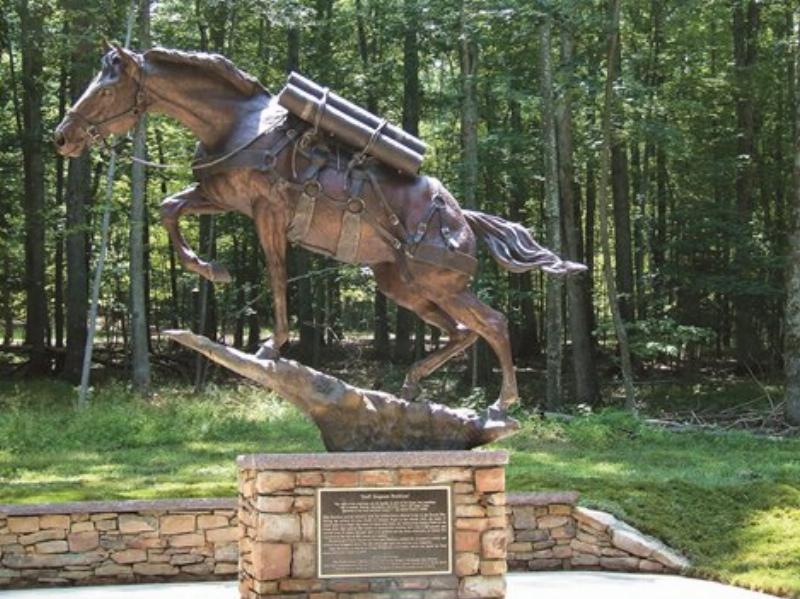 The war story horse pedigree of Sergeant Reckless, a decorated mare from the Korean War, is a tale of bravery.
Frequently Asked Questions (FAQ)
What was the most common war horse breed?
There was no single “most common” breed, as the ideal war horse changed with the era and the specific task. In medieval times, heavy types like the Destrier (a type, not a breed) and Friesian were common. In the 17th to 19th centuries, versatile breeds with stamina like the Thoroughbred and Arabian became invaluable for cavalry.
How were war horses trained?
War horses underwent extensive desensitization training to prepare them for the chaos of battle. They were exposed to loud noises like gunfire, the waving of flags, and the clash of weapons to reduce their natural flight instinct. They were also trained in specific combat maneuvers, such as charging in formation and responding to leg and seat aids, freeing the rider’s hands for combat.
What is the most famous war horse in history?
Bucephalus, the horse of Alexander the Great, is arguably the most famous war horse from antiquity. His story, partnership with Alexander, and incredible spirit have made him a legendary figure for over two millennia. In modern American history, Sergeant Reckless from the Korean War is highly decorated and famous for her bravery.
Did war horses wear armor?
Yes, in medieval times, war horses, particularly those of knights, often wore armor known as barding. This could range from simple leather coverings to full suits of plate armor designed to protect them from lances, swords, and arrows. As warfare shifted to rely more on firearms, horse armor became obsolete.
What happened to war horses after a war ended?
The fate of war horses was varied and often tragic. Many were sold to local farmers for labor, slaughtered for meat due to the logistical difficulty of transporting them home, or succumbed to disease and exhaustion. Very few, typically the beloved mounts of high-ranking officers, were fortunate enough to be pensioned off and returned home to a peaceful retirement.
