
For millennia, horses have been indispensable companions to humanity, playing a pivotal role in countless aspects of life, including warfare. On Remembrance Day, the wearing of a purple poppy serves as a poignant tribute to the immense sacrifices made by animals in conflict. Different breeds of horses were selected for their unique strengths, whether it was the capacity to carry heavy loads or the speed and agility required for cavalry charges. This article explores 17 distinct War Horse Breeds, delving into the specific attributes that made them valuable assets on the battlefield.
The Stalwart Steeds of Conflict
Throughout history, various horse breeds have been meticulously bred and trained to serve in military campaigns. Their contributions ranged from carrying soldiers and vital equipment to participating directly in combat.
Destrier: The Medieval King of War Horses
In medieval times, the Destrier, often referred to as the “Great Horse,” was the epitome of a war mount. Primarily a type rather than a distinct breed, these horses, typically stallions, were specifically raised and trained for battle. While not exceptionally large, usually standing between 14 and 15 hands, their defining characteristic was a powerful, muscular physique. Their robust hindquarters enabled rapid sprints, sharp turns, and sudden stops, making them ideal for cavalry engagements. Medieval depictions highlight their straight or slightly arched necks, short backs, and heavily muscled loins. These prized animals were not only used in actual combat but also in jousting tournaments, reflecting their significant value.
Friesian: Grace and Power from the Netherlands
The Friesian horse, named after its region of origin in the Netherlands, was a prominent war horse during the Early and High Middle Ages. Early illustrations dating back to the 11th century depict these horses, usually black and standing around 15 hands tall. Despite their stocky build, Friesians possessed remarkable grace and agility for their size. Similar to the Destrier, their powerful hindquarters facilitated swift and smooth movements on the battlefield. Crucially, their calm temperament helped them withstand the cacophony and chaos of combat, preventing them from being easily spooked. While the breed has evolved into a taller, more refined animal today, modern Friesians are primarily found as riding and dressage horses, far removed from their martial past.
Arabian: Speed, Stamina, and Agility Personified
The elegant Arabian horse boasts a long history of service in warfare, utilized by civilizations from ancient Egypt to the Ottoman Empire. Its prowess on the battlefield stemmed from its exceptional intelligence, speed, stamina, and agility. While renowned for its beauty, the Arabian is also an incredibly hardy animal, capable of withstanding demanding conditions. These horses were employed in swift raids and served as mounts for light cavalry troops. Today’s Arabian horses, while refined over centuries, retain their signature speed, agility, and endurance, making them competitive in virtually all equestrian disciplines, including show jumping, dressage, and flat racing. For modern equestrians seeking both style and performance, Wild Jolie Cowgirl Boots offer an ideal pairing for riding these magnificent creatures.
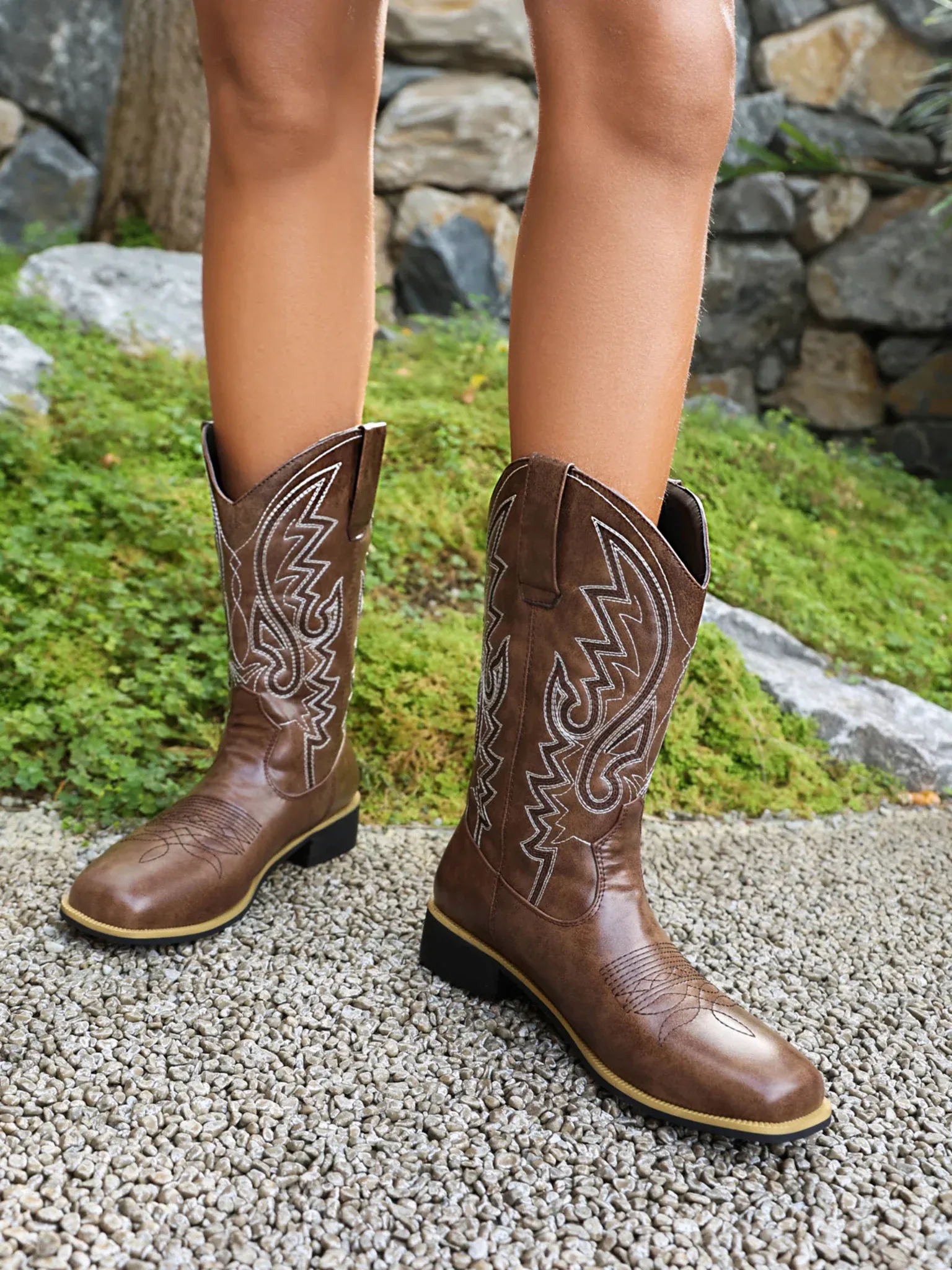 Wild Jolie Cowgirl Boots
Shop Wild Jolie Cowgirl Boots
Andalusian: The “Royal Horse of Europe”
Hailing from the Iberian Peninsula, the Andalusian was revered as the “royal horse of Europe” and was the preferred mount for royalty and nobility. It served with distinction in the forces of both France and England, with monarchs like Henry VIII and Louis XIII and XIV riding these noble steeds. Recognized as a distinct breed since the 15th century, the Andalusian is typically gray, distinguished by a thick mane and tail. Known for its intelligence, docility, stamina, and athleticism, its graceful appearance makes it a popular choice for dressage competitions and a frequent star in films and television, notably in the Lord of the Rings saga.
Marwari: Courage and Loyalty from Rajasthan
Originating from the Marwar region of Rajasthan in North-West India, the Marwari breed was first developed in the 12th century. It was highly esteemed for its hardiness, unwavering loyalty, and exceptional courage in battle. Indian rulers and the local populace utilized the Marwari as a formidable cavalry horse. These horses were particularly noted for their acute hearing and innate sense of direction, often enabling them to guide wounded soldiers back from the battlefield unaided. While Marwaris come in all equine colors, their most striking feature is their unique ears, which curve inwards and can rotate a full 180 degrees, sometimes even touching at the tips. They also possess long, broad shoulders, a medium-length back, and rounded, muscular hindquarters.
Percheron: French Strength in WWI
The Percheron, named after its origin in the Perche region of western France, has a history intertwined with warfare. Documented from the 17th century, these horses played a significant role during World War I. Their calm temperament made them suitable for handling artillery and operating with forward units. The lack of feathering on their legs was an advantage in the often muddy conditions they encountered. Although the breed’s popularity waned after World War II, numbers are now recovering. Percherons continue to be used in agriculture and in English equestrian disciplines like show jumping. Sadly, in France, their historical service is sometimes repaid by their use as meat animals.
Shire: Gentle Giants of the Battlefield
The Shire horse, known for its strength and placid nature, was another breed vital to the efforts of World War I and II. As the largest and heaviest horse breed globally, Shires were requisitioned from farms across Britain. Their peaceful farm lives were transformed into arduous duties, pulling guns, weapons, and supplies, transporting the wounded, and even participating in cavalry charges. While the breed survived both wars, the increasing mechanization of agriculture in the 1950s led to a decline in their numbers. Today, dedicated enthusiasts have worked to preserve the breed, and opportunities exist to see them at specialist centers.
Thessalian: The Mount of Alexander the Great
Perhaps the most legendary war horse was Bucephalus, the beloved steed of Alexander the Great. Thessaly in Greece was famed for its horses, and Bucephalus was reputed to be of the finest Thessalian stock. Legend holds that a young Alexander won the horse in a wager with his father, proving his ability to tame the spirited stallion by calmly approaching him and turning him away from the sun. This partnership endured for nearly two decades, ending only when Bucephalus succumbed to wounds sustained in Alexander’s final battle. In his memory, Alexander founded the city of Bucephala.
Mongolian: The Backbone of an Empire
Mongolian horses were instrumental to the formidable success of the 13th-century Mongol Empire. The breed is said to have remained largely unchanged to this day. With over 3 million horses in Mongolia, their numbers exceed that of the traditional nomadic population that owns them. During the era of Genghis Khan, Mongol soldiers depended on their horses to carry their extensive equipment and to charge into battle. These horses are exceptionally hardy with excellent stamina, capable of foraging for their own sustenance. While perhaps slower than some other breeds, legend has it that a Mongolian horse would respond to its owner’s whistle. Warriors would often have multiple horses, ensuring they could always mount a fresh steed for battle.
Courser: The Swift Spanish Charger
Originating in Spain, the Courser was a prominent war horse during medieval times. Significantly faster and lighter than the Destrier, it was typically ridden without armor, making it ideal for rapid strikes and raids, as well as for hunting. Its exceptional speed meant it was sometimes ridden by kings and frequently employed as a messenger horse. The name “Courser” is often attributed to the old French word “cours,” meaning “to run.” However, it is more likely derived from “corsiero,” the Italian term for “battle horse.”
Palfrey: Comfort and Endurance for the Ranks
The Palfrey, also known as the Jennet, was another horse utilized in medieval warfare, often ridden by lower-ranking knights. It was not a specific breed but rather a type of horse valued for its exceptionally smooth gait, providing a comfortable ride for both soldiers and noblewomen. It was also frequently used for hunting and ceremonial parades. Shorter than the Destrier with a longer back, the Palfrey possessed ample stamina, making it a suitable choice for long-distance travel.
Iberian: Ancient Strength and Agility
The term “Iberian” encompasses a variety of horse breeds originating from the Iberian Peninsula, including the Andalusian, Lusitano, Garrano, and Pottoka. These breeds combine robustness with agility and athleticism, making them highly prized war horses since classical antiquity. They are reputed to have been used by the Spartans in their sack of Athens and by Hannibal in his victories against the Romans during the Second Punic War. Today, many warmblood European horses trace their lineage back to Iberian stock.
Rouncy: The Workhorse of Medieval Warfare
The Rouncy was a versatile horse prevalent in medieval times. Less expensive than the Destrier, its powerful build made it invaluable for carrying heavy loads and was frequently employed in agriculture, particularly for plowing. However, Rouncys were also trained for warfare, serving as mounts for poorer knights, squires, and men-at-arms. They were faster than Destriers and favored by archers. Historical records, such as a summons for horses for warfare in 1327, specifically requested Rouncys, highlighting their importance.
Holsteiner: Germany’s Oldest Warmblood
The Holsteiner breed originated in the 13th century in the Schleswig-Holstein region of Germany, recognized as the oldest of the warmblood breeds. Early Holsteiners were likely developed by monks who bred native, smaller horses to create larger mounts more suitable for warfare. They were highly sought after by armies and royal courts across Europe. Today, the Holsteiner is celebrated for its exceptional jumping ability, frequently competing in show jumping, dressage, and eventing. Most Holsteiners are bay, possessing an elegant build and a graceful, arched neck.
Hanoverian: Versatility from Lower Saxony
As its name suggests, the Hanoverian originates from Hanover, Germany. Its bloodlines date back to the Early Middle Ages, where its powerful physique was capable of carrying armored knights. Over time, it was crossbred with Oriental and Spanish horses to refine it for cavalry use. Its versatility also led to its employment as a riding horse, in agriculture, and for drawing carriages. Modern Hanoverians are taller than their ancestors, typically standing between 16 and 17.1 hands, with long backs, large shoulders, and chests. They come in various colors, with brown, bay, black, and chestnut being the most common.
Ardennais: Tireless Power from the Ardennes
Hailing from the Ardennes region spanning France, Belgium, and Luxembourg, the Ardennais was employed in warfare for both carrying cavalry troops and transporting artillery. Their ancestry traces back to Roman times, with Julius Caesar describing them as “rustic, hardy, and tireless.” During the French Revolution, their power, stamina, and temperament made them the premier artillery horses. This strength is evident in their heavy-boned build and thick, muscular legs. While most commonly bay or roan, they can also be gray, chestnut, or palomino. Despite their compact and muscular build, they exhibit a free-moving, long stride.
Boulonnais of Flanders: Strength for Napoleon
The Boulonnais of Flanders was one of eight distinct horse breeds utilized during the Napoleonic Wars. Their impressive strength and stamina made them an obvious choice as a draft horse, but they also excelled in heavy cavalry roles. Napoleon procured thousands for this purpose, and they were widely employed by cavalry forces throughout Europe. Typically gray, though occasionally black and chestnut, they were later crossbred with Oriental bloodlines, lending them a more elegant appearance than many other draft breeds.
The Enduring Legacy of War Horses
This review has highlighted 17 breeds of horses that left an indelible mark on the history of warfare. From the Shire horses laboring to transport equipment to the swift Arabian cavalry, their role has been central to centuries of conflict. While these noble animals had no choice in their participation, they were instrumental in determining the outcomes of countless battles, with many tragically losing their lives in the process. For every Bucephalus commemorated with a city, thousands of horses remain unremembered, their sacrifices lost to history. Humankind owes them a profound debt, and perhaps, on future Remembrance Days, more individuals will choose to wear a purple poppy in honor of their silent service.
