
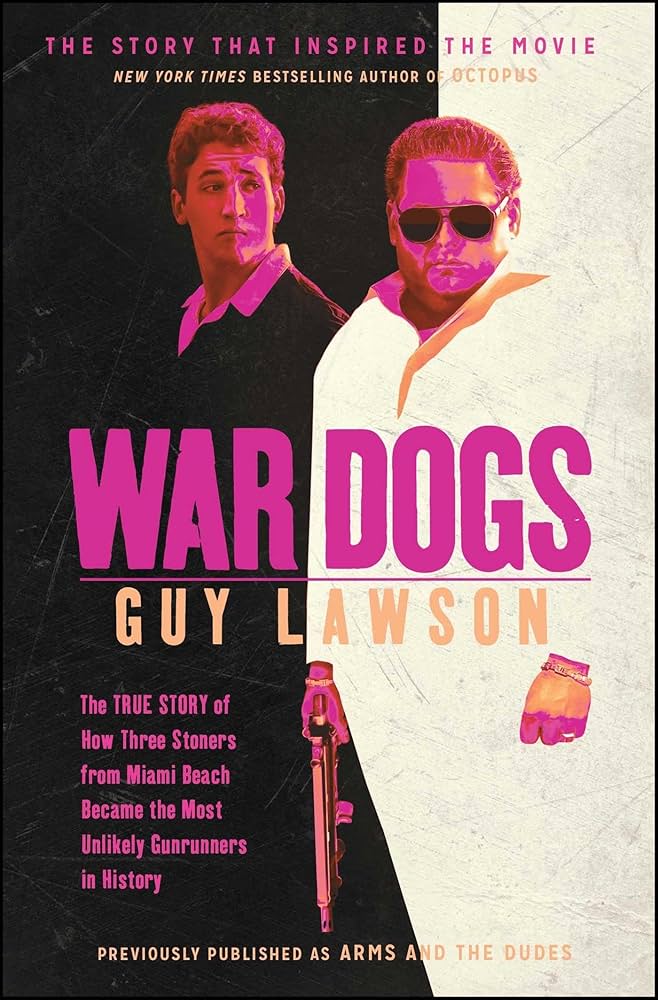
“War Dogs” tells a wild tale of two young men from Miami who became unlikely international arms dealers, scoring a $300 million contract to arm the Afghan military. But how much of this incredible story is fact and how much is Hollywood fiction? While the movie takes creative liberties, the core of the story is based on a stranger-than-fiction reality. This narrative dives deep into the true events that inspired the film, exploring the real lives of Efraim Diveroli and David Packouz, their rise and fall in the shadowy world of arms dealing, and the significant aspects that made it to the silver screen.
The Real “War Dogs”: Efraim Diveroli and David Packouz
The characters in “War Dogs” are based on real people: Efraim Diveroli and David Packouz. Diveroli, depicted as the more ambitious and ethically flexible of the two, was the driving force behind their arms-dealing enterprise. Packouz, a more reluctant participant, initially joined Diveroli with the intention of earning quick money before aiming for a different life. Their journey began in the early 2000s, capitalizing on a loophole in government contracts that allowed smaller businesses to bid on lucrative deals. This loophole was part of a U.S. government initiative to support small businesses while supplying arms to allies.
The true story of these “War Dogs” is a fascinating, albeit morally ambiguous, look at how two seemingly ordinary individuals managed to navigate the complex and often dangerous world of international arms trafficking. Their story highlights the unexpected opportunities that can arise from government policies and the equally unexpected individuals who seize them.
From Miami to Afghanistan: The $300 Million Contract
The central plot point of “War Dogs”—securing a $300 million contract to supply weapons to the Afghan National Army—is rooted in truth. In 2007, Diveroli and Packouz’s company, AEY Inc., won this massive contract. The U.S. Department of Defense had put out bids for supplying 100 million rounds of AK-47 ammunition, 5,000 machine guns, and 2,000 rocket launchers, among other weaponry. AEY Inc. was one of the few companies to secure a slice of this enormous pie.
However, the execution of this contract was far from smooth. The weapons they supplied were largely of Chinese origin, which was a violation of the contract terms. Furthermore, many of the weapons were found to be in poor condition, and the ammunition was old. The narrative presented in the movie captures the chaos and questionable practices involved in fulfilling this significant deal. The real-life challenges of sourcing, shipping, and ensuring the quality of such a vast arsenal were immense and fraught with peril.
The Rise and Fall of AEY Inc.
AEY Inc.’s success was meteoric but short-lived. The company exploited loopholes and operated in a gray area of international law, taking advantage of the vast sums of money being poured into the war effort. They were known for their aggressive business tactics and their ability to secure deals that larger, more established defense contractors often overlooked.
The downfall began when the contract’s irregularities came to light. Investigations revealed AEY Inc.’s use of substandard and illegally sourced Chinese ammunition, as well as their deceptive practices. The U.S. government eventually terminated the contract and launched an investigation, leading to the arrest and prosecution of Diveroli and Packouz. The movie effectively portrays the mounting pressure and the eventual collapse of their operation. This dramatic arc underscores the inherent risks involved in their line of business and the inevitable consequences of breaking the law on such a grand scale.
Key Differences: Movie vs. Reality
While “War Dogs” captures the essence of Diveroli and Packouz’s story, several differences exist between the film and the actual events. The movie, for instance, tends to portray Packouz as a more central and active participant than he perhaps was in the latter stages of their dealings. His moral qualms are a significant part of the film’s narrative, but the extent of his involvement in the more dubious aspects of the business is subject to interpretation.
Furthermore, the film simplifies the complex geopolitical landscape and the intricacies of arms procurement. The real operations involved a far greater number of players, backroom deals, and a constant balancing act between legal and illegal activities. The movie also streamlines the timeline and consolidates events for dramatic effect. For instance, the scale of their operation and the specific types of weapons and ammunition traded are often simplified for the screen. It is common in true story movies about dogs to see such narrative condensations.
Lessons Learned from the “War Dogs” Story
The “War Dogs” story, both in its real-life manifestation and its cinematic adaptation, offers a stark look at the arms trade and the individuals who operate within it. It raises questions about government oversight, corporate responsibility, and the moral compromises made in the pursuit of profit. The story serves as a cautionary tale about ambition unchecked by ethics and the potential consequences of playing with dangerous commodities.
The film and the real events behind it highlight the often-unseen mechanisms of global conflict and the individuals who profit from it. It’s a narrative that blurs the lines between legitimate business and illicit trade, leaving audiences to ponder the true cost of war and the people caught in its supply chain. The experience of Diveroli and Packouz serves as a stark reminder of how quickly fortunes can be made and lost in the high-stakes world of defense contracting.
Frequently Asked Questions about the “War Dogs” Story
Q1: Was the “War Dogs” movie based on a true story?
A1: Yes, the movie “War Dogs” is based on the true story of Efraim Diveroli and David Packouz, two young men who became international arms dealers.
Q2: Did Efraim Diveroli and David Packouz really get a $300 million contract?
A2: They secured a significant contract to supply arms to the Afghan military, valued at $300 million, though the exact final figure and the specifics of their dealings evolved over time.
Q3: What happened to Efraim Diveroli and David Packouz?
A3: Both were arrested and faced legal consequences. Diveroli pleaded guilty to one count of conspiracy to distribute the forbidden arsenal and was sentenced to four years in federal prison. Packouz cooperated with the authorities and received a lighter sentence.
Q4: Did they really drive an Audi across Europe to pick up weapons?
A4: While the movie depicts such a journey, the real-life events involved more complex logistics and travel, though road trips for arms acquisition were part of their operation.
Q5: What is the main lesson from the “War Dogs” story?
A5: The story serves as a cautionary tale about unchecked ambition, the ethics of the arms trade, and the potential legal and personal consequences of engaging in illicit activities. It also highlights how loopholes in government contracts can be exploited.
Q6: Were there other people involved besides Diveroli and Packouz?
A6: Yes, the real story involved a wider network of associates, fixers, and even military personnel, many of whom are simplified or omitted in the film for narrative focus.
Conclusion: The Enduring “War Dogs” Narrative
The story of Efraim Diveroli and David Packouz is a compelling testament to the extraordinary paths ordinary people can take, particularly in the opaque world of defense contracting. “War Dogs” brought their incredible journey to a wider audience, shedding light on a chapter of recent history that is both shocking and, in its own way, deeply illustrative of the complexities of global politics and commerce. While the film entertains with its dramatic flair, the true story behind it offers a more nuanced and cautionary perspective on ambition, opportunity, and the high-stakes game of international arms dealing. Understanding the real war dogs movie story provides a fascinating glimpse into a world few rarely see.
