
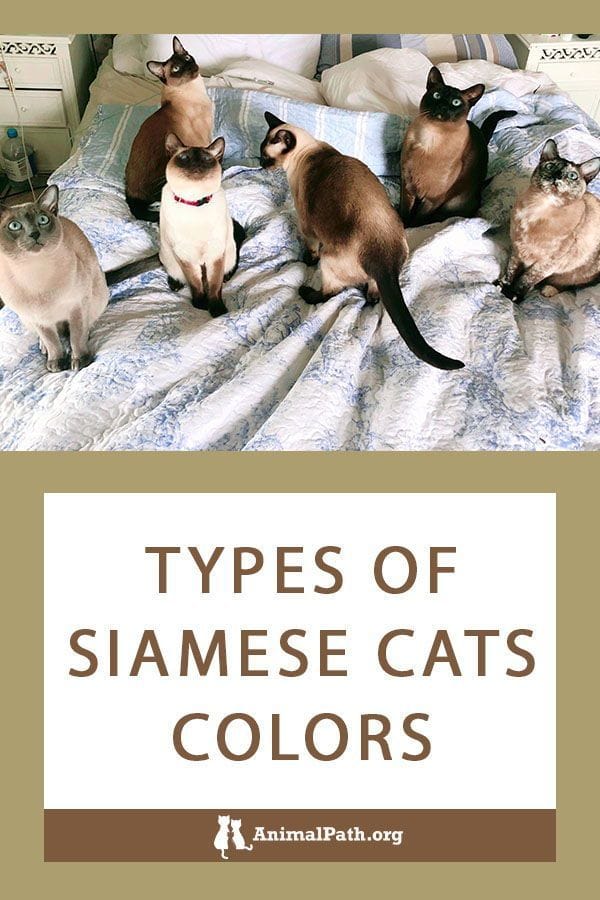
Siamese cats, renowned for their elegant physique, striking color contrast, and vocal personalities, are one of the world’s most ancient and recognizable feline breeds. If you’re a Siamese owner, you might be curious about identifying your cat’s specific type. Fortunately, distinguishing between Siamese cat varieties is straightforward, primarily based on their distinctive color points. This guide delves into the history and characteristics of various Siamese cat colors, helping you identify your feline companion.
A Glimpse into the History of Siamese Cat Varieties
In the United States, the Siamese breed is recognized by two prominent cat registries: The Cat Fanciers’ Association (CFA) and The International Cat Association (TICA). Each registry adheres to its own breed standard, a detailed description outlining the ideal appearance and temperament for a given breed. These standards serve as blueprints for breeders, ensuring the consistent development and preservation of the breed. Siamese cats are known for their sleek bodies, contrasting color patterns, and friendly, talkative nature.
While the CFA and TICA standards are largely similar, a key difference lies in the number of accepted colors. The CFA recognizes only four colors, often referred to as “traditional” Siamese colors, which align with the breed’s early history in the U.S. Seal point was the first recognized color in 1906, followed by blue point (1934), chocolate point (1952), and lilac point (1955).
TICA, established in 1979, initially accepted the same four traditional colors when Siamese was a foundational breed. However, over subsequent decades, TICA expanded its standard to include additional accepted colors and patterns. These include lynx point (tabby point), parti-color point (tortie point), red point, cream point, cinnamon point, fawn point, silver tabby, and smoke point.
Identifying Siamese Cat Colors: A Detailed Look
All Siamese cats share common traits: a body of a lighter hue with distinct, darker color points on their extremities (legs, tail, and head) and striking, deep blue eyes. Differentiating between the various shades can be subtle, but focusing on the nuances of their point coloration and body color will help you determine your Siamese cat’s type.
Solid Color Variations
Within the solid color category, there are eight recognized variations. The four traditional colors—seal, chocolate, blue, and lilac—are complemented by four additional solid colors recognized by TICA: red, cream, cinnamon, and fawn.
Seal Point: Characterized by a warm, pale fawn to cream body, the Seal Point boasts the darkest points among all Siamese types, a deep seal brown. Their nose leather and paw pads are also a rich, dark brown.
Chocolate Point: These Siamese cats feature an ivory-colored body with points of soft milk chocolate, which are lighter than those of the Seal Point. Their nose and paw pads typically present as a cinnamon-pink color.
Blue Point: The Blue Point Siamese displays a cool, bluish-white body complemented by deep blue-gray points. Their nose and paw pads are slate-colored, distinguishing them from the warmer lilac point.
Lilac Point: With a glacial white body, the Lilac Point’s points are a frosty gray with subtle pinkish undertones. Their nose and paw pads are lavender-pink, offering a softer appearance than the Blue Point.
Red Point (Flame Point): Also known as Flame Point, this variety has a warm, creamy white body with deep orange or “hot” red points, with darker coloration being preferred.
Cream Point: A Cream Point Siamese exhibits a creamy white body with points ranging from pale sand to a deeper cream hue.
Cinnamon Point: These Siamese cats have an ivory-colored body and points that are a light, warm, reddish-brown, closely resembling the color of a cinnamon stick.
Fawn Point: TICA describes the Fawn Point Siamese’s body color as “magnolia white,” with points of a warm pinkish beige or taupe.
Patterned Color Variations
Beyond solid colors, Siamese cats can also be found in patterned variations, including Lynx Point (tabby point), Parti-Color Point (tortie point), Silver Tabby Point, and Smoke Point.
Lynx Point (Tabby Point): This pattern can appear with any of the base Siamese colors. Lynx Point Siamese feature distinct striped tabby markings on their color points. While the body is usually solid, faint “ghost striping” might be visible.
Parti-Color Point (Tortie Point): These Siamese cats display tortoiseshell patches—shades of red or cream—interspersed within the base color of their points.
Silver Tabby Point: Similar to Lynx Point, Silver Tabby Point Siamese have tabby markings on their points. However, the presence of the silver gene imparts a cooler tone to the body and points. Their markings are often more contrasted, making them stand out more prominently.
Smoke Point: Smoke coloring is a unique pattern where the base of each hair shaft is white or silver, while the ends are colored. This creates a solid appearance with a distinct smoky or misty effect. In Siamese cats, this pattern occurs within the points, which can be any of the recognized Siamese colors (e.g., seal smoke, chocolate smoke, blue smoke).
Determining Your Siamese Cat’s Type
Understanding the diverse range of Siamese cat colors can help you identify your own feline companion. Whether your Siamese exhibits one of the traditional pointed colors or one of the many other accepted variations, sharing your life with this beautiful breed is a rewarding experience.
A common question among owners is whether different Siamese color types possess distinct personalities. The answer is generally no. Siamese cats of all colors embody the exceptional and unique personality traits that make the breed so beloved. They are consistently intelligent, curious, playful, affectionate, and famously chatty, often forming strong bonds with their favorite humans. Siamese cats are aptly nicknamed “Velcro cats” due to their tendency to stay close to their owners. You are likely to find yourself as captivated by your Siamese as they are by you!
