
Longhaired cats, with their elegant appearance and luxurious fur, captivate many pet enthusiasts. These breeds often possess distinctive features such as flowing manes, bushy tails, and tufts of fur between their toes, giving them a regal presence. While the abundance of fur might suggest intensive grooming needs, this isn’t always the case for every fluffy feline. This guide explores some of the most popular and unique longhaired cat breeds, offering insights into their characteristics and care requirements.
Exploring Diverse Longhaired Cat Breeds
The world of longhaired cats is rich with variety, encompassing breeds with distinct personalities, coat types, and appearances. From the famously placid Persian to the dog-like Maine Coon, there’s a longhaired breed to suit many households.
Persian
Renowned for their distinctive flat faces and flowing coats, Persians are among the longest-haired cat breeds. They typically exhibit a mellow disposition and thrive in calm environments. While affectionate with their families, they may be reserved around strangers. Persians are available in a wide array of colors, including black, red, cream, and unique shades of blue and lilac, making them a sought-after option for those desiring a gray longhaired cat. Due to their abundant fur, daily grooming is essential to prevent matting and keep their faces clean.
Himalayan
A delightful crossbreed of Persian and Siamese cats, the Himalayan is an affectionate and playful longhaired companion. Their defining characteristic is the colorpoint pattern—darker shading on the ears, nose, feet, and tail—which contrasts with their cream-colored body. These points can appear in various shades like seal, blue, lilac, chocolate, or flame. The Himalayan’s coat texture can range from fine to woolly, but regular daily brushing is crucial for maintaining its health and appearance.
LaPerm
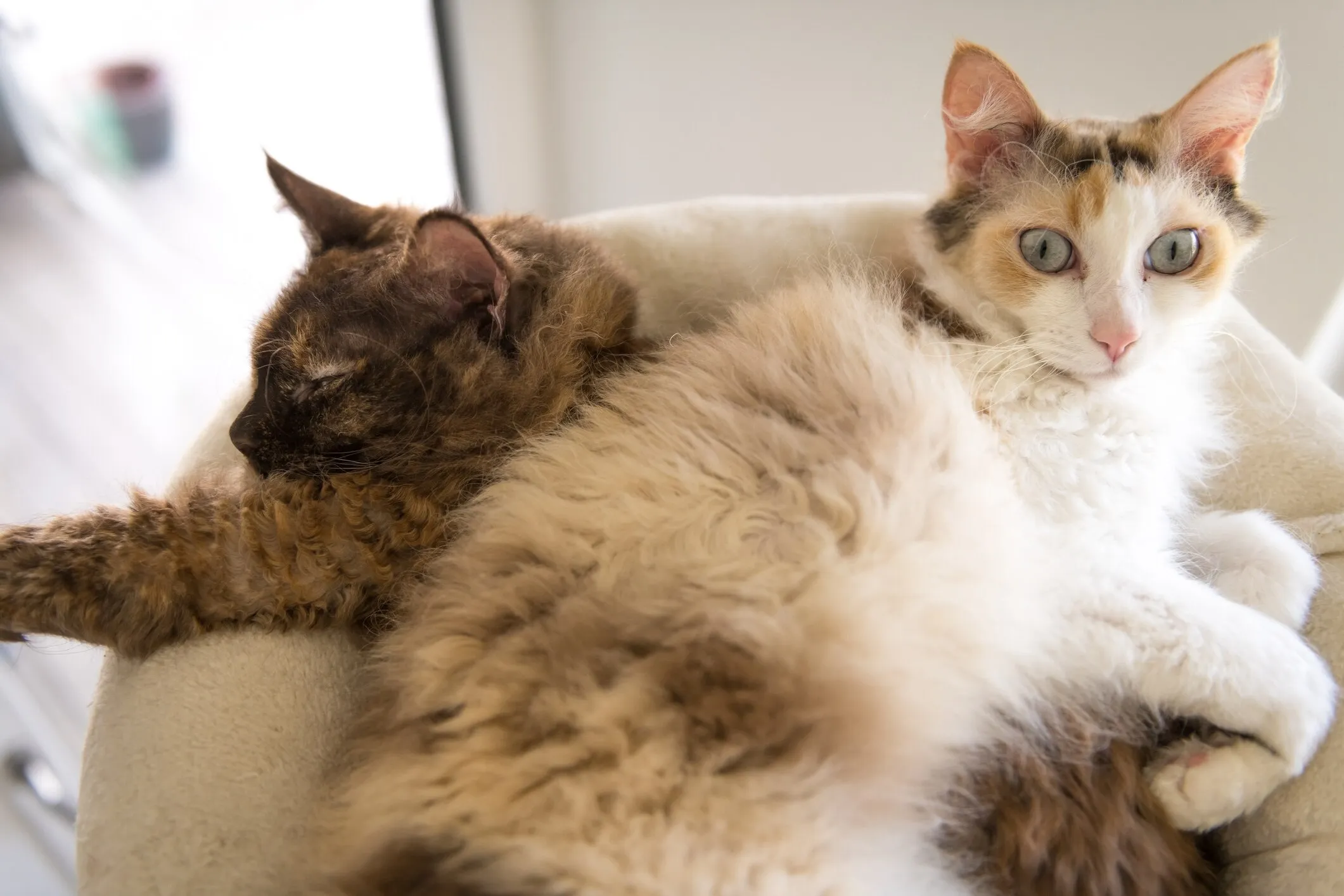 two laperm cats lying together in a cat tree
The LaPerm stands out with its uniquely curly coat, a result of a natural gene mutation. These cats can be either longhaired or shorthaired, with the longhaired variety featuring a medium-long, wavy coat that has a springy texture. Despite their abundant fur, LaPerms are known for being low-shedding, affectionate, and active.
Maine Coon
The Maine Coon is a majestic breed, recognized for its large size, impressive long coat, and prominent whiskers. These cats make wonderful companions, often exhibiting intelligent and affectionate traits that are sometimes compared to those of dogs. As one of the largest longhaired breeds, a mature Maine Coon can weigh up to 25 pounds. Their dense double coat requires brushing at least a few times a week to prevent tangles and maintain its pristine condition. Exploring different types of domestic cats can reveal the diversity within the feline world.
Norwegian Forest Cat
Hailing from Scandinavia, the Norwegian Forest Cat is another large breed with a thick, protective coat adapted for cold climates. These cats benefit from regular brushing several times a week. Twice a year, they undergo significant shedding, necessitating an increased grooming routine to manage the loose fur. Their sociable nature makes grooming sessions enjoyable, as they often seek interaction with their human companions.
Ragdoll
The Ragdoll is a beloved fluffy breed, famously known for its tendency to go limp and relaxed when picked up or petted. These are considered one of the friendliest cat breeds, thriving in homes with other pets or with owners who are frequently present. Their grooming needs are relatively simple, with brushing once or twice a week generally sufficient to maintain coat health.
RagaMuffin
Closely related to the Ragdoll, the RagaMuffin is cherished for its affectionate demeanor and strong bond with family. This longhaired breed features a soft, silky coat with a noticeable ruff around the neck and longer fur on the belly. Despite its luxurious appearance, the coat is relatively low-maintenance, requiring grooming only about once a week with a comb.
Siberian
The Siberian possesses a unique triple coat, comprising guard hair, awn hair, and an undercoat. While this might sound like a significant amount of fur, weekly grooming is usually adequate, except during shedding seasons in spring and fall. During these periods, more frequent brushing, potentially daily, is needed to manage the molting undercoat. Siberians are known for being friendly, intelligent, active, and trainable cats who enjoy spending time with their owners.
Selkirk Rex
Characterized by a curly coat due to an inherited gene mutation and long, fluffy fur from its Persian lineage, the Selkirk Rex requires careful grooming. Over-brushing can lead to a frizzy coat. These cats are also prone to oily skin, necessitating semi-regular baths. Establishing a consistent grooming and bathing routine early in their lives can make the process smoother.
American Bobtail
The American Bobtail sports a shaggy, medium-long coat and is distinctively recognized by its short tail, which can vary in length. According to TICA breed standards, they can come in any coat color. These adaptable and affectionate cats are known for their ability to learn tricks and engage in playful activities. The variety of coat types means you might encounter big fluffy cat breeds like this one or even tiny cat breeds in different feline varieties.
Birman
With striking blue eyes and a white or cream coat featuring colorpoints on the face, tail, and legs, the Birman is a visually captivating longhaired breed. A significant advantage for owners is that the Birman’s silky long coat is less prone to tangling and matting compared to other fluffy breeds. Nevertheless, brushing a few times a week helps minimize shedding and the occurrence of hairballs.
Japanese Bobtail
The longhaired Japanese Bobtail features a tail that typically extends no more than three inches. Their coat is medium to long, silky, and lacks an obvious undercoat, making it easy to manage with weekly brushing. These cats come in a vibrant array of colors, including solid shades and bi-color or tri-color patterns. They are known for being highly interactive, often vocalizing for attention and readily befriending newcomers.
Pixiebob
Bred to resemble the wild North American bobcat, the Pixiebob comes in both shorthaired and longhaired varieties. The longhaired Pixiebob has a soft coat, about two inches long, that lies close to the body. Despite their wild appearance, Pixiebobs are known for their relaxed and friendly nature, making them excellent domestic companions.
Turkish Angora
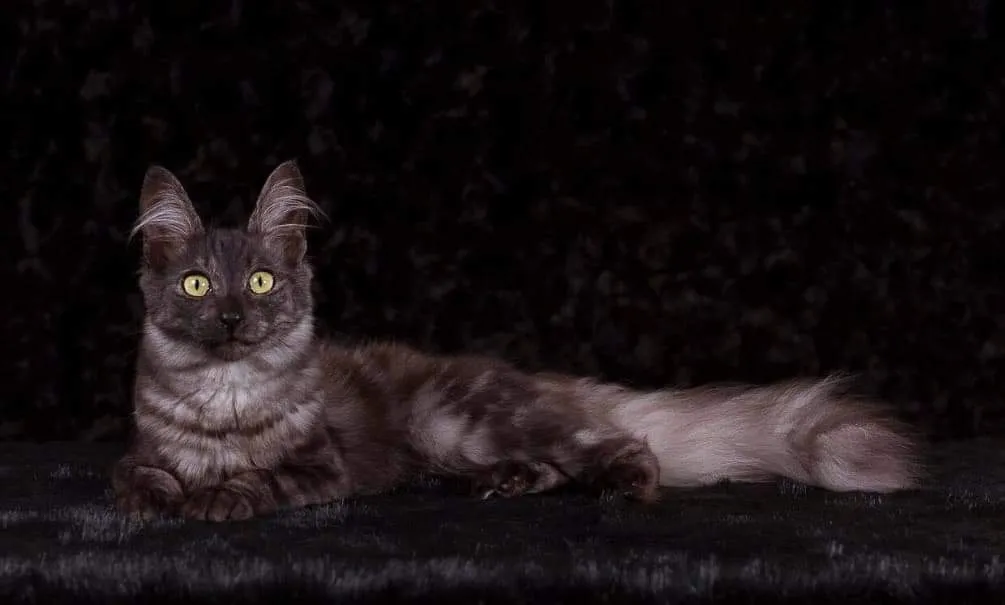 black turkish angora lying down on a black background
The Turkish Angora boasts a smooth, silky coat that is both beautiful and low-maintenance due to the absence of an undercoat, which reduces the likelihood of matting. Weekly brushing is recommended. While not known for being overly cuddly, they enjoy active play and tend to be quite vocal. They are known to be very active and enjoy playing with people and other pets.
Turkish Van
The Turkish Van is another longhaired breed with manageable grooming needs. Interestingly, their coat develops over time, growing longer as they mature. Their coat length fluctuates seasonally, being shorter in summer and thicker in winter. Throughout the year, they maintain a full, bushy tail and distinctive ear tufts.
Essential Care for Longhaired Cat Breeds
Caring for longhaired cats generally aligns with the needs of all felines, requiring proper nutrition, mental stimulation, and basic necessities like a litter box and toys. However, breeds with long fur demand a significant commitment to grooming. Regular brushing is paramount for removing loose fur, dander, and maintaining coat health. Investing in appropriate combs and brushes is essential.
It’s crucial to employ proper brushing techniques and make the experience positive for your cat through affection and treats. Avoid over-brushing, which can damage the coat. For severe matting that cannot be easily resolved, professional grooming is advisable. Regular visits to a groomer can be beneficial, especially for very fluffy breeds like Persians and Siberians, ensuring their coats remain in optimal condition. Consider exploring breeds like the grey and white domestic shorthair cat for potentially lower grooming requirements.
WRITTEN BY
Erica Puisis
Freelance Writer
