
Life with multiple cats can be incredibly rewarding, filled with purrs, snuggles, and companions who entertain each other. However, when cats start fighting, the joy diminishes, replaced by stress and concern. Even cats who have coexisted peacefully for years can suddenly develop animosity under certain circumstances. You might not have witnessed the exact moment the conflict began, and sometimes, the triggers are not obvious.
A common scenario involves two cats who have lived harmoniously for years. One cat may go to the veterinarian for a routine check-up, dental work, or another health issue. Upon their return, they might seem a bit off, which is understandable given the stress of a vet visit. While regular trips to the veterinarian are absolutely necessary for maintaining your cat’s health, the change in scent and demeanor after a vet visit can sometimes disrupt their established relationship. [cite:1, cite:0] The cats might seem fine initially, or a fight could erupt immediately. Following this, their relationship is fundamentally altered. Cats that once lounged and played together can no longer be in the same room without conflict. They may appear more stressed than usual and simply not act like their former selves.
This dynamic can be equally tough on their human companions. The desire to see your feline friends be buddies again, free from the worry of one attacking the other, is strong. The question then becomes: Will life ever return to normal?
Why Do Cats Fight?
The reasons behind feline aggression vary, but in the scenario described above, a primary cause is non-recognition aggression. This might seem strange to us, but smell plays a crucial role in how cats identify each other. If one cat returns from the vet smelling and behaving differently, the other cat may perceive them as an unfamiliar intruder.
Cats are highly territorial, and unfamiliar cats are often met with suspicion and hostility. A cat feeling threatened by this perceived new presence in their territory may react defensively. The other cat, who might have recognized their companion, now feels threatened by their former friend, leading to fear whenever they see each other.
In other instances, cats may have never gotten along from the start, perhaps due to personality clashes or improper introductions. This fear of each other is then reinforced with every subsequent fight. Another cause can be misinterpreting a scary event. For example, if a loud noise startles one cat, and another cat is nearby, the startled cat might mistakenly attribute the fear to the other feline and act aggressively.
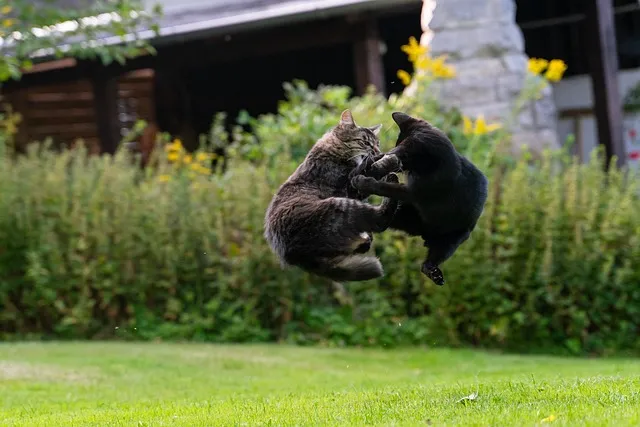 Two cats fighting while flying through the air.This is not a friendly aerial wrestling match. *Photo by René Schindler.*
What Do I Do If My Cats Are Fighting?
The immediate goal is usually to restore peace to your home. In some cases, cats may return to their normal behavior without significant intervention. However, these situations often require time and a structured approach to resolve. To help your cats become friends again, a process called reintroduction may be necessary.
What Are Reintroductions?
Reintroductions are designed to teach each cat that the other is not a threat and that positive experiences occur when they are around. When performed correctly, this process is often successful, though it can take months to achieve a semblance of normalcy. The duration and difficulty can increase with each negative interaction the cats have. In some unfortunate cases, resolution may not be possible, and rehoming might be the best option.
This process mirrors the initial introduction of cats but requires a more precise and gradual approach. It’s crucial to keep the cats completely separated during reintroductions, except during planned sessions where they are allowed to see each other.
The reintroduction process can be lengthy and emotionally taxing for humans. Attempting it alone can be challenging, even with a reliable guide. Fortunately, experienced guidance can make a significant difference. Reintroductions are a common reason why professional help is sought for feline behavioral issues. [cite:8, cite:6] If you are prepared to invest the time and effort, seeking assistance can greatly improve the chances of success.
What Are Alternatives To A Reintroduction?
If a full reintroduction seems daunting, several other strategies can be employed to mitigate conflict, though their success rates vary. Pheromone diffusers are often suggested; while generally harmless, they typically offer limited benefits. It’s worth trying if you wish, but manage your expectations.
Fix The Underlying Problem
Identifying and addressing the root cause of the conflict is key. For instance, if both cats desire the same favorite cat tower, providing a second one can alleviate immediate tension. [cite:10, cite:11] While this may reduce fighting, repairing the damage to their relationship might still require further effort.
Separating the cats for a few hours or days can also be beneficial, ensuring all their needs are met during this period. During separation, complete visual separation is essential. This might involve using draft guards under doors or window films to prevent them from seeing each other.
What Not To Do
Several actions should be avoided. Historically, allowing cats to “fight it out” was common advice, but this is now recognized as a detrimental approach. It doesn’t guarantee resolution and increases the risk of injury. It’s better to actively manage the situation and facilitate a calmer coexistence.
While some online guides recommend feeding cats near each other, this is often less effective than suggested and is not recommended by current AAFP guidelines on intercat tension. [cite:14, cite:13] Building positive associations is beneficial, but cats generally prefer to eat separately, so forcing proximity during meals can create more problems. They might tolerate each other simply to eat, but this doesn’t erase underlying animosity.
If your cats are actively fighting, it’s crucial to break up the conflict safely without putting your hands between them, as this can lead to bites.
Is There Hope For My Fighting Cats?
This is a frequent question from individuals seeking help. While numerous factors influence a cat’s tolerance of another, many fighting cats can learn to coexist peacefully, provided a rapid resolution isn’t expected. Sometimes, situations improve naturally over time. In other cases, deliberate intervention is required. With patience, it’s often possible to create a home environment free from constant feline conflict.
Need help fixing your fighting cats?
Set Up a Consultation
