
The tortoiseshell cat, affectionately known as the “tortie,” is a true masterpiece of the feline world. With their uniquely mottled coats that resemble the intricate patterns of natural tortoiseshell, these cats are visually stunning and possess a personality as vibrant as their coloring. Often described as vocal, energetic, and fiercely independent, torties are known for their spirited nature and the distinct “tortitude” they bring to any household. This guide delves into the fascinating world of tortoiseshell cats, exploring their characteristics, variations, and the charming lore that surrounds them. Discover what sets a tortie apart and why they are considered a special companion.
What Exactly is a Tortoiseshell Cat?
It’s important to understand that “tortoiseshell” is not a breed but rather a coat pattern. Much like tabby or calico markings, the tortoiseshell pattern can appear in various purebred and mixed-breed felines. The name originates from the once-popular material made from the shells of tortoises and turtles, known for its beautiful, mottled appearance. This distinctive pattern is more commonly observed in certain cat breeds, contributing to their unique allure.
Common Breeds Featuring the Tortoiseshell Pattern
While not a breed itself, the tortoiseshell pattern is frequently seen in breeds such as the American Shorthair, Japanese Bobtail, Cornish Rex, and Devon Rex, among others. These breeds, when exhibiting the tortie coat, often embody the breed’s typical characteristics alongside the tortoiseshell’s distinctive temperament.
Distinguishing Tortoiseshell from Calico Cats
A frequent point of confusion arises when comparing tortoiseshell and calico cats, as both feature multi-colored coats. The key differentiator is the presence of white. Calico cats typically display a tri-color pattern of white, black, and red or orange. In contrast, tortoiseshell cats combine two colors other than white, most commonly black and red. However, these base colors can manifest in various shades: “red” might appear as orange, yellow, or cream, while “black” can range to chocolate, grey, or blue. Therefore, if a multi-colored cat has white patches, it is more likely a calico.
A Spectrum of Tortoiseshell Variations
The beauty of the tortoiseshell cat lies not only in its common form but also in its diverse variations, each with unique characteristics:
Bridled Tortoiseshell
In a bridled tortoiseshell, the colors appear intricately woven together, creating a fluid, blended effect in the coat.
Dilute Tortoiseshell
This variation results from recessive genes that soften the coat colors. Dilute torties display pastel-like hues, such as cream, lilac, or cinnamon, giving them a distinctively gentle appearance.
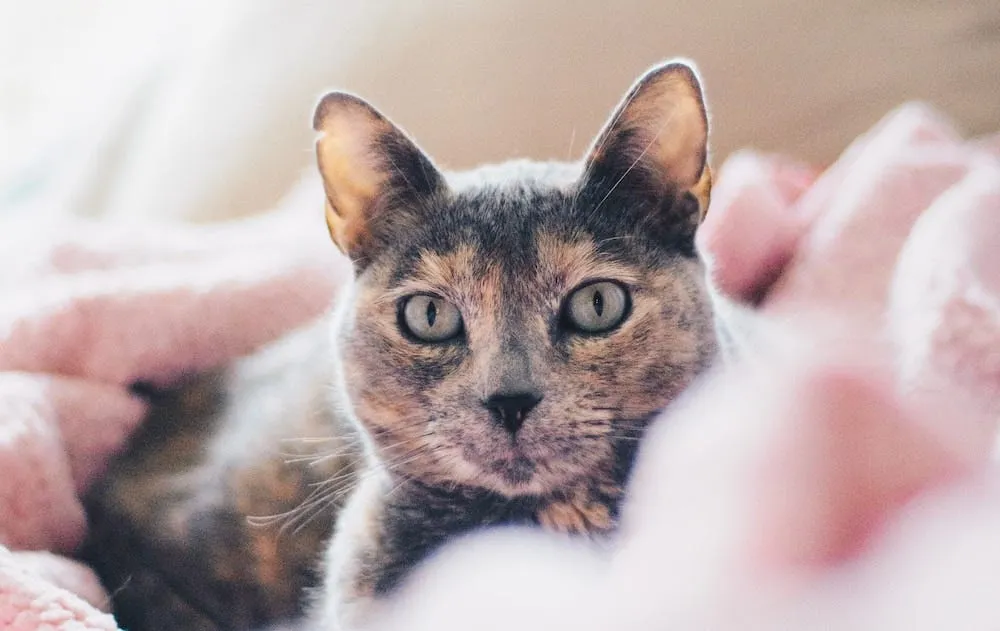 A dilute tortoiseshell cat with soft, pastel-colored fur.
Tortoiseshell Tabby (Torbie)
The “torbie” is a fascinating combination of tortoiseshell and tabby patterns. These cats often feature patches of brown and orange tabby stripes, with markings typically more pronounced on the head and legs.
Chimera Tortoiseshell
The rarest of all tortie variations, the chimera tortoiseshell is formed when two embryos merge in utero. This results in a cat with distinctly different colors on each half of its body, a striking example being Venus the “Two Face Cat.”
The Genetic Anomaly: Why Most Torties are Female
A remarkable genetic fact about tortoiseshell cats is that approximately 99.9% of them are female. This phenomenon is linked to the X chromosome, which carries the genes for coat color. Since females have two X chromosomes (XX), they can carry both the black and red color genes simultaneously. Males, with one X and one Y chromosome (XY), typically only inherit one of these colors.
Rarely, a male cat can be born with an XXY chromosome configuration, leading to the tortoiseshell pattern. These male torties, however, are almost always sterile and often face various health issues due to their genetic makeup. While some male chimera torties may be fertile, it is still recommended to neuter all male cats.
“Tortitude”: The Tortoiseshell Personality
The term “tortitude” is widely used to describe the distinct personality traits often associated with tortoiseshell cats. Owners frequently describe them as sassy, fierce, independent, and strong-willed, often likening them to the “divas” of the cat world. While a 2016 study by UC Davis Veterinary Medical Teaching Hospital did not find a definitive scientific link between fur patterns and behavior, the overwhelming anecdotal evidence from tortie owners suggests a unique temperament. These cats are known for being vocal about their needs, whether it’s a clean litter box or a desire for affection. Their bold and sometimes bossy demeanor, coupled with their affectionate side, makes them captivating companions.
Lifespan and Health Considerations
The lifespan of a tortoiseshell cat generally ranges from 14 to 18 years, with many living long and healthy lives into their early twenties. However, this can vary depending on the specific breed. Male tortoiseshell cats, due to their rarity and associated genetic health problems, tend to have shorter lifespans. It is crucial for owners of male torties to ensure regular veterinary check-ups and vigilant health monitoring.
Tortoiseshell Cats: Symbols of Good Luck
Across various cultures, tortoiseshell cats are revered as bringers of good fortune:
- Japan: Believed to protect homes from evil spirits.
- England: Folklore suggests rubbing a tortie’s tail on a wart can cure it.
- United States: Often referred to as “money cats,” they are thought to attract wealth.
- Southeast Asia: Legend states that tortie cats were formed from the blood of a young goddess.
- Ancient Celts & Ireland: The presence of a male tortie cat in the home was considered a sign of good luck, and their appearance in a home was seen as a positive omen.
A Literary Connection: Edgar Allan Poe and His Tortie
The allure of the tortoiseshell cat extended even to renowned author Edgar Allan Poe, who cherished his tortie named Cattarina. This bond was so profound that Cattarina remained with Poe until his final weeks. The Poe Museum in Richmond, Virginia, even named a trio of rescued kittens Edgar, Pluto, and Cattarina, further cementing the cat’s literary legacy.
Fascinating Tortie Tidbits
Beyond their genetic and cultural significance, tortoiseshell cats are subjects of various intriguing beliefs:
- Some believe torties possess psychic abilities and can glimpse the future.
- Dreaming of a tortoiseshell cat is said to foretell an upcoming romance.
- A bride hearing a tortie sneeze on her wedding day is considered a sign of good luck.
These captivating felines, with their striking coats and spirited personalities, offer a unique blend of beauty, charm, and mystique, making them truly special companions for any cat lover.
