
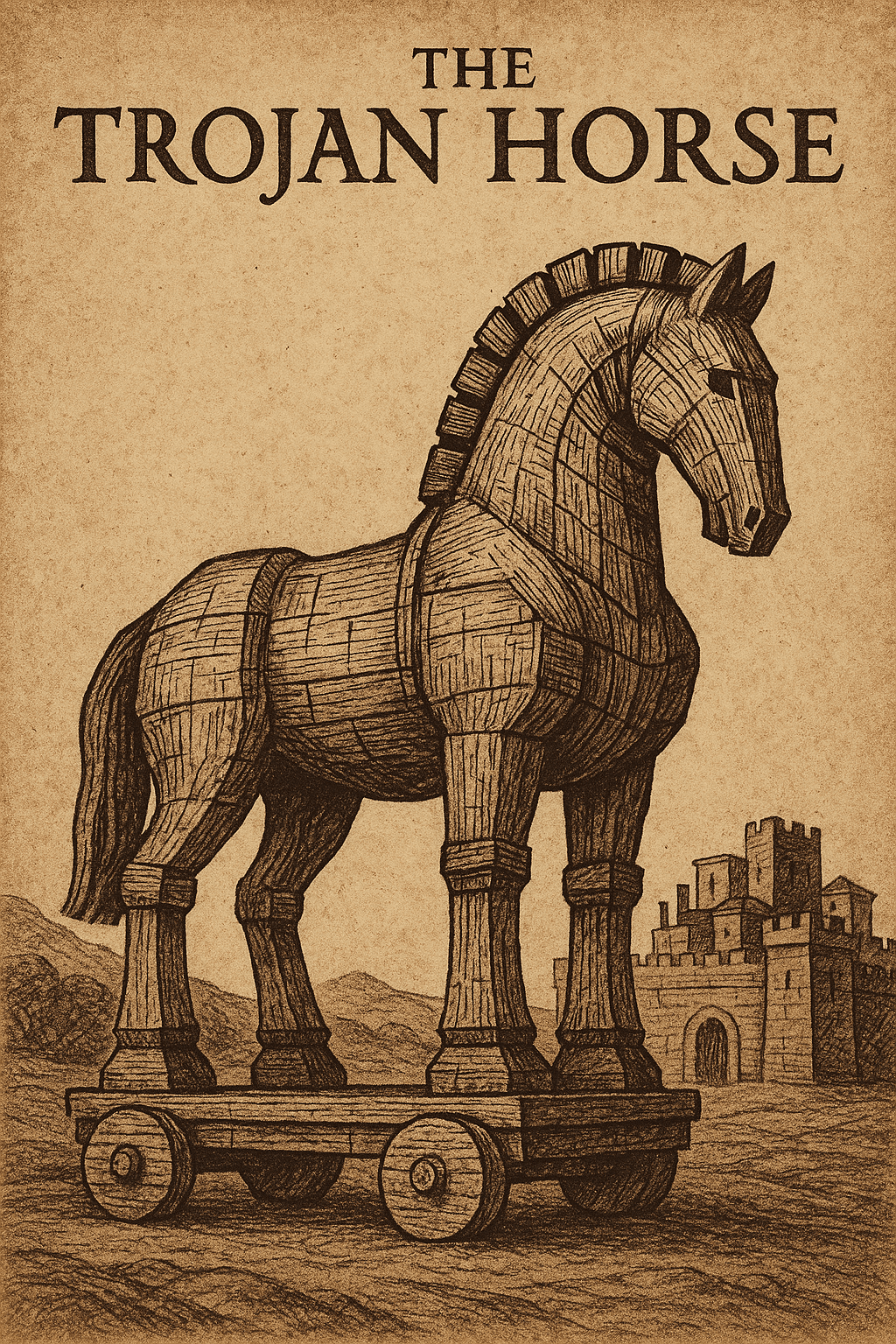
For millennia, the tale of a giant wooden horse has captivated audiences, serving as the ultimate symbol of cunning, deception, and the devastating fall of a great city. If you’re looking for a Trojan Horse Story Pdf to read, print, or share, you’ve come to the right place. This article not only guides you to the classic narrative but also delves into the rich history, mythology, and enduring legacy behind one of the most famous stratagems ever conceived. The story is a masterclass in psychological warfare, a pivotal moment in Greek mythology that marked the end of the legendary Trojan War.
What is the Story of the Trojan Horse? A Detailed Summary
The Trojan War, a brutal conflict between the Achaeans (Greeks) and the city of Troy, had raged for ten long years. Despite their formidable army, the Greeks could not breach the city’s impenetrable walls. The Trojans, equally resilient, could not drive the invaders from their shores. A bloody stalemate had descended upon the battlefield, and morale was low on both sides.
Odysseus’s Master Plan
With brute force failing, the cunning Greek hero Odysseus of Ithaca proposed a radical new approach—one based on guile rather than strength. The plan was as audacious as it was brilliant: the Greeks would build a colossal wooden horse and offer it as a gift to the Trojans, supposedly as a tribute to the goddess Athena to ensure a safe voyage home. However, the horse’s hollow belly would conceal a select group of elite Greek warriors, led by Odysseus himself.
The Great Horse and the Feigned Retreat
The Greeks set to work under the guidance of the master artisan Epeius. They constructed an enormous, magnificent horse from fir planks, so large that the Trojans would have to tear down a section of their own city walls to bring it inside. Once the horse was complete, the chosen soldiers, including the fearsome Menelaus, crept inside its dark, cavernous interior.
The rest of the Greek army played their part to perfection. They burned their camps, boarded their ships, and sailed away from the shores of Troy. However, they did not go far, hiding just beyond the island of Tenedos, waiting for the signal to return. To complete the deception, one man was left behind: a Greek spy named Sinon, tasked with the perilous mission of convincing the Trojans to accept the “gift.”
Deception and Dire Warnings
When the Trojans awoke, they were astonished to find the Greek army gone and the gigantic horse standing before their gates. As they marveled at the structure, Sinon emerged, presenting himself as a deserter. He spun a masterful tale of woe, claiming he had escaped the Greeks after being chosen as a human sacrifice by the cruel Odysseus. He explained that the horse was an offering to Athena, deliberately made too large to fit through Troy’s gates. If the Trojans were to destroy it, he claimed, they would incur Athena’s wrath. But if they brought it into their city, the goddess’s favor would shift to Troy, making it invincible.
The Trojans were largely convinced, but not all. The priest Laocoön passionately warned his countrymen, “I fear the Greeks, even when they bear gifts.” In a fit of frustration, he hurled his spear at the horse’s side, and the sound of clanging armor echoed from within. But at that moment, two giant sea serpents emerged from the ocean and devoured Laocoön and his two sons. The Trojans interpreted this horrific event as a sign of divine punishment for disrespecting the sacred offering. The prophetess Cassandra also foretold the city’s doom, but her curse was never to be believed. Her warnings, too, were dismissed.
The Fall of Troy
Blinded by Sinon’s lies and the apparent divine omen, the Trojans celebrated their perceived victory. They tore down a section of their mighty walls and triumphantly wheeled the colossal horse into the heart of their city. The day was filled with feasting and revelry, and as night fell, the exhausted and intoxicated Trojans fell into a deep sleep.
In the dead of night, as the city lay silent, Sinon crept to the horse and released the lock. Odysseus and his warriors descended from their hiding place, their swords gleaming in the moonlight. They swiftly killed the city’s sentries and opened the main gates. A signal fire was lit, and the Greek fleet, which had sailed back under the cover of darkness, stormed into the now-defenseless city. The sack of Troy was brutal and absolute. The city was burned to the ground, its people were slaughtered or enslaved, and the ten-year war came to a bloody and decisive end. The story is a timeless lesson, much like the story of the trojan horse, which explores similar themes of strategy and consequences.
Where Does the Trojan Horse Story Come From?
Interestingly, the most famous part of the Trojan War is not actually in its most famous epic, Homer’s Iliad. The Iliad concludes with the funeral of the Trojan hero Hector, before the city’s fall.
The most detailed and influential account of the Trojan Horse comes from the Roman poet Virgil in his epic poem, the Aeneid, written in the 1st century BC. Book II of the Aeneid is narrated by the Trojan prince Aeneas, who describes the fall of his city to the Carthaginians. It is from Virgil that we get the most vivid details of the story, including the deception of Sinon and the tragic fate of Laocoön.
Homer does, however, allude to the story in his other great epic, the Odyssey. While recounting his adventures, Odysseus is told a story of how Helen of Troy walked around the horse, calling out the names of the Greek warriors inside in the voices of their wives, tempting them to reveal themselves. Odysseus had to physically restrain his men from answering. This brief mention confirms the myth was well-known in Greek oral tradition long before Virgil wrote it down.
Is the Trojan Horse Story Real? Fact vs. Myth
The question of the story’s historical accuracy has fascinated scholars for centuries. For a long time, Troy itself was considered a mythical place. However, in the 1870s, archaeologist Heinrich Schliemann excavated a site in modern-day Turkey that is now widely accepted as the historical location of Troy. Archaeological findings show that the city was destroyed and rebuilt multiple times, with one layer of destruction dating to the late Bronze Age (around 1200 BC), consistent with the timeframe of the Trojan War.
However, there is no direct archaeological evidence for the existence of a giant wooden horse. Most historians and archaeologists believe the horse itself is a poetic invention, a powerful metaphor rather than a literal object.
“The Trojan Horse is a brilliant narrative device, likely representing a historical truth wrapped in myth,” suggests Dr. Alistair Finch, a fictional classicist. “It could be a symbolic retelling of how a clever siege engine, perhaps a battering ram covered in wet horse hides to protect it from flaming arrows, finally breached Troy’s defenses. Or perhaps it represents an earthquake that toppled the walls, an event the ancients might have attributed to the earth-shaker god Poseidon, who was also associated with horses.”
Ultimately, whether fact or fiction, the story’s power lies in its themes of deception, betrayal, and the dangers of underestimating an opponent.
How to Download Your Trojan Horse Story PDF
Finding a trojan horse story pdf is simple, as the ancient texts are in the public domain. This makes them freely and legally available for reading, printing for classroom use, or personal study. A PDF format is ideal for offline access and maintaining the original formatting of the text.
Here are the best places to look:
- Project Gutenberg: This is one of the largest digital libraries of free public domain ebooks. A quick search will yield translations of Virgil’s Aeneid and Homer’s Odyssey.
- University and Educational Websites: Many classics departments at universities offer free PDFs of ancient texts and summaries as educational resources for their students.
- Digital Archives: Websites like the Internet Archive often have multiple scanned versions of published translations of the story.
When searching, use terms like “Virgil Aeneid Book 2 PDF” or “Homer Odyssey English translation PDF” to find the original sources. For a more condensed version, search for “Trojan War summary for students PDF.”
The Legacy of the Trojan Horse
The story’s impact on Western culture is immeasurable. The phrase “Trojan horse” has become a universal metaphor for any trick or stratagem that causes a target to invite a foe into a securely protected bastion or place. Its most famous modern application is in computing, where “Trojan horse” or “Trojan” refers to a type of malicious software that disguises itself as a legitimate program to gain access to a user’s system.
From Shakespeare to modern Hollywood films, the tale has been retold and reinterpreted countless times, a testament to its timeless appeal. It serves as a powerful reminder that even the mightiest walls can be brought down not by force, but by intellect and deception. The narrative continues to be a cornerstone of classical education, teaching valuable lessons about critical thinking and the importance of looking beyond surface appearances, a concept further explored in the story of trojan horse.
Frequently Asked Questions (FAQ)
Who came up with the idea of the Trojan Horse?
The idea for the Trojan Horse is credited to Odysseus, the king of Ithaca and one of the cleverest Greek heroes. His plan was to use deception to get inside the city walls when a decade of direct assault had failed.
Why did the Trojans accept the horse?
The Trojans accepted the horse due to a combination of factors: the convincing lies of the Greek spy Sinon, their belief that it was a sacred offering to Athena, their war-weariness, and their interpretation of the priest Laocoön’s gruesome death as a divine sign that the horse was not to be harmed.
Is the Trojan Horse story in the Iliad?
No, the story is not found in Homer’s Iliad. The epic ends with the funeral of Hector, before the final sack of the city. The most complete classical account comes from Book II of Virgil’s Aeneid.
What does a “Trojan Horse” mean today?
Today, a “Trojan horse” refers to a deceptive scheme that tricks someone into willingly allowing a destructive element into a protected environment. It is most commonly used to describe a type of computer virus that masquerades as harmless software.
Was Troy a real city?
Yes, Troy is believed to be a real historical city. The archaeological site at Hisarlik in modern-day Turkey is widely accepted by scholars as the location of ancient Troy. Evidence shows the city was destroyed multiple times, aligning with the legends of a great war.
Conclusion
The story of the Trojan Horse is far more than just a myth; it is a foundational story of Western literature about the triumph of cunning over strength. It explores timeless themes of hubris, deception, and the bitter realities of war. Whether you’re a student of the classics, a history enthusiast, or simply a lover of a great story, having a trojan horse story pdf on hand provides easy access to this legendary tale. From the battlefields of ancient Greece to the digital frontiers of cybersecurity, the legacy of Odysseus’s wooden horse proves that the most effective weapon is often the one you never see coming.
