
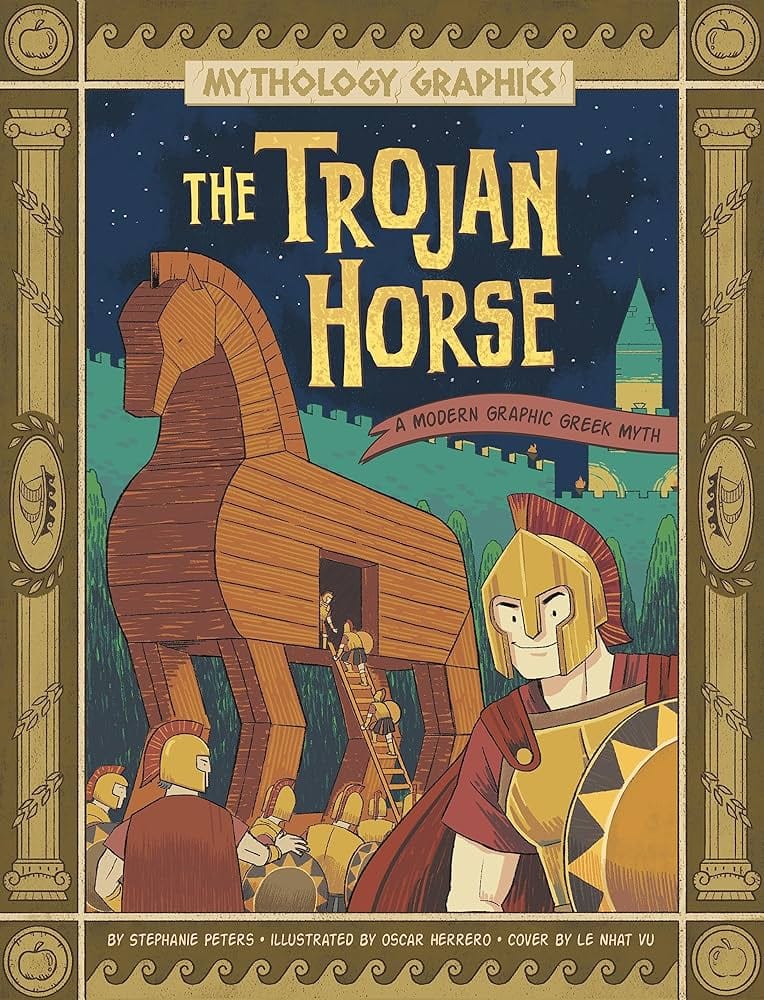
The annals of history and myth are filled with tales of great battles, clever strategies, and heroic deeds, but few are as iconic or enduring as the Trojan Horse Story In English. It’s a classic tale of deception, a testament to the old saying that brains can triumph over brawn. This is not just a story about a wooden horse; it’s a narrative about the culmination of a decade-long war, the ingenuity of a desperate army, and the catastrophic fall of a great city. It has captivated audiences for millennia, serving as a powerful lesson on the dangers of pride and the importance of looking a gift horse in the mouth.
At its heart, the story is a pivotal chapter in the saga of the Trojan War, a conflict waged between the Achaeans (the Greeks) and the city of Troy. For ten grueling years, Greek forces laid siege to the impenetrable walls of Troy, but the city held firm. Heroes rose and fell, battles were won and lost, yet a stalemate persisted. It was in this climate of exhaustion and frustration that one of Greece’s most brilliant minds, Odysseus, conceived a plan so audacious it would either secure a legendary victory or seal their utter defeat. This plan revolved around a single, monumental deception: a giant wooden horse. Understanding this story is more than just recalling an ancient myth; it’s about appreciating a masterpiece of military strategy and psychological warfare that has echoed through the ages.
The Spark of War: A Tale of Love and Betrayal
To truly grasp the significance of the Trojan Horse, one must first understand the conflict that spawned it. The Trojan War, as chronicled in Homer’s epic poems, the Iliad and the Odyssey, was not just a war for territory but one sparked by passion and a broken pact. It all began with Paris, a prince of Troy, who was asked to judge a divine beauty contest between the goddesses Hera, Athena, and Aphrodite. Each offered him a bribe: Hera promised power, Athena offered wisdom and victory in battle, but Aphrodite tempted him with the most beautiful mortal woman in the world—Helen, Queen of Sparta.
Paris, swayed by the promise of love, chose Aphrodite. The only problem was that Helen was already married to Menelaus, the King of Sparta. When Paris visited Sparta on a diplomatic mission, he abducted Helen (or she willingly eloped, depending on the version of the tale) and took her back to Troy. Enraged, Menelaus invoked a sacred oath sworn by all of Helen’s former suitors to defend her marriage. His brother, Agamemnon, King of Mycenae, rallied a massive Greek army to sail to Troy and bring Helen back, thus beginning the ten-year Trojan War. This conflict was a clash of titans, featuring legendary warriors like the nigh-invulnerable Achilles for the Greeks and the noble Hector for the Trojans.
A War of Attrition and a Stroke of Genius
For ten long years, the war raged on. The Greeks, despite their superior warriors like Achilles and Ajax, could not breach the formidable walls of Troy. The Trojans, led by King Priam and his valiant son Hector, were equally determined to defend their homeland. The conflict devolved into a brutal stalemate, with heavy losses on both sides. The Iliad famously chronicles a period during this final year, focusing on the wrath of Achilles and the death of Hector, but it ends before the city’s fall, leaving the tale of the Trojan Horse to other works like Virgil’s Aeneid.
With morale at an all-time low and victory seeming impossible, the Greeks were on the verge of admitting defeat. It was then that Odysseus, the cunning king of Ithaca, proposed his masterstroke. He argued that if they couldn’t conquer Troy by force, they would have to do it by guile. His idea was to build a colossal wooden horse, hollow on the inside, and present it as a votive offering to the goddess Athena for a safe voyage home. The Greek army would pretend to sail away, leaving the horse behind on the shores of Troy. However, a select group of their finest soldiers, led by Odysseus himself, would be hiding inside the horse’s belly. The entire strategy hinged on the Trojans’ willingness to accept the gift and bring it inside their fortified city. While the Trojan Horse is a tale of wartime deception, other narratives explore the bond between man and animal in conflict, a theme beautifully captured in the war horse story line.
The Deception Unfolds
The construction of the horse was a massive undertaking, led by the master craftsman Epeius. Once completed, it stood as a magnificent, yet ominous, monument on the plains before Troy. As planned, the Greek fleet burned their camps and set sail, but they only went as far as the nearby island of Tenedos, where they hid out of sight. They left behind one man, a spy named Sinon, who was tasked with the crucial role of persuading the Trojans to accept the gift.
When the Trojans awoke to find the Greek army gone and the giant horse standing in their place, they were bewildered. They discovered Sinon, who pretended to be a deserter who had escaped a Greek sacrifice. He spun a masterful tale of lies, claiming that the horse was an offering to Athena. He explained that the Greeks had built it so large specifically to prevent the Trojans from taking it inside their city because a prophecy foretold that if the horse entered Troy, the city would become invincible. This lie was designed to play on Trojan pride and piety, turning their greatest strength—their faith—into their fatal weakness.
“Beware of Greeks bearing gifts.” – Laocoön
Not everyone was convinced. The Trojan priest Laocoön warned his people, famously declaring, “I fear the Greeks, even when they bring gifts.” To prove his point, he hurled a spear at the horse’s side, which produced a hollow, echoing sound. At that moment, divine intervention sealed Troy’s fate. Two giant sea serpents emerged from the ocean and devoured Laocoön and his two sons. The terrified Trojans interpreted this as a sign of Athena’s wrath, believing Laocoön was punished for desecrating a sacred object. Their doubts erased, they celebrated their apparent victory, tore down a section of their own impenetrable walls, and wheeled the colossal horse into the heart of their city.
The Fall of a Great City
That night, the Trojans celebrated the end of the war with feasting and revelry, oblivious to the doom they had just welcomed into their home. Once the city was cloaked in the darkness and silence of a drunken sleep, the next phase of the plan began. Sinon released a signal, and the hidden Greek fleet sailed back to Troy from Tenedos. Inside the city, Odysseus and his fellow warriors emerged from the belly of the horse. This small, elite force was the key to unlocking the city from within. They silently killed the sentries and opened the city gates, allowing the returned Greek army to pour into Troy.
The slaughter that followed was absolute. The Trojans, caught completely by surprise and disoriented from their celebrations, were mercilessly cut down. The city that had stood defiant for a decade fell in a single night of fire and blood. King Priam was killed, the Trojan men were slaughtered, and the women and children were taken into slavery. The great city of Troy was sacked, looted, and burned to the ground. Helen was reunited with Menelaus, and the Greeks, having finally achieved their victory, prepared to sail home. The trojan horse story in english thus concludes not with a heroic battle, but with a tragic and brutal massacre, a stark reminder of the harsh realities of war. The narrative’s structure, focusing on a single, pivotal object, provides a fascinating contrast to a more linear horse short story.
Is the Trojan Horse Story Real?
A lingering question for historians and enthusiasts alike is whether the Trojan Horse was a real object or a literary invention. For centuries, the Trojan War itself was considered pure myth. However, archaeological excavations in the 19th century at Hisarlik, in modern-day Turkey, uncovered the ruins of a city that strongly matches the descriptions of ancient Troy. Evidence of a violent conflict and destruction around the 12th century BCE suggests that a war, or a series of conflicts, likely did occur.
However, there is no direct archaeological evidence of a giant wooden horse. Most historians believe the horse is likely a poetic metaphor. It could represent a particular type of siege engine used to breach the city walls, which perhaps resembled a horse in some way. Another popular theory is that the “horse” was a metaphor for an earthquake that destroyed Troy’s walls, as the god Poseidon, who was associated with horses, was also the god of earthquakes. Regardless of its historicity, the power of the trojan horse story in english lies in its symbolism and the lessons it imparts. It is a powerful allegory for how deception can bypass even the strongest physical defenses.
The Enduring Legacy of the Trojan Horse
The story of the Trojan Horse has permeated Western culture and language for thousands of years. Its influence is undeniable.
- A Common Idiom: The phrase “Trojan horse” has become a universal metaphor for any trick or strategy that causes a target to invite a foe into a securely protected bastion or place. It describes a form of subterfuge that attacks from the inside.
- In Cybersecurity: In the modern digital age, the term has been famously adopted to describe a type of malicious software. A “Trojan horse” virus disguises itself as legitimate software to trick a user into installing it, thereby giving the malware access to their computer system from the inside.
- Lessons in Strategy: The story is a timeless case study in military and psychological operations. It highlights the importance of intelligence, deception, and understanding an opponent’s psychology, teaching that the most effective attacks often target an enemy’s biases and assumptions. While this story illustrates a mythical strategy, one might find a different kind of narrative in a princess and horse story.
The story serves as a cautionary tale about the dangers of hubris and complacency. The Trojans’ belief that they had won, their pride, and their dismissal of warnings led directly to their downfall. They failed to question the nature of the “gift” left by their enemies, a fatal error in judgment.
Frequently Asked Questions (FAQ)
Who was inside the Trojan Horse?
While the exact list varies between accounts, the most prominent Greek heroes hidden inside included Odysseus (the mastermind), Menelaus (the wronged husband of Helen), Diomedes, and Neoptolemus (the son of Achilles). A total of 30 to 50 of the best Greek warriors were said to be concealed within.
What is the moral of the Trojan Horse story?
The primary moral of the story is to be wary of accepting gifts or propositions from your enemies, as encapsulated by the famous warning, “Beware of Greeks bearing gifts.” It also serves as a lesson on the dangers of pride and the power of cunning and intellect over brute force.
How long was the Trojan War before the Trojan Horse?
The Trojan War lasted for ten years before the Trojan Horse strategy was employed. For nine of those years, the conflict was a brutal stalemate, with the Greek forces unable to breach Troy’s walls. The horse was the desperate, final gambit that brought the long war to a close.
Where does the Trojan Horse story come from?
The story is not detailed in Homer’s Iliad, which ends before the war’s conclusion. The most famous and comprehensive account comes from the Roman poet Virgil in his epic, the Aeneid. The story is also referenced in Homer’s Odyssey, where the events are recounted by characters who were there.
Why was the Trojan Horse built as an offering to Athena?
The horse was presented as an offering to Athena to ensure a safe journey home for the Greeks and to atone for the desecration of her temple in Troy. This was a clever lie designed to appeal to the Trojans’ religious piety and make them believe the object was sacred and should be protected, not destroyed.
A Story for the Ages
The trojan horse story in english remains one of the most compelling narratives ever told. It is a rich tapestry of war, heroism, deception, and tragedy. It explores the depths of human ingenuity and the fatal flaws of human pride. From the battlefields of ancient Greece to the firewalls of modern computers, the legacy of Odysseus’s clever stratagem endures. It reminds us that the greatest threats often come disguised as gifts and that the strongest walls are useless if the gates are willingly thrown open from the inside. This epic tale is more than just a myth; it is a timeless lesson etched into the consciousness of Western civilization.
