
For decades, if you walked through a field with a professional dog trainer or a serious hunter, you’d likely see a specific piece of gear in their hand: a remote from Tri-Tronics. The name became synonymous with reliability, precision, and excellence in the world of dog obedience. Today, while the name on the box has changed, the legacy behind Tri-Tronics training collars for dogs is stronger than ever. Understanding this story is the key to unlocking one of the most effective training tools available for your canine partner. While technology has evolved, exploring options like the best remote dog training collar shows how these foundational concepts have been refined for modern use.
This guide will walk you through the history of this iconic brand, explain how its technology works, and help you understand how these collars are used as a communication tool to forge a deeper, more reliable bond with your dog.
From Pioneer to Powerhouse: The Tri-Tronics Story
Founded in 1968, Tri-Tronics wasn’t just another company; it was a foundational pillar in the development of electronic training collars. In the early days, e-collars were often crude devices with limited, harsh settings. Tri-Tronics revolutionized the industry by pioneering systems with multiple, adjustable levels of stimulation. This shifted the focus from simple correction to nuanced communication, allowing trainers to use the lightest possible touch to get their dog’s attention.
Their reputation for building rugged, dependable gear made them the top choice for professionals who couldn’t afford equipment failure in critical situations. In 2011, this legacy of excellence caught the eye of another industry giant: Garmin. The acquisition merged Tri-Tronics’ unparalleled dog training expertise with Garmin’s cutting-edge GPS and electronic technology. The result is the modern lineup of Garmin e-collars, which carry the DNA and field-tested principles of the original Tri-Tronics systems.
What Exactly Are Modern Training Collars?
Let’s clear up a common misconception. The term “shock collar” brings to mind a punitive, painful device. However, that’s a world away from how modern Tri-Tronics training collars for dogs are designed and used. It’s more accurate to think of them as “communication collars” or “e-collars.” They operate on the same principle as a TENS unit used in physical therapy, creating a mild muscle stimulation, not a static shock.
These devices are designed to provide clear, unmistakable signals to a dog, especially when they are at a distance and can’t hear you. Modern systems typically offer three modes of communication:
- Tone: An audible beep that can be used to mark a behavior or as a warning, similar to a clicker.
- Vibration: A non-stimulating buzz, perfect for getting the attention of sensitive or hearing-impaired dogs.
- Static Stimulation: A range of electronic impulses, from a gentle tickle to a stronger sensation. The goal is never to punish, but to use the lowest level the dog can perceive to break their focus and redirect them to your command.
As canine behaviorist Dr. Emily Carter notes, “The magic of a modern e-collar isn’t in its power, but in its subtlety. It’s a remote tap on the shoulder, a way to communicate ‘Hey, listen to me’ across a field. When used with positive reinforcement, it builds confidence and reliability, giving dogs the freedom of off-leash exploration in a safe, controlled way.”
For those seeking robust options, the variety available, including the kind of dog training collar tractor supply might carry, demonstrates the wide range of choices for today’s dog owner.
Key Features of the Modern Garmin/Tri-Tronics Lineup
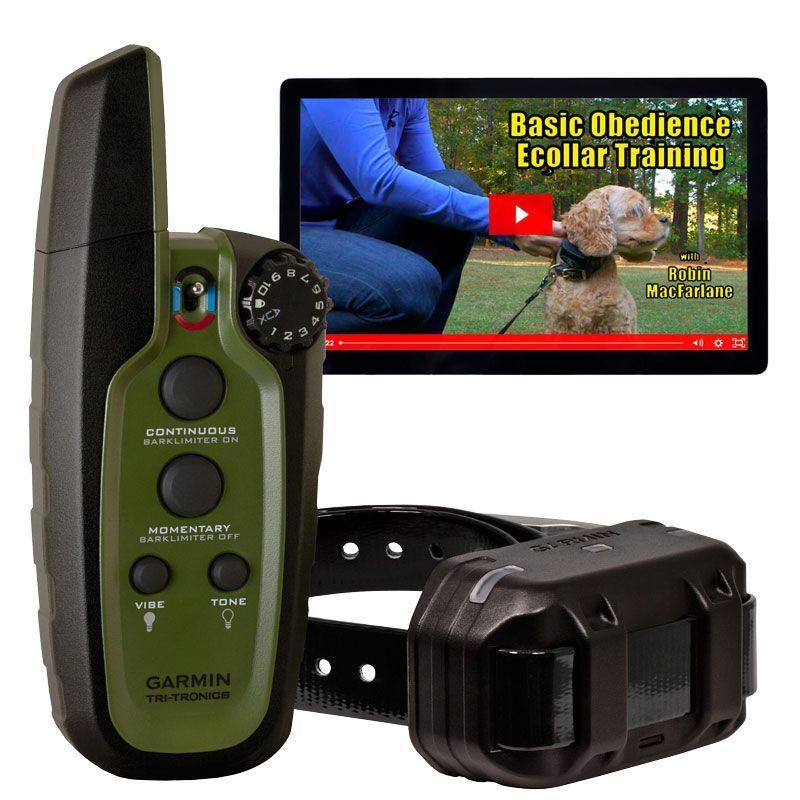
The spirit of Tri-Tronics lives on in Garmin’s PRO series collars. These units are packed with features designed for effectiveness, ease of use, and the dog’s safety. They are engineered to be field-ready and intuitive.
 A person using a Garmin PRO series remote to train a golden retriever in an open field, showcasing the intuitive one-hand operation of Tri-Tronics training collars for dogs.
Key features often include:
- Intuitive One-Hand Operation: The remotes are designed to be used without looking. The tactile dial and buttons allow you to adjust levels and deliver cues while keeping your eyes on your dog.
- Multiple Stimulation Levels: With 10 or more levels of momentary and continuous stimulation, you can find the exact “working level” for your dog—the lowest possible setting they can feel.
- Beacon Lights: Many collars include remote-activated, high-visibility LED lights, a crucial safety feature for training or hunting in low-light conditions.
- Built-in BarkLimiter: Some models, like the Sport PRO, double as an anti-bark collar, using accelerometer technology to distinguish between barking and other movements to eliminate false corrections. This integrated functionality makes it a versatile tool, similar in purpose to a premium dog training collar.
- Multi-Dog Expandability: A single remote can often be paired with up to three or even six collars, allowing you to manage a whole team of dogs seamlessly.
- Waterproof and Rugged Design: Built to withstand the harshest conditions, these collars are waterproof (often rated to 1 ATM) and made with durable materials.
How to Use a Training Collar Humanely and Effectively
A training collar is not a shortcut or a magic wand. It is a powerful tool that, like any other, requires knowledge and skill to be used correctly. When used improperly, it can cause confusion and anxiety. But when used as part of a balanced training program, it can unlock a new level of freedom and safety.
The process should always be slow, positive, and methodical.
Step 1: Find the “Working Level”
The first step is to find the lowest stimulation level your dog can perceive. You’re looking for a subtle reaction, like an ear twitch or a slight turn of the head—not a yelp. This usually happens at a very low number (e.g., 2 or 3 out of 10). This is your dog’s “working level,” the gentle tap on the shoulder you’ll use for training.
Step 2: Condition the Collar with Known Commands
Never just put the collar on and start correcting the dog for bad behavior. They won’t understand what the sensation means. Instead, layer the stimulation over a command they already know well, like “Sit” or “Come.”
For example, for the “Come” command:
- Say “Come” and gently guide them with a long leash.
- As you say the command, press the button at their working level.
- The moment the dog starts moving toward you, release the button.
- When they arrive, shower them with praise and a high-value treat.
The dog quickly learns: “That tapping sensation goes away when I move toward my human. Coming back is a great choice!”
Step 3: Proofing for Off-Leash Reliability
Once your dog understands what the stimulation means, you can use it to reinforce commands in more distracting environments. This is where the collar shines, providing a reliable line of communication when your voice is drowned out by distance, wind, or other noises. It’s the ultimate safety tool for preventing a dog from chasing after wildlife or running toward a busy road. Even for smaller companions, finding a suitable pet training collar for small dogs that applies these principles can be incredibly beneficial.
Are Tri-Tronics (Garmin) Collars the Right Choice for You?
These collars are a professional-grade tool designed for specific needs. They are an excellent choice for:
- Hunters and Sporting Dog Owners: For upland and waterfowl hunters, a reliable e-collar is non-negotiable for safety and control at a distance.
- Serious Trainers: Anyone involved in competitive obedience, field trials, or advanced training will appreciate the precision and reliability.
- Owners Needing Off-Leash Safety: If you live on a large property or frequent areas where off-leash freedom is possible, an e-collar provides a crucial safety net.
However, they might not be the first choice for everyone. A new puppy or a dog with severe fear or anxiety issues will benefit more from foundational positive reinforcement training before an e-collar is even considered. It’s always best to have a solid training base and, if possible, consult with a professional trainer who is experienced in the humane use of e-collars.
 Close-up of a waterproof Garmin training collar on a happy, well-trained German Shorthaired Pointer, highlighting the durability and features of Tri-Tronics training collars for dogs.
For those seeking a system that can withstand the elements, selecting the best waterproof dog training collar is essential for activities like hunting or hiking near water.
Frequently Asked Questions (FAQ)
Do they still make Tri-Tronics collars?
Yes, the technology, design principles, and legacy of Tri-Tronics are alive and well within the Garmin brand. Models like the Garmin PRO 550 and Sport PRO are direct descendants of the most popular Tri-Tronics systems.
Are Tri-Tronics collars safe and humane for dogs?
When used correctly, absolutely. The key is using the tool as a form of communication, not punishment. Finding the lowest working level and pairing it with positive reinforcement ensures the process is fair and clear for the dog, building confidence rather than fear.
What is the difference between momentary and continuous stimulation?
Momentary stimulation delivers a single, brief pulse, like a quick tap. It’s excellent for getting a dog’s attention. Continuous stimulation delivers a pulse for as long as you hold the button (up to a few seconds). It’s used for teaching commands, as the dog learns to turn the sensation off by complying.
How long can my dog wear the training collar?
The collar should fit snugly, but not too tight, allowing two fingers to fit between the strap and the dog’s neck. To prevent skin irritation, it’s crucial not to leave the collar on for more than 8-10 hours a day and to reposition it on the neck every couple of hours.
Can I use a training collar on a small dog?
Yes, but it’s important to choose the right model. Garmin offers collars with smaller receivers and lower stimulation ranges designed specifically for smaller breeds. Ensure the contact points are appropriately sized and the lowest levels are gentle enough for your dog.
The Enduring Legacy of Communication
The story of Tri-Tronics training collars for dogs is one of constant innovation driven by a deep respect for the human-animal bond. What began as a tool for professionals has evolved, under the Garmin name, into a sophisticated communication system accessible to any dedicated owner.
When used with patience, knowledge, and a positive mindset, these collars do more than just teach commands. They build a language between you and your dog that transcends distance and distraction. They create a confident, reliable off-leash partner and provide the peace of mind that comes from knowing your dog is safe, responsive, and connected to you, no matter where your adventures take you.
