
Many new dog owners assume that their canine companions instinctively know how to walk politely on a leash. The reality is, elegant leash manners are a learned skill, crucial for harmonious walks and a strong bond between you and your pet. Mastering the art of Training Your Dog To Walk With You transforms every outing into a pleasant experience for both of you. It’s an essential aspect of responsible dog ownership, ensuring safety and comfort in various environments. Dog training expert and AKC Family Dog training and behavior columnist Kathy Santo emphasizes the importance of a structured approach to achieve this vital skill.
Building the Foundation: Early Leash Training Steps
Establishing a solid groundwork early on is key to successful leash training and will benefit all your future adventures with your dog.
Introduce Essential Gear: Collar, Harness, and Leash
Begin by familiarizing your puppy or new dog with their walking equipment. Let them wear a lightweight collar or a comfortable harness and a leash for short periods while inside the house. Make these sessions positive by engaging them in play and offering high-value treats. The goal is for your dog to associate wearing their gear with fun and rewards. This initial conditioning helps them see the collar, harness, and leash as positive signals, not restrictive devices. If you’re working with a dog that has a past, understanding how to approach training a rescue dog to walk on a leash can be especially helpful during this foundational stage.
Establish a Positive Reinforcement Cue
Introduce a consistent sound cue that signals “food is coming” or “good job.” Popular methods include using a clicker (followed by a treat), a verbal marker like “yes,” or a simple tongue click. The technique remains the same: In a calm, distraction-free environment with your dog wearing their collar and leash, make the chosen sound. The instant your dog turns their head towards you or makes eye contact, immediately reward them with a small, tasty treat. Repeat this several times. Soon, your dog will not only look at you but also start moving towards you after hearing the cue, anticipating a reward. This foundational step is critical for capturing and reinforcing desired behaviors.
 Cute French Bulldog puppy in a comfortable harness learning to walk politely on a leash in green grass.
Encourage Coming to You
Once your dog reliably responds to the cue, it’s time to add movement. While they are on their way to you, still wearing their leash and collar, take a few steps backward. Reward them enthusiastically with a treat and praise when they reach you. Gradually increase the distance, always rewarding them for following. Continue this progression until your dog, upon hearing the cue, readily comes to you and walks alongside you for several paces. Remember that puppies and young dogs have short attention spans. Keep your training sessions brief (5-10 minutes is often ideal) and always end on a high note, leaving your dog eager for the next session rather than feeling mentally exhausted. This helps build a positive association with training your dog to walk with you.
Practice Walking Indoors
With your dog now understanding the cue and basic recall, practice walking a few steps inside your home. Start in a room with minimal distractions. For a puppy, simply feeling and seeing the leash around them will be enough of a challenge initially. Offer treats and verbal praise consistently as your dog learns to come and walk with you while on the leash. This controlled environment allows them to focus solely on your guidance before facing the complexities of the outside world.
Transition to Outdoor Environments
Finally, you’re ready to put your dog’s skills to the test in the great outdoors. This step introduces new challenges due to the myriad of sounds, smells, and sights that will naturally intrigue your dog. Be patient and keep the first outdoor walks very short. As you’re walking, maintain constant awareness of your dog’s body language. If you notice them about to lunge towards something or get distracted (their ears might perk up, or their gaze might fixate), immediately use your established cue sound. Simultaneously, take a few steps away from the enticing object. When they follow you, reward them generously with a treat for refocusing their attention. This proactive approach reinforces the desired behavior of staying engaged with you. Exploring fun tricks to do with your dog can also enhance their focus and responsiveness, which translates well to polite leash walking.
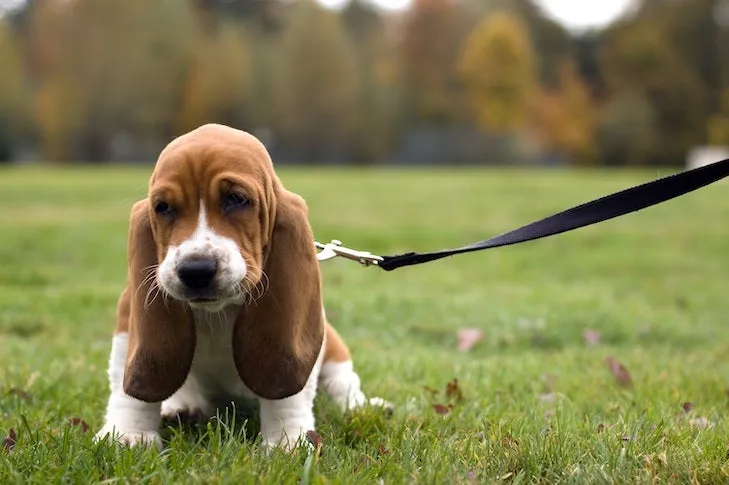 Relaxed Basset Hound puppy sitting calmly on a lead during an outdoor leash training session.
Overcoming Common Challenges on Walks
Even well-trained dogs may encounter difficulties as they mature, explore new places, or face new distractions. The goal is to teach them loose-leash walking, which is much more enjoyable for both of you and is a prerequisite for advanced certifications like the Canine Good Citizen test. Here are practical tips for common leash training issues, informed by insights from the AKC GoodDog! Helpline.
Addressing Excessive Pulling
If your dog consistently pulls ahead or in a different direction, transform yourself into “a tree.” Stand completely still and refuse to move an inch until your dog returns to your side and the leash slackens. Avoid yanking, jerking, or dragging your dog. This teaches them that pulling gets them nowhere, but a loose leash earns movement. For dogs that are persistent pullers, alternative training tools such as front-hook harnesses or head halters can be incredibly effective in redirecting their momentum and making walks more manageable while you work on foundational training.
Managing Lunging Behavior
If your dog tends to lunge at specific triggers during walks—be it another dog, a car, or a skateboarder—proactive intervention is key. Increase the distance between your dog and the target of their frustration. Stay vigilant and be prepared before the trigger gets too close. As soon as you spot the potential distraction, use your cue to redirect your dog’s attention to you, offering a high-value treat. The aim is to interrupt the lunge before it happens and reward calm behavior. While this behavior might be more prevalent in certain breeds like herding dogs, any dog can be startled or overstimulated by new or exciting sights and sounds. Focusing on training your dog for better recall can also help with managing reactive behaviors by giving you more control in distracting environments.
Handling Excessive Barking
Some dogs develop a habit of barking excessively at other dogs or people while on walks. Often, this behavior stems from pent-up energy or a lack of appropriate mental and physical stimulation. Ensure your dog receives adequate exercise and mental engagement tailored to their age and breed. If the barking persists, employ a similar proactive strategy as you would for lunging. Create distance from the trigger and offer treats to redirect your dog’s focus to you before they start barking. Consistently rewarding calm attention towards you whenever another dog or person appears will gradually teach them to associate these encounters with positive reinforcement and looking to you for guidance, rather than barking. Learning about things you can train your dog to do can help diversify your training methods and keep your dog more engaged during walks.
Conclusion
Successfully training your dog to walk with you is a journey of patience, consistency, and positive reinforcement. By introducing equipment early, establishing clear communication cues, practicing in controlled environments, and gradually exposing them to the outdoors, you build a strong foundation. Remember to proactively address common challenges like pulling, lunging, and barking with consistent techniques and a calm demeanor. Gradually, you’ll reduce the need for constant treats and troubleshooting as your dog becomes more proficient. Always carry a few treats to randomly reinforce excellent leash-walking behavior, ensuring that every walk remains a joyful and stress-free experience for both you and your cherished companion. Continue to invest in their training, and you’ll foster a lifetime of pleasant walks and a deeper connection.
