
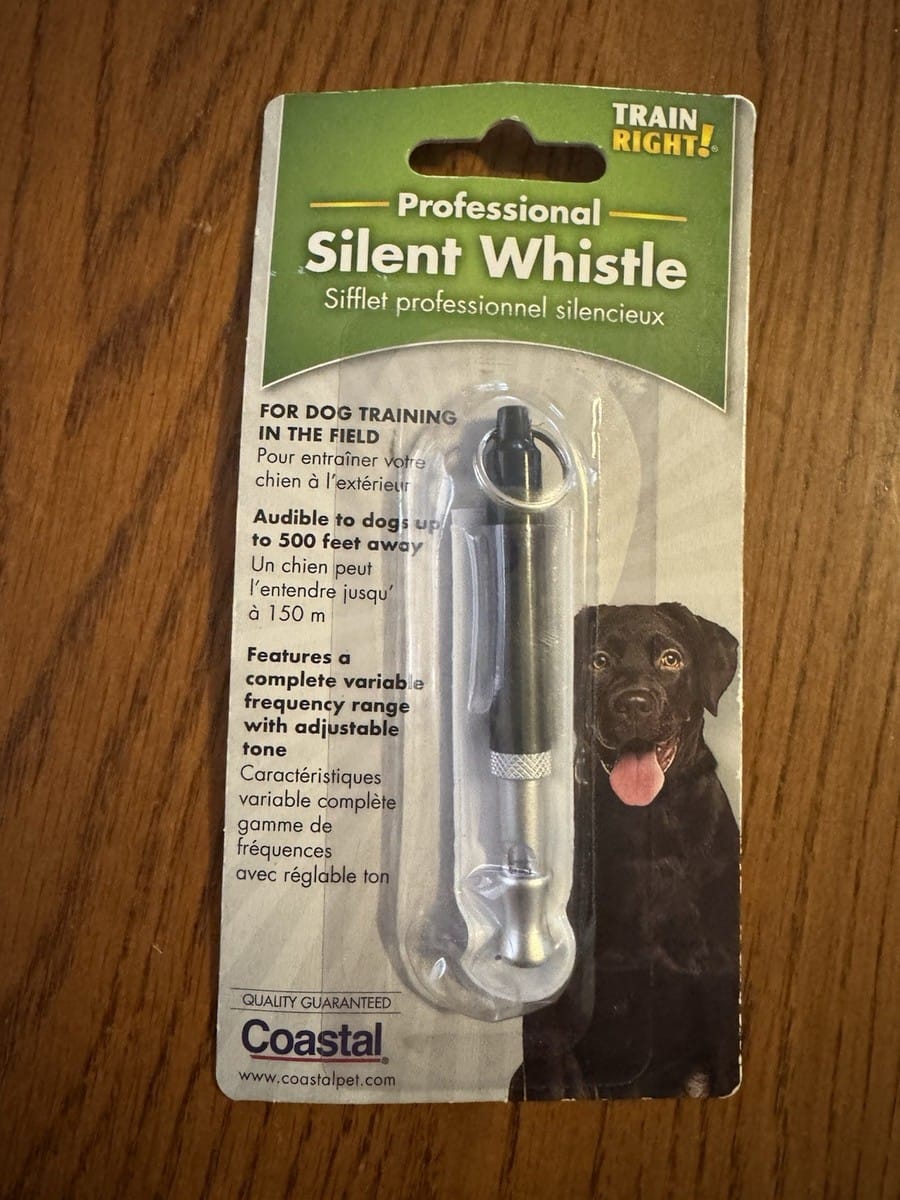
Training whistles for dogs offer a unique and effective way to communicate with your canine companion, leveraging a sound that travels farther and is often more consistent than the human voice. Whether you’re teaching basic obedience, advanced recall, or specialized hunting skills, a well-chosen and properly used training whistle can significantly enhance your training sessions and deepen the bond with your dog. This guide delves into the world of dog training whistles, exploring their benefits, how to choose the right one, and the most effective methods for incorporating them into your training repertoire.
Understanding the Power of Sound: Why Use a Training Whistle?
Dogs possess a far superior sense of hearing compared to humans, capable of detecting a wider range of frequencies and sounds. Training whistles exploit this ability, offering several advantages over verbal commands:
- Consistency: Unlike human voices, which can vary in tone and volume due to emotion or fatigue, a whistle’s pitch remains constant, ensuring your dog receives the same command signal every time. This consistency is crucial for clear communication and faster learning.
- Distance: High-frequency whistles can travel much farther than the human voice, making them ideal for outdoor training, recall exercises, and working with dogs in noisy environments where verbal commands might get lost.
- Clarity: A distinct whistle sound cuts through background noise and can signal a specific cue without the ambiguity that sometimes accompanies spoken words. This is particularly useful for recall commands, ensuring your dog understands it’s time to return to you.
- Focus: A unique whistle tone can capture your dog’s attention more effectively, especially when they are excited or distracted. It acts as a clear signal, redirecting their focus back to you and the training task at hand.
- Reduced Frustration: For both dog and owner, a whistle can minimize the need for repetitive shouting, leading to a calmer and more positive training experience.
Choosing the Right Training Whistle: A Buyer’s Guide
With a variety of training whistles available, selecting the best one for your needs is essential. Here’s what to consider:
Types of Whistles:
- High-Frequency Whistles: These are the most common for dog training. They operate at frequencies humans can often hear, but are particularly noticeable to dogs. Many are adjustable, allowing you to fine-tune the pitch.
- Ultrasonic Whistles: These emit sounds at frequencies above the range of human hearing. While this means you won’t hear them, they can be highly effective for dogs, especially those with sensitive hearing. However, some debate exists on their long-term effectiveness and potential for startling overly sensitive dogs.
- Pealess Whistles: Unlike traditional whistles that use a pea to create sound, pealess whistles produce a clear, consistent tone through airflow. This makes them reliable in all weather conditions and less prone to freezing or malfunctioning.
Key Features to Look For:
- Adjustability: The ability to adjust the whistle’s pitch is a significant advantage. This allows you to find a frequency that your individual dog responds to best and to gradually increase or decrease the intensity as needed. The best dog training whistle often has this feature.
- Durability and Material: Opt for whistles made from sturdy materials like metal (brass, aluminum, stainless steel) or high-quality plastic that can withstand outdoor use and occasional drops.
- Lanyard Attachment: A whistle with a loop or attachment point for a lanyard is practical, keeping it readily accessible around your neck or attached to your gear.
- Sound Consistency: Regardless of the type, ensure the whistle produces a clear, consistent sound without rattling or distortion.
Mastering the Whistle: Effective Training Techniques
Simply owning a training whistle isn’t enough; the key lies in how you use it. Introducing the whistle correctly is paramount to its success.
1. Introducing the Whistle: The “Association” Phase
The goal here is to get your dog to associate the whistle sound with something positive, like a treat or praise.
- Step 1: Choose a quiet environment with minimal distractions.
- Step 2: Have high-value treats ready.
- Step 3: Give a short, sharp blast on the whistle. Immediately follow with a treat and enthusiastic praise.
- Step 4: Repeat this process several times over short training sessions. Your dog will begin to understand that the whistle means good things are coming.
2. Attaching Whistle Blasts to Commands
Once your dog consistently responds to the whistle with anticipation, you can start associating specific whistle signals with commands.
- Recall Command: A common method is a short, sharp blast (or a series of short blasts) for “come.” When your dog looks at you or starts moving towards you after hearing the whistle, reward them generously. This is fundamental to how to train your dog off leash effectively.
- “Sit” or “Stay” Commands: You might use a longer, single blast for “sit” or a specific tone for “stay.” Ensure you use the verbal command first, followed immediately by the whistle signal, then reward the desired behavior. Gradually, you can fade out the verbal cue, relying more on the whistle.
- “Heel” or “Close”: A series of short, rhythmic blasts can be used to encourage your dog to stay close to your side.
3. Advanced Whistle Training Techniques
Varying the Signal: Use different patterns or lengths of whistles for different commands. For example:
- One short blast: “Sit”
- Two short blasts: “Come”
- One long blast: “Stay”
- Three short blasts: “Down”
Experiment to find a system that is easy for you to remember and for your dog to distinguish.
Working at a Distance: As your dog becomes proficient in a quiet environment, gradually increase the distance and introduce mild distractions. Practice your recall whistle in the yard, then at the park (on leash initially), always rewarding successful responses. This is where whistles truly shine, offering an advantage over voice commands for recall.
Hunting Dog Training: For those involved in hunting dog training, whistles are indispensable. They are crucial for commands like “hup” (stay put), “seek,” and recall during field work. For specific needs, resources like gun dog training aids can provide further specialized guidance.
4. Common Pitfalls to Avoid
- Overuse: Don’t blow the whistle constantly. Reserve it for the specific command you are teaching or reinforcing. Constant whistling can desensitize your dog to its importance.
- Punishment: Never use the whistle for punishment. This will create a negative association, and your dog may start to fear or ignore it.
- Inconsistency: Ensure everyone who handles the dog uses the same whistle signals and commands. Inconsistency confuses the dog and hinders progress.
- Expecting Instant Results: Like any training tool, whistles require patience and consistent practice. Don’t get discouraged if your dog doesn’t master commands immediately.
Real-World Scenarios: When a Whistle Shines
- The Distracted Dog: Your dog is intensely focused on a squirrel or another dog across the park. A loud, clear whistle blast can cut through their fixation and alert them to your command, making recall much more effective than a shouted “come!”
- The Busy Handler: You’re carrying equipment, throwing a ball, or need to issue a command quickly. Having a whistle on a lanyard means your hands are free, and you can issue a command with a simple puff of air.
- The Hearing-Impaired Dog: For dogs with age-related hearing loss, a high-frequency whistle can be a lifeline, providing a clear signal when verbal commands may no longer be effective.
- Hunting and Working Dogs: In fields or woods, a whistle’s range is unparalleled. It allows handlers to communicate commands effectively over long distances, essential for retrieving, pointing, or other working roles. Training methods and aids, such as those discussed in dog hunting training mn, often integrate whistle commands.
Frequently Asked Questions About Dog Training Whistles
Q: Can any whistle be used for dog training?
A: While any whistle can produce a sound, specialized training whistles are designed for specific frequencies and clarity that are most effective for dogs. Adjustable and high-frequency whistles are generally recommended.
Q: How long does it take for a dog to learn whistle commands?
A: This varies greatly depending on the dog’s age, breed, previous training, and the owner’s consistency. Some dogs may pick up on associations within a few days, while others might take a few weeks. Patience and regular, short training sessions are key.
Q: My dog is scared of the whistle sound. What should I do?
A: If your dog shows fear, you are likely introducing it too intensely or without sufficient positive reinforcement. Start with very short, quiet blows from a distance, pairing each sound immediately with a high-value treat and praise. Gradually decrease the distance and increase the sound intensity as your dog becomes more comfortable. Consider trying an ultrasonic whistle or one with a different pitch if high frequencies seem to be the issue.
Q: Can I use a whistle for recall training exclusively?
A: While whistles are excellent for recall, they are versatile tools for many commands. Relying solely on a whistle for all commands might limit your dog’s understanding of verbal cues. A balanced approach, using both verbal commands and whistle signals, often yields the best results. For comprehensive recall strategies, understanding how to train your dog off leash is crucial, and whistles are a powerful aid in this process.
Q: Are pealess whistles better than those with a pea?
A: Pealess whistles offer greater reliability as they are less affected by moisture or dirt, ensuring a consistent sound. Traditional pea whistles can sometimes be muffled or have their pitch altered by the pea. For outdoor or harsh conditions, a pealess design is often preferred.
Q: What is the difference between a training whistle and a regular dog whistle?
A: The term “training whistle” usually refers to whistles specifically designed for canine communication, often adjustable and high-frequency. While some “regular” whistles might work, they may not have the optimal frequency or consistency for effective dog training.
The Final Bark: Elevating Your Training with a Whistle
A Training Whistle For Dogs is more than just a tool; it’s a sophisticated communication device that, when used correctly, can unlock a new level of understanding and responsiveness with your canine partner. By carefully selecting the right whistle and dedicating time to consistent, positive training, you can harness the power of sound to build a stronger bond, achieve clearer communication, and enjoy a more harmonious life with your dog. Whether you’re a seasoned trainer or just starting your journey, incorporating a training whistle can be a rewarding step towards a better-trained and happier dog.
