
Whips are indispensable tools in the equestrian world, serving as crucial conduits for communication between rider and horse. This guide offers an in-depth exploration of the various types of horse whips, detailing their specific applications, construction, advantages, and disadvantages. We will also provide essential advice on selecting the right whip for your needs.
For a more extensive understanding of whip usage, regulations, materials, and handling, consult our Complete Guide to Horse Riding Whips.
Horse whips can be broadly categorized into ten distinct types, and this article will cover the following:
- Dressage Whips
- Jumping Bats
- Riding Crops
- Hunting Whips
- Show Canes
- Vaulting Whips
- Horse Driving Whips
- Lunging Whips
- Schooling Whips
- Jockey Whips
1. Dressage Whips
The dressage whip is a slender, flexible implement designed to facilitate subtle communication between rider and horse in dressage. Typically measuring between 100 to 160 centimeters, it allows riders to issue precise cues without significant body movement. This whip is used to encourage forward impulsion, enhance lateral movements, and refine gait transitions. It is not intended for punishment but rather to support the horse in achieving greater precision and responsiveness. The dressage whip is used for engagement and plays a vital role in dressage training and competition.
- Uses: Dressage training and competition to refine and reinforce leg aids.
- Construction: Typically long (100-160cm), flexible shaft, nylon cover, rubber or leather handle, with a small lash.
- Pros: Offers precise control, lightweight, good reach.
- Cons: Not suitable for jumping or close-contact riding.
- Interchangeability: Best used specifically for dressage due to its length and flexibility.
- Price Range: £10.00 – £400.00.
2. Jumping Bats
A jumping bat, also known as a jumping whip, is a shorter, more robust whip for show jumping and cross-country phases in Eventing competitions. Ranging from 50 to 70 centimeters, it features a wide, flat end called a “bat” or “flapper.” The jumping bat encourages horses to clear obstacles effectively, providing gentle reinforcement during training and competition. Its design facilitates quick, precise signals without disrupting the horse or rider’s position. The jumping bat is an essential tool for improving a horse’s performance over jumps.
- Uses: Jumping to encourage clear jumps or correct approach.
- Construction: Shorter (50-70cm), stiff shaft, wide leather flap, ergonomic handle.
- Pros: Easy to handle, effective for quick signals.
- Cons: Limited to jumping, less versatile.
- Interchangeability: Can be used for general riding but not ideal for dressage or groundwork.
- Price Range: £10.00 – £120.00.
3. Riding Crops
The riding crop is a versatile whip suitable for general riding and training across various equestrian disciplines. Measuring between 80 and 90 centimeters, it’s longer than a jumping bat but shorter than a dressage whip. It has a straight, flexible shaft with a handle and a flexible leather tip. The riding crop provides subtle cues to reinforce leg aids and enhance rider-horse communication. Its lightweight design and moderate length allow for precise signals without discomfort. This whip is a good all-rounder for everyday riding and training.
- Uses: General-purpose riding aid across disciplines.
- Construction: Medium length (80-90cm), flexible shaft, leather or nylon popper, grip handle.
- Pros: Versatile, widely available, good for general use.
- Cons: Less specialized than discipline-specific whips.
- Interchangeability: Can be used in many disciplines but lacks specificity.
- Price Range: £10.00 – £100.00.
4. Hunting Whips
Specifically used in traditional fox hunting, the hunting whip features a long, sturdy shaft, a leather lash, and a “keeper” hook for opening gates without dismounting. The leather lash guides and controls hounds, while the hook is practical for riders during hunts. It also signals other riders and maintains hound discipline. Its durable and multifunctional design makes it essential for hunting, blending practicality with tradition.
- Uses: Traditionally for controlling hounds and opening gates in fox hunting.
- Construction: Long, solid shaft with leather thong and lash, heavy handle with a hook.
- Pros: Durable, multifunctional for hunting.
- Cons: Heavier, not suitable for regular riding.
- Interchangeability: Specific to hunting, impractical for other disciplines.
- Price Range: £60.00 – £450.00.
5. Show Canes
A show cane is a decorative accessory for horse shows and competitions, particularly in in-hand classes. Often made from wood, fiberglass, or metal, it may feature ornate handles or silver accents. Its primary purpose is to assist handlers in guiding and presenting the horse, helping with positioning and attention. While not used for force, it provides subtle cues for optimal presentation.
- Uses: Guiding and positioning horses in showing, especially in-hand classes.
- Construction: Short, stiff, often ornate with leather wrapping or decorative elements.
- Pros: Enhances presentation, provides subtle control.
- Cons: Not functional for riding, purely for show.
- Interchangeability: Only for in-hand showing.
- Price Range: £20.00 – £50.00.
6. Vaulting Whips
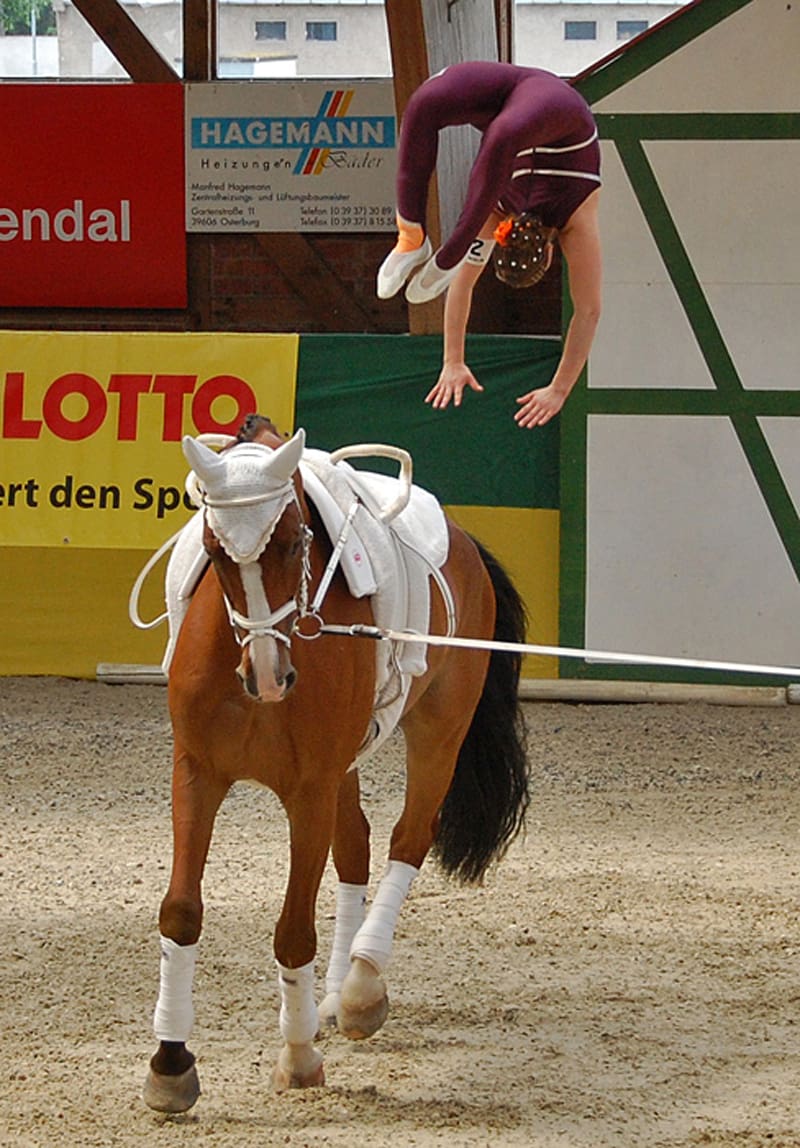
The vaulting whip is a specialized long whip used in equestrian vaulting, where athletes perform gymnastics on horseback. Typically measuring 3 to 4 meters (10 to 13 feet) with an additional 2–5 meter lash, it helps the lunger control and direct the horse in a circle. This lightweight, flexible whip provides precise and gentle cues, ensuring the horse maintains a steady pace for the vaulters’ routines. Vaulting whip is designed for control and communication.
- Uses: Signaling the horse during vaulting performances.
- Construction: Long, flexible shaft, lightweight, often rubber or nylon covered.
- Pros: Lightweight, offers good reach for signaling.
- Cons: Too long for regular riding use.
- Interchangeability: Specific to vaulting.
- Price Range: £50.00 – £200.00.
7. Horse Driving Whips
Horse driving whips assist drivers in guiding horses or teams from a carriage. Unlike riding whips, they allow control without physical contact. Driving whips are longer, up to 2 or 3 meters, acting as an extension of the driver’s arm for directional and speed commands. They are crucial for training and competitive driving events. Driving whips offer precision in commands.
- Uses: Communication, control, and guidance during carriage driving.
- Construction: Lightweight, flexible shaft (fiberglass, carbon fiber), ergonomic grip.
- Pros: Extended reach, lightweight, flexible, precise commands.
- Cons: Limited use to driving, requires skill.
- Interchangeability: Specific to carriage driving.
- Price Range: £40.00 – £700.00.
8. Lunging Whips
The lunging whip is essential for lunging, where a horse is guided in circles around the handler. Typically 5 to 7 feet long with an additional lash, its design maintains handler safety while enabling effective communication. The whip directs and encourages the horse’s movement, aiding balance and responsiveness without a rider. It’s primarily used as an extension of the handler’s arm for cues and direction in groundwork training. Lunging whip is crucial for this training method.
- Uses: Lunging horses and groundwork training.
- Construction: Very long (180cm – 250cm), flexible shaft, telescopic options, long lash.
- Pros: Excellent reach, essential for lunging.
- Cons: Bulky, not suitable for riding.
- Interchangeability: Only for lunging and groundwork.
- Price Range: £20.00 – £150.00.
9. Schooling Whips
A schooling whip, or groundwork whip, is versatile for flatwork and general riding. Ranging from 140 to 180 cm, it helps refine responsiveness to leg aids and improve rider-horse communication. It provides gentle cues to encourage forward movement, lateral work, or correct minor issues. Its lightweight, balanced design with a comfortable grip makes it ideal for daily training, promoting obedience and suppleness. In-hand schooling whips are particularly useful.
- Uses: Groundwork training to direct and control the horse.
- Construction: Medium to long length, flexible shaft, lightweight, sometimes with a lash.
- Pros: Versatile for groundwork, lightweight.
- Cons: Not primarily designed for riding.
- Interchangeability: Primarily for groundwork; less suitable for dressage or jumping.
- Price Range: £40.00 – £90.00.
10. Jockey Whips
Jockey whips, or racing whips, are used in horse racing. Short and lightweight (around 40cm), they feature a padded popper to minimize discomfort. Their purpose is to encourage the horse to maintain or increase speed. Jockey whips are regulated for humane use, with rules on length and padding. They are used sparingly to enhance performance, signal pace changes, or correct course.
- Uses: Encouraging speed in horse racing.
- Construction: Short, stiff shaft, padded popper, lightweight.
- Pros: Lightweight, designed for minimal impact, highly regulated.
- Cons: Limited to racing, not versatile.
- Interchangeability: Specific to racing.
- Price Range: Around £40.00.
How to Choose the Right Horse Whip
Selecting the appropriate horse whip is crucial for an enhanced riding experience and effective horse communication. With specialized whips for different disciplines, understanding key selection factors is essential. Consider the type of construction, materials, ergonomic design, brand reputation, cost, and compliance with competition rules.
1. Types of Horse Whips
Different whips are designed for specific equestrian disciplines. While some overlap exists, it is recommended to purchase a whip for its intended purpose. For instance, if you engage in both dressage and jumping, two different whips may be necessary. Always check the rules and regulations of equestrian bodies, such as showjumping whip rules, which dictate whip length in competition. The required length can depend on your height and the horse’s size.
2. Materials and Construction
Modern whips utilize strong, flexible, and lightweight materials like fiberglass, carbon fiber, and carbon composite. Traditional whips made from bamboo, cane, or wood are also available but tend to be more expensive due to handcrafting. Whip handles are commonly made from leather, rubber, or synthetic materials, with a focus on non-slip, ergonomic grips. The shaft is often covered in lacquered nylon for added strength and durability, while premium whips may feature leather. The lash, popper, or flap varies by whip type. Understanding the parts of the whip is important.
3. Design and Ergonomics
Leading manufacturers invest in research and development, often collaborating with professional riders to design ergonomic grips that reduce hand fatigue and improve control. A well-balanced whip feels more comfortable and is easier to use effectively. Consider the weight and ensure it is manageable for the intended user.
4. Brand and Quality
Choosing a manufacturer dedicated exclusively to crafting whips ensures uncompromised quality and thoughtful design. Specialized manufacturers maintain meticulous control over their products, using superior materials and expert craftsmanship. Prioritizing brands renowned for whip-making excellence, like Fleck, guarantees reliability and performance over generic alternatives.
5. Regulations and Compliance
For competition, familiarize yourself with relevant rules, such as dressage whip rules. Equestrian organizations have specific regulations regarding whip type and length. For example, dressage whips are allowed in FEI competition up to 120cm. Non-compliance can lead to disqualification.
6. Price and Value for Money
Horse whip prices vary significantly. Determine your budget to narrow down choices. Balance price with quality and features for the best value. While high-end whips offer superior quality, affordable options provide good performance. Avoid extremely cheap whips, as they often use inferior materials. Beginners might consider a more affordable whip before investing in a higher-quality one as they gain experience.
7. User Reviews and Expert Recommendations
Reviews from experienced riders offer insights into a whip’s performance and durability. Seek retailer recommendations backed by expertise. Reputable retailers can help you find a whip that meets your needs.
8. Personal Preference and Comfort
The choice of whip ultimately depends on personal preference and riding style. Ensure the whip feels comfortable in your hand. While functionality is paramount, aesthetics can also play a role. Many whips can be custom-designed to meet specific criteria.
Summing-Up
By considering the factors above, you can select a horse whip that best suits your needs and enhances your riding experience. Whether replacing an old whip or introducing a whip to your horse for the first time, the right choice depends on your discipline, training needs, and personal preferences, as each type of whip has specific uses, construction benefits, and limitations.
While some whips can be used interchangeably, most are designed for particular purposes to optimize performance and communication. At Pink Equine, we recommend Fleck horse whips for their superior quality and durability. We also offer helpful articles on which whips are the most popular and the best dressage whips. Our Fleck Whip Buyer’s Guide explores design differences within a single brand across disciplines. Trusting Pink Equine ensures expert advice and the best whips to enhance your riding experience.
