
Welcome to the incredible journey of dog training. Whether you’ve just brought home a new puppy or you’re looking to teach an old dog some new tricks, you’re embarking on a rewarding process that strengthens the bond between you and your canine companion. The secret to a well-behaved dog isn’t about dominance or complex methods; it’s about clear communication, patience, and positive reinforcement. These foundational Training Tips For Dogs will help you build a common language and a trusting relationship that lasts a lifetime. The goal is to create a happy, confident, and well-mannered member of your family, and it all starts with a few simple, consistent steps. For those just starting, exploring options for at home dog training can provide a structured yet flexible approach.
The Cornerstone of All Training: Positive Reinforcement
Before you teach a single command, it’s crucial to understand the most effective and humane training philosophy: positive reinforcement. This method is simple and incredibly powerful. When your dog does something you like, you reward them with something they want. This could be a tasty treat, enthusiastic praise (“Good boy!”), a favorite toy, or a good scratch behind the ears.
By rewarding desired behaviors, you make your dog more likely to repeat them. Instead of punishing mistakes, which can lead to fear and anxiety, you focus on celebrating successes. This approach transforms training from a chore into a fun game that both you and your dog can enjoy.
Why Does Positive Reinforcement Work?
Dogs, like humans, are motivated to repeat actions that result in positive outcomes. When a dog learns that sitting calmly results in a delicious treat, they will choose to sit more often. This science-based technique builds confidence and trust.
According to canine behaviorist Dr. Emily Carter, “Positive reinforcement doesn’t just teach commands; it teaches a dog how to think and make good choices. It fosters a relationship built on mutual respect and understanding, which is the foundation of any successful training program.”
Key elements to remember:
- Immediate Rewards: Deliver the reward within a second or two of the desired behavior. The timing is critical for your dog to connect their action with the reward.
- High-Value Treats: Especially when starting, use treats your dog finds irresistible. Small, soft, and smelly treats like tiny pieces of chicken or cheese often work wonders.
- Enthusiastic Praise: Your happy tone of voice is a powerful reward in itself.
Setting the Stage for Success
To make your training sessions effective, you need to create the right environment. Just like you wouldn’t try to study for an exam at a loud concert, your dog can’t learn effectively with too many distractions.
Keep Sessions Short and Sweet
A dog’s attention span, especially a puppy’s, is shorter than you might think. Aim for several short training sessions of 5-10 minutes throughout the day rather than one long, overwhelming session. This keeps your dog engaged and prevents them from getting frustrated or bored. End each session on a positive note, with a successful command and a big reward.
Choose a Quiet Location
Start training in a quiet, familiar space with minimal distractions, like your living room or backyard. As your dog becomes more reliable with their commands, you can gradually introduce them to more distracting environments, like a park or a quiet street. This process of “proofing” the behavior ensures they will listen even when things get more interesting.
Train Before Meals
A hungry dog is a motivated dog. Scheduling a brief training session right before your dog’s regular mealtime can significantly increase their focus and desire to work for food rewards. They’ll be more eager to earn those tasty treats, making your job as a trainer much easier.
Mastering the Basic Commands
With the foundation of positive reinforcement and the right environment, you’re ready to teach some essential commands. These basics are the building blocks for more advanced training and are crucial for your dog’s safety and good manners.
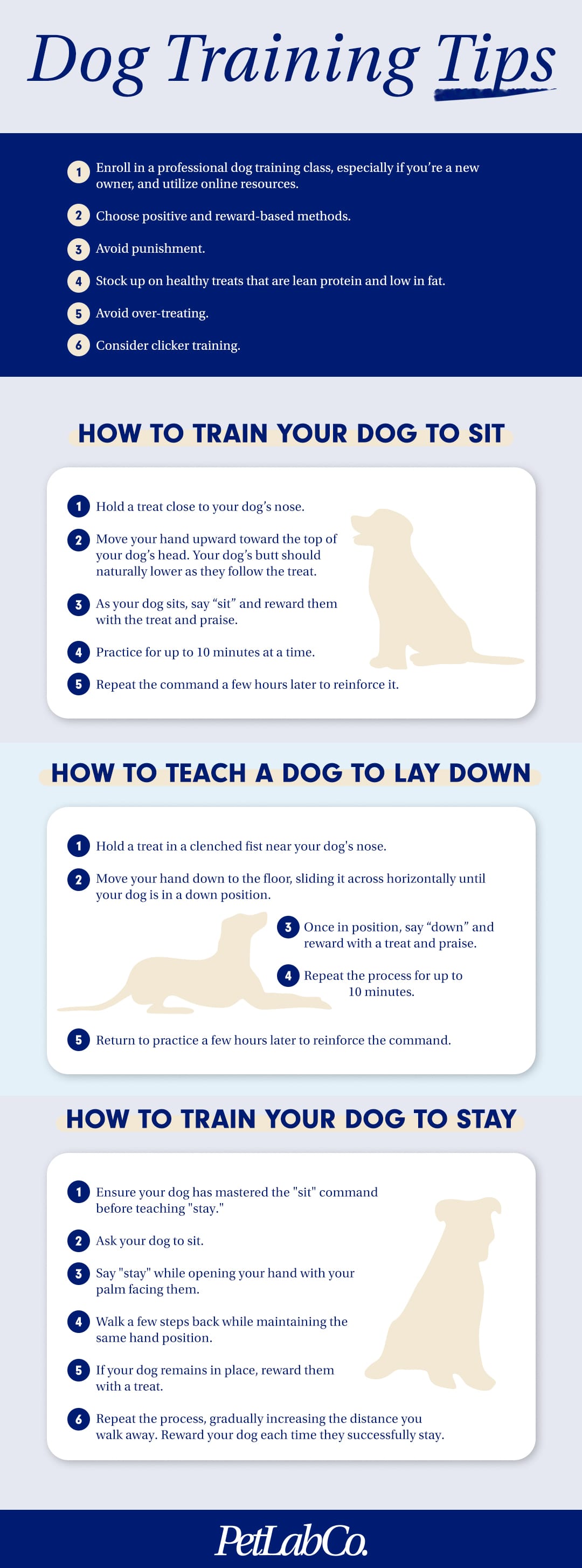
1. The “Sit” Command
“Sit” is often the first command taught because it’s relatively easy for most dogs to learn.
- How to Teach: Hold a treat near your dog’s nose. Slowly move your hand upwards and slightly back over their head. As their head follows the treat, their bottom will naturally go down into a sit. The moment they sit, say “Yes!” or “Good!” and give them the treat and praise.
- The Cue: Once they are reliably doing the motion, start saying the word “Sit” just as they begin to lower themselves. Only say the cue once to avoid confusing them.
2. The “Stay” Command
“Stay” is a vital safety command. It requires more impulse control from your dog.
- How to Teach: First, ask your dog to sit. Use an open-palmed hand signal in front of their face and say “Stay.” Take one small step back. If they stay, step back to them, praise them calmly, and give them a treat.
- Building Duration and Distance: Gradually increase the distance you step back and the length of time you ask them to stay. Always return to your dog to give the reward; don’t call them to you, as that teaches them to break the stay.
3. The “Come” Command (Recall)
A reliable recall is arguably the most important command you can teach. It can keep your dog safe from traffic or other dangers.
- How to Teach: Start in a quiet area. With a happy, encouraging tone, say your dog’s name followed by “Come!” and hold out a high-value treat. When they start moving toward you, praise them enthusiastically. Reward them generously the moment they reach you. Never scold your dog when they finally come to you, no matter how long it took. You want them to always associate coming to you with positive things.
Tackling Common Behavior Problems
Even the best dogs can develop challenging behaviors. The key is to address them with patience and consistency, using the same positive principles.
Leash Pulling
Walking should be enjoyable for both of you. If your dog pulls on the leash, it’s often because they’re excited and have learned that pulling gets them where they want to go. For more detailed strategies, consider looking into how to keep dogs from pulling when walking.
- The Solution: The moment the leash becomes tight, stop walking. Stand still and silent like a tree. Only resume walking when your dog puts some slack back in the leash. When they walk beside you on a loose leash, reward them with praise and occasional treats. This teaches them that a loose leash means the walk continues, while a tight leash means the fun stops.
Excessive Barking
Dogs bark to communicate, but constant barking can be a nuisance.
- The Solution: First, identify the trigger. Are they bored, anxious, or alerting you to something? If it’s boredom, increase their physical exercise and mental stimulation with puzzle toys. Teach a “Quiet” command by rewarding moments of silence after a barking spell.
Destructive Chewing
Chewing is a natural dog behavior, but it needs to be directed toward appropriate items.
- The Solution: Provide a variety of durable chew toys. If you catch your dog chewing something they shouldn’t, interrupt them with a firm “No” and immediately redirect them to one of their chew toys. Praise them enthusiastically when they start chewing the toy. Some situations may require more specific interventions, similar to the specialized focus needed for snake training for dogs, where redirection and positive association are key.
The Importance of Socialization
Socialization is the process of exposing your puppy to various sights, sounds, people, and other dogs in a positive and safe way. This is a critical window, typically from 3 to 16 weeks of age, that shapes your dog’s future temperament. A well-socialized dog is less likely to be fearful or reactive.
Introduce them to:
- Different types of people (ages, appearances)
- Vaccinated, well-mannered dogs
- Various environments (car rides, different neighborhoods)
- New sounds (vacuum cleaner, traffic)
Make every new experience positive with plenty of treats and praise. If your dog seems scared, don’t force the interaction. Let them approach things at their own pace.
Consistency is Your Superpower
The single most important rule in dog training is consistency. Everyone in the household must use the same commands and enforce the same rules. If one person lets the dog jump on them while another doesn’t, the dog will become confused and the training will be ineffective.
Establish clear rules from the beginning and make sure every family member is on board. This creates a predictable environment where your dog can understand what is expected of them and thrive. Whether you’re working on basic commands or more complex skills like those taught in bite training for dogs near me, consistency will always be the key to success.
Training is an ongoing dialogue with your dog. By using these positive and effective training tips for dogs, you’re not just teaching commands—you’re building a foundation of communication, trust, and mutual respect that will enrich both of your lives for years to come.
Frequently Asked Questions (FAQ)
What is the best age to start training a dog?
You can start training a puppy the day you bring them home, typically around 8 weeks old. Start with simple concepts like house training and basic commands. For older dogs, training can begin at any time. It’s never too late to build a better relationship and teach new skills.
How do I stop my dog from jumping on guests?
Teach an alternative behavior, like “Sit.” When guests arrive, have your dog on a leash. As the guest approaches, ask your dog to sit. Reward them for keeping all four paws on the floor. Ask your guests to ignore the dog completely if it jumps and only offer affection when it is sitting calmly.
What are the most important commands to teach my dog?
The most critical commands for safety are “Come” (recall), “Stay,” and “Leave It” (to prevent them from eating something dangerous). “Sit” and “Down” are also foundational for good manners and as building blocks for other commands.
How long does it take to train a dog?
The time it takes to train a dog varies greatly depending on the dog’s age, breed, temperament, and the consistency of the training. Basic obedience can be learned in a few weeks of consistent practice, but training and reinforcing good behavior is a lifelong commitment.
What should I do if my dog isn’t motivated by treats?
While most dogs are food-motivated, some may prefer other rewards. Find out what your dog truly loves. It could be a specific toy (like a tennis ball), enthusiastic praise and petting, or a chance to play a quick game of tug-of-war. Use whatever they find most rewarding as their “payment” for a job well done.
