
Training a service dog is a significant undertaking, requiring dedication, understanding, and the right expertise. Whether you’re in Atlanta or anywhere else, the journey of transforming a canine companion into a vital aid involves specialized techniques and a deep appreciation for the bond between humans and dogs. This guide delves into the world of service dog training, focusing on the resources and considerations relevant to Atlanta residents.
Understanding Service Dogs: More Than Just Pets
Service dogs are not simply pets; they are working animals trained to perform specific tasks that assist individuals with disabilities. These tasks can range from guiding the visually impaired and alerting the hearing impaired to providing physical support or detecting medical episodes like seizures or low blood sugar. The Americans with Disabilities Act (ADA) defines a service animal as a dog individually trained to do work or perform tasks for the benefit of an individual with a disability. It’s crucial to distinguish service dogs from emotional support animals (ESAs) or therapy dogs, as their training and legal protections differ significantly. ESAs provide comfort by their presence, while therapy dogs offer comfort to many people in facilities like hospitals or nursing homes. Service dogs, on the other hand, are integral to the daily life and safety of their handlers.
The Rigorous Training Process
The training for a service dog is extensive and can take anywhere from several months to over two years. It typically involves several stages:
- Basic Obedience: This is the foundation. Dogs must master commands like sit, stay, come, and down, along with leash manners and proper socialization. A well-behaved dog in public is paramount.
- Advanced Obedience and Public Access: Once basic commands are solid, training progresses to advanced skills, ensuring the dog remains focused and calm in distracting environments. This includes navigating crowded places, public transportation, and various social settings without disrupting others. This phase is critical for the dog to be a reliable partner in public.
- Task-Specific Training: This is where the dog learns the unique tasks tailored to their handler’s specific disability. For example, a mobility assistance dog might learn to retrieve dropped items or help a person stand. A diabetic alert dog is trained to recognize changes in blood glucose levels and alert their handler.
- Generalization and Proofing: Training isn’t complete until the dog can perform its tasks reliably in a wide variety of environments and situations. This ensures the dog’s skills are robust and not dependent on a specific location or context.
Finding Service Dog Training Services in Atlanta
Atlanta offers a growing number of resources for those seeking to train a service dog. Whether you are looking to train your own dog or obtain a fully trained service dog, several avenues can be explored.
Professional Training Organizations
Several reputable organizations in and around Atlanta specialize in training service dogs. These organizations often have established programs and experienced trainers who understand the intricacies of service dog work. They may offer:
- Full Service Dog Programs: Where the organization trains a dog from puppyhood or selects and trains a suitable dog for a specific handler.
- Assistance Dog Training: Programs focused on specific types of assistance, such as mobility, medical alert, or psychiatric service dogs.
- Handler Training: Comprehensive courses designed to teach individuals how to train their own dogs to become service animals, or how to effectively work with a newly matched service dog.
When researching organizations, look for those that are accredited by recognized bodies or have a strong track record of successful placements. It is also beneficial to inquire about their training methodologies and ensure they align with positive reinforcement principles. Exploring options like k9 alpha dog training could provide insights into specialized training approaches that might be relevant.
Private Professional Trainers
For individuals who prefer a more personalized approach or have a dog with specific needs, hiring a private professional trainer with experience in service dog work is an excellent option. These trainers can provide one-on-one guidance, adapting training plans to suit both the dog and the handler. When seeking a private trainer, ask about their experience with service dogs, their success rates, and their approach to public access training. Understanding how much is dog training per hour can help in budgeting for these services.
Considerations for Owner-Trained Service Dogs
Training your own service dog, often referred to as owner-training, is a challenging but rewarding path. It requires an immense commitment of time, patience, and consistency. If you are considering owner-training, it’s vital to:
- Select the Right Dog: Not all dogs are suited for service work. Factors like temperament, breed, health, and age play a significant role. A dog that is easily distracted, fearful, or aggressive will likely not succeed.
- Seek Professional Guidance: Even if you are owner-training, consulting with professional trainers is highly recommended. They can assess your dog’s potential, guide you through the training process, and help troubleshoot challenges. This is especially important when considering if can you crate train an adult dog that might be a candidate for service work.
- Understand Legal Requirements: Familiarize yourself with the ADA guidelines regarding service dogs to ensure your dog is properly trained and performs the necessary tasks.
Local resources in Atlanta, such as dog training atlanta ga based services, can offer support for owner-trainers.
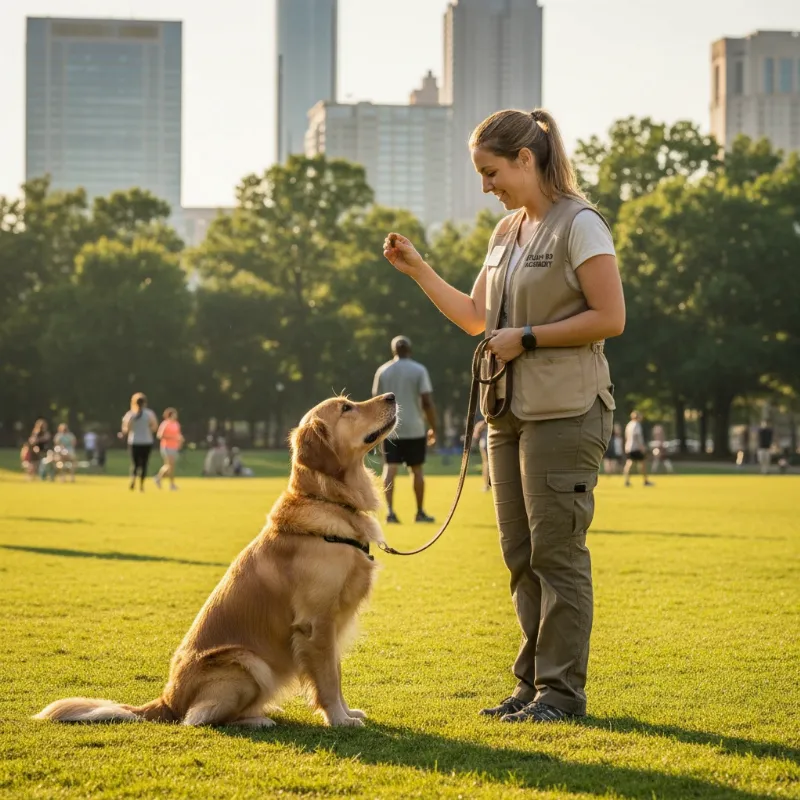 A professional dog trainer in Atlanta working with a Golden Retriever service dog candidate in a park setting, demonstrating leash control and focus. The trainer uses positive reinforcement methods.
The Role of Socialization and Public Access
Proper socialization is non-negotiable for a service dog. From a young age, puppies need to be exposed to a wide variety of sights, sounds, people, and environments in a positive and controlled manner. This helps them develop into confident, well-adjusted adults capable of handling the demands of public life.
Public access training ensures that a service dog can accompany its handler anywhere the public is allowed. This includes restaurants, stores, hospitals, and public transportation. The dog must remain under the handler’s control at all times, refrain from sniffing merchandise, pottying inappropriately, or bothering other patrons. The goal is for the dog to be an unobtrusive presence, performing its duties without causing disruption. Understanding the specific requirements for atlanta dog board and train programs can be beneficial for owners seeking intensive public access preparation.
Health and Well-being of Service Dogs
The physical and mental health of a service dog is paramount. They must be healthy enough to perform their tasks reliably and live a good quality of life.
- Veterinary Care: Regular check-ups, vaccinations, and prompt attention to any health issues are essential.
- Nutrition: A balanced, high-quality diet appropriate for an active working dog is crucial.
- Exercise and Mental Stimulation: Service dogs need appropriate physical exercise and mental engagement to prevent boredom and behavioral problems. Training sessions, puzzle toys, and playtime are vital components of their routine.
- Rest and Downtime: Working dogs also need adequate rest. It’s important to allow them time to relax and be a “dog” without the constant pressure of work.
Common Challenges and Solutions
The path to becoming a service dog is not always smooth. Common challenges include:
- Behavioral Issues: Distractibility, reactivity, or anxiety can arise. Consistent training, professional intervention, and management strategies are key.
- Health Problems: Dogs can develop unexpected health conditions that may impact their ability to work. Close collaboration with a veterinarian is crucial.
- Handler Challenges: Balancing the demands of training, daily life, and the handler’s own disability can be overwhelming. Support networks and professional guidance can make a significant difference.
Expert Insight
Dr. Evelyn Reed, a leading canine behaviorist, emphasizes, “The success of a service dog team hinges on a strong partnership. It’s about clear communication, mutual respect, and a deep understanding of the dog’s needs alongside the handler’s requirements. Owner-training requires immense dedication, but with the right support and a well-suited dog, the rewards are immeasurable.”
Conclusion: Embracing the Journey
Training a service dog is a profound commitment that enriches the lives of individuals with disabilities. In Atlanta, a variety of resources are available to support this journey, from specialized training organizations to experienced private trainers. By understanding the rigorous training process, prioritizing the dog’s well-being, and leveraging local expertise, individuals can successfully partner with a service dog, enhancing independence and quality of life. Remember, the journey of training a service dog is a testament to the incredible capabilities of dogs and the powerful human-animal bond.
Frequently Asked Questions About Service Dog Training in Atlanta
Q1: How long does it typically take to train a service dog in Atlanta?
A1: Service dog training can take anywhere from 1 to 2 years, sometimes longer, depending on the dog’s age, temperament, and the specific tasks required.
Q2: Can I take my service dog into any establishment in Atlanta?
A2: Under the ADA, service dogs are generally allowed in public places where the public is permitted. However, there are exceptions, such as in places where the dog’s presence would fundamentally alter the nature of the service or pose a direct threat.
Q3: What is the difference between a service dog and a therapy dog?
A3: Service dogs are trained to perform specific tasks for an individual with a disability. Therapy dogs provide comfort and emotional support to multiple people in various settings, but they do not have the same public access rights as service dogs.
Q4: Are there specific breeds that make better service dogs?
A4: While certain breeds like Labrador Retrievers, Golden Retrievers, and Poodles are popular due to their temperament and trainability, any breed can potentially be a service dog if it possesses the right temperament, health, and trainability. The individual dog’s characteristics are more important than breed alone.
Q5: What are the costs associated with service dog training in Atlanta?
A5: Costs can vary widely. Obtaining a fully trained service dog from an organization can range from $15,000 to $50,000 or more. Owner-training with professional guidance might cost a few thousand dollars for trainer fees, equipment, and supplies.
Q6: How do I know if my dog is suitable for service dog training?
A6: A suitable candidate typically has a calm, confident, and non-reactive temperament, is eager to please, shows good focus, and is in good health. Professional assessment is highly recommended.
Q7: Can emotional support animals (ESAs) accompany me in public places like service dogs?
A7: No. ESAs are not service dogs and do not have the same public access rights under the ADA. They are typically only allowed in housing situations that have “no pets” policies, under specific conditions.
