
The image of a horse moving in perfect harmony with music, a seamless blend of power and grace, is captivating. But is it possible to actually start Training Horses To Dance? The answer is a resounding yes, though it may not be what you think. This enchanting performance isn’t about teaching a horse the waltz; it’s the beautiful culmination of advanced horsemanship, profound trust, and artistic expression. It’s a dialogue without words, seen in disciplines from the high-level precision of Dressage to the profound connection of Liberty work.
This journey into equine dance is about deepening your partnership and unlocking a new level of communication with your horse. It’s a process built on patience, understanding, and celebrating the incredible athletic and cognitive abilities of our equine partners. This guide will walk you through the ethical and effective methods to transform your training into a true art form.
The Heart of the Dance: Why Connection is Non-Negotiable
Before a single dance step is taught, a foundation of trust must be built. The world of horse training has a clear line between ethical, partnership-based methods and outdated, forceful techniques. A horse that is “dancing” out of fear is a tragic sight, often identifiable by wide, worried eyes, a tense body, and a wringing tail. These are not the signs of a willing partner but of an animal in distress.
True equine dancing comes from a place of mutual respect and understanding. This is where the concept of a “magnetic connection” comes into play, especially in disciplines like Liberty work. It’s a bond so strong that the horse chooses to be with you, to mirror your movements, and to respond to the slightest cues, all without the need for ropes or reins.
Building this connection involves:
- Quality Time: Spend non-demanding time with your horse. Grooming, hand-grazing, and simply being present in their space without asking for anything builds immense trust.
- Clear Communication: Your horse must understand your body language and cues with absolute clarity. This is honed through consistent and fair groundwork.
- Positive Reinforcement: Reward curiosity, effort, and correct responses. This creates a horse that is eager to learn and willing to try new things, which is essential for the creative process of dancing.
Laying the Foundation: Essential Skills Before the First Step
Attempting to teach complex movements without a solid foundation is like trying to build a house on sand. It will only lead to confusion, frustration, and resistance for both you and your horse. Before you even think about choreography, you must master the basics. If you are just starting out, understanding the first steps in training a horse is crucial.
Essential foundational skills include:
- Responsive Groundwork: Your horse should yield to pressure gracefully, moving their hindquarters and forequarters independently. They should back up softly and respect your personal space without fail.
- Riding Fundamentals: For disciplines under saddle, the horse must be balanced, responsive to leg and seat aids, and able to maintain a steady rhythm. The rider, in turn, must have an independent seat and clear, quiet hands.
- Patience and Consistency: These foundational skills take time to develop. Rushing the process will only create holes in your training that will become glaring issues when you attempt more advanced maneuvers.
 A woman and a majestic bay horse practicing liberty work in a sunlit pasture, showcasing the deep connection involved in training horses to dance.
The Different Styles of Equine Dance
“Dancing” can take many forms in the equestrian world. Each discipline offers a unique way to express the partnership you’ve built with your horse, blending athleticism with artistry.
Dressage: The Ballet of Horsemanship
Often called “horse ballet,” Dressage is the epitome of disciplined grace. Musical Freestyle Dressage takes this to the next level, where riders choreograph a unique test set to music. This routine must include compulsory movements for the chosen level, woven together in a creative and artistic pattern. The goal is to create a performance where the horse’s powerful movements—from the collected canter of a pirouette to the floating steps of a passage—appear completely synchronized with the music, as if the horse itself is interpreting the melody.
Liberty: A Dance of Ultimate Trust
Liberty work is perhaps the purest form of equine dance. It involves working with a horse that is completely free of tack—no halter, no bridle, no saddle. This discipline is the ultimate test of your connection. The “dance” emerges from your communication, with the horse choosing to circle, change direction, and perform movements based on your subtle body language. It’s a breathtaking display of a partnership built on a desire to be together, not on physical restraints. One of the best ways to get started is by exploring natural horse training methods that focus on this bond.
Freestyle Reining: The Western Expression
The Western discipline of Reining also has its own form of dance. Freestyle Reining combines the athletic, high-speed maneuvers of the sport—like sliding stops and fast spins—with music, costumes, and choreography. It’s a high-energy, crowd-pleasing performance that demands incredible trust and skill, especially when performed bridleless, where the rider guides their powerful horse through a complex pattern relying on only their legs and seat.
How to Teach Your Horse to Dance: A Step-by-Step Guide
Once your foundation is solid, you can begin to introduce the elements of dance. The key is to break it down into small, achievable steps, always keeping the process positive and enjoyable for your horse.
Step 1: Teach Individual Movements
Don’t start by trying to create a full routine. Instead, teach individual “tricks” or movements that will become the building blocks of your dance. These could include:
- The Bow: A gesture of respect and a great starting point.
- The Spanish Walk: A stylized, high-stepping walk that looks very impressive.
- The Side Pass: Moving laterally towards or away from you.
- The Pirouette: Turning in a tight circle on the hindquarters.
Teach each of these using positive reinforcement methods. Keep sessions short, celebrate small successes, and end on a good note before your horse becomes bored or tired.
Step 2: Introduce Music
Start by simply playing music during your regular grooming or groundwork sessions. Choose songs with a clear, steady rhythm. The goal is to get your horse accustomed to different sounds and to observe which tempos seem to match their natural gaits. You can even find apps that measure the beats per minute (BPM) of your horse’s walk, trot, and canter to help you find the perfect soundtrack.
Step 3: Weave It All Together
Once your horse knows a few individual movements and is comfortable with music, you can start choreographing.
- Start Simple: Create a short sequence of two or three movements. For example: walk to the center of the arena, ask for a bow, and then back up a few steps.
- Use Clear Cues: Your cues to transition between movements must be distinct and well-understood.
- Practice in Silence First: Run through the sequence without music until it becomes smooth and predictable.
- Add the Music: Now, perform the sequence with the music. Focus on timing your cues to match the phrases in the song.
- Be Patient: This is a process of refinement. It takes many repetitions to achieve a seamless performance. Always prioritize your horse’s comfort and confidence over perfecting the routine.
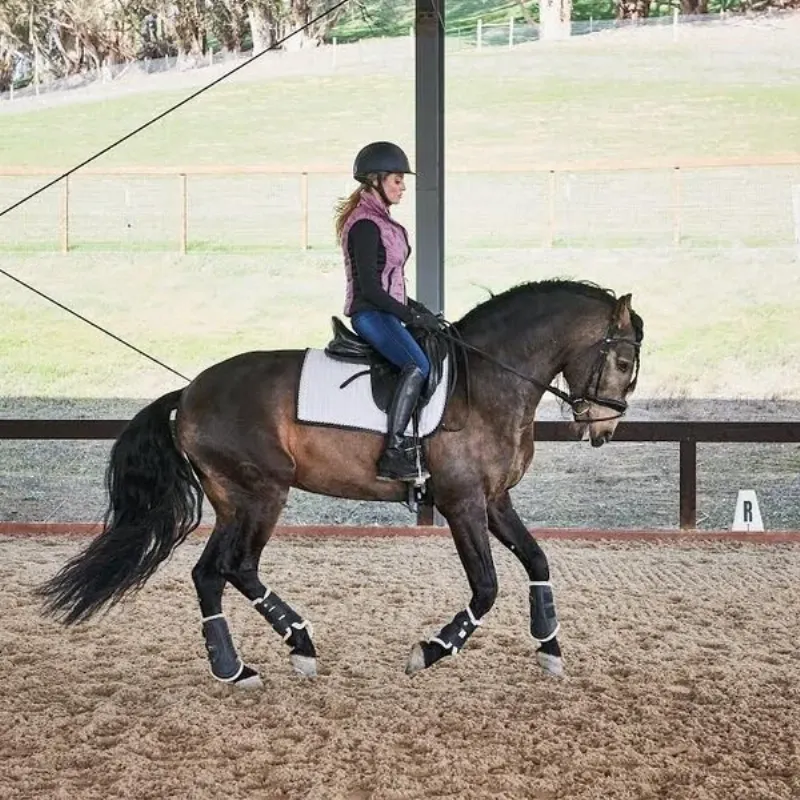 A stunning grey horse performing an advanced dressage movement in an arena, demonstrating the elegance of training horses to dance.
What Makes a Good Equine Dancer?
While any horse can learn a simple routine and benefit from the bonding process, certain characteristics can make a horse a natural performer. A calm and willing temperament is paramount; a horse that is intelligent and eager to please will learn more quickly and enjoy the process more.
For specific disciplines, certain physical traits are advantageous. The powerful hindquarters of a Quarter Horse are ideal for Freestyle Reining, while the natural grace and suspension of a Warmblood lend themselves beautifully to Dressage. However, the most important ingredient is not the breed, but the strength of the bond you share.
Frequently Asked Questions (FAQ)
Can any horse learn to dance?
Yes, to some extent. Any sound horse with a good temperament can learn simple movements and sequences. The complexity of the “dance” will depend on the horse’s physical ability, trainability, and the skill of the handler.
How long does it take to train a horse to dance?
This is a long-term journey, not a short-term project. Building the necessary foundation of trust and skill can take years. Teaching a simple routine might take a few months, while a high-level dressage freestyle is the result of many years of dedicated, daily training.
Is training a horse to dance cruel?
When done correctly, it is the opposite of cruel. Ethical training, based on positive reinforcement and a deep understanding of equine behavior, strengthens the horse-human bond. It provides mental stimulation and physical benefits. However, methods that use fear, force, or intimidation are absolutely cruel and should be condemned.
What is the difference between dressage and liberty dancing?
The primary difference is the use of tack. Dressage is a discipline performed under saddle with a bridle, focused on precise movements and rider-horse harmony. Liberty dancing is performed without any tack, relying solely on the connection and communication between the horse and handler.
Do I need a special arena to practice?
A safe, enclosed area with good footing is all you need to start. A standard dressage arena is ideal for more formal choreography, but a round pen or even a secure pasture can work well for liberty work and teaching initial movements.
The Final Bow
Ultimately, training horses to dance is one of the most profound expressions of partnership you can achieve. It’s a journey that challenges you to become a better horseperson—more patient, more precise, and more empathetic. It’s not about the final performance, but about the countless hours of quiet communication and mutual understanding that get you there. It’s a testament to the incredible connection possible between two different species, a silent conversation that unfolds into a beautiful, moving work of art.
