
Embarking on the journey of dog ownership is incredibly rewarding, filled with wagging tails and unconditional love. However, it also comes with responsibilities, and one of the most fundamental is teaching your canine companion to walk politely on a leash. This isn’t just about good manners; it’s crucial for safety, control, and ensuring enjoyable walks for both of you. If you’ve ever felt like you’re in a tug-of-war with your furry friend, this guide is here to transform those challenging strolls into harmonious adventures. We’ll delve into effective strategies to ensure your dog learns to walk on a leash with confidence and ease, making every outing a positive experience.
Understanding the Importance of Leash Training
Leash training is more than just a formality; it’s a cornerstone of responsible dog ownership. A dog that pulls excessively can be difficult to manage, potentially leading to injuries for both the dog and the owner. It can also make walks stressful rather than enjoyable. Proper leash training ensures your dog is safe in various environments, preventing them from running into traffic, encountering aggressive dogs, or getting lost. It fosters a deeper bond between you and your pet, built on trust and clear communication. Understanding the ‘why’ behind leash training can be a great motivator to commit to the process.
Why Do Dogs Pull on the Leash?
Before we dive into solutions, it’s helpful to understand why dogs pull in the first place. Often, it’s simply because they’re excited and eager to explore the world around them! Their noses are working overtime, picking up scents, and they want to get to that interesting spot now. Sometimes, pulling is a learned behavior; if pulling has always gotten them where they want to go, they’ll continue the practice. Other reasons can include a lack of proper training, fear, or anxiety in certain environments, or even underlying medical conditions that cause discomfort when walking.
Essential Tools for Leash Training
Having the right equipment can make a significant difference in your training success. While a standard flat collar and leash are basic necessities, some tools can offer more control and comfort for both you and your dog.
Collars and Harnesses
- Flat Collar: Suitable for dogs who are already well-trained or for dogs with specific breed needs where a harness is not ideal. Ensure it’s fitted correctly – you should be able to slip two fingers underneath.
- Martingale Collar: These collars tighten slightly when the dog pulls, providing a gentle cue to slow down, but they are designed not to choke the dog. They are a good option for dogs with slender heads, like sighthounds.
- Head Halter: These fit over the dog’s muzzle and behind their ears, offering excellent control by directing the dog’s head. They require a proper introduction to ensure the dog is comfortable wearing them.
- No-Pull Harness: Many designs are available, but the most common have a front-clip attachment. This means the leash attaches to a ring on the dog’s chest, redirecting them back towards you when they pull, which is a much gentler and more effective method for most dogs.
Leashes
- Standard Leash: A 4-6 foot nylon or leather leash is generally recommended for training. It provides enough length for exploration while maintaining good control.
- Avoid Retractable Leashes: These can be dangerous as they offer less control, can cause serious injury if they break or the dog runs out of slack unexpectedly, and can actually encourage pulling.
Foundational Training Techniques
Consistency and positive reinforcement are the cornerstones of effective dog training. Here are some proven methods to teach your dog to walk nicely on a leash:
The “Be a Tree” Method
This is one of the simplest yet most effective techniques for beginners.
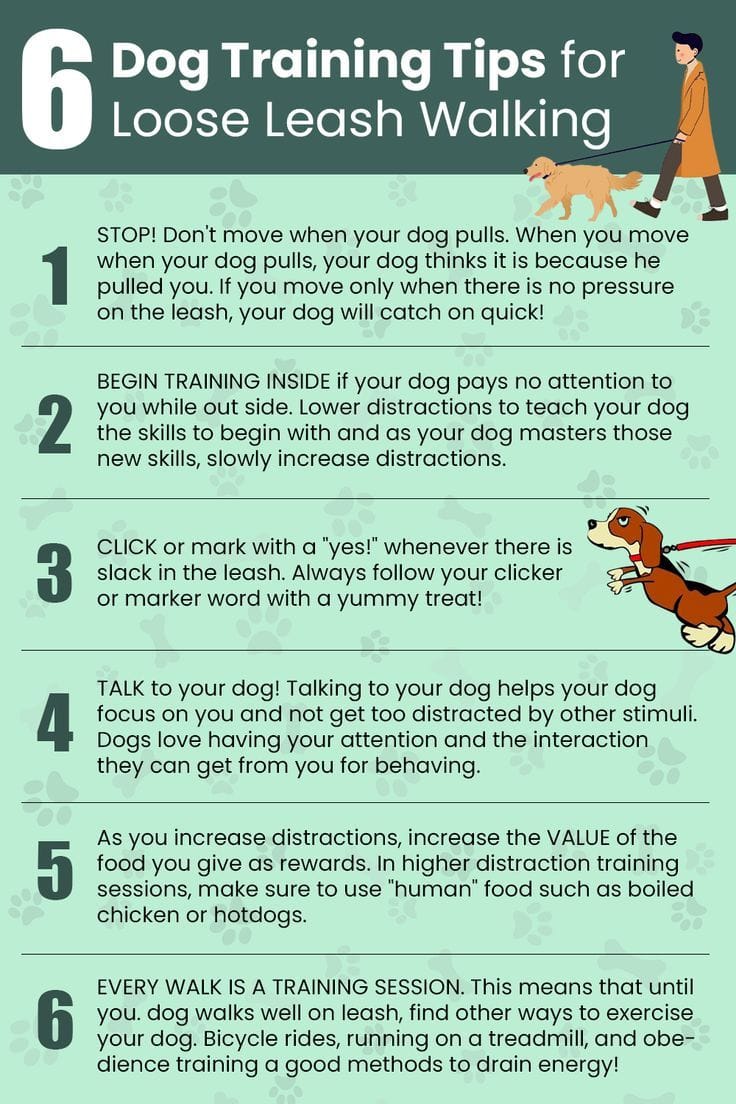
- Start Walking: Begin your walk as usual.
- The Moment They Pull: The instant your dog’s leash becomes taut, stop moving. Stand completely still, like a tree.
- Wait: Wait patiently. Don’t yank or pull back. Simply wait until the leash slackens, even slightly, which usually happens when the dog pauses or looks back at you.
- Resume Walking: As soon as the leash slackens, start walking again.
- Repeat: This process will likely take many repetitions, especially at first. Your dog will learn that pulling stops the fun (the walk), while a loose leash allows them to continue moving forward.
Rewarding Loose-Leash Walking
Positive reinforcement is key to making training a positive experience for your dog.
- Mark and Reward: When you are walking and the leash is loose, use a verbal marker like “Yes!” or a clicker, followed by a high-value treat. The treats should be small and enticing – think tiny pieces of cheese, chicken, or special training treats.
- Timing is Crucial: Reward your dog while the leash is loose, not after they’ve already pulled. You want to reinforce the state of having a loose leash.
- Random Rewards: Don’t reward every single step initially, but as your dog gets the hang of it, you can start to reward more randomly to keep them engaged.
Changing Direction
This method is similar to “Be a Tree” but involves actively redirecting your dog.
- Start Walking: Begin your walk.
- Dog Pulls: As soon as the leash tightens, cheerfully say “This way!” and turn 180 degrees, walking in the opposite direction.
- Encourage Them: Keep the leash loose by maintaining a gentle tension that encourages them to follow you.
- Reward: When they catch up and the leash is loose, offer praise and a treat.
- Continue: This teaches your dog that pulling leads them away from their desired direction, while staying with you and keeping the leash loose keeps them moving forward. This technique is particularly useful for dogs who are easily distracted by things ahead of them.
Addressing Common Challenges
Even with the best techniques, you might encounter some common hurdles.
Distractions
The world is full of exciting smells, sights, and sounds for dogs. When distractions become overwhelming, they can override training.
- Management: Start training in quiet areas with minimal distractions. Gradually introduce more stimulating environments as your dog progresses.
- High-Value Rewards: Use extremely enticing treats for distractions, as the reward needs to be more appealing than the distraction itself.
- “Look at That” Game: Teach your dog to associate seeing a distraction (like another dog) with a reward. When they see something distracting, and before they react, say “Yes!” and treat. This helps them look at the distraction and then back at you for a reward.
Jumping and Lunging
Some dogs might jump up or lunge when excited or frustrated by the leash.
- Stay Calm: Avoid pulling back sharply, as this can sometimes encourage more lunging.
- Use a Harness: A front-clip harness can be very effective here by preventing them from lunging forward with full force.
- Reinforce Calmness: Reward moments when they are calm and not jumping or lunging. If they jump, calmly turn away or stop the walk until they settle.
How to Keep Dogs from Pulling When Walking
For persistent pullers, a combination of methods is often best. Consistently applying the “Be a Tree” or “Change Direction” techniques, coupled with rewarding loose-leash walking, will yield results. Consider the type of equipment you are using; a well-fitted no-pull harness can significantly help manage pulling while you implement training.
Advanced Leash Training Tips
Once your dog has a good grasp of the basics, you can refine their skills.
Introducing New Environments
Practice in different locations – parks, quiet streets, pet-friendly stores – to generalize the behavior. This helps your dog understand that loose-leash walking is expected everywhere.
Building Duration and Distance
Gradually increase the length of your walks and the amount of time your dog spends walking on a loose leash before needing a cue or reward. Celebrate small victories!
Using a Cue Word
Consider adding a cue word like “Heel” or “With me” as you reward loose-leash walking. This gives your dog a specific command to follow.
The Role of Canine Clarity and Expert Guidance
For particularly challenging cases or if you’re struggling to see progress, seeking professional help can be invaluable. Organizations or trainers who specialize in canine clarity dog training emphasize clear communication and understanding canine behavior. While resources from individuals like Kate Perry dog training often focus on positive reinforcement and building a strong owner-dog relationship, they can provide insights applicable to leash walking. Remember, training french bulldogs to walk on leash might require slightly different approaches than training a larger, more energetic breed, but the core principles remain the same.
Maintaining a Positive Walking Experience
Leash training is an ongoing process, not a one-time event. Regular practice and reinforcement will ensure your dog remains a well-mannered walking companion.
Consistency is Key
Ensure everyone who walks the dog uses the same methods and rules. Inconsistency can confuse your dog and slow down progress.
Patience and Understanding
Every dog learns at their own pace. Be patient, celebrate successes, and don’t get discouraged by setbacks. Remember, your dog is learning a complex behavior.
Making Walks Enjoyable
The ultimate goal is for walks to be a joyful bonding experience. By implementing these training techniques, you’re not just teaching your dog to walk on a leash; you’re building a foundation of trust and cooperation that will enrich both of your lives. For those in specific areas, services like springfield mo dog training can offer localized support.
Frequently Asked Questions About Leash Training
Q1: How long does it take to leash train a dog?
A1: The time it takes varies greatly depending on the dog’s age, breed, temperament, and the consistency of training. Some dogs pick it up in a few weeks, while others may take several months. Patience and consistency are crucial.
Q2: My dog still pulls even with a no-pull harness. What else can I do?
A2: Ensure the harness fits correctly. If pulling persists, it may indicate a need for more foundational training on attention and impulse control. Using the “Be a Tree” or “Change Direction” methods consistently, combined with high-value rewards when the leash is loose, is essential.
Q3: Is it okay for my dog to pull sometimes?
A3: Ideally, no. Consistent pulling teaches the dog that it’s an acceptable way to move forward. It’s best to discourage pulling every time it happens to avoid confusion and reinforce the desired behavior of a loose leash.
Q4: When can I stop rewarding loose-leash walking?
A4: You never truly stop rewarding it; you just change the reinforcement schedule. Initially, rewards are frequent. As the dog becomes proficient, rewards can become more intermittent (randomly spaced) but should always be available as a way to maintain the behavior and provide positive reinforcement.
Q5: Can I use treats for leash training?
A5: Absolutely! Treats are a highly effective tool for positive reinforcement. Use small, high-value treats and ensure your timing is impeccable – reward the moment the leash is loose.
Conclusion: Building a Harmonious Partnership on Walks
Teaching your dog to walk on a leash is a journey that requires dedication, patience, and the right approach. By understanding your dog’s motivations, utilizing appropriate tools, and consistently applying positive reinforcement techniques, you can transform challenging walks into enjoyable bonding experiences. Remember the core principles: stop when they pull, reward them for a loose leash, and always aim to make training a positive interaction. This commitment to effective leash training is a fundamental aspect of being a responsible and loving dog owner, paving the way for countless happy adventures together. Mastering this skill is key to unlocking the full potential of your relationship with your canine companion.
