
Have you ever watched a dog on screen or at the park perform a clever trick and thought, “I wish my dog could do that”? The great news is, they probably can! The world of Training Dogs To Do Tricks is an accessible, joyful journey that goes far beyond mere entertainment. It’s a powerful way to deepen your connection, sharpen your dog’s mind, and build incredible confidence in your furry companion. This isn’t about creating a circus performer; it’s about opening a new line of communication and discovering just how brilliant your dog truly is. Forget the idea that it’s a complicated process reserved for professional trainers; with a little patience and a pocketful of treats, you can unlock a whole new level of partnership. For those looking to build a solid foundation, exploring various dog training and obedience classes can provide an excellent starting point.
Why Bother with Tricks? More Than Just a Show
Before we dive into the “how,” let’s talk about the “why.” Teaching tricks is one of the most beneficial activities you can do with your dog, offering advantages that ripple through every aspect of their life.
Boosting Their Brainpower
Just like humans, dogs need mental exercise to stay sharp and happy. Learning a new trick forces a dog to think, problem-solve, and focus. This mental stimulation is a fantastic way to prevent boredom, which can often lead to destructive behaviors like chewing or excessive barking. A tired dog is a happy dog, and that applies to their brain as much as their body.
Strengthening Your Unbreakable Bond
Training is a two-way street; it’s a form of communication. When you’re teaching a trick, you and your dog are working as a team toward a common goal. Your dog learns to watch you for cues, and you learn to read their body language more effectively. This shared experience, filled with positive reinforcement and praise, builds trust and deepens your connection in a profound way.
Building Canine Confidence
For a timid or anxious dog, mastering a new skill can be a huge confidence booster. The process of trying something new, figuring it out, and earning a reward shows them that they are capable and that learning is a positive experience. This newfound confidence can translate to other areas of their life, making them more resilient and less fearful in new situations.
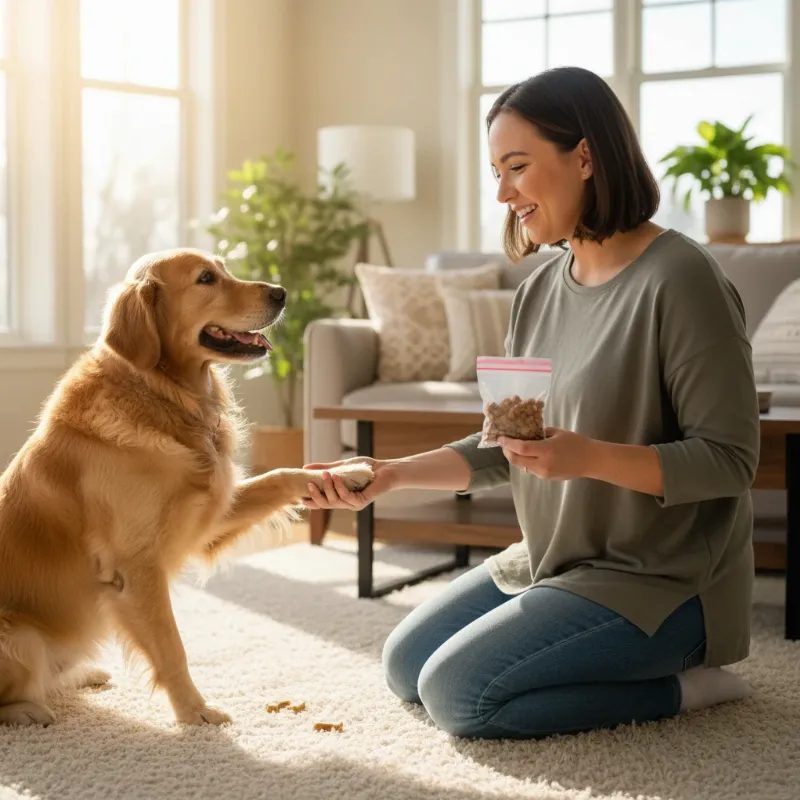 A close-up shot of a person's hand holding a treat while a happy Golden Retriever offers its paw for a shake, illustrating the concept of training dogs to do tricks.
Getting Started: The Trick Training Toolkit
You don’t need a lot of fancy equipment for training dogs to do tricks. The most important tools are your attitude and your understanding of how dogs learn.
The Magic of Positive Reinforcement
The gold standard for all modern dog training is positive reinforcement. In simple terms, this means you reward the behavior you want to see. When your dog does something right, they get something they love (like a treat or praise). This makes them more likely to repeat the behavior in the future. It’s a fun, effective, and humane method that builds a positive association with learning. Avoid punishment or harsh corrections, as these can create fear and anxiety, hindering the learning process.
The Right Tools for the Job
- High-Value Treats: Forget the dry kibble. For trick training, you need something extra special that your dog will go bonkers for. Think small, soft, smelly pieces of chicken, cheese, or store-bought training treats. The key is “small” so you can do lots of repetitions without filling them up too quickly.
- A Clicker (Optional): A clicker is a small handheld device that makes a distinct “click” sound. You “charge” the clicker by clicking and immediately giving a treat, over and over, until your dog understands that the click means a reward is coming. It’s a powerful tool for marking the exact moment your dog performs the correct action.
- A Quiet Space: Start your training sessions in a low-distraction environment, like your living room. This helps your dog focus on you and the task at hand.
- A Positive Attitude: Your dog can read your emotions. Keep sessions upbeat, short, and fun! Aim for multiple 5-10 minute sessions a day rather than one long, grueling hour. Always end on a high note with a trick your dog knows well.
5 Easy Tricks to Start with Today
Ready to begin? Here are five foundational tricks that are perfect for beginners. Remember to be patient and celebrate the small successes!
1. Shake Paws
This classic trick is a fantastic starting point.
- Step 1: Ask your dog to sit. Hold a treat in your closed fist and let them sniff it.
- Step 2: Most dogs will naturally paw at a hand that holds a treat. The moment their paw touches your hand, say “Yes!” (or click), and give them the treat from your other hand.
- Step 3: Repeat this a few times. Once they are reliably pawing at your closed fist, start presenting your open palm instead.
- Step 4: When they touch your open palm with their paw, mark it and reward them.
- Step 5: Once they’ve got the hang of it, add the verbal cue “Shake” just before you offer your hand. With practice, they’ll offer their paw on cue alone.
2. High Five
This is a fun and easy variation of “Shake.” Once your dog has mastered shake, simply hold your hand up vertically, palm facing them, and say “High Five!” Since they already know the motion of touching their paw to your hand, they’ll catch on quickly.
3. Spin
A dynamic trick that looks impressive but is surprisingly simple to teach.
- Step 1: Hold a high-value treat near your dog’s nose.
- Step 2: Use the treat as a lure to guide their head around toward their tail. As their head turns, their body will follow.
- Step 3: Guide them in a full circle. The moment they complete it, mark the behavior (“Yes!”) and give them the treat.
- Step 4: After a few repetitions, start making the hand motion smaller and add the verbal cue “Spin!” Eventually, you’ll be able to get them to spin with just the hand signal or the verbal cue.
4. Speak
This trick involves capturing a behavior your dog already does naturally.
- Step 1: Identify what makes your dog bark. Is it the doorbell? A knock? A certain toy?
- Step 2: Trigger the bark. The second they bark, say “Yes!” and give them a treat.
- Step 3: Repeat this process several times. You are teaching them that the sound of their bark earns a reward.
- Step 4: Start adding the cue “Speak” right before you anticipate they will bark. With consistency, they will learn to bark on command. Don’t forget to also teach the “Quiet” cue!
5. Fetch
While it seems simple, a reliable game of fetch has several parts.
- Step 1: Start by generating excitement for a specific toy. Make it seem like the best thing in the world!
- Step 2: Toss it a very short distance (just a foot or two). When they move toward it, praise them enthusiastically.
- Step 3: When they pick it up, immediately offer them a high-value treat in exchange for the toy. This teaches them that bringing the toy back to you is rewarding.
- Step 4: Gradually increase the distance of your toss. The key is to make returning the toy to you the best part of the game.
Level Up: Impressive Intermediate Tricks
Once your dog has mastered the basics, you can move on to more complex behaviors. These tricks often involve stringing multiple simple actions together.
Take a Bow
This is a wonderful stretch for your dog and a very polite-looking trick.
- Step 1: With your dog standing, hold a treat in your hand.
- Step 2: Lower the treat from their nose down between their front paws. This will encourage them to lower their front end while keeping their back end in the air—the “play bow” position.
- Step 3: The moment they hit the position, mark it (“Yes!”) and release the treat.
- Step 4: Practice this, and once they are reliably following the lure, add the verbal cue “Take a bow!”
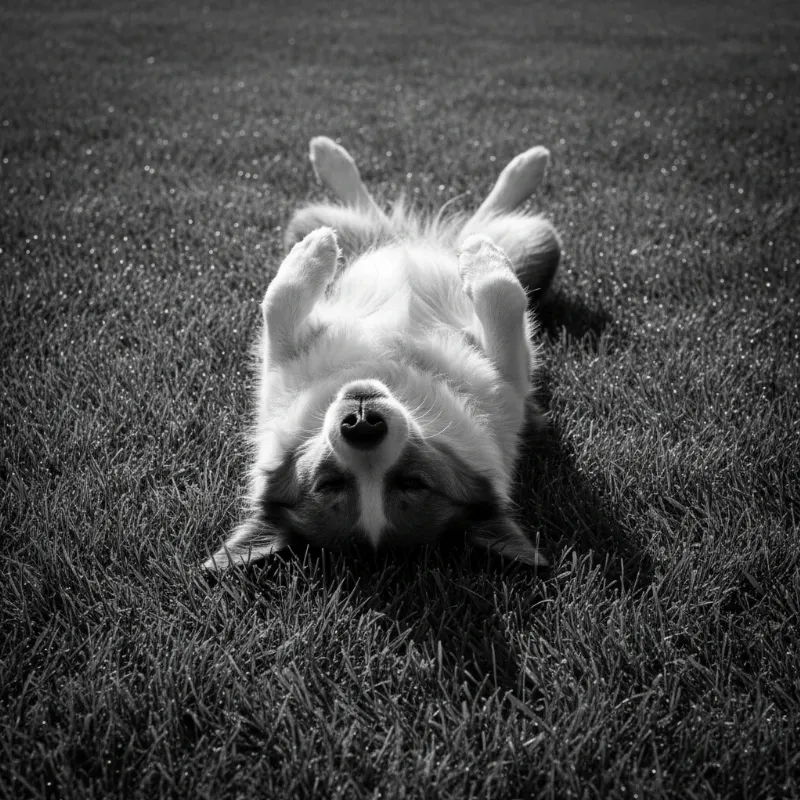 A well-trained Border Collie lying on its side on a green lawn, performing the "play dead" trick as part of advanced training for dogs to do tricks.
Play Dead
This crowd-pleaser requires patience and builds on the “down” command.
- Step 1: Ask your dog to lie down.
- Step 2: With a treat as a lure, guide their head to one side, encouraging them to shift their weight onto one hip. Mark and reward any shift in weight.
- Step 3: Gradually, use the lure to get them to flop over completely onto their side. This may take several sessions. Be patient and reward small movements.
- Step 4: Once they are comfortably lying on their side, you can add the verbal cue “Bang!” or “Play dead!” and use a fun hand signal like a finger gun. Successful training dogs to do tricks like this one is a matter of breaking down complex actions into manageable steps.
Common Stumbling Blocks and How to Fix Them
Even the best trainers run into challenges. Here are a few common issues:
- My dog isn’t interested. Your treats might not be high-value enough, or your training sessions might be too long. Try a tastier reward and keep sessions under 5 minutes.
- They aren’t getting it. You might be moving too fast. Go back a step and reward smaller, simpler approximations of the final behavior. The core of dog training is incremental progress. For those seeking structured guidance, exploring options like dog training in Conway SC can be very beneficial.
- I’m getting frustrated. Your dog can sense your frustration. If you feel yourself getting tense, end the session with a trick your dog knows well, give them lots of praise, and try again later. Training should always be a positive experience for both of you.
As renowned canine behaviorist Dr. Emily Carter states, “Trick training isn’t just about showing off; it’s a conversation you’re having with your dog. Each new trick is a new word you both learn to share.”
This perspective highlights that the journey of training is just as important as the end result. Whether you’re in a specific locale like that covered by dog obedience training Naples FL or working on your own, the principles of patience and communication are universal.
Frequently Asked Questions (FAQ)
How long does it take to teach a dog a trick?
This varies wildly depending on the dog’s age, breed, personality, and the complexity of the trick. A simple trick like “shake” might be learned in a few short sessions, while a multi-step trick like “play dead” could take weeks. Consistency is more important than speed.
Can you really teach an old dog new tricks?
Absolutely! This is one of the biggest myths in the dog world. Adult and senior dogs can learn new things just as well as puppies. In fact, they often have longer attention spans. The approach to old dogs new tricks dog training is fundamentally the same: patience, positive reinforcement, and finding what motivates them.
What if my dog isn’t motivated by food?
While rare, some dogs prefer other rewards. Find out what your dog truly loves. Is it a special squeaky toy? A vigorous game of tug-of-war? Enthusiastic praise and petting? You can use anything your dog finds rewarding to reinforce behavior.
How many tricks can a dog learn?
There’s no limit! Dogs are incredibly intelligent animals capable of learning hundreds of commands and tricks. The more you teach them, the better they become at the process of learning itself.
Your Adventure in Trick Training Awaits
Ultimately, training dogs to do tricks is about so much more than the final performance. It’s about the laughter when they almost get it right, the pride you feel when they finally understand, and the incredible partnership you build along the way. It’s a language of fun, trust, and mutual respect. So grab some treats, call your dog, and start your training adventure today. You’ll be amazed at what you can achieve together.
