
Welcome to the Dog Care Story family! If you’re looking to build a stronger bond with your furry friend, teaching them new commands is one of the best ways to do it. One of the most fundamental and useful commands is “lay down.” Beyond being a neat trick, training a dog to lay down is a powerful tool for managing their energy and promoting calmness. It’s a foundational skill that can help in various situations, from relaxing at a café to managing excitement when guests arrive. This guide will walk you through the process with simple, effective techniques that work for dogs of all ages and breeds.
Teaching this command is often a natural next step after your dog has mastered “sit.” It builds on that established behavior and introduces a new level of obedience. Think of it as a calming signal you can give your dog, a way to tell them it’s time to settle. Just like with any training, patience and positive reinforcement are your best friends. Ready to get started? Let’s dive in. For a similar foundational command, you can also explore how to get your dog to lay down.
Why ‘Lay Down’ is an Essential Command
Before we get into the “how,” let’s talk about the “why.” The “lay down” command, often paired with “stay,” is more than just a party trick. It’s an essential tool for impulse control and safety.
- Promotes Calmness: Asking a dog to lie down physically puts them in a relaxed posture. This can help de-escalate an overly excited or anxious state.
- Safety and Management: In public spaces or when you have visitors, having your dog lie down quietly can prevent them from jumping on people or getting underfoot. It’s a crucial command for keeping them safe around children or in busy environments.
- Foundation for Other Skills: “Lay down” is the starting point for more advanced tricks and commands, such as “roll over” or “play dead.”
- Strengthens Your Bond: Every training session is an opportunity to communicate and connect with your dog. Successfully teaching them a new skill builds trust and deepens your relationship.
According to veterinary behaviorist Dr. Sarah Miller, “The ‘down’ position is a submissive and relaxed posture for a dog. When you train this command using positive methods, you’re not forcing submission; you’re teaching your dog a cue to choose calmness, which is incredibly empowering for them.”
Getting Started: What You’ll Need
To set yourself up for success, gather a few simple items before you begin your training session. Preparation is key to keeping the session smooth and positive.
- High-Value Treats: Find a treat your dog absolutely loves. These should be small, soft, and easy to swallow quickly so the training flow isn’t interrupted. Think small pieces of chicken, cheese, or specially made training treats.
- A Quiet Space: Choose a location with minimal distractions. Your living room or a quiet backyard is perfect. Avoid areas where other pets or people might interrupt the session.
- A Positive Attitude: Your dog feeds off your energy. Stay patient, upbeat, and encouraging. Keep sessions short and fun—around 5 to 10 minutes is ideal, especially for puppies or dogs new to training.
- A Clicker (Optional): A clicker is a great tool for marking the exact moment your dog performs the correct behavior. If you’re not using a clicker, a verbal marker like a sharp “Yes!” works just as well.
How to Teach Your Dog to Lay Down: The Luring Method
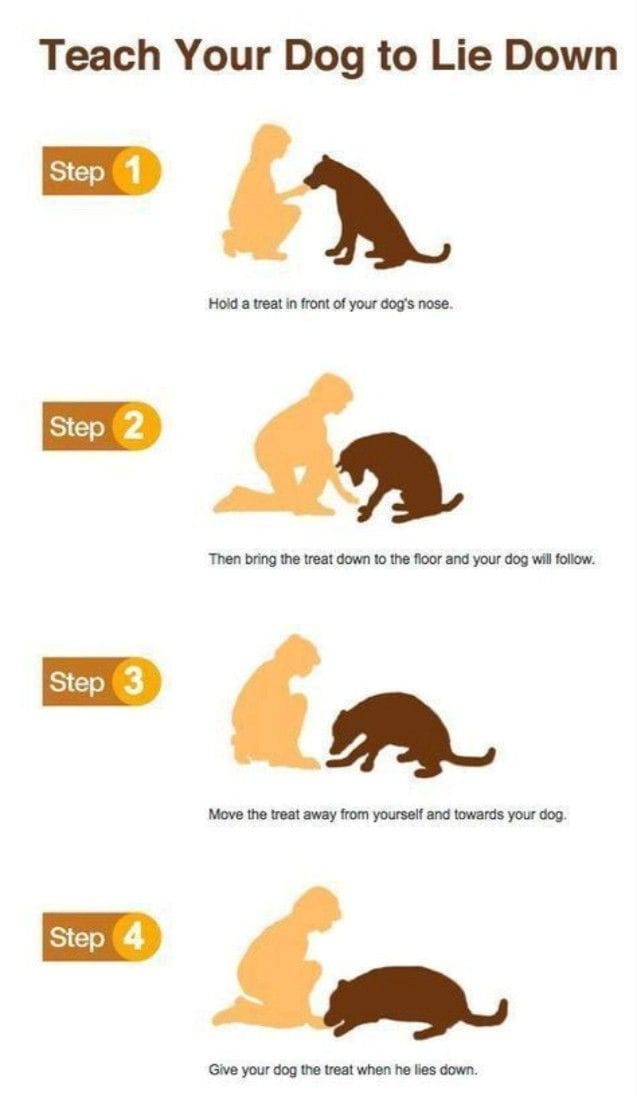
The luring method is the most common and often the easiest way to teach a dog to lie down. It uses a treat to guide your dog into the desired position.
Step 1: Start with a “Sit”
Ask your dog to sit. Having them in a seated position first makes the transition to lying down much smoother and more natural. Once they are sitting, give them a moment of praise.
Step 2: Lure Them Down
Hold a high-value treat in your hand. Let your dog sniff it, so they know you have something delicious. Then, slowly lower the treat from their nose straight down to the floor between their paws. Their head should follow the treat.
Step 3: Guide Them into Position
As their head follows the treat to the floor, they will likely have to bend their elbows to reach it. Most dogs will naturally slide into a down position. The moment their belly touches the floor, mark the behavior with your clicker or a “Yes!” and immediately give them the treat and lots of praise.
Step 4: Practice and Repeat
Repeat this process several times in your short training session. The goal is to make the motion smooth and for your dog to understand what action is earning them the reward. If your dog stands up, simply ask them to sit again and restart the process.
Step 5: Fading the Lure
Once your dog is consistently following the lure into a down position, you can start to “fade” it. Go through the same motion with your hand, but without a treat in it. When your dog lies down, mark the behavior and then reward them with a treat from your other hand. This teaches them to follow the hand signal, not just the treat itself.
Step 6: Adding the Verbal Cue
When your dog is reliably lying down with the hand signal, you can introduce the verbal cue. Say “Lay Down” or “Down” in a clear, calm voice just before you give the hand signal. After several repetitions, your dog will start to associate the words with the action.
Step 7: Practice with the Verbal Cue Alone
The final step is to test the verbal cue on its own. Ask your dog to “Lay Down” without giving the hand signal. If they do it, give them a “jackpot”—several treats and lots of enthusiastic praise! If they don’t, that’s okay. Simply go back a step and practice with the verbal cue and hand signal together for a bit longer. Mastering complex movements can sometimes be challenging, and it’s interesting to see how this training compares with teaching motion-based commands like when you learn how do i train my dog to heel.
Common Challenges and Troubleshooting
Training doesn’t always go perfectly, and that’s completely normal. Here are some common hurdles and how to overcome them when training a dog to lay down.
My Dog Just Backs Up or Stands Up
This often happens if you move the lure too far forward instead of straight down. Ensure the treat moves directly between their paws. You can also try practicing in a corner or with your dog between your legs to prevent them from backing away.
My Dog Just Bows and Won’t Go All the Way Down
This is common! They are halfway there. When your dog is in this “play bow” position, try slowly sliding the treat along the floor away from them. This will encourage them to crawl forward and drop their hips to the floor. Reward any movement toward a full down position.
My Dog is Too Excited and Can’t Focus
If your dog is too wiggly, try a quick play session before you start training to burn off some excess energy. Keep the training sessions very short (even just 2-3 minutes) and use extremely high-value treats to keep their focus.
Advancing the ‘Lay Down’ Command
Once your dog has mastered the basic command in a quiet room, it’s time to up the ante. This process is called “proofing” the behavior, and it teaches your dog to respond reliably in different situations.
- Adding Duration: After your dog lies down, ask them to “stay.” Wait a few seconds before rewarding them. Gradually increase the amount of time they stay down.
- Adding Distance: Once they can hold the position, start taking a step back before you reward them. Slowly increase the distance until you can ask them to lie down from across the room.
- Adding Distractions: Start practicing in slightly more distracting environments, like your backyard or on a quiet street. The key is to increase the difficulty gradually. If your dog fails, simply make it easier for them to succeed next time. Sometimes, understanding the nuances of professional training can provide insights. For instance, discovering how are therapy dogs trained can offer new perspectives on patience and consistency.
Frequently Asked Questions (FAQ)
How long does it take for training dog to lay down?
The timeline varies greatly depending on the dog’s age, breed, and temperament. Some dogs might pick it up in a few sessions, while others may take a few weeks. Consistency is more important than speed. Short, daily sessions of 5-10 minutes are most effective.
Can I train an older dog to lay down?
Absolutely! The saying “you can’t teach an old dog new tricks” is a myth. Older dogs can learn just as well as puppies, though they may have some ingrained habits to work around. Be patient and keep it positive. For senior dogs, ensure the surface is comfortable for them to lie on.
What should I do if my dog has physical limitations?
If your dog is older, has arthritis, or other physical issues, the “lay down” command might be uncomfortable. Never force them. Consult with your veterinarian. You may need to provide a soft, padded surface or focus on other commands that are more comfortable for them.
Should I use “Down” or “Lay Down”?
It’s your choice, but be consistent. Some trainers prefer “Lay Down” to avoid confusion with “Off” (as in, get off the furniture). Whichever you choose, make sure everyone in the household uses the same verbal cue.
My dog only listens when I have treats. What do I do?
This is a common issue and is why fading the lure is so important. Make sure you are rewarding from your other hand or pocket, not the hand giving the signal. Also, start incorporating “life rewards.” For example, ask your dog to lay down before you put their food bowl down or before you throw their favorite toy.
Conclusion: A Calmer, Happier Companion
Mastering the art of Training Dog To Lay Down is a rewarding experience for both you and your pet. It goes far beyond simple obedience; it’s about building a language of trust, enhancing your communication, and providing your dog with the structure they need to feel secure and calm. Remember to celebrate the small victories, keep your sessions fun and positive, and be patient with the process. With consistency, you’ll soon have a dog who can relax on cue, making your life together more harmonious and enjoyable. Now go grab those treats and start practicing
