
Choosing the right training collar for your large dog is a significant decision that impacts their behavior, your relationship, and overall safety. Large breeds often possess immense strength and energy, making effective training not just a matter of good manners, but also necessity. This guide delves into the essential aspects of selecting and using a Training Collar For Large Dogs, ensuring a positive and effective training experience for both you and your canine companion.
Understanding the Need for Training Collars for Large Dogs
Large dogs, by their very nature, can be more challenging to manage if not properly trained. Their size and strength mean that a lack of obedience can lead to safety concerns, whether it’s pulling excessively on the leash, exhibiting aggressive behaviors, or simply not responding to commands. Training collars are tools designed to aid in this process by providing a clear communication channel between you and your dog. They are not intended as a substitute for consistent training and positive reinforcement but rather as a supplement to help enforce commands and correct unwanted behaviors.
Types of Training Collars Suitable for Large Breeds
When considering a training collar for a large dog, it’s crucial to understand the different types available and their specific applications. The effectiveness and suitability often depend on the dog’s temperament, the specific training issue, and the owner’s skill level.
Martingale Collars
Martingale collars, also known as greyhound collars, are designed with a unique loop system. When the dog pulls, the collar tightens, but only to a certain point, preventing choking or injury. This is particularly beneficial for dogs with narrow heads, like sighthounds, who can easily slip out of traditional collars. For large dogs, a well-fitted martingale can provide a secure and humane way to discourage pulling without causing harm.
Flat Buckle Collars
While not strictly a “training” collar in the sense of correction, a sturdy flat buckle collar is a fundamental piece of equipment for any dog, especially large breeds. It’s essential for attaching identification tags and for casual wear. When used with a leash for basic obedience training, it can be effective for dogs who are already responding well to commands and only need gentle guidance. However, for dogs prone to strong pulling or behavioral issues, a more specialized training collar might be necessary.
Head Halters
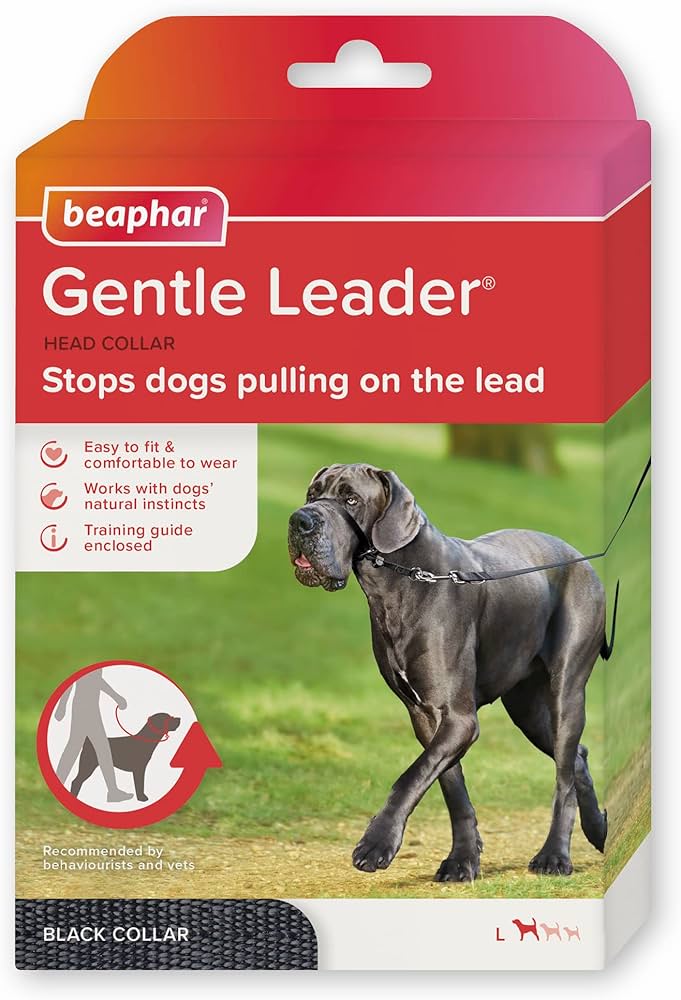
Head halters, such as the Gentle Leader or Halti, work on the principle of steering. They fit around the dog’s muzzle and behind the ears, allowing you to guide the dog’s head with gentle pressure on the leash. When the dog pulls, their head is turned back towards you, naturally discouraging forward momentum. These are often highly effective for strong pullers and can be a good alternative for owners who are uncomfortable with prong or shock collars. They require a gradual introduction to ensure the dog accepts wearing it comfortably.
Prong Collars ( a type of training collar for large dogs)
Prong collars, also known as pinch collars, feature a series of metal links with blunt prongs that rest against the dog’s neck. When the dog pulls, the prongs apply pressure, providing a physical correction. These collars can be very effective for strong, stubborn dogs who don’t respond to other methods. However, they must be used with extreme caution and proper knowledge. Incorrect fitting or improper use can lead to injury or create fear and anxiety in the dog. We recommend professional guidance when considering a prong collar.
Electronic Collars (E-collars)
Electronic collars, often referred to as shock collars, provide a stimulation (vibration, tone, or static shock) when the dog misbehaves or fails to respond to a command. They offer a range of correction levels and modes, making them versatile tools. E-collars can be highly effective when used by experienced trainers for specific issues like recall or boundary training. However, they are also the most controversial type of training collar. Improper use, incorrect settings, or a lack of understanding can cause pain, fear, and behavioral fallout. As with prong collars, expert guidance is strongly advised. For those considering such tools, understanding the nuances of [dog training collar for large dogs] and their proper application is paramount.
Key Considerations When Choosing a Training Collar
Selecting the appropriate training collar for your large dog involves more than just picking a style. Several factors need careful consideration to ensure safety, effectiveness, and the well-being of your pet.
Size and Fit
This is perhaps the most critical factor for large dogs. A collar that is too loose can slip off, posing a safety risk and rendering it ineffective. Conversely, a collar that is too tight can cause discomfort, chafing, breathing difficulties, or even injury. For prong and electronic collars, the placement of the prongs or contact points is crucial for proper function and to avoid pain. Always follow the manufacturer’s guidelines for fitting, and when in doubt, consult a professional trainer. A properly fitted [best training collar for large dogs] is foundational to successful training.
Dog’s Temperament and Breed
A gentle giant like a Great Dane might respond differently to a correction than a powerful, high-drive dog like a Belgian Malinois. Consider your dog’s individual personality, sensitivity, and energy levels. Some dogs are more easily startled or anxious, making aversive methods less suitable. Breeds with specific physical characteristics, such as thick fur or long muzzles, may also require specialized collar designs to ensure effective contact and comfort.
Training Goals and Issues
What specific behaviors are you trying to correct or manage? If your primary concern is leash pulling, a head halter or a martingale might be ideal. For dogs with significant behavioral issues or a strong prey drive, a prong or electronic collar, used judiciously, might be considered. It’s essential to match the tool to the task. For instance, the [best training collar for big dogs] for a simple leash-pulling issue may differ greatly from one needed for advanced obedience.
Your Comfort Level and Training Philosophy
Your comfort with the tool plays a significant role. If you are hesitant or uncomfortable using a particular type of collar, it will likely translate into your dog’s training sessions, creating tension and distrust. Many modern trainers advocate for positive reinforcement methods, using tools like clickers and treat rewards. Training collars should be seen as communication aids, not punishment devices. If you’re unsure about the ethical implications or proper use of aversive tools, seek advice from certified professional dog trainers who align with your philosophy.
Best Practices for Using Training Collars
Regardless of the type of training collar you choose, responsible and ethical use is paramount. The goal is to enhance communication and improve your dog’s behavior, not to inflict pain or create fear.
Gradual Introduction
Never simply put a new training collar on your dog and expect them to accept it. Introduce it gradually, associating it with positive experiences like meals, playtime, or short walks. For head halters and electronic collars, start with brief periods of wear, rewarding your dog for calm acceptance.
Consistency is Key
Training collars are most effective when used consistently alongside clear commands and positive reinforcement. A single correction from a collar means little if the behavior isn’t consistently addressed and good behavior isn’t rewarded. Your commands should be clear, and your timing impeccable.
Focus on Positive Reinforcement
Training collars should be used to stop unwanted behaviors or reinforce commands, but they should never be the sole method of training. Always pair corrections with positive reinforcement for desired behaviors. Reward your dog generously when they respond correctly to a command or when they are calm and well-behaved. This builds a strong, positive association with training.
When to Seek Professional Help
If you are struggling with your dog’s behavior or are unsure about how to properly use a training collar, do not hesitate to seek professional help. A certified dog trainer can assess your dog’s needs, recommend the most appropriate [training collars for large dogs], and demonstrate proper usage techniques. They can help you avoid common mistakes that can be detrimental to your dog’s well-being and your training progress. For example, a trainer can show you the correct way to fit and use [training shock collars for large dogs] if that is the chosen method.
Conclusion: Empowering Your Large Dog’s Training Journey
Training a large dog requires patience, consistency, and the right tools. A training collar, when chosen wisely and used responsibly, can be an invaluable asset in shaping your dog’s behavior and strengthening your bond. By understanding the different types of collars, carefully considering your dog’s individual needs, and adhering to best practices, you can navigate the world of dog training with confidence. Remember, the ultimate aim is a well-behaved, happy, and safe companion, and the right training collar is just one piece of that rewarding puzzle. Whether you opt for a simple flat collar for basic leash manners or explore more advanced options for specific behavioral challenges, the focus should always remain on clear communication, positive reinforcement, and a humane approach to building a trusting relationship with your beloved large dog.
