
The art of horsemanship in North America owes a significant debt to the Spanish vaqueros, whose arrival over five centuries ago introduced a profound legacy that continues to shape Western riding culture today. Their influence is evident not only in common equestrian terms like “chaps” and “rodeo” but also in the fundamental principles of horse training and stockmanship. The vaqueros meticulously developed their horses into responsive, agile working partners, a process that began with the hackamore, progressed through the two-rein stage, and culminated in horses ridden “straight up in the bridle” with a spade bit.
While modern ranching practices have led to a decline in this traditional style of horsemanship, some riders remain dedicated to the vaquero philosophy. Martin Black, a fifth-generation rancher from Idaho, is one such advocate, whose family has upheld this tradition for nearly 150 years. Black emphasizes that the ultimate goal of a bridle horse is to be an all-around stock horse, capable of working cattle with minimal cues. “What made the bridle horse ideal was you could have a rope in one hand and steer your horse with the other, and what everybody strived for was a horse you could ride without pulling on him,” he explains.
Black continues to train his horses using the classical methods, starting them in a hackamore, then progressing to the two-rein, and finally to the spade bit, which he describes as both a leverage and signal bit. “We want [horses] to respond to the slightest movement of the mouthpiece,” he states. This tradition, originating from the Moors of Africa and carried to Spain, spread through Mexico and into the western United States, with vaquero horsemanship becoming prevalent in California by the mid-1800s and subsequently moving into states like Nevada, Oregon, and Idaho.
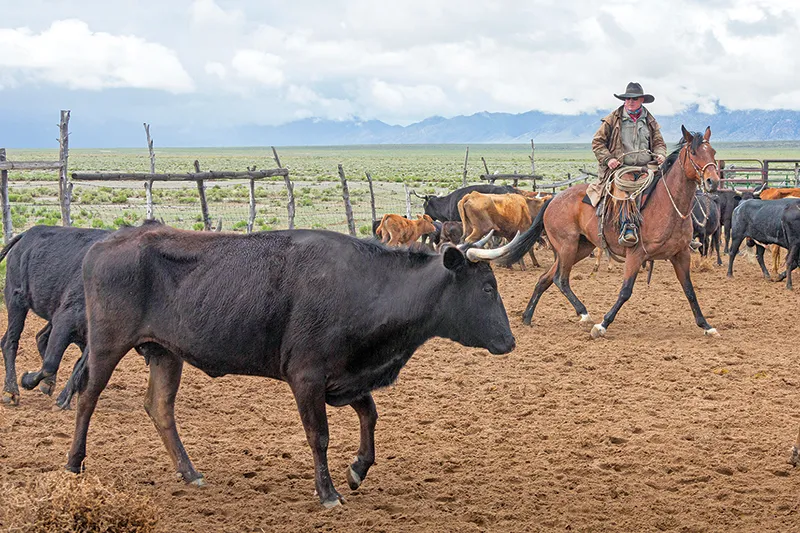 Vaquero tradition, bridle horse training, Martin Black, horse horsemanship*Martin Black’s well-trained bridle horse demonstrates its responsiveness and attentiveness to its rider’s subtle cues. Photo: Kim Stone Shinanatu Photography*
Black contrasts the traditional bridle horse training with modern methods, noting that the focus in his family has always been on developing a capable horse over time, rather than on early competitions. “You worked your young horses kind of like you send your kid to grade school, hoping that he’d eventually go to university and become a doctor, lawyer, or scientist,” he says. “Today, I don’t spend much time riding the three-year-olds. I maybe ride the four-year-olds a bit more, but I’m really looking to the five- and six-year-olds to start blossoming, so they’re good six, seven, or eight-year-old horses.” This approach fosters horses that are more open to new challenges and decision-making, rather than simply following repetitive training patterns.
The appeal of the bridle horse tradition extends beyond traditional cowboys, attracting riders like Stefanie Travers, a British Columbia-based horsewoman who has trained her horses this way for 12 years. She views it as an art form, distinct from the sport-oriented approach common in much of the horse world. A key difference, according to Travers, is the absence of a strict timeline. “Our horse world is so steeped in three-day colt starts and 90-day training… And it’s not. But that’s the standard,” she observes. In contrast, California-style riders embrace a more patient approach, often saying, “Who cares? There’s always tomorrow. It’s the horse that matters.” Historically, vaqueros had the leisure time to dedicate to perfecting their horses’ abilities, viewing it as an art to be developed.
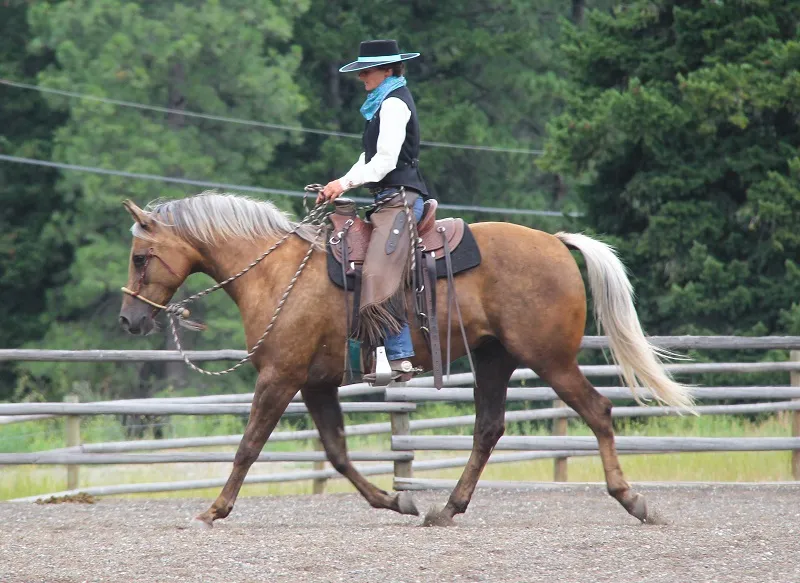 Vaquero tradition, bridle horse training, Stefanie Travers, horse horsemanship*Stefanie Travers exemplifies the modern rider dedicated to the vaquero bridle horse tradition. Photo: Danielle Wegelin*
Travers further explains that the essence of bridle horse training lies in developing the horse to its fullest potential as a stock horse, emphasizing a partnership where the horse dictates the training pace. “The horse dictates the training timeline. They speak a completely different language and we’re trying to work together,” she notes. A central tenet is “staying in the centre of the horse,” focusing on body-oriented communication rather than forceful methods. This involves a harmonious balance between the rider and horse, fostering a desire in the horse to be with and travel alongside the rider.
The tack used in the bridle horse tradition is also integral to the communication process. Travers highlights the brilliance of the equipment, which was historically crafted by working cowboys. Black shares that he and his family would spend evenings refining their gear. Today, artisans create specialized equipment, with elements like the number of plaits in rawhide or strands in mecate reins serving as subtle communication tools. Travers likens these components to “fibre optics between your hands and the horse’s mouth,” emphasizing that while the gear facilitates communication, the rider’s body and presence are the most powerful tools.
The bridle horse tradition appeals to those seeking a deeper connection with their horses, often individuals who have previously explored other equestrian disciplines. Travers suggests that people drawn to this art are fascinated by horses and driven to learn more about themselves through their equine partners. The development of a bridle horse, she believes, compels riders to become better horsemen.
The ultimate achievement in this tradition is training a horse to be “straight up in the bridle,” a state where the horse is round, engaged, and relaxed, with its head in a naturally elevated position. This is not forced but is a result of sensitive hands, aware riders, and a horse that is happy and engaged. As Travers concludes, “The horse will teach you if you listen is not just a beautiful saying, it’s the truth… that’s the essence of the bridle horse.” It is this profound pursuit that continues to inspire horsemen and women to preserve this centuries-old tradition.
Related: Neverwinter Training Day: Equip Your Horse
Related: Horse Training Collar
Related: Icelandic Horse Gait Training Equipment Ornamental
Related: Horse Riding Training Fees
