
Selecting the appropriate bit is crucial for effective communication and control when riding and training horses. Bits are designed to translate rider cues into pressure within and around a horse’s mouth, guiding its speed and direction. The choice of bit is influenced by several factors, including riding discipline, rider proficiency, the horse’s training level, and its intended use. For instance, stock seat riders often prefer curb bits used with one-handed reins, while hunt seat riders typically opt for ring snaffles managed with two hands. This guide aims to assist less experienced riders in understanding the fundamentals of bit construction and use, providing a foundation for informed bit selection. Continuous education through hands-on instruction and resource materials is highly recommended to deepen understanding of the training process and how bit selection contributes to achieving riding goals.
Bit Nomenclature: Key Components Explained
A foundational understanding of bit terminology is essential for proper selection and use. Here are some commonly used terms:
- Bars: The section of the mouthpiece situated between the shank and the port. When the headstall is adjusted, the bars rest on the horse’s lower gum area, also known as the “bars” of the mouth, located between the front and back teeth.
- Bosal: The noseband component of a hackamore, typically made from braided rawhide. Bosals are commonly used on young or inexperienced horses, earning them the name “breaking hackamores.”
- Bridle bit: A general term for any bit that applies curb or leverage pressure.
- Broken mouthpiece: A mouthpiece that is hinged or jointed in the center.
- Chin (curb) strap: A strap, usually leather or chain, attached to the shanks of a curb bit. Positioned under the horse’s chin, it acts as a lower anchor point for pressure when the reins are engaged. Most show organizations require chin straps to be at least 1/2 inch wide and lie flat.
- Curb bit: Features a mouthpiece and shanks. The headstall attaches to the upper shanks, and the reins to the lower shanks, creating leverage pressure. The action of the mouthpiece and curb strap tightens on various parts of the horse’s mouth and head when reins are pulled.
- Hackamore: A headstall and noseband designed to apply pressure to the bridge of the nose and under the chin.
- Mechanical hackamore: A noseband device with a curb strap and hinged sidepieces that exerts pressure around the nose and chin, primarily used for slowing or stopping horses.
- Mouthpiece: The part of the bit that rests on the horse’s tongue. For snaffles, it might hang slightly below the lip junction.
- Port: A raised section on solid or hinged mouthpieces that applies pressure to the tongue and potentially the roof of the mouth. Wider ports generally mean less tongue pressure.
- Pressure points: Areas on the horse where bits apply pressure, including the tongue, bars, lips, nose, chin, and poll.
- Rings: The outer parts of snaffle bits that hold the mouthpiece in place and allow for rein and headstall attachment. Ring shape and diameter influence pressure.
- Shanks: The sidepieces of a curb bit. Upper shanks connect to the headstall and curb strap, while lower shanks attach to the reins. Shank length and angle significantly affect pressure.
- Snaffle: A bit consisting of a mouthpiece and rings. True snaffles apply direct rein pressure to the mouthpiece, acting on the tongue, corners of the mouth, and bars.
- Solid mouthpiece: A non-jointed mouthpiece, often featuring bars and ports to modify pressure application.
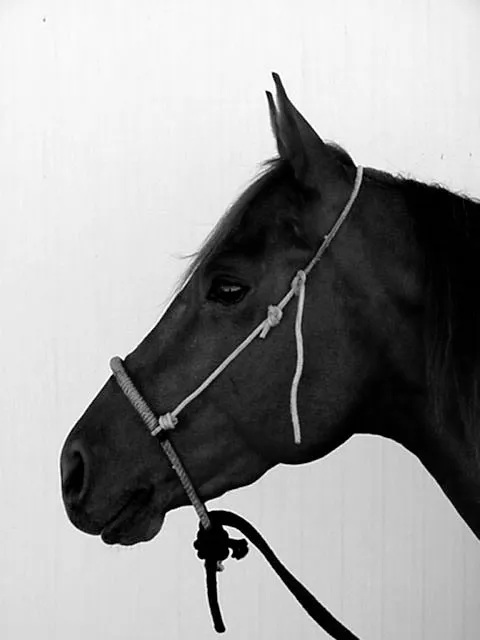 Bosal Hackmore.
Figure 1: Bosal Hackamore
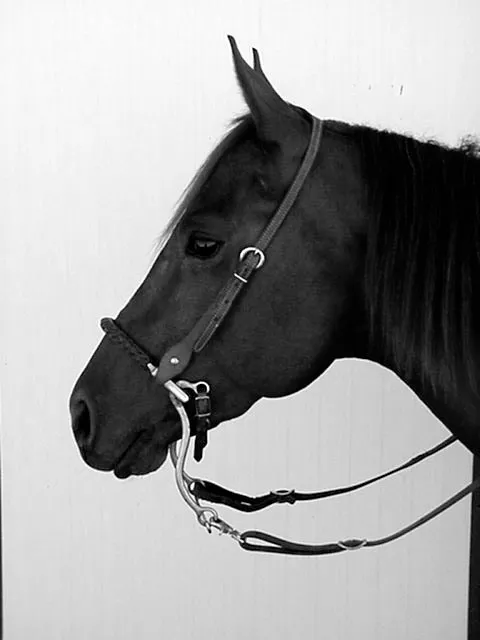 Mechanical Hackamore.
Figure 2: Mechanical Hackamore
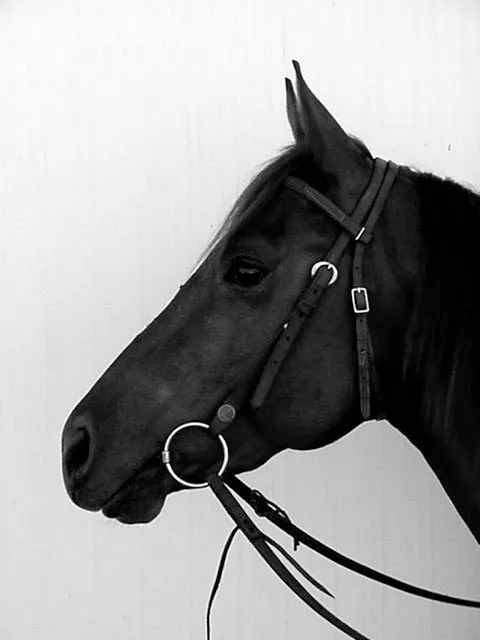 Snaffle Bit.
Figure 3: Snaffle Bit
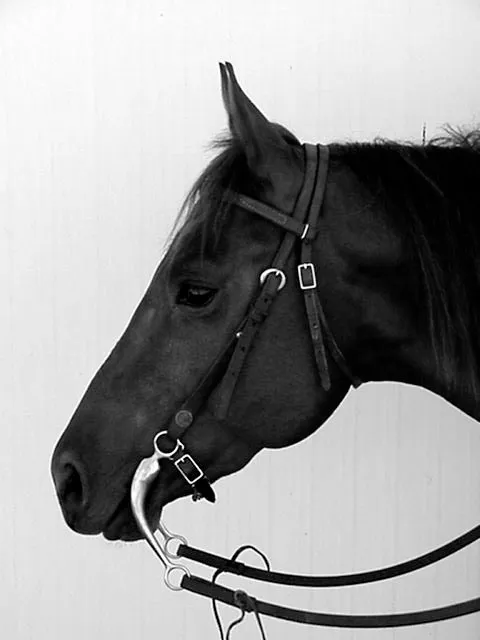 Curb Bit.
Figure 4: Curb Bit
Bit Construction Variations: Tailoring Pressure
Bits are engineered with various features to modify the location, intensity, and type of rein pressure. Understanding these variations is key to selecting the right bit for a specific horse and rider.
- Bit balance: Refers to how a curb bit releases pressure when the reins are slackened. “Over-balanced” bits have lower shanks that hang forward of the mouthpiece, promoting quick pressure release. “Balanced” or “under-balanced” bits maintain pressure. Most bits are designed to be over-balanced for responsive cueing.
- Bar elevation: The upward or forward extension of the bar portion of a mouthpiece. Higher elevation creates more space between the mouthpiece and the horse’s tongue.
- Bit material: Commonly steel, iron, or aluminum, with some featuring copper or rubber mouthpieces for comfort or enhanced response. Decorative inlays are purely aesthetic.
- Mouthpiece diameter: Typically ranges from 5/16 to 3/4 inch, affecting the pressure applied.
- Mouthpiece elevation: The height of the port or the center of the mouthpiece. High ports (2 1/2 inches or more) can press on the sensitive upper palate and are not recommended for inexperienced horses or riders.
- Mouthpiece placement: The angle between the port and the upper shanks, influencing how pressure is distributed.
- Mouthpiece shape: Can be smooth, twisted, rolled, or flattened to alter pressure intensity. Twisted mouthpieces, especially wire twists, significantly intensify pressure and are not recommended for daily use.
- Port shape: Varies from rounded to flattened or rolled, impacting tongue pressure and bit balance.
- Port size: Width and height of the port affect tongue relief and palate pressure.
- Shank length: Lower shank length, in particular, can vary significantly (3 to 7 inches commonly), directly impacting leverage and pressure intensity.
- Shank position: The angle of the shanks relative to the mouthpiece can alter pressure dynamics.
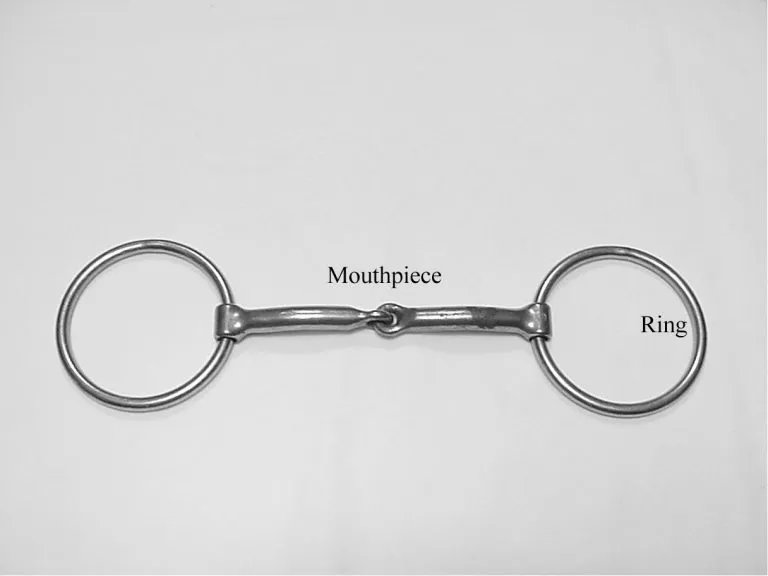 Smooth O-Ring.
Smooth O-Ring: Ideal for daily training requiring lateral control.
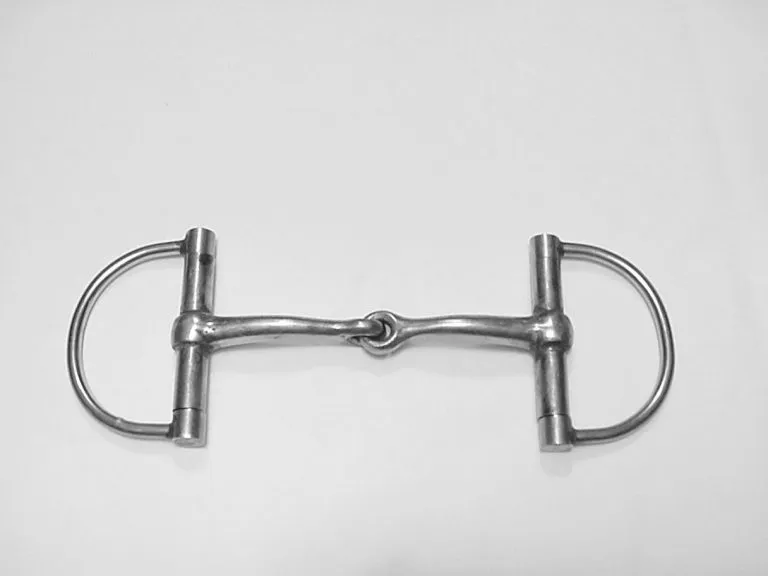 Smooth D Ring.
Smooth D Ring: The ring shape distributes pressure along the sides of the horse’s mouth.
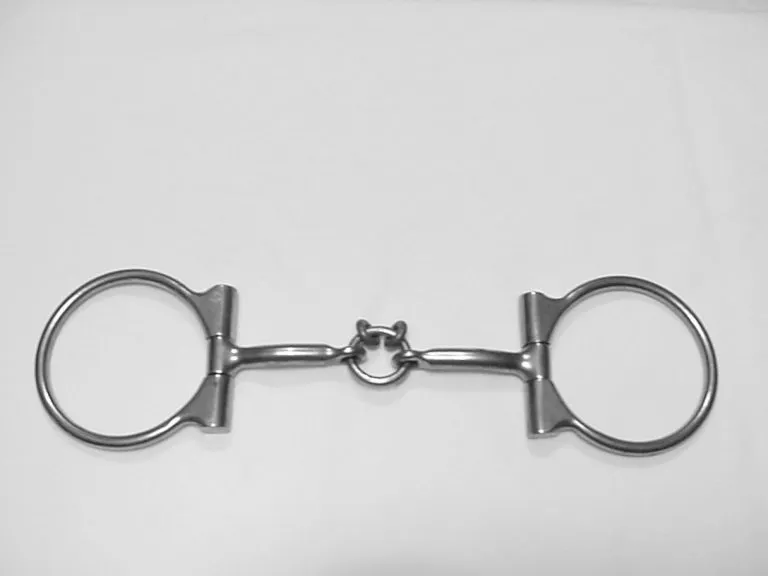 Dr. Bristol Mouthpiece.
‘Dr. Bristol’ mouthpiece: Central rings help keep the tongue positioned correctly.
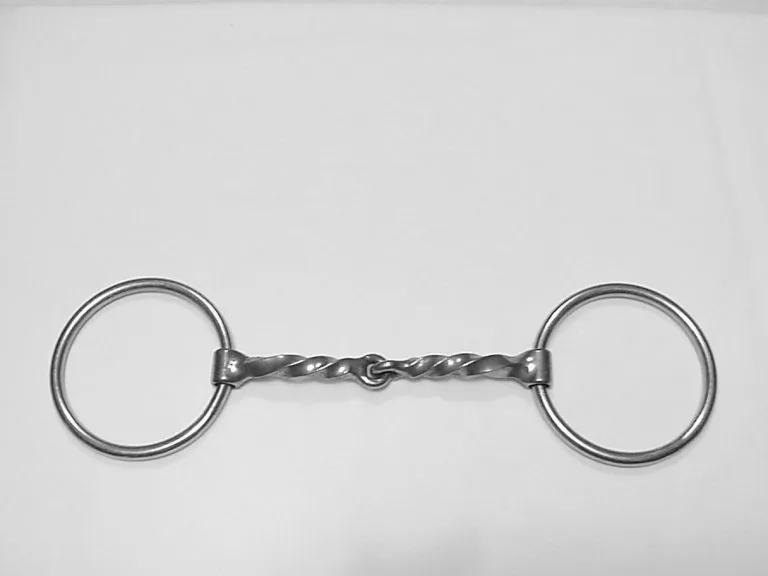 Iron Twist Mouthpiece.
‘Iron twist’: The twisted design reduces tongue contact, intensifying pressure.
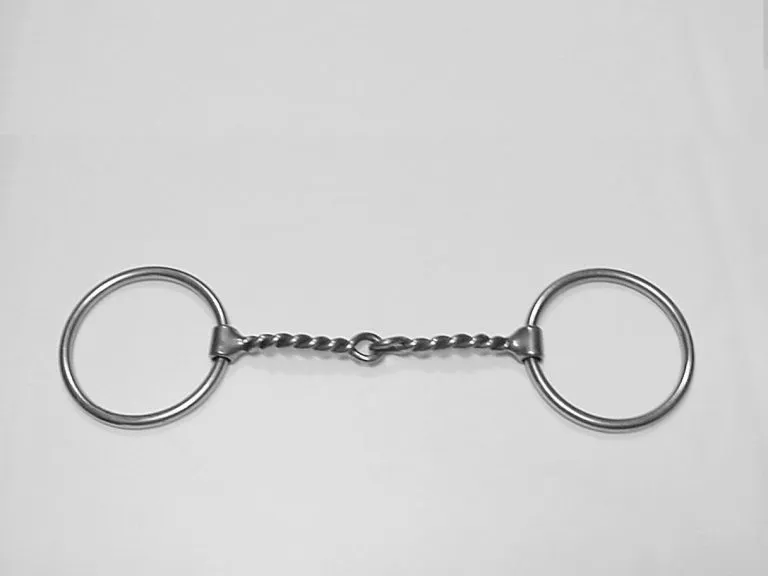 Wire Twist Mouthpiece.
‘Wire Twist’: A small-diameter twist significantly intensifies pressure on the mouth’s corners. Use with caution.
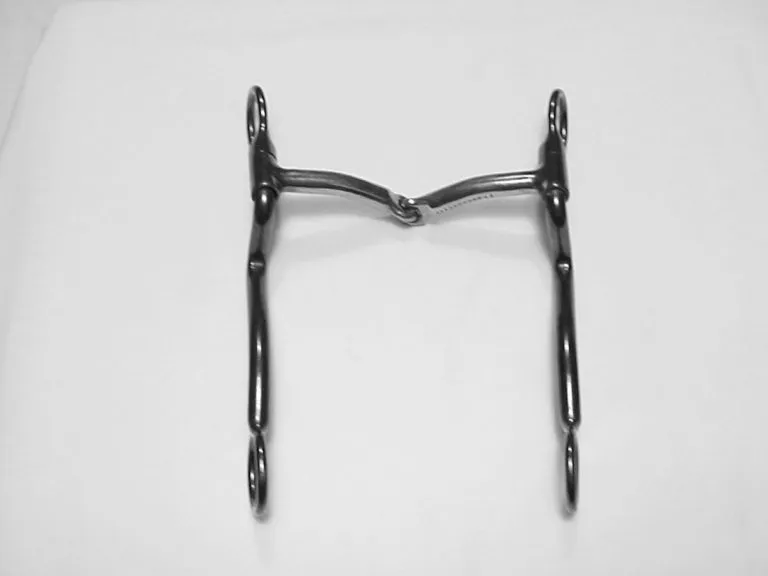 Jointed Mouthpiece.
Jointed Mouthpiece: Intensifies pressure on the corners of the mouth. This type, combined with appropriate shank length, is often used as a transition bit from a bosal or ring snaffle.
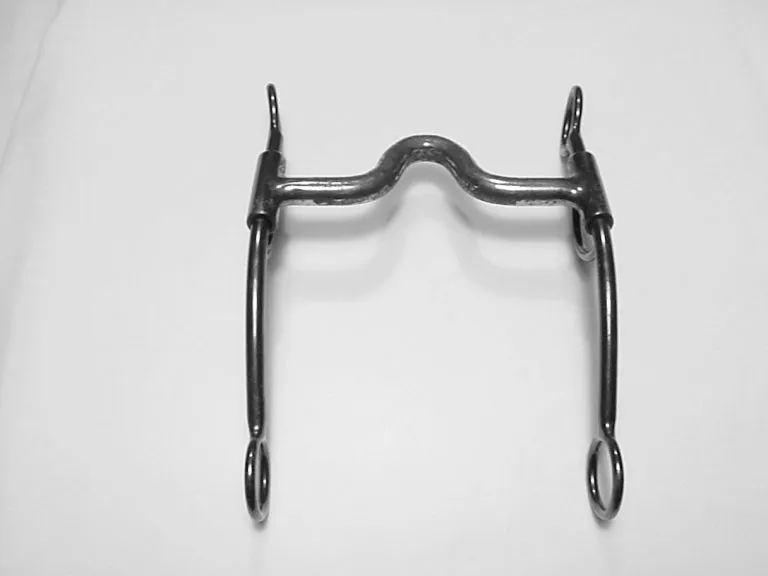 Grazing Mouthpiece.
“Grazing” port: Offers minimal tongue and no palate pressure. Curved shanks promote pressure release. This is a mild bit, suitable for transitioning from a jointed mouthpiece curb to a solid mouthpiece.
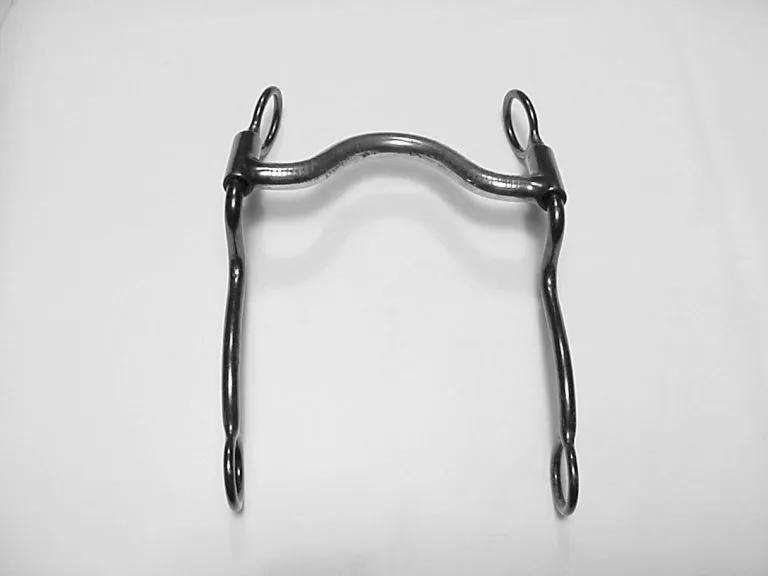 Sweetwater Mouthpiece.
“Sweetwater” port: Allows the tongue to escape pressure, focusing it on the bars.
Bitting Principles for Effective Training
Understanding horse behavior and training principles is paramount when selecting and using bits. Bitting is an ongoing process aimed at teaching horses to accept bits and respond correctly to cues.
- Bitting Process: A continuous training cycle that gradually accustoms horses to bits and teaches them to respond to pressure.
- Curb pressure: Longer lower shanks on curb bits increase leverage and pressure. Mouthpiece designs further refine pressure points.
- Curb use: Primarily used for slowing or stopping horses and for neck reining. Curb bits are typically used on horses already trained to respond to rein cues from snaffles or hackamores.
- Ground driving: Using long lines attached to a snaffle bit, often through a harness, to guide the horse from behind. This method introduces bit pressure and teaches stopping, backing, and guiding before the horse is ridden.
- Hackamore use: Bosal hackamores are used for training young horses in stock seat disciplines. Mechanical hackamores are used to enforce slowing or stopping, particularly in speed events, and offer less lateral control than snaffles. They are best used on previously trained horses.
- Pressure intensity: The goal is to elicit responses with the least amount of pressure possible. Cues should be brief and followed by a release. Excessive pressure, especially for initial responses, can lead to undesirable behaviors and hinder learning. Inexperienced horses benefit from mild, direct pressure bits rather than those that intensify pressure or use leverage.
- Pressure release: Prolonged, consistent pressure encourages resistance. Bit pressure should be applied in short bursts, immediately followed by a release. Reinforcement should involve repeated short “pull-and-release” actions rather than lengthening the cue duration.
- Pre-ride bitting: Before riding, horses are accustomed to the bit and taught to respond to rein pressure. This involves sessions of wearing a snaffle bit without reins and then learning to respond to pressure via ground driving or a bitting harness.
- Snaffle pressure: Ring snaffles apply direct pressure. Jointed mouthpieces intensify pressure on the mouth’s corners, facilitating lateral control and head redirection. Pressure can be further intensified with smaller or twisted mouthpieces.
- Snaffle use: Snaffles are ideal for teaching young or inexperienced horses to respond to direct rein cues, allowing for frequent reinforcements. They are suitable for continuous use in English riding and as a training tool throughout a horse’s life in Western riding due to their effectiveness in reinforcement.
Bits That Greatly Increase Pressure Intensity
While any bit can be misused, some are specifically designed to intensify pressure. These are generally considered short-term correctional bits for experienced horses and riders only.
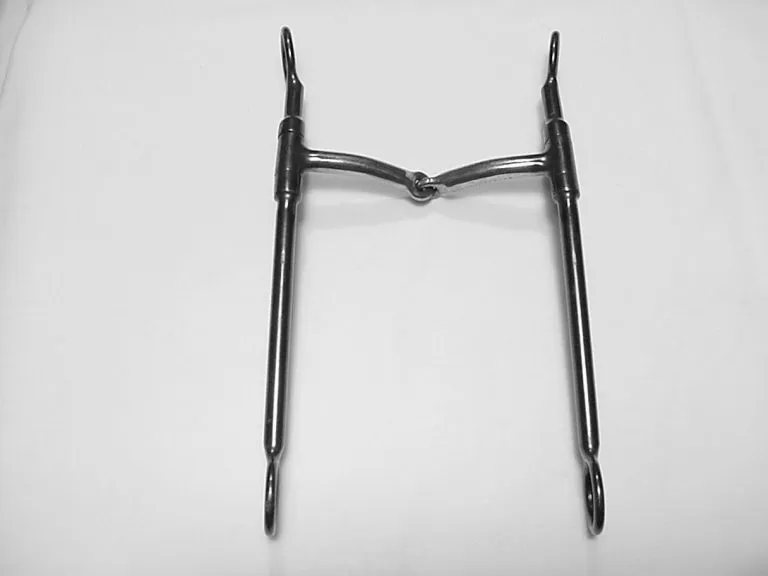 Long Shank Mouthpiece.
Long shank length significantly increases leverage pressure.
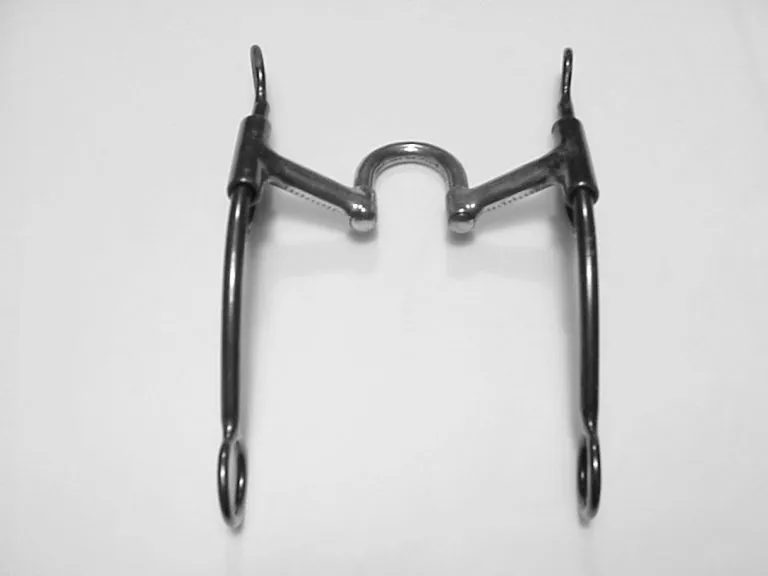 Correctional Mouthpiece.
A ‘Correctional’ mouthpiece applies intense pressure to the sides of the tongue and bars.
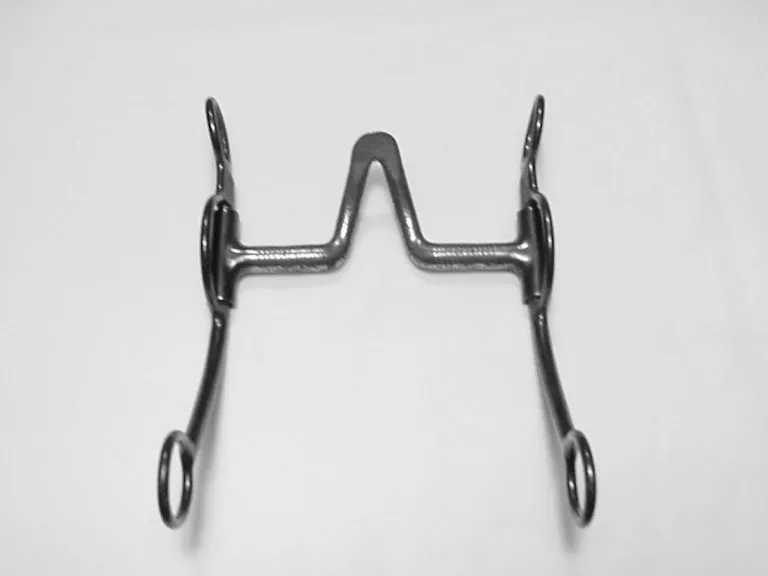 Las Crusas Mouthpiece.
The ‘Las Crusas’ mouthpiece applies pressure to the upper palate without providing tongue relief.
For optimal results and the well-being of your horse, always prioritize hands-on instruction from experienced professionals when learning about bit selection and use. Continuous learning and careful consideration of your horse’s individual needs and training level are essential for successful communication and partnership.
