
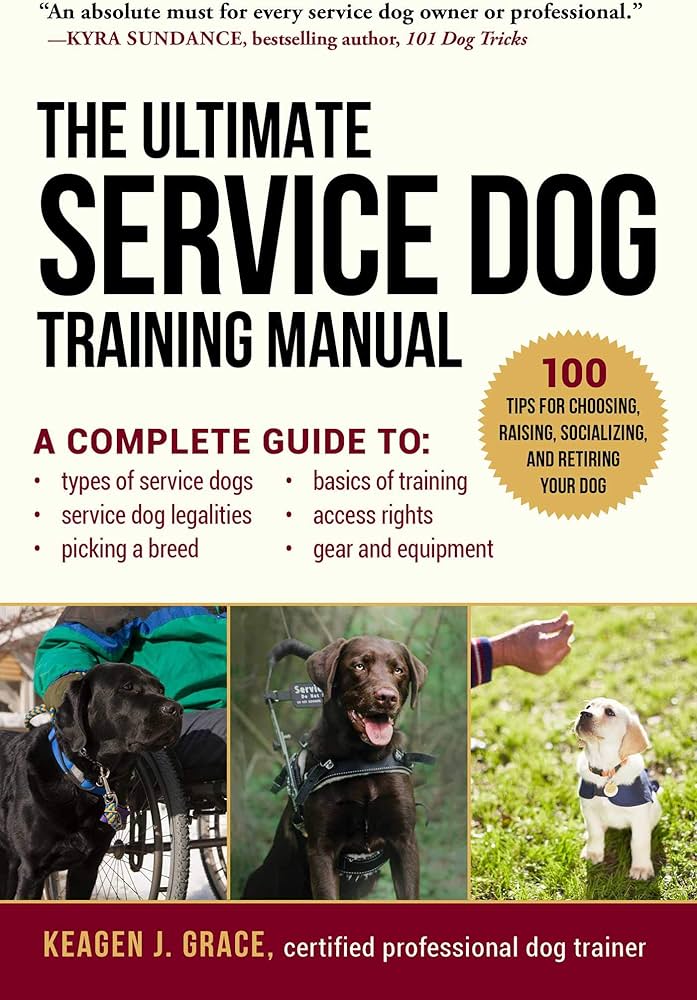
Embarking on the journey of Training A Service Dog Yourself is a rewarding yet demanding endeavor. It requires a significant commitment of time, patience, and understanding of canine behavior. Unlike emotional support animals, service dogs are specifically trained to perform tasks that mitigate a person’s disability. This guide will walk you through the essential steps and considerations for successfully training your own service dog, ensuring they are well-prepared to assist you.
Understanding the Role of a Service Dog
Before diving into training, it’s crucial to understand what distinguishes a service dog. Legally, under the Americans with Disabilities Act (ADA), a service animal is defined as a dog that has been individually trained to do work or perform tasks for the benefit of an individual with a disability. This work must be directly related to the person’s disability. Examples include guiding individuals with visual impairments, alerting individuals who are deaf, pulling a wheelchair, alerting and protecting a person who is having a seizure, or reminding a person with diabetes to take insulin. Not all dogs are suitable for this role; temperament, breed, and health are significant factors.
Choosing the Right Dog
The foundation of a successful service dog is the right canine candidate. While many breeds can be trained as service dogs, certain traits are highly desirable:
- Temperament: A good service dog candidate should be confident, eager to please, not easily startled, and possess a stable disposition. They should be adaptable to various environments and not exhibit aggression or excessive fear.
- Health: Your dog must be in excellent health, free from genetic conditions that could affect their working life. This includes sound joints, good vision, and hearing.
- Trainability: Look for a dog that shows a good aptitude for learning and responding to commands. A high food drive or a strong desire to work with their handler can be advantageous.
Many successful service dogs are acquired through reputable breeders who understand the demands of the role, or from rescue organizations that have assessed dogs for suitability. Early socialization and a strong bond with the handler are paramount from the beginning.
Essential Training Phases
Training a service dog yourself can be broken down into several key phases, each building upon the last.
1. Basic Obedience and Socialization
This is the bedrock of all service dog training. Your dog must have a solid grasp of basic obedience commands and be comfortable in a wide range of public settings.
- Commands: Ensure mastery of commands such as sit, stay, down, come, heel, and leave it. These commands are not just for good manners; they are crucial for safety and control in public.
- Socialization: Expose your dog to various sights, sounds, people, and environments from a young age. This includes busy streets, different types of transportation, stores, parks, and interacting calmly with children, other dogs, and people of all ages. This helps prevent fear-based reactions in public.
Consistency is key. Use positive reinforcement methods, such as treats, praise, and toys, to reward desired behaviors. This builds a positive association with training and strengthens your bond.
2. Task Training: The Core of Service
This phase involves teaching your dog the specific tasks required to mitigate your disability. The tasks must be observable and directly related to your needs.
- Identifying Tasks: Work with a medical professional to identify tasks that will genuinely assist you. This could range from retrieving dropped items, fetching medication, providing deep pressure therapy, or alerting to specific sounds.
- Breaking Down Tasks: Complex tasks should be broken down into smaller, manageable steps. For example, if training a dog to retrieve an item, start by teaching them to pick up a specific object, then to bring it to you, and gradually increase the distance and complexity.
- Generalization: Once a task is learned in a controlled environment, practice it in various settings to ensure the dog can perform it reliably wherever you go.
3. Public Access Training
A service dog must be able to behave impeccably in public spaces. This goes beyond basic obedience; it’s about maintaining a calm, unobtrusive presence.
- Manners: Your dog should not bark excessively, jump on people, sniff indiscriminately, or solicit attention from others. They must be able to lie quietly under a table or at your feet for extended periods.
- Focus on Handler: The dog’s primary focus should always be on you, their handler, not on distractions in the environment.
- Progressive Exposure: Gradually introduce your dog to more challenging public access scenarios. Start with quieter places and work your way up to busier, more stimulating environments.
4. Advanced Skills and Proofing
This stage refines the dog’s abilities and ensures they can perform under pressure.
- Distraction Proofing: Introduce controlled distractions during training to ensure the dog remains focused on commands and tasks.
- Task Reliability: Practice tasks repeatedly in different scenarios to build unwavering reliability.
- Handler Cues: Train your dog to respond not only to verbal cues but also to hand signals or subtle body language.
Legal Considerations and Rights
Understanding the legal framework surrounding service dogs is vital. In many countries, including the U.S. under the ADA, service dogs are granted public access rights. However, handlers can be asked two questions: (1) Is the dog a service animal required because of a disability? and (2) What work or task has the dog been trained to perform? Businesses cannot ask about the nature of the disability, demand documentation, or require the dog to wear a vest or ID (though these can be helpful for identification).
It’s also important to note that while you can train your own service dog, there are no legal requirements for formal certification or registration. However, some handlers choose to obtain vests or IDs for ease of identification.
Resources and Support
Training a service dog is a significant undertaking, and seeking support is often beneficial.
- Professional Trainers: While you are training yourself, consulting with a certified professional service dog trainer can provide invaluable guidance, especially for complex tasks or challenging behaviors. They can help you troubleshoot, refine your techniques, and ensure you are on the right track. Look for trainers with experience in dog training warwick ri or other local areas if you are in the US, or consider online resources if local options are limited.
- Online Communities: Connecting with other service dog handlers and trainers online can offer a wealth of shared experiences, advice, and emotional support. Forums and social media groups dedicated to DIY service dog training can be incredibly helpful.
- Breed-Specific Information: If you have a specific breed, research their general suitability for service work and any breed-specific training considerations. For instance, if your focus is on specific training techniques, looking into resources for total recall dog training can be beneficial for recall reliability.
- Task-Specific Training: If you are looking into specialized training like dog aggression training tampa fl or dog training lafayette co, ensure you consult with trainers experienced in those specific areas, especially if your disability requires such specific task training. The journey to how do I get a trained service dog often starts with understanding the commitment required for self-training.
Common Challenges and Solutions
- Behavioral Issues: If your dog develops behavioral problems, such as reactivity or fear, address them promptly with professional guidance. Early intervention is crucial.
- Handler Fatigue: The process is demanding. Ensure you are taking care of your own well-being and don’t push yourself or your dog too hard.
- Public Access Challenges: Be prepared for occasional questioning or pushback in public. Know your rights and remain calm and informative.
Training your own service dog is a testament to dedication and a deep understanding of your needs and your dog’s capabilities. With patience, consistency, and a focus on positive reinforcement, you can equip your canine partner with the skills necessary to become an invaluable assistance animal. This journey, while challenging, offers unparalleled independence and a profound companionship.
