
Training a puppy to sit and stay is a foundational step in building a strong and loving bond with your furry companion. It’s not just about teaching commands; it’s about fostering a relationship based on clear communication, trust, and mutual respect. This process lays the groundwork for a well-behaved and confident dog who can navigate a wide range of social situations with ease.
Understanding the fundamentals of training a puppy to sit and stay will not only enable you to control your pet’s behavior but will also create a harmonious and joyful environment for both of you. This article will delve into the nuances of training techniques, behavioral considerations, and the profound impact that these seemingly simple commands have on shaping a puppy’s development and your relationship.
Understanding the Importance of Basic Commands
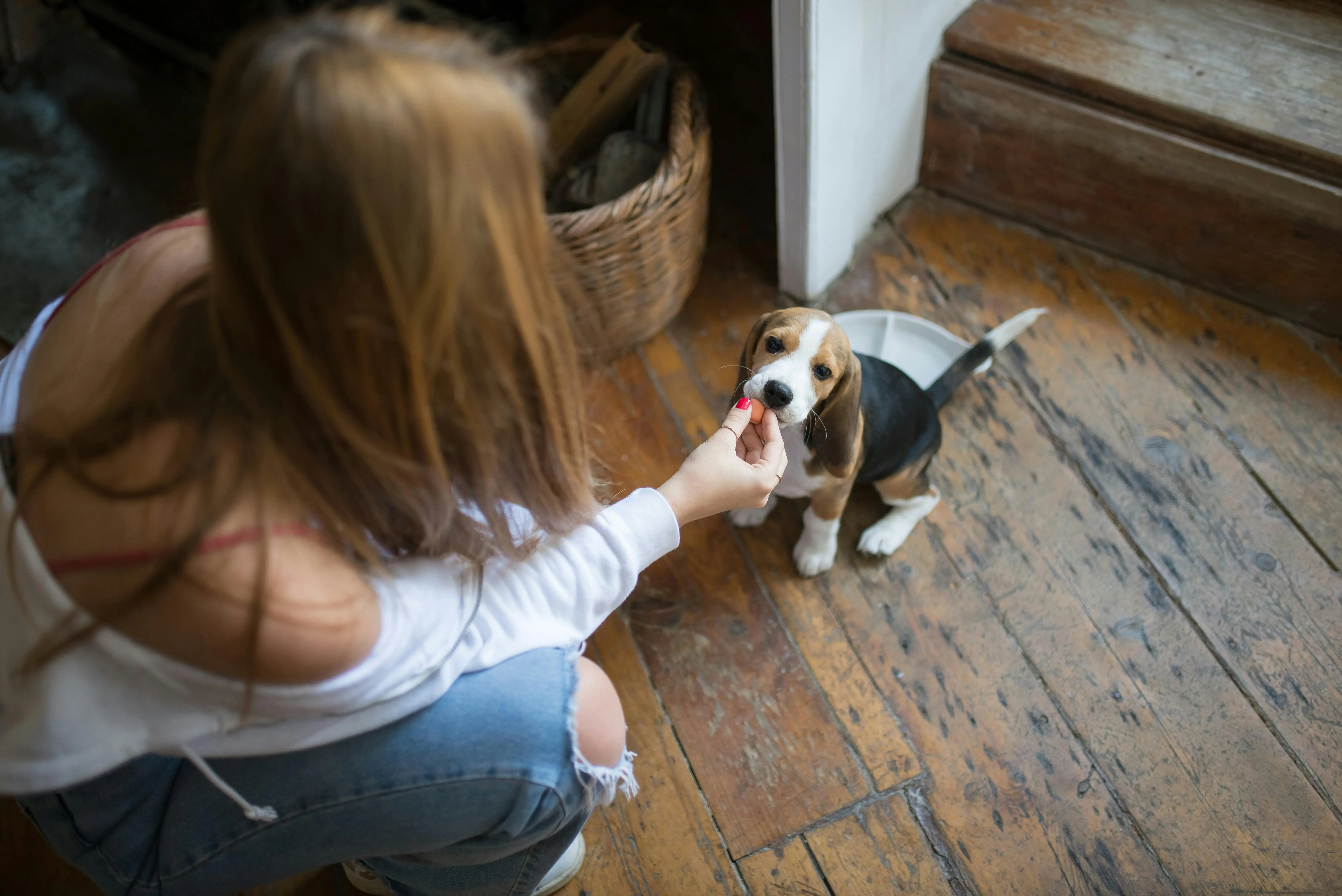
Training a puppy to obey basic commands like “sit” and “stay” provides a solid foundation for a well-rounded and happy canine companion. It’s more than just about controlling your dog; it’s about building a language that fosters clear communication and understanding between you. These commands are not just tools for behavioral management but rather vital building blocks for fostering a deeper connection between you and your puppy.
Training a Puppy to Sit and Stay – Building a Foundation for Obedience
Building a foundation of obedience is the cornerstone of training a puppy to sit and stay. This involves establishing a clear set of rules and expectations from the very beginning. It’s like teaching a child their first words and simple instructions, except here, the language we are using is a mix of verbal cues, body language, and consistent rewards.
When you teach your puppy to obey basic commands like “sit” and “stay”, you are essentially equipping them with a language they can understand. It’s a way for you to communicate your desires effectively, and for them to respond in a way that ensures both your safety and comfort. When your dog consistently sits when instructed, you’re both on the same page. This clarity in communication prevents misunderstandings and ensures that your dog’s actions are aligned with your expectations.
Imagine a situation where you need your dog to stay in one place while you handle a potentially dangerous situation. The ability to confidently rely upon a trained command like “stay” can be crucial in preventing a mishap. These foundational commands provide a sense of security and control, allowing you to navigate a variety of settings with confidence.
Enhancing Communication Between Dog and Owner
The process of training a puppy to sit and stay significantly improves communication between you and your furry companion. It’s not just about barking and tugging on leashes; it’s about making your dog understand exactly what you want and building a vocabulary that you both can easily utilize.
The act of teaching commands creates a back-and-forth exchange, a two-way communication channel that transcends basic instinct. Every time you use a command, followed by a treat or praise, you solidify a mental connection in your puppy’s brain that links the word/gesture to a response and a reward. This strengthens the bond between you and your dog, creating a partnership where both parties understand each other’s signals and intentions. It’s about creating a shared language beyond the usual “woof” or wagging tail.
Training a puppy to sit and stay becomes a powerful way to build a language of trust and understanding. When your puppy responds to your commands, they’re not just performing a trick—they’re demonstrating their comprehension of your language and actively collaborating with you. This process allows you to deepen the emotional connection with your puppy and create a richer, more fulfilling relationship. It’s about crafting a unique understanding between you and your dog that goes far beyond simple obedience.
Promoting Safety and Control in Various Environments
Training a puppy to sit and stay isn’t just about controlling unruly behavior; it empowers you to keep your dog and others safe in various environments. Teaching these commands cultivates a sense of responsibility and control, ensuring the well-being of your pup and those around them.
In situations where there are a lot of distractions, your dog’s ability to respond to your command of ‘sit’ or ‘stay’ is a lifesaver. Whether you are in a crowded park, by a busy road, or surrounded by other dogs, training enhances safety by ensuring that your dog remains under your control even amidst exciting stimuli. You can prevent accidents like a puppy darting out into traffic or getting into a scuffle with another dog. This is a safety net for all individuals, people, and your pup.
Beyond immediate safety, these commands equip you to introduce your dog to a larger world with more confidence. When your dog feels secure under your direction and reliable communication, they are less likely to develop anxieties in new environments. This is why training can be a valuable tool for socializing your puppy. When they know they can rely on your commands and guidance during outings, they feel more comfortable exploring and expanding their social horizons.
The Ideal Age for Training Your Puppy
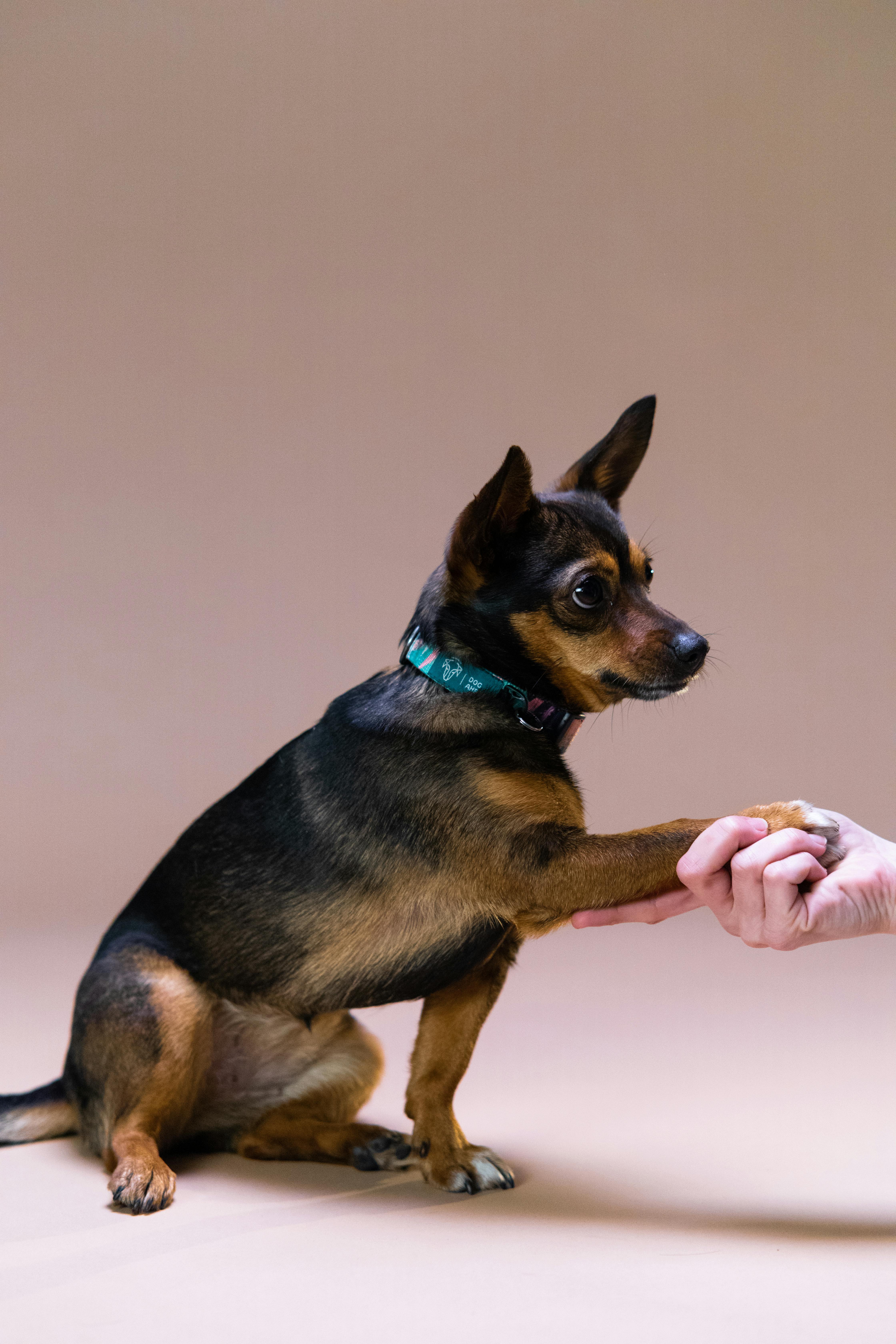
The optimal time to start training a puppy is the younger they are, but with the correct adjustments, this is not impossible with older puppies. There are various factors to consider when deciding when to begin training your puppy, with the age of six weeks being the ideal time as puppies are like a sponge.
Starting Early: Benefits of Training at Six Weeks
The early weeks of a puppy’s life are a period of intense development and growth, both physically and mentally. It’s the perfect window to start training a puppy to sit and stay, as their brains are like sponges, eagerly absorbing information and adapting to new routines.
Starting at around six weeks old, puppies are receptive to learning new behaviors. Their brains are still establishing neural pathways, making it easier to establish connections between actions and rewards. It’s akin to building a house on a newly cleared site—it’s easier to construct a solid foundation when the area is fresh and clear of pre-existing structures.
Early training lays down a solid foundation of basic commands and manners. These early experiences provide a building block for later training as puppies progress. Just as a baby learns to crawl before walking, puppies need to master basic commands like “sit” and “stay” before moving on to more advanced tricks and skills.
Adapting Training Techniques for Older Puppies
While it’s best to start training early, don’t feel discouraged if you haven’t begun yet with your older puppy. Older puppies, or even rescued adult dogs, are still capable of learning new commands, but it might require a slightly adjusted approach.
Training a rescued or older puppy may demand a little more patience and understanding. It takes time to build trust and a relationship with them. Understanding their past experiences is crucial. If they have undergone any abuse or neglect, they may need extra time and gentle guidance to fully grasp the training process.
While an adult dog might seem to be set in its ways, their ability to learn and adapt shouldn’t be underestimated. You might need to modify your method. Perhaps using more visual cues or breaking down commands into smaller steps will be required. The use of positive reinforcement, such as treats and praise, remains crucial in creating a positive learning experience.
The Role of Positive Reinforcement
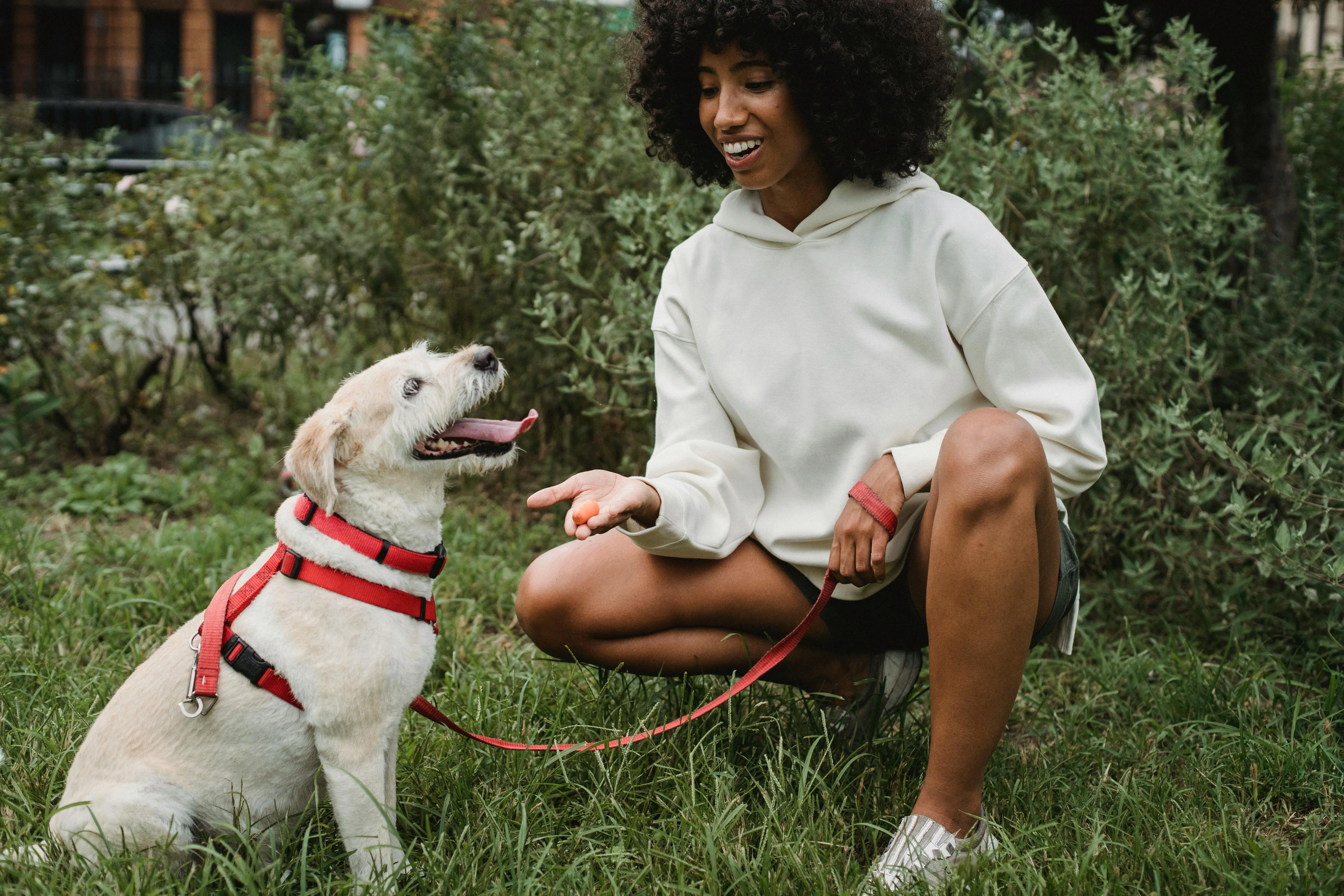
Positive reinforcement is the bedrock of effective puppy training. It is what makes training fun and joyful for both you and your puppy, rather than an unpleasant experience. Using a reward-based approach creates a positive association with learning and produces a well-behaved dog.
Types of Rewards: Treats, Praise, and Playtime
Using the right kind of reward can make a huge difference in your puppy’s learning experience. The key is to discover what motivates your puppy and tailor your rewards accordingly.
For most puppies, treats are a highly effective reward. Choosing a high-quality, delicious treat that can easily be broken into smaller pieces is a good starting point. These will be easily digestible and more attractive.
Praise is an equally important reinforcer. Using encouraging words and tones, such as “Good boy!” or “Yes!” right after your puppy performs a desired action, allows them to associate the action with positive feedback. The tone of your voice is crucial: it should be enthusiastic, genuinely encouraging, and celebratory.
Playtime can also serve as a powerful motivator for puppies. A quick game of fetch or a tug-of-war session can be used as a reward for successful completion of a command. The key is to keep the play sessions short and enjoyable, making them a coveted reward that can reinforce the connection between the desired action and playtime.
Timing Your Rewards for Maximum Effect
The timing of your rewards is crucial for effective training. This is known as operant conditioning, something we will dive into later. It’s like telling a joke and getting a laugh – the laughter immediately lets you know that your joke was funny. Similarly, providing rewards immediately after the desired behavior helps your puppy connect the action with the positive consequence.
It’s crucial to avoid delaying the reward for too long. If the reward comes after a time delay or you are inconsistent your puppy may not understand what they did correctly to receive the reward. The ideal timing is a fraction of a second after the desired action. This quick connection helps to strengthen the association between the command and the reward, solidifying the behavior in your puppy’s mind. It’s also important to ensure that your delivery of the reward is consistent, so that your puppy knows that they are being praised or rewarded for their good behavior each and every time they respond to the command.
Creating a Conducive Learning Environment
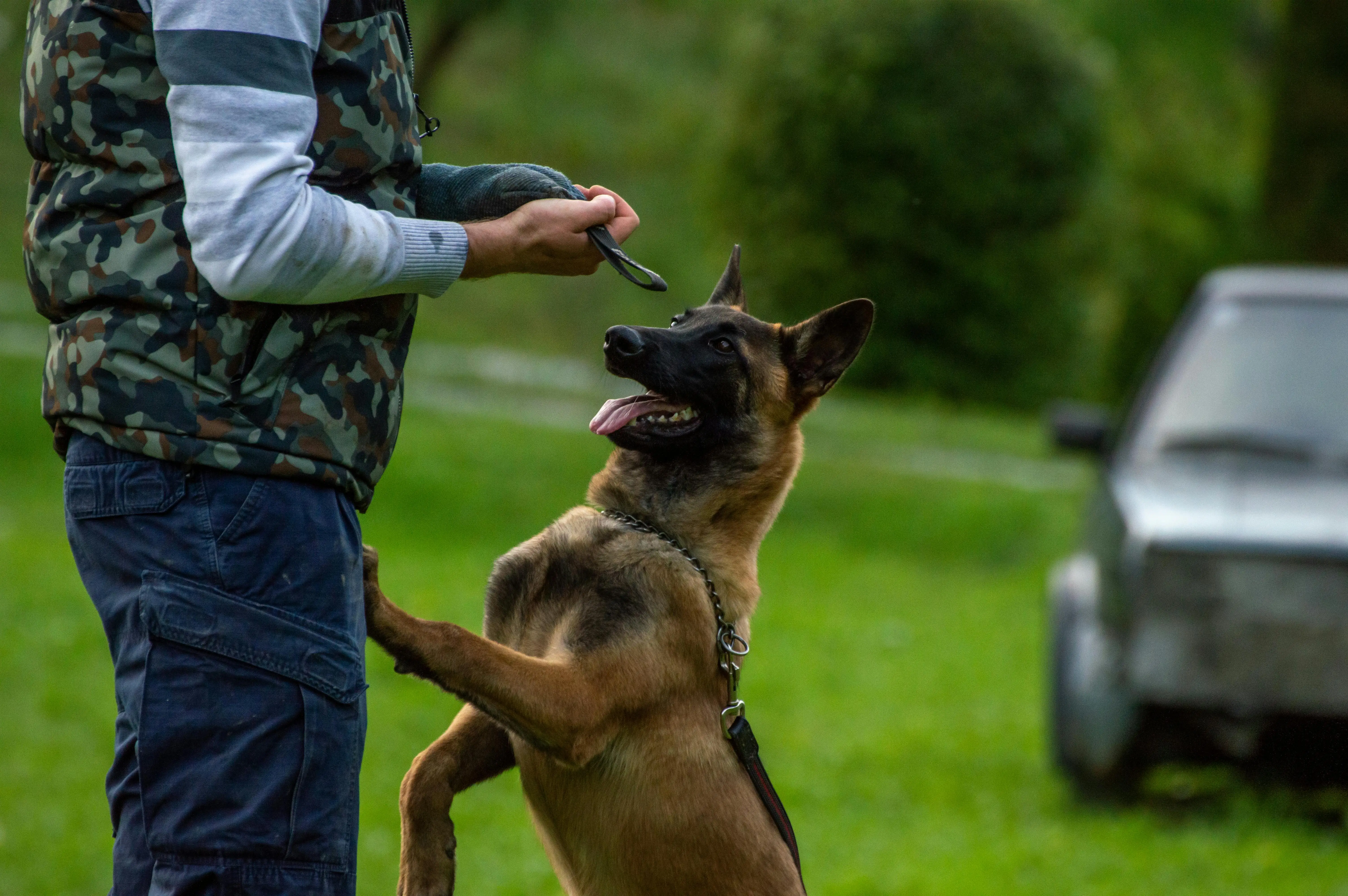
A puppy’s training environment plays a significant role in their ability to learn and respond to commands. Creating a distraction-free zone will allow the puppy to focus on the training session and absorb the commands more easily. Just as a student needs a quiet library to study, a puppy needs a focused environment for optimal learning.
Minimizing Distractions During Training Sessions
The learning process can be greatly hindered if there are too many distractions for your puppy. It’s like trying to have a conversation in a noisy room- it can be tricky to focus when many things are going on at once. This is true for your puppy as well.
Training sessions should be held in a quiet and controlled space, where distractions are kept to a minimum. A space where they are unlikely to be interrupted by other animals or loud noises, ideally in your own home.
When you’re starting out, it’s best to limit the amount of sensory input your puppy is exposed to. Keeping the TV turned off or avoiding loud music will help create a more focused environment. The fewer new stimuli, the easier it will be for your puppy to grasp the commands.
Selecting the Right Location for Training Exercises
Choosing the optimal location for your training sessions is key for effective learning. Some areas can be more stimulating and distracting for a puppy than others.
Choose a space that is comfortable and familiar to your puppy. This could be a room in your house like the living room or a specific section of the garden. A familiar space will lessen any anxieties your puppy may have, making them more receptive to training.
Make sure the space is free of distractions that could pull your puppy’s attention away from the training. This means ensuring there are not other family members or pets around that could draw their focus away.
Ensure you have a safe space that allows for the desired behaviour. For the ‘sit’ command you ideally need a safe, flat surface and for the ‘stay’ command you need a space that is secure and free from dangers or temptation. This training ground should be positive and comforting for your puppy. It’s important for them to associate their training space with positive experiences.
Effective Techniques for Teaching “Sit”
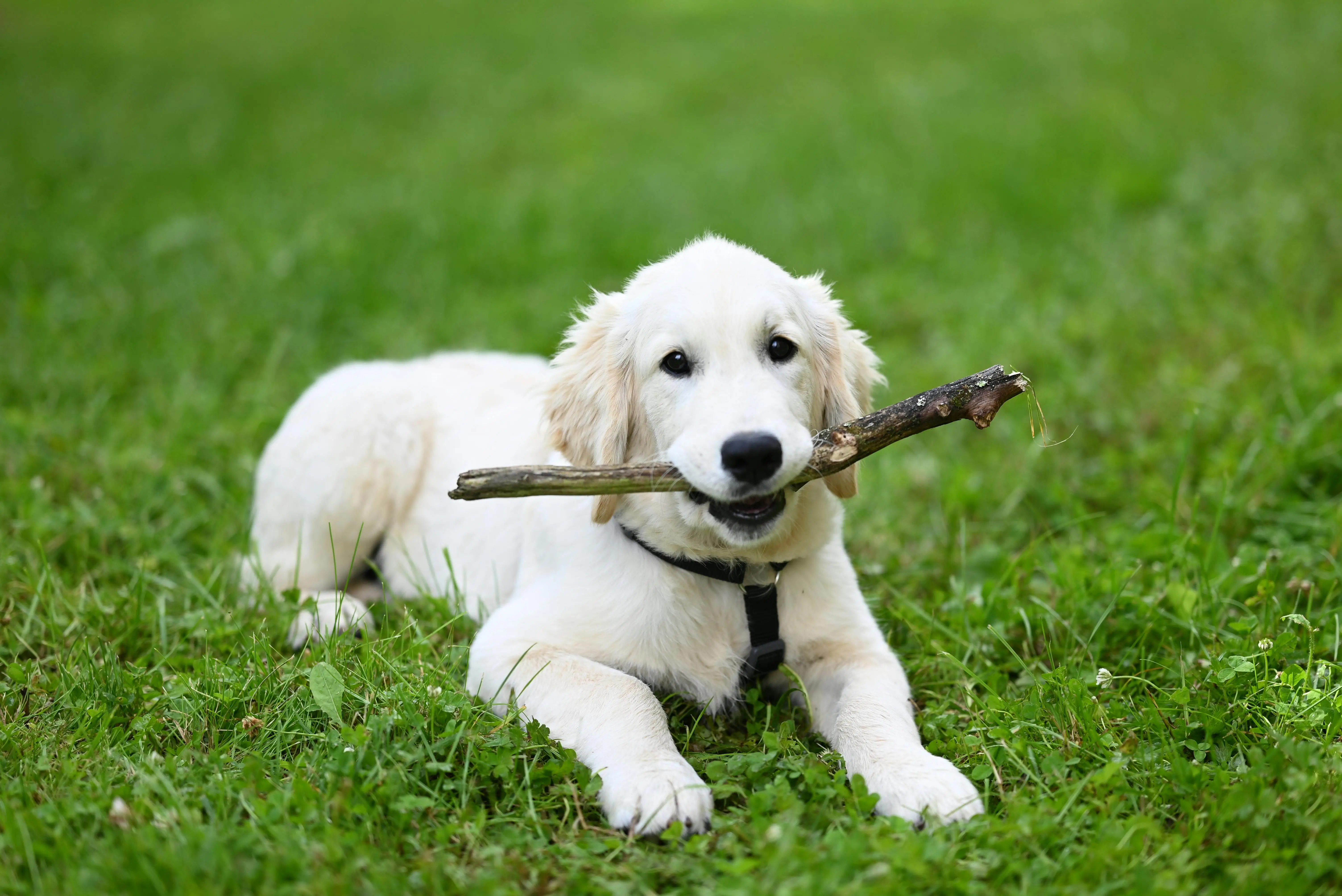
The “sit” command is often the first command that puppies learn, and it’s a crucial step in building a foundation of obedience. It’s a relatively simple command to teach, but it requires patience, consistency, and positive reinforcement.
Using Treats as Lures
Using treats as lures is a common and effective technique to teach the sit command. It makes the learning process engaging and fun for the puppy. This method also gently guides the puppy into the desired position.
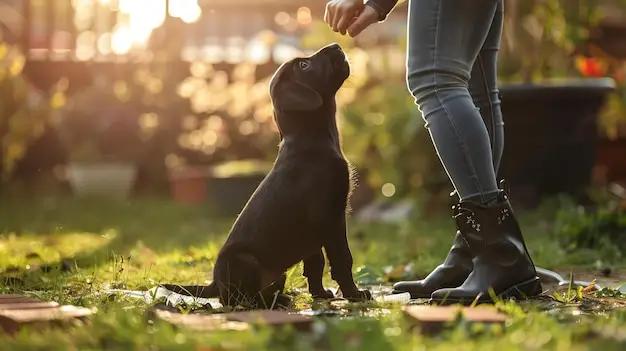
Firstly, choose a high-value treat, something your puppy will find irresistible. Hold the treat in your hand and slowly lift it above your puppy’s head. As the puppy looks upwards their natural inclination may be to move their bum down, if not use a gentle pressure on their backside to aid with this natural movement, encouraging them to sit.
The moment their rump touches the ground and they are in a sitting position, say “Sit” in a clear and encouraging tone, and immediately reward them with the treat. Repeat this process several times, always associating the word “Sit” with the action of sitting and the reward.
Gradually Fading the Use of Treats
Once your puppy has mastered the sit command with the use of a lure and treats, it’s time to start phasing out the treats gradually. It is not uncommon for dogs to constantly desire a treat for each command, but this prevents you from controlling the environment and managing behaviour without the use of treats.
Start by occasionally replacing the treat reward with verbal praise and encouragement. You can start by using treats only every other time and then reducing the frequency of treat use even further until your puppy is able to reliably sit on command without a constant treat.
Once your puppy is consistently sitting on command with minimal use of treats, then you can work on decreasing the use of treats further. The use of the command should be sufficient in allowing the dog to remember and perform the behaviour.
Incorporating Hand Signals for Clarity
Incorporating hand signals alongside verbal commands can improve clarity and reinforce learning for your puppy. Especially when you are in distracting environments.
Simply raise your hand towards your puppy, mimicking a hand gesture that would signal a sitting motion. As you use the hand gesture, you must give the command ‘Sit’.
It is crucial to establish a hand gesture that you will use consistently over time. It’s important to be consistent on each repetition to ensure they understand the hand signal.
By pairing the hand gesture with the verbal command “Sit” and positive reinforcement (treats or praise), you gradually get your puppy to associate the hand signal with the desired action.
Mastering the “Stay” Command
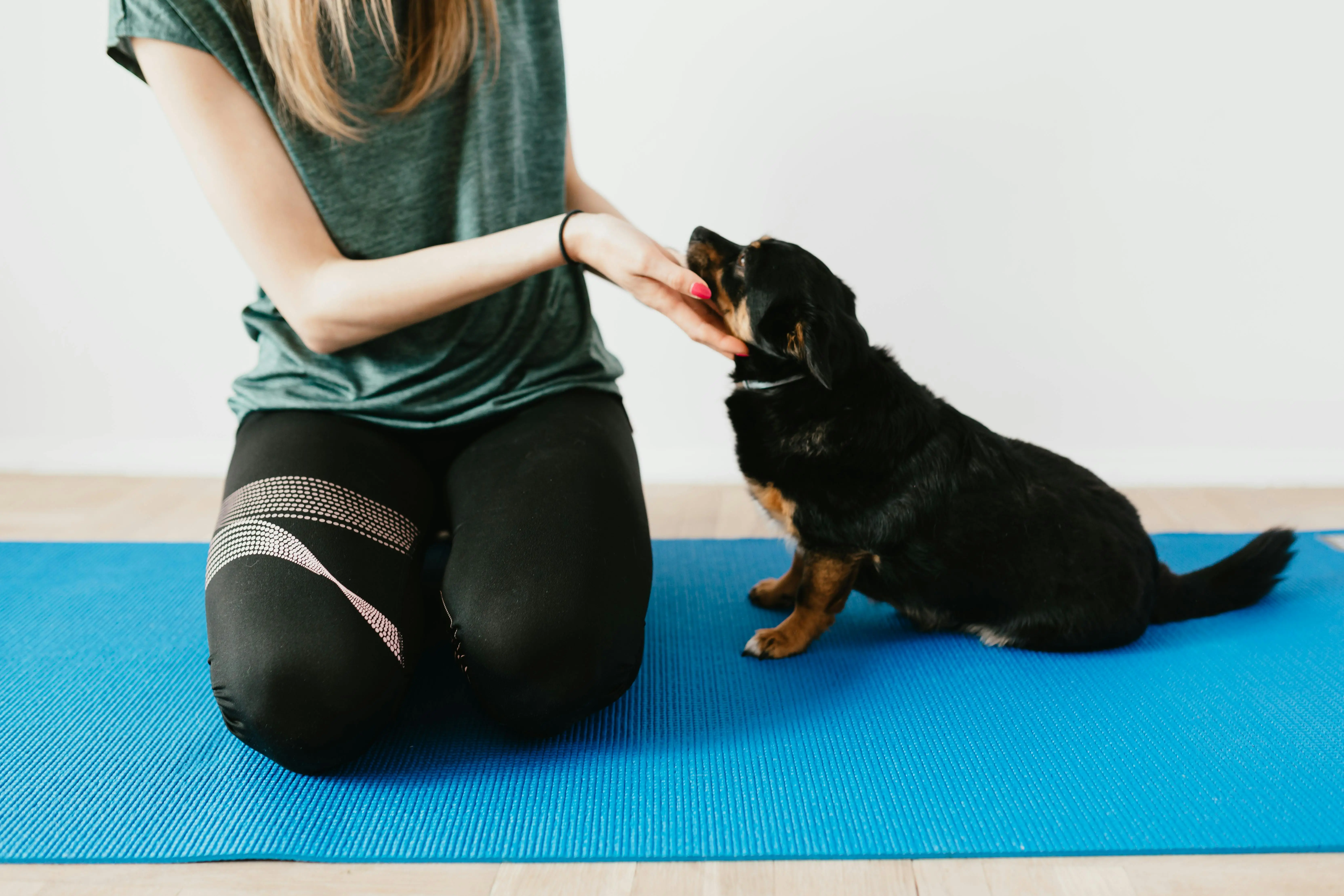
“Stay” is a vital command that teaches your dog to remain in a particular location until released. It ensures your dog’s safety and your ability to control them in a variety of settings. It can be a challenging instruction for a puppy to grasp, but with the right methods, patience, and encouragement you can teach your puppy to stay.
Establishing Duration and Distance
The “Stay” command is built upon the foundation of the “Sit” command. Once your puppy has mastered the “Sit” command you can begin teaching the ‘Stay’ command.
To teach the stay command, begin by having your puppy in a sit position, say ‘Stay’ and immediately step a few paces away from them. When your puppy remains in that position, release them with the command ‘OK’.
Start by practicing for short durations (a few seconds) and close distances (a couple of steps). Gradually increase both the duration and distance over time.
Start by using small increments within the duration and distance. This is important to allow the puppy to understand the command and to prevent them from becoming frustrated or overwhelmed.
Reinforcing the “Stay” with Consistent Cues
Consistency is key when teaching the “Stay” command. In order for your puppy to understand what you expect of them you have to be consistent with your use of cues.
For the ‘Stay’ command, begin with your puppy in the ‘Sit’ position. Give the ‘Stay’ command and then step back slowly. If they move, gently return them to the sit position and repeat the ‘Stay’ command. If they remain in the ‘Sit’ position and for a few seconds, release them with the command ‘Ok’.
Use consistent hand signals for all training commands, which builds the association with the command. A gentle gesture with your hand, coupled with a calming tone in your voice. When your puppy adheres to the command, give immediate positive reinforcement.
Common Challenges in Training
Training puppies, although rewarding, can also present various challenges. Your furry friend will not always be willing to sit or stay, and if this is the case, you have to find the correct method and way to proceed with training. These challenges are often linked to the puppy’s age, breed, past experiences, and the environment in which you train.
Dealing with Distraction and Impulsivity
Puppies are naturally curious and impulsive, and this can lead to challenges during training sessions. It can be distracting. They might get distracted easily by anything going on around them, especially if it is exciting for them so it is important that you keep them in a suitable environment. Try and keep training to a few minutes per session and do multiple sessions within a day.
If your puppy becomes distracted during training, gently redirect their attention back to the task at hand. The more stimulation, the more difficult it will be for your puppy to follow your instructions.
Incorporate short training sessions into the day. This provides the puppy with the chance to learn the command without becoming overwhelmed.
Addressing Resistance and Frustration from the Puppy
Puppies, like humans, sometimes get frustrated and resistant. If the training sessions are too long and demanding it can cause some upset in your puppy and they can display a resistance to instructions.
If you find your puppy displaying behaviours of resistance, it’s important to understand they may be struggling or are not fully comfortable. Puppies will express frustration in different ways. You may notice signs of them becoming withdrawn, they may start to growl, or even nip at you.
If you notice your puppy getting frustrated, it’s a clue it might be time to take a break. End the training session and continue later when they are more settled and willing to learn. Use the opportunity to play with the puppy so that they have a positive association with the training session.
The Importance of Consistency

Consistency is essential for a successful puppy training journey. If you are inconsistent with your behaviour, commands, and delivery of rewards, it will cause confusion in the puppy’s mind and make the commands difficult to understand.
Daily Routine for Reinforcement
Puppies thrive on routine, just like small children. A familiar daily order provides them with a sense of security and eases their transition into a new home and environment.
Maintain a consistent daily training routine, even if the training sessions only last for 5-10 minutes each time. The more consistent you are with your training and the method that you are employing, the more likely it is that your puppy will learn more quickly.
These training sessions will be the best way to reinforce the puppy’s learning from each session. It also allows for more control of the environment within which you train and reduces the possibility of distractions.
Involving Family Members in Training
Puppies can get confused if every member of the family gives instructions in a different way. It is important that you get everyone in the household trained to use the same cues and commands so that the puppy does not become confused.
If you share a household, create a training plan that is followed by everyone. This ensures that the puppy doesn’t get mixed messages and can prevent unwanted behaviour patterns and confusion.
The puppy should not be given conflicting instructions. It’s important that family members know the puppy’s cues that you are using and that you have a clear understanding of the training plan.
The Behavioral Framework of Training
The science of learning and behavior is crucial for understanding how your puppy learns new commands. By applying this knowledge you can create a learning experience that is enjoyable for both you and your puppy and one that leads to positive behaviour changes.
Operant Conditioning Principles Explained
Operant conditioning is a cornerstone of puppy training. It teaches that behaviours are controlled by their consequences. It’s a learned behaviour.
Operant conditioning relies on a simple rule: when a behaviour is followed by a positive outcome (reward), it’s likely to be repeated. When a behaviour is followed by a negative outcome (punishment), it’s less likely to be repeated.
Within operant conditioning a few of the most well-known elements are positive reinforcement (something given after the desired behaviour), negative reinforcement (something removed after the desired behaviour), positive punishment (something given to discourage a behaviour), and negative punishment (something removed to discourage a behaviour).
Understanding operant conditioning principles is crucial for effective puppy training. You want to reinforce the behaviours that you want to encourage and discourage behaviours that you don’t want to see again.
The Impact of Consequences on Learning
The impact of consequences on learning is profoundly important for training puppies. It’s why consistent rewards and immediate consequences to a training session are crucial to the success rate.
When your puppy performs a desirable behaviour (such as sitting on command), it’s crucial to follow it with a reward or a positive outcome. The positive consequence encourages them to repeat the behaviour in the future. If you do not reward the behaviour, the puppy may not recognise that they have done something positive so it’s unlikely that they will repeat it again.
The opposite is also true: if a behaviour is not rewarded or is followed by a negative outcome, it’s less likely to be repeated. This is how you can discourage behaviours such as barking excessively or jumping up at people.
Gentle Correction Techniques
When you are training a puppy you need to understand the puppy’s body language and be understanding about any behaviour that the puppy displays. These skills are necessary in order for you to be able to build a strong bond with your puppy and you need to be aware of any of the puppy’s discomfort in order to be able to properly train them.
Redirecting Instead of Punishing
Puppies can sometimes make mistakes. The ideal outcome is that you can avoid any instances of unwanted behaviour, but this isn’t always possible. When your puppy is performing unwanted behaviours, it is important that you carefully monitor and observe any signs of frustration within the puppy.
Redirecting unwanted behavior is far more effective than punishment. Rather than yelling or punishing your puppy for accidents or unwanted actions, you should gently guide them towards a more desirable behavior.
For example, if your puppy is chewing on your furniture, provide them with a suitable chew toy as a replacement for the furniture. If they are biting they may be playing or displaying some frustration and the best solution is to provide them with an alternative toy for them to bite.
Understanding Your Puppy’s Body Language
Understanding your puppy’s body language can give you valuable insights into their emotional state and help you manage them more effectively. It could be that training sessions are too long, that the puppy feels threatened by the environment, or the way you are giving them instructions.
Signs like lip licking, yawning, or tail-tucking can indicate that your puppy might be feeling stressed or anxious. Observe the puppy and try to pick up on any small nuances and changes in their behaviour to aid you in understanding their needs and managing them more effectively.
Observing a puppy’s body language and adjusting training methods accordingly increases the likelihood of success. Puppies who feel safe and understood are more receptive to training.
Progression in Training Commands
Once you have mastered training your puppy to sit and stay, it is important to reinforce these commands by gradually introducing new and more advanced instructions to the puppy. This is important to continue the development of your puppy and to continue to stimulate their brain.
Introducing Advanced Commands After Mastery of Basics
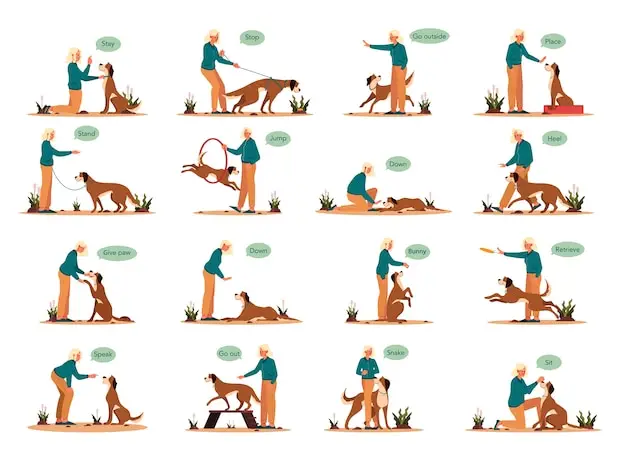
Once your puppy has a solid grasp of the basic commands “sit” and “stay”, you can gradually move on to more complex commands. This includes commands like “come”, “down”, “fetch”, “leave it”, and “drop it”.
This is important in keeping the puppy’s mind engaged and will stimulate their learning. Training should be fun for both you and your puppy.
Stimulating Mental Engagement Through Varied Exercises
Beyond obedience training, you can stimulate your puppy’s mental engagement with a variety of cognitive exercises. This is important to prevent boredom and also maintains their focus on you.
Interactive games, such as puzzle toys, can sharpen your puppy’s problem-solving skills. Puzzle toys can be great in stimulating the dog’s mind. Hiding treats around the house and encouraging the puppy to ‘find’ the treats.
These exercises enhance problem-solving abilities and keep your puppy’s mind engaged, adding another layer to the bond you build with them.
The Emotional Bonding Aspect
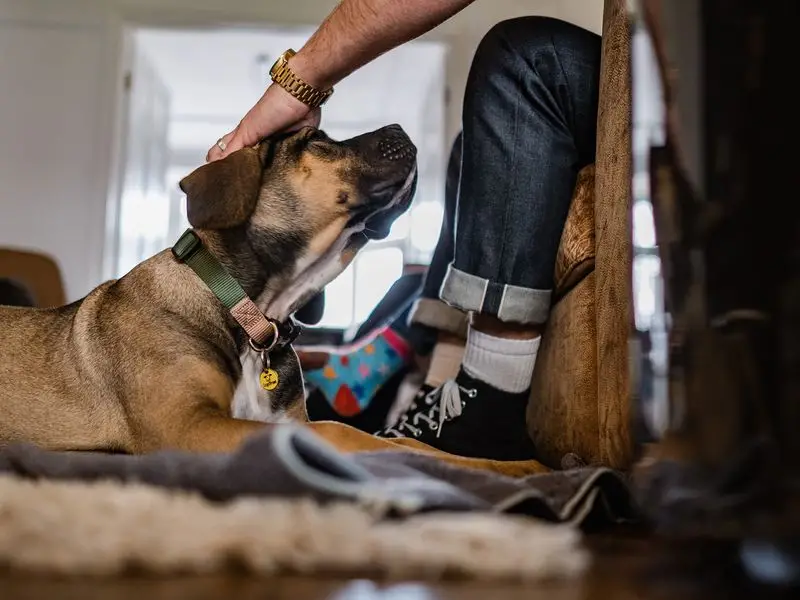
The journey of training a puppy is not simply about commands and control; it’s about forging a profound connection with your furry companion. This training journey is vital in allowing you to build trust and a strong bond with your puppy.
Building Trust Through Consistent Training
Consistency is not just important regarding the puppy’s learning and behaviour – it’s vital in allowing you to build trust and emotional intimacy with the puppy. They will understand that they can always count on you to be there for them.
The act of consistent training and positive reinforcement gradually strengthens the bond of trust between you and your puppy. They learn that you are predictable and reliable, that you’ll always follow through with your promises.
Nurturing a Lifelong Relationship with Your Puppy
Training a puppy to sit and stay fosters a deep and meaningful bond with your canine companion. This bond isn’t just based around rewards and treats, but it becomes something deeper, something that you can enjoy and rely on for many years to come.
The consistent communication and shared experiences during training create a sense of shared understanding. It leads to a stronger connection, a deeper appreciation for each other, and strengthens your bond.
Real-Life Applications of “Sit” and “Stay”
These basic commands are not just for show; they have vital real-life applications, making everyday situations and your dog’s life safer and more rewarding. They are crucial in managing your dog’s behaviour across a myriad of settings and in helping you ensure their safety.
Preventing Accidents in Crowded Spaces
In crowded spaces, your puppy’s ability to “sit” on command can save them from potential dangers. When you are walking your dog in a busy street or park, you are able to easily manage your dog’s behaviour.
Their ability to readily sit and stay also prevents them from getting into chaotic or potentially dangerous situations. This is an essential command to have, especially in busy areas.
Enhancing Enjoyment in Outdoor Activities
Having a dog that is trained and reliably follows your commands can make your outdoor excursions much more enjoyable and memorable. It is imperative that they are receptive to your instructions and follow them on command.
Training enhances your ability to bring your puppy to a broader range of activities and places. Your puppy’s ability to reliably respond to your commands will provide more flexibility for you and your dog.
Resources for Continued Learning
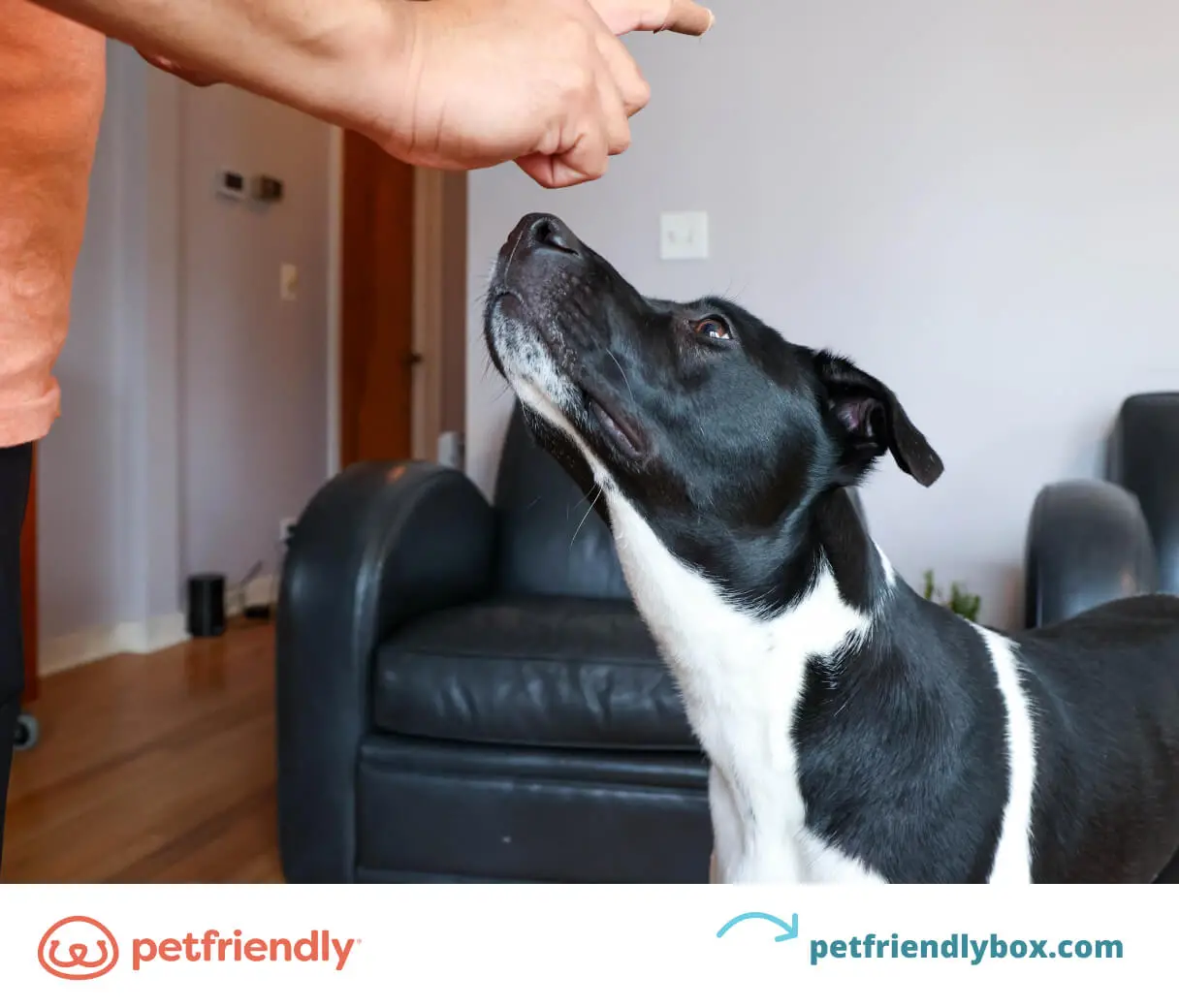
There are many different resources that are available to help pet owners with training their pets. These resources include online courses, books, videos, and classes from qualified dog trainers. It is important to understand which of these resources are going to fit your and your puppy’s requirements.
Recommended Books and Online Courses
There’s a wealth of information available to assist you with your pup’s training, ranging from classic dog training manuals to the latest behavioral insight offered online.
You can find books that offer step-by-step instructions on how to teach your puppy basic commands, alongside methods to manage different behaviors. You can also find countless online resources that offer video explanations and guides that are specifically designed for different ages and different types of puppies.
Finding books and courses that are tailored to your puppy’s breed and age is a great starting point. The correct book and specific training style or approach will provide you with instructions that are most likely to lead to positive learning outcomes given the situation.
Professional Trainers vs. DIY Methods
When it comes to puppy training, deciding between hiring a professional trainer and utilizing DIY methods can be a difficult decision. It’s important to weigh up the options so that you can decide which option is going to be more beneficial for you and your puppy.
Hiring a professional dog trainer can offer a structured and personalized approach to training. These are highly experienced in managing different dog behaviours and it is likely that they will pick up on the nuances of your dog’s behaviour more quickly than a novice dog trainer.
DIY methods, like using books and videos, can be cost-effective and flexible, allowing you to work at a pace that suits your lifestyle and your dog’s needs.
Encouraging Socialization Alongside Training
Socialization plays a crucial role in a puppy’s development and in ensuring that they are receptive to training as it can help in preventing them from developing anxieties or fear around new situations. Socialization is about exposing your puppy to a variety of environments, people, and situations, ensuring that they develop into a well-adjusted and confident dog.
Integrating Other Skills into Training Sessions
Incorporating opportunities for socialization into your puppy’s training sessions is an incredible way to broaden the experiences for your puppy. It can help to increase the confidence of a puppy and also improve their learning capacity.
You can introduce your puppy to other dogs of appropriate size, and encourage them to play. You can also invite people over your house and have them give instructions, allowing them to familiarise themselves with a range of different people.
Make sure any interactions are positive and that the puppy does not feel threatened or overwhelmed. Ensure that the training environment is always safe and welcoming.
The Role of Group Classes in Social Development
Taking your puppy to group training classes can be a fantastic opportunity to help with their social development. They will have the chance to encounter and interact with a wide range of dogs and other people.
Group classes allow for guided interactions in a secure environment. It can help your puppy become more confident when they are in a new situation or around people they don’t know.
It is important to make sure that the group class is safe and that all puppies are up-to-date with their vaccinations.
Monitoring Progress and Adjusting Techniques
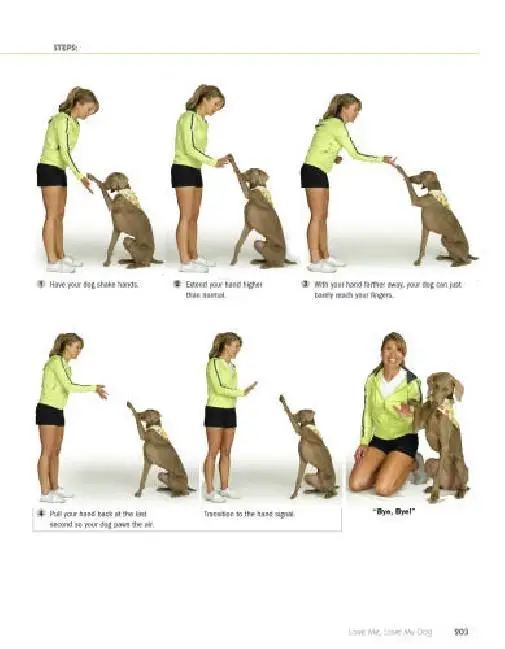
It’s crucial to keep track of the training process so that you can understand the progress that the puppy has been making and to understand whether the training techniques that you are deploying are assisting with the puppy’s learning process.
Keeping a Training Journal to Track Successes
Keeping a training journal can be a helpful tool to monitor your puppy’s progress and make adjustments as needed. The puppy’s learning may differ depending on circumstances, their breed, their age and the training environment.
Writing down the dates and details of each training session allows you to track your puppy’s successes and identify any areas where they may be struggling. It also allows you to look back on the performance of the puppy and look at the different contexts within which they trained and how this influenced their behaviour.
Being Open to Modifying Your Approach
It’s important to recognize that not all puppies learn at the same pace or respond to the same training methods in the same way. Some puppies will show different responses to training and it is important to be flexible regarding the techniques that you are using.
If your puppy seems to be struggling with a specific command, be open to trying a different approach. Instead of using a lure, try using hand signals and verbal commands.
If the puppy is not receptive to certain methods, or you are finding that the puppy is struggling or displaying signs of discomfort, then change your methods or take a break.
The Joy of Training Together

Training a puppy is more than a chore; it’s a wonderful journey that fosters a profound bond between you and your furry companion. It is a great opportunity to bond with your dog in a different way and one that is guaranteed to be a lot of fun.
Celebrating Small Wins During the Training Journey
The training journey is filled with small triumphs as your puppy masters every command. It is crucial to acknowledge and celebrate the small successes. This helps to keep the puppy motivated and positive about the training process.
These successes can range from your puppy successfully staying in the sitting position for a little longer, or from understanding a new gesture. Make sure you provide the puppy with plenty of praise and affection and make training fun and engaging for everyone.
Making Training Sessions Fun for Both You and Your Puppy
Training sessions should be enjoyable for everyone. If your puppy begins to show signs of discouragement, it’s important to take a break and change the method or the approach that you are using.
Make use of games and play to keep the puppy engaged. This will help develop a positive association with training.
Conclusion
The journey of training a puppy to sit and stay encapsulates more than just obedience; it’s a profound voyage of discovery, shared joy, and the forging of an enduring bond. This journey encourages you to understand and respond to your puppy’s needs and behaviours. It’s all about building a language of companionship that shapes a harmonious and loving ecosystem between you and your puppy. Through persistent nurturing, patience, and positive reinforcement, you unlock not only training objectives but also a life-enriching partnership where your puppy’s potential flourishes alongside your unwavering love and guidance. This journey should be a harmonious one and a journey where you both enjoy learning from one another, and one that you look back on in the years to come.
