
Teaching your puppy to ring a bell to go outside is an incredibly rewarding training endeavor that empowers your furry friend with a clear way to communicate their needs. This simple yet effective method not only reduces accidents indoors but also strengthens the bond between you and your puppy by fostering better understanding. It’s a proactive step in house training that shifts communication from guesswork to clear signals, making potty breaks a more predictable and positive experience for everyone.
Why Bell Training Your Puppy is Beneficial
Giving your dog the means to communicate their need to go outside offers numerous advantages beyond just preventing messes. When considering options, basic bells hanging from a doorknob are the most straightforward and cost-effective. More advanced options include doorbell-like systems with receivers or even talking buttons popularized by methods like “Hunger4Words.” While these buttons can be used to teach your dog to talk and express various needs, bell training specifically targets outdoor communication and is often easier for puppies to grasp initially.
Implementing a bell system creates a shared language between you and your puppy, significantly decreasing frustration from miscommunication and strengthening your bond. Your puppy learns a reliable signal for potty breaks, which is especially helpful for other family members or pet sitters who might not be as attuned to your puppy’s subtle cues. This clear communication helps your puppy adjust better if you’re away, as they can still express their fundamental needs. Additionally, teaching your puppy basic commands like how to get your puppy to come inside or how to teach down to a puppy can complement bell training by reinforcing obedience and control.
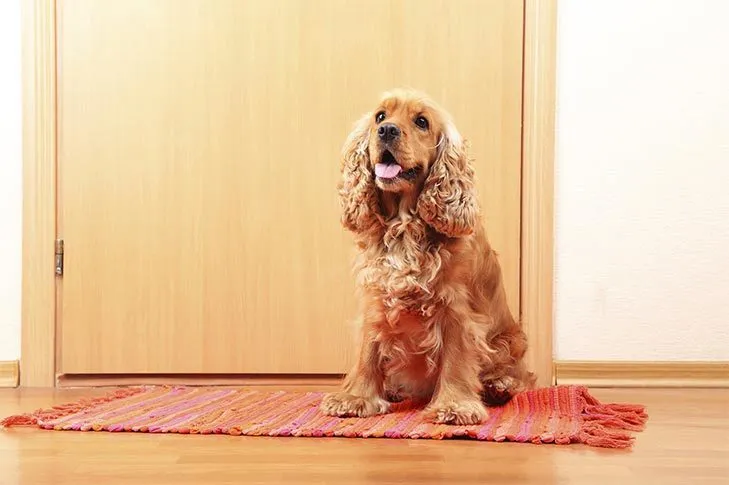 A well-behaved English Cocker Spaniel patiently waiting by a door, ready for a potty break outside, demonstrating successful bell training.
Step-by-Step: Teaching Your Puppy to Ring a Bell for Potty Breaks
The most effective way to teach your puppy to ring a bell is through demonstration and consistent repetition. The goal is for your puppy to independently make the connection that ringing the bell is their way of asking to go outside.
Step 1: Introduce the Bell
Present the chosen bell or button to your puppy. Allow them to sniff, inspect, and explore it without pressure. Reward any interest or engagement with praise and treats. This initial positive association ensures your puppy isn’t wary of the new object.
Step 2: Associate the Bell with Going Outside
Hang or place the bell near the door you most frequently use for potty breaks. Every single time you take your puppy out, physically press the button or ring the bell yourself. Say a cue like “outside” as you do so. The key here is unwavering consistency. Your puppy will begin to associate the sound of the bell with being taken outdoors. This step requires patience, as puppies learn through consistent exposure.
Step 3: Encourage Independent Ringing
Puppies are keen observers. After watching you consistently ring the bell before going out, they will start to understand its purpose. Continue your routine until your puppy begins to nudge, paw, or mouth the bell without any direct cue from you. The very moment your puppy rings the bell, offer enthusiastic praise and immediately take them outside, even if it’s just for a moment. This immediate reward reinforces the desired behavior. Remember, patience is vital, and coupling this training with getting your puppy used to a lead can make transitions smoother.
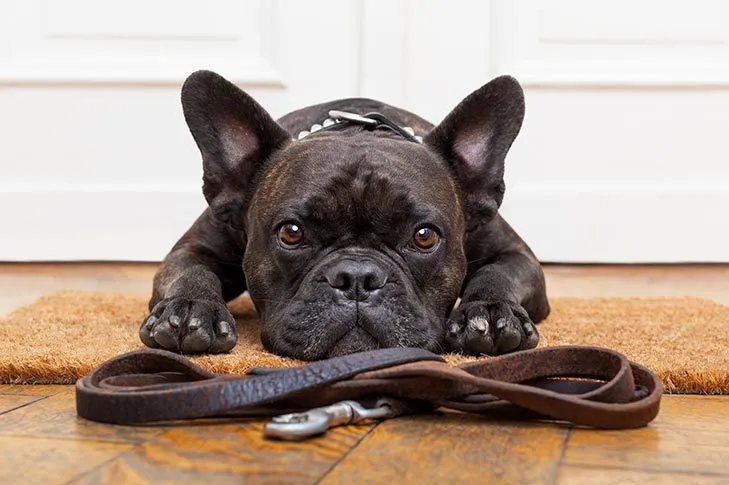 A French Bulldog puppy lying calmly by the door next to a leash, indicating it's waiting to go outside after signaling with a bell.
Most puppies quickly grasp the concept of ringing a bell or pushing a button to signal their need to go outside. If you encounter challenges, revisiting the previous steps or seeking guidance on related behavioral issues like how to stop puppy barking at night might be helpful.
Conclusion
Successfully training your puppy to ring a bell to go outside is a testament to the power of consistent positive reinforcement and clear communication. This skill not only aids in house training but also deepens the understanding and bond between you and your puppy. Remember that consistency, patience, and positive reinforcement are your most powerful tools. With dedication, your puppy will soon be ringing their way to successful potty breaks, making your home a cleaner and happier place. Continue exploring other training guides on Dog Care Story to further enhance your puppy’s skills and well-being.
