
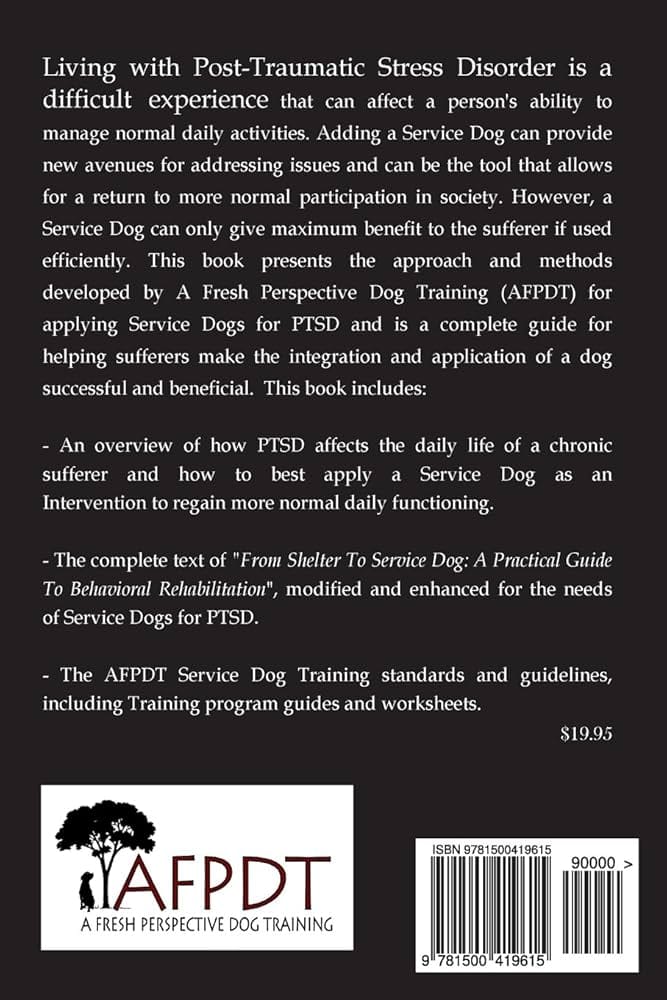
Bringing a service dog into your life is a significant decision, especially when seeking support for Post-Traumatic Stress Disorder (PTSD). These highly trained canine companions offer more than just comfort; they provide practical assistance that can dramatically improve the quality of life for individuals navigating the challenges of PTSD. This guide will walk you through the essential aspects of Training A Ptsd Service Dog, from understanding their role to the dedicated process involved in their development.
Understanding the Role of a PTSD Service Dog
Service dogs for PTSD are specifically trained to perform tasks that mitigate the symptoms of PTSD. Unlike emotional support animals, service dogs are recognized under the Americans with Disabilities Act (ADA) and are permitted in public places where pets are typically restricted. Their training is task-oriented, focusing on actions that directly assist their handler.
Tasks a PTSD Service Dog May Perform:
- Deep Pressure Therapy (DPT): Placing their body weight on the handler during an anxiety or panic attack to provide a grounding sensation.
- Interruption of Dissociation: Nudging, licking, or making eye contact to bring the handler back to the present moment.
- Night Terrors Interruption: Waking the handler during a night terror to prevent them from escalating.
- Creating Space: Alerting to approaching people or creating a physical buffer in crowded environments.
- Retrieving Medication or a Phone: Fetching essential items during a crisis.
- Guiding: Leading the handler away from a triggering situation or towards an exit.
- Alerting to Triggers: Sensing physiological changes associated with an impending flashback or panic attack and alerting the handler.
The Training Journey: A Step-by-Step Approach
Training a service dog is a rigorous and lengthy process that requires patience, consistency, and expert guidance. It typically involves several stages, beginning with basic obedience and progressing to highly specialized task training.
1. Foundation: Basic Obedience and Socialization
Before any specialized training begins, the dog must master fundamental obedience commands. This includes:
- Sit, Stay, Come, Down, Heel: Essential commands for control and responsiveness.
- Leave It: Crucial for ignoring distractions in public settings.
- Focus: The ability to pay attention to the handler amidst chaos.
Simultaneously, extensive socialization is paramount. This involves exposing the dog to a wide variety of sights, sounds, people, and environments in a positive and controlled manner. Proper socialization ensures the dog remains calm and well-behaved in diverse situations, from busy urban streets to quiet natural settings.
2. Advanced Obedience and Public Access Training
Once basic obedience is solid, training advances to include:
- Proofing Commands: Ensuring commands are obeyed reliably in distracting environments.
- Handler Focus: Training the dog to maintain focus on their handler even when faced with compelling distractions like other animals, food, or people.
- Public Access Skills: This is a critical phase where the dog learns to navigate public spaces without causing disruption. This includes:
- Walking calmly on a loose leash.
- Resting quietly under a table in a restaurant.
- Ignoring food dropped on the floor.
- Showing no aggression or excessive barking.
- Navigating crowds without issue.
This stage often involves working with a professional service dog trainer who understands the specific requirements of public access.
3. Task Training: Tailoring to PTSD Needs
This is the most individualized part of the training process. Tasks are trained based on the handler’s specific needs and the dog’s aptitudes. This involves:
- Desensitization and Counter-Conditioning: Helping the dog remain unfazed by triggers the handler might experience or encounter.
- Shaping Behaviors: Gradually reinforcing desired actions that will become specific tasks. For example, training a dog to apply pressure might start with rewarding them for leaning against the handler, progressively increasing the duration and pressure.
- Association Training: Teaching the dog to recognize early signs of distress in the handler and respond with a trained task.
This specialized training requires a deep understanding of PTSD symptoms and how a dog can provide practical assistance. It’s often conducted in close collaboration with the handler and, ideally, with a therapist’s input.
4. Handler Training and Teamwork
A service dog is only as effective as the handler guiding them. Handler training is crucial and involves teaching the handler:
- How to Cue Tasks: Understanding when and how to ask the dog to perform specific tasks.
- Reading the Dog’s Signals: Recognizing when the dog is alerting or needs to be taken out.
- Maintaining Training: Continuing practice and reinforcement to keep the dog’s skills sharp.
- Legal Rights and Responsibilities: Understanding ADA guidelines and how to advocate for their rights in public.
The goal is to create a seamless partnership where the handler and dog function as a cohesive team.
Selecting the Right Dog for PTSD Service
Not every dog is suited for service work. Ideal candidates possess a combination of temperament, breed predispositions, and health.
- Temperament: The dog should be confident, adaptable, eager to please, not easily startled, and possess a calm demeanor. They should not be overly sensitive, fearful, or reactive.
- Breed: While many breeds can be trained as service dogs, some are naturally predisposed to certain traits. Labrador Retrievers, Golden Retrievers, and Standard Poodles are popular choices due to their intelligence, trainability, and stable temperaments. However, a dog’s individual temperament is more critical than breed alone.
- Health: Service dogs must be in excellent health. They undergo thorough veterinary checks, including orthopedic assessments (like OFA or PennHIP) to screen for hip and elbow dysplasia, and cardiac evaluations. Good health is non-negotiable for the demanding life of a service dog.
Finding or Training a PTSD Service Dog
There are two primary avenues for obtaining a PTSD service dog:
- Working with a Reputable Organization: Many non-profit organizations specialize in training and placing service dogs for various disabilities, including PTSD. These organizations often have rigorous application processes and may have waiting lists. They provide dogs that are already well-trained and matched with a handler.
- Professional Trainer Assistance: If you have a suitable dog or are acquiring one, you can work with a professional service dog trainer who has experience with PTSD support. This route requires significant commitment from the handler to participate actively in the training process. This is similar to service dog training for ptsd.
DIY Training Considerations
While it’s possible for individuals to train their own service dogs, it is a challenging undertaking, especially for PTSD, which involves complex behavioral tasks. It requires extensive knowledge of canine behavior, positive reinforcement training methods, and a deep understanding of PTSD. Without proper guidance, training can be ineffective or even counterproductive. Many who attempt DIY training find themselves needing professional help later. For those considering this path, resources on training a service dog for ptsd can be a starting point, but professional mentorship is highly recommended.
The Long-Term Commitment
Owning and working with a PTSD service dog is a lifelong commitment. It involves ongoing training, veterinary care, grooming, and providing a stable, loving environment. The bond formed, however, is incredibly rewarding, offering unparalleled support and companionship. The dedication involved in training ptsd service dogs pays dividends in enhanced independence and well-being for the handler.
Frequently Asked Questions About PTSD Service Dogs
- How long does it take to train a PTSD service dog?
The entire process, from puppyhood to full public access and task training, can take 18 months to two years. - Can any dog be a PTSD service dog?
While many dogs can be trained, not all possess the necessary temperament, health, and aptitude for the demanding role of a service dog. - What is the difference between a service dog and an emotional support animal (ESA)?
Service dogs are trained to perform specific tasks to aid a person with a disability and have public access rights under the ADA. ESAs provide comfort through their presence but are not task-trained and do not have the same public access rights. - Are there specific geographic areas with specialized training?
Yes, some areas offer more resources than others. For example, you might find specialized programs in locations like service dog training louisville ky or service dog training jacksonville fl, though quality training is available nationwide through reputable trainers and organizations.
Training a PTSD service dog is a journey of dedication, partnership, and immense potential for healing and independence. It’s a testament to the incredible bond between humans and dogs, offering a path towards reclaiming life from the grip of PTSD.
