
Bringing a new dog into your home is an incredibly exciting experience, the start of a beautiful journey filled with wagging tails, wet-nosed boops, and unconditional love. But this new chapter also comes with a big responsibility: training. The process of Training A New Dog is the cornerstone of your future relationship. It’s not just about teaching them to sit or stay; it’s about building a language of mutual understanding and respect that will ensure they become a well-behaved, confident, and happy member of your family. Whether you’ve welcomed a brand-new puppy or adopted an older companion, these foundational weeks are crucial for setting the tone for a lifetime of companionship.
This journey requires patience, consistency, and a positive attitude. Forget the old-school, dominance-based theories. Modern, science-backed training focuses on positive reinforcement—rewarding good behavior to encourage it. This method doesn’t just teach commands; it builds trust and strengthens the bond between you and your dog. It’s a process that can be a major [turning point dog training](https://dogcarestory.com/turning-point-dog-training/) for both new and experienced owners, transforming challenges into rewarding moments of connection. Let’s dive into the essential steps to guide your new best friend toward becoming a well-mannered companion.
The First Few Days: Setting the Foundation
The first few days with your new dog are all about adjustment. Your home is a strange new world filled with unfamiliar sights, sounds, and smells. It’s crucial to manage this transition with care to build a foundation of security and trust. Don’t overwhelm them with complex commands or introductions to everyone you know. Instead, focus on making them feel safe.
Start by creating a dedicated safe space for them. This is often a crate or a comfortable bed in a quiet corner of the house. This “den” gives them a place to retreat to when they feel overwhelmed. Establish a predictable routine from day one. Take them out for potty breaks frequently, especially after waking up, after eating, and after playing. Feed them at the same times each day. This predictability helps them understand what to expect, which significantly reduces anxiety and helps the house-training process click faster. Remember, your primary goal during this initial period is to let your new dog decompress and learn that you are a source of comfort and security.
Essential Gear for Training a New Dog
Before you begin formal training sessions, it’s important to have the right tools on hand. The right gear can make the process smoother, safer, and more effective for both you and your dog. You don’t need to break the bank, but a few key items are non-negotiable for success.
- Collar or Harness: A well-fitting collar with ID tags is a must. For walks, many trainers recommend a front-clip harness, as it discourages pulling without putting pressure on the dog’s neck.
- Leash: A standard 6-foot leash made of nylon or leather is perfect for daily walks and training. Avoid retractable leashes, as they offer less control and can be dangerous.
- High-Value Treats: Positive reinforcement training runs on rewards. Find small, soft, and extra-tasty treats that your dog absolutely loves. These will be your primary tool for rewarding good behavior.
- Crate: As mentioned, a crate is an invaluable tool for house training and creating a safe den for your dog. Ensure it’s large enough for them to stand up and turn around in comfortably.
- Chew Toys: Dogs, especially puppies, explore the world with their mouths. Providing appropriate chew toys like rubber Kongs or puzzle toys will save your furniture and teach your dog what is okay to chew on.
House Training Your New Companion
House training is often the first and most pressing priority for new dog owners. Accidents are a part of the process, but a consistent and positive approach can speed things up considerably. The key is to create a routine that sets your dog up for success.
Start by taking your dog out first thing in the morning, last thing at night, and every 1-2 hours in between during the day (more frequently for young puppies). Also, take them out immediately after naps, meals, and vigorous play sessions. When you go outside, take them to the same designated potty spot each time and use a consistent verbal cue like “go potty.”
When they successfully eliminate outside, praise them enthusiastically and immediately give them a high-value treat. This positive association is the most powerful tool you have. If you catch them having an accident inside, don’t scold or punish them. This can create fear and anxiety, leading them to hide from you when they need to go. Instead, make a calm noise to interrupt them and immediately take them outside. Clean up indoor accidents with an enzymatic cleaner designed to eliminate pet odors, which prevents them from being attracted back to the same spot.
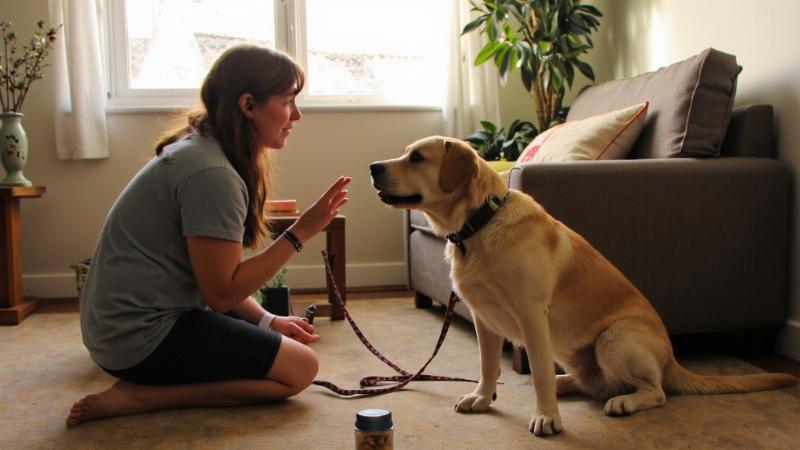 A person patiently training a new dog to sit in a sunny living room, holding a treat as a reward for training a new dog.
Mastering Basic Obedience Commands
Once your dog has started to settle in, you can begin working on basic obedience commands. These commands are about more than just cute tricks; they are vital for safety and management. Keep your training sessions short and fun, around 5-10 minutes each, a few times a day.
How to Teach ‘Sit’
‘Sit’ is one of the easiest commands to teach and is a great starting point.
- Hold a treat near your dog’s nose.
- Slowly move the treat up and over their head. As their nose goes up, their rear end will naturally go down into a sit.
- The moment their bottom touches the floor, say “Yes!” or click your clicker, and give them the treat and praise.
- Repeat this several times. Once they understand the motion, start adding the verbal cue “Sit” just as they are about to sit.
How to Teach ‘Come’
A reliable recall is arguably the most important command you can teach.
- Start in a quiet, indoor space. Sit on the floor and say your dog’s name followed by “Come!” in an excited, happy tone.
- When they start moving toward you, praise them.
- When they reach you, give them a high-value treat and lots of affection.
- Never call your dog to punish them, as this will poison the cue. The goal is for them to associate coming to you with wonderful things. This command is a foundational skill for all dogs, and its reliability is a core component even in advanced programs like
[va service dog training](https://dogcarestory.com/va-service-dog-training/).
How to Teach ‘Stay’
‘Stay’ teaches impulse control and is crucial for safety.
- Ask your dog to sit.
- Hold your hand up in a “stop” gesture and say “Stay.”
- Take one small step back. If they stay, step back to them, praise them, and give them a treat.
- Gradually increase the distance and the duration of the stay. Always return to your dog to reward them; don’t call them to you from a stay, as that teaches them to break it.
The Importance of Socialization
Socialization is the process of exposing your dog to various people, places, sounds, and other animals in a positive and controlled way. For puppies, there is a critical socialization window between 3 and 16 weeks of age where these experiences have the most significant impact on their future temperament. Proper socialization helps prevent fear, anxiety, and aggression later in life.
Introduce your dog to new things slowly and make every experience positive. Let them meet calm, vaccinated adult dogs. Introduce them to different types of people—men, women, children, people wearing hats or carrying umbrellas. Expose them to everyday sounds like vacuum cleaners and traffic from a safe distance, rewarding them for calm behavior. If you have an adult rescue dog, socialization is still important, but you must go at their pace, never forcing them into situations where they feel uncomfortable. If you’re struggling, seeking guidance from local professionals, similar to the services offered by [dog training newport news va](https://dogcarestory.com/dog-training-newport-news-va/), can provide a structured and safe approach.
Tackling Common Behavioral Challenges
Every new dog owner will face some behavioral hurdles. The key is to address them with management and training rather than frustration.
“Most common behavioral issues like chewing and nipping are not signs of a ‘bad dog,’ but rather a dog behaving like a dog,” explains Dr. Ethan Bennett, a certified veterinary behaviorist. “Our job isn’t to punish the behavior, but to redirect that natural energy toward appropriate outlets and teach them what we want them to do instead.”
- Chewing: This is a natural behavior. To save your shoes, manage their environment by puppy-proofing your home and never leaving them unsupervised with access to things they shouldn’t chew. Provide a wide variety of exciting chew toys and rotate them to keep them interesting.
- Nipping and Bite Inhibition: Puppies explore with their mouths. If your puppy nips you during play, yelp “Ouch!” in a high-pitched voice and briefly withdraw your attention. This mimics how their littermates would teach them that they bit too hard. This is a concept that applies across all ages, though
[training an older dog obedience](https://dogcarestory.com/training-an-older-dog-obedience/)might require a different approach to ingrained habits. - Jumping: Dogs jump up to greet people. To stop this, teach them an alternative behavior. When your dog jumps, turn your back and ignore them. When they have all four paws on the floor, turn back and reward them with calm praise. Ask guests to do the same.
Creating a Consistent Training Schedule
Consistency is the single most important element of successfully training a new dog. Everyone in the household must be on the same page with rules and commands. A predictable daily schedule helps your dog learn routines for potty, meals, and play, which reduces anxiety and unwanted behaviors.
A typical day might look like this:
- Morning: Potty break, breakfast, short training session, playtime.
- Mid-Day: Potty break, puzzle toy or nap time in the crate.
- Afternoon: Walk and socialization opportunity, another short training session.
- Evening: Dinner, potty break, family time, and one last potty break before bed.
Remember to keep training sessions short and upbeat. Ending on a positive note with a command your dog knows well will keep them eager for the next session. This structured approach is a principle used by many professional organizations, including [sea dog animal training llc](https://dogcarestory.com/sea-dog-animal-training-llc/), to build reliable behaviors.
Frequently Asked Questions
How long does it take to train a new dog?
There is no set timeline. It depends on the dog’s age, breed, past experiences, and your consistency. Basic house training and commands can be learned in a few weeks, but training is an ongoing process that lasts a lifetime to keep skills sharp and your bond strong.
What is the best training method for a new dog?
Positive reinforcement is widely considered the most effective and humane method. This involves rewarding desired behaviors with treats, praise, or toys. It builds a trusting relationship and makes training enjoyable for your dog, which encourages them to learn.
Should I use treats for training?
Absolutely. Treats are a powerful motivator for most dogs. Think of them as a paycheck for a job well done. As your dog becomes more proficient with a command, you can start to phase in other rewards like praise or a favorite toy, but treats are invaluable for teaching new behaviors.
How do I stop my new dog from jumping on people?
The key is to teach them an alternative behavior. Ignore them when they jump and reward them with attention and praise only when all four of their paws are on the ground. You can also teach them to “sit” for greetings as an incompatible behavior.
When should I seek help from a professional trainer?
If you are feeling overwhelmed, or if your dog is exhibiting serious behavioral issues like aggression, resource guarding, or severe separation anxiety, it’s time to call a professional. A certified trainer or veterinary behaviorist can provide a customized plan and expert guidance.
The Journey Ahead
Training a new dog is a marathon, not a sprint. There will be moments of incredible progress and days where it feels like you’ve taken a step back. This is normal. The most important thing is to remain patient, stay consistent, and always lead with love and positivity. Every training session, every walk, and every shared moment is an opportunity to strengthen your bond. By investing this time and effort now, you are not just teaching commands; you are building a foundation of trust and communication for a lifetime of joyful companionship. Embrace the process of training a new dog, celebrate the small victories, and enjoy the incredible journey with your new best friend.
