
When good ideas are delivered poorly, it can negatively impact the well-being of horses. This is particularly evident in young horse training, where the ineffective use of techniques like the flank rope is increasingly spread through online videos. When applied by unskilled individuals, the flank rope can inadvertently teach horses to buck in anticipation of a release, potentially causing back injury and trauma, or even leading to dangerous situations for the handler. Often, people resort to this method to address bucking issues under saddle, viewing it as a quick fix. However, there is a safer, more progressive way to utilize the flank rope, prioritizing the horse’s benefit and understanding.
Horses typically buck with a saddle or rider for two primary reasons, sometimes a combination of both: a feeling of constriction from the cinch, or fear of the saddle and rider’s presence, perceiving it as something alien to be removed. For issues related to cinch sensitivity, the 22-foot ring rope can be an effective tool when used correctly. Its advantage lies in isolating the problem, allowing the horse to learn and accept one stimulus at a time – the rope itself. The ring design also allows the rope to loosen once pressure is released, unlike a cinch that can remain tight. This approach reduces the number of simultaneous challenges a horse faces, enhancing its capacity to learn.
A more beneficial, slow, and progressive method focuses on isolating each training step to help the horse learn incrementally. The primary goal is to teach the horse to yield. Initially, the horse should simply become accustomed to the rope resting loosely on its body. Subsequently, the horse can be guided by the rope with gentle tension on the halter.
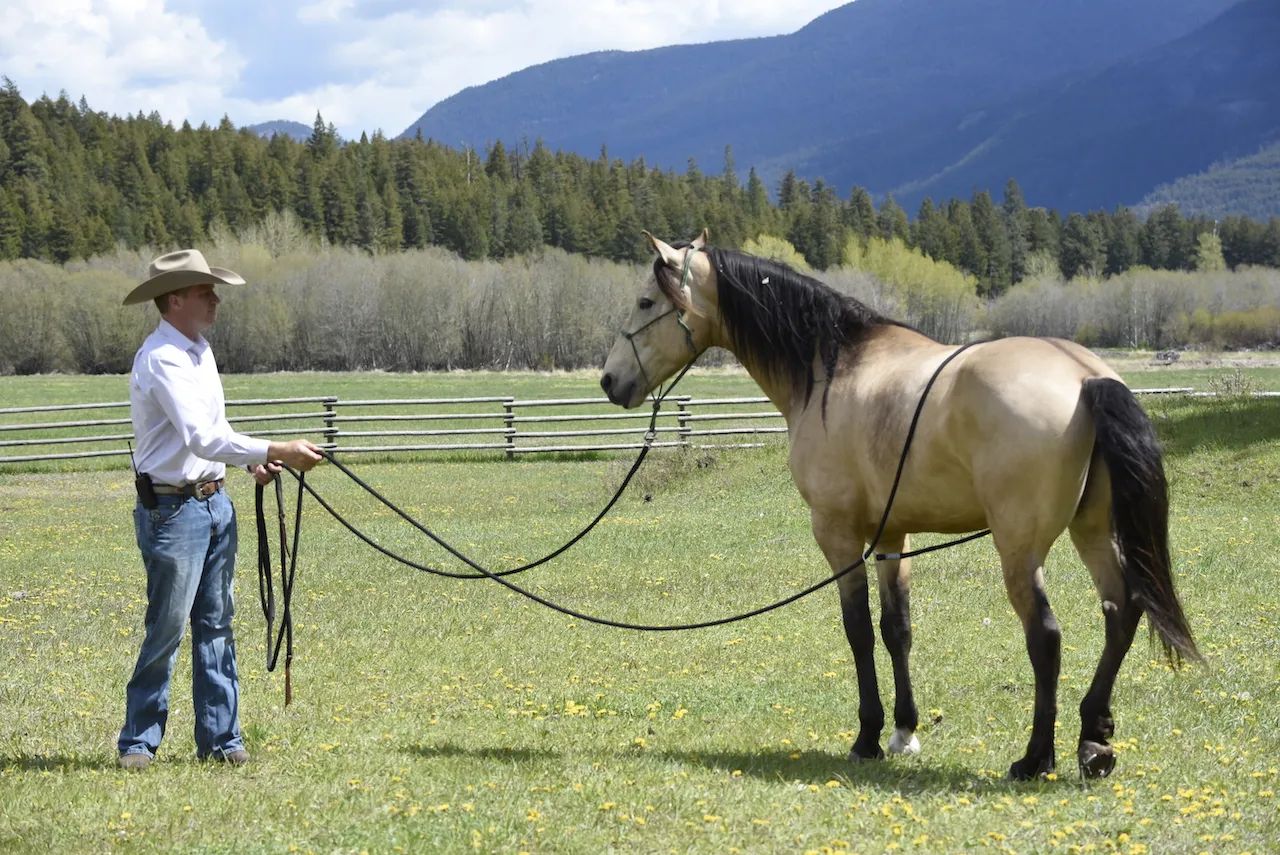 A horse with a flank rope applied loosely around its belly.In this initial stage, the horse is learning to carry the rope without any adverse reaction.
The training progresses to leading the horse with the rope, encouraging yielding to gentle pressure as the rope is positioned closer to the girth.
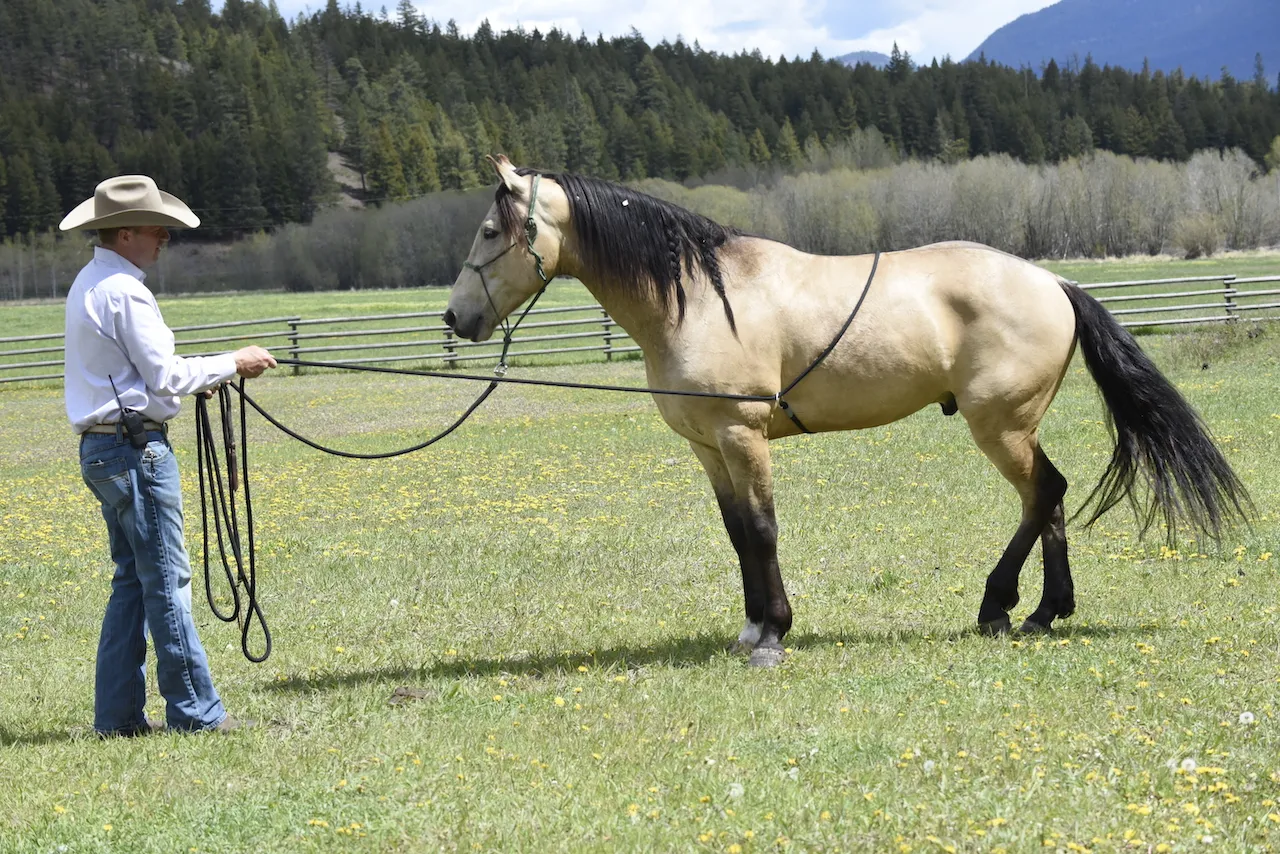 A horse being led with a flank rope positioned near its girth.
As the horse becomes more comfortable, the pressure on the rope can be gradually increased, preparing the horse to yield to it.
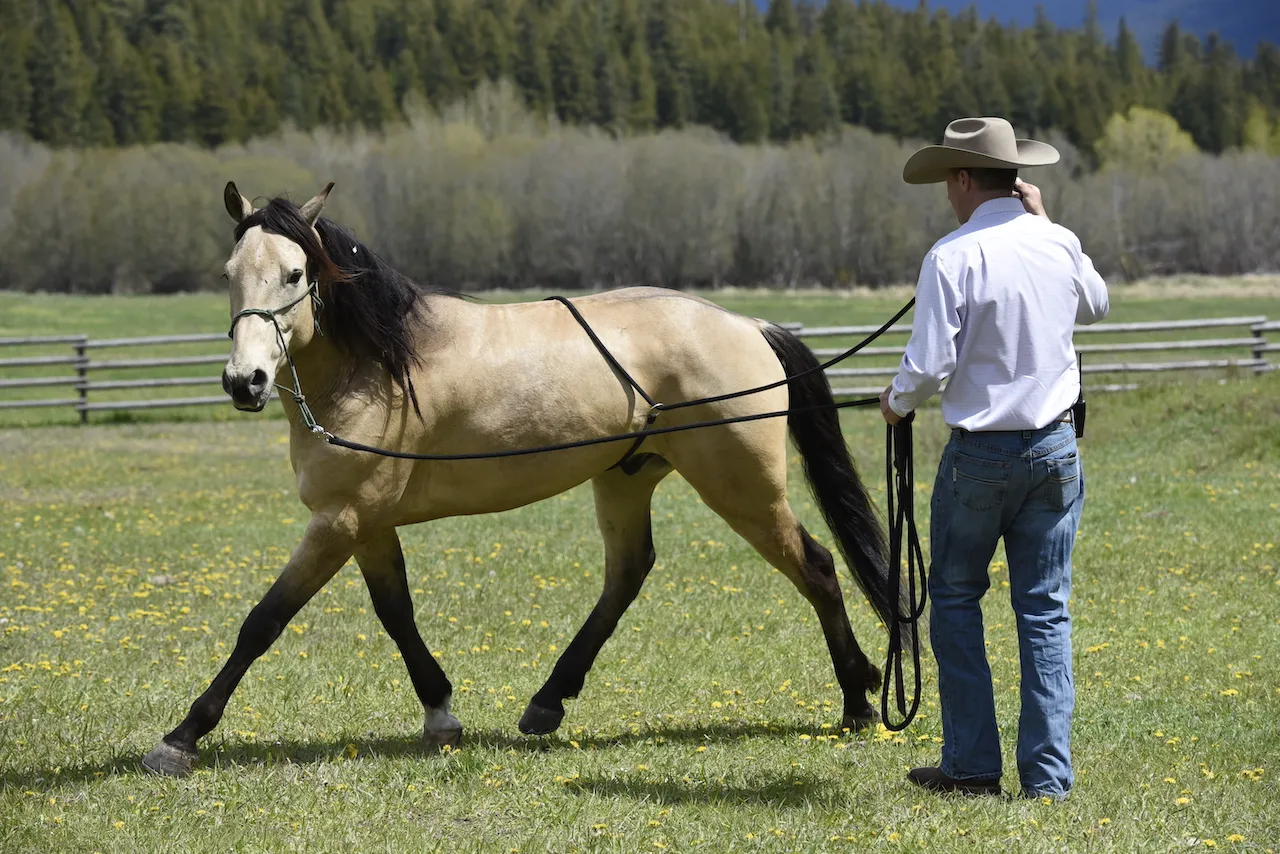 A horse carrying a flank rope with some tension, ready to yield.
The ultimate success is achieved when the horse learns to carry the rope and yield to its pressure, replacing fear with a willing response.
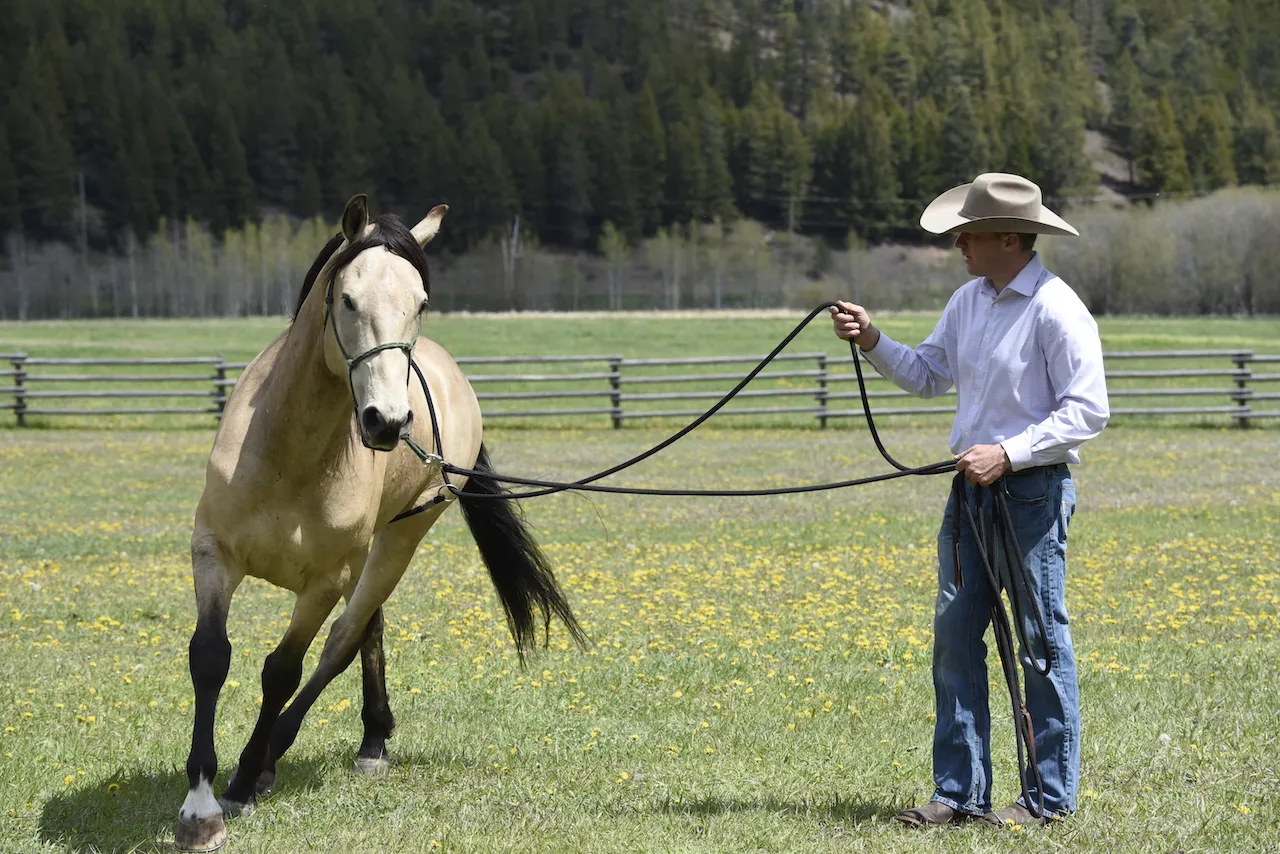 A horse yielding to a flank rope, moving forward calmly.
If a horse exhibits bucking behavior when feeling the rope, it’s crucial to start with the rope very loose, positioned high on the barrel where a front cinch would go. Allow the horse to simply wear the rope for several sessions. Gradually increase the pressure and release. If the horse tenses up or attempts to buck, immediately ask it to move forward and release the pressure as soon as it complies.
The KEY principle is to replace the fear of “WHAT IS THIS ON MY BELLY?” with the understanding of “I CAN YIELD TO THAT.” This process empowers the horse to think through the situation rather than reacting purely out of fear. Consequently, when the saddle and cinch are introduced, the horse has already developed the cognitive ability to process the situation and respond calmly by yielding forward or stepping off, preventing the tension that often leads to bucking.
This progressive, step-by-step approach ensures each stage is mastered before moving to the next, building a foundation of trust and understanding. For those interested in learning this method, resources such as The (re) Start is Everything Series DVD or online streaming are available.
When shopping for a 22′ Ring Rope, ensure you are acquiring a quality tool that supports this training methodology.
Discover more valuable articles and insights from Jonathan HERE!
We invite you to enhance your horsemanship journey by joining our yearly membership in Open Field. We believe you’ll find it an invaluable resource.
And remember, Be Better With Horses! Stay inspired by the incredible animals we share our lives with.
