
Liberty training, a captivating method of working with horses without physical restraints like ropes or bridles, can appear magical to onlookers. This approach focuses on clear communication and a deep understanding between horse and trainer, moving beyond traditional methods. Whether observing a demonstration at a horse expo or watching videos of renowned trainers, the seamless coordination between horse and human at liberty is truly awe-inspiring. This article delves into the essence of liberty training, its benefits, and how to begin implementing it with your own equine partner.
Liberty training involves eliciting specific movements from a horse using subtle cues, often facilitated by a standard long whip, rather than direct physical control. These movements can range from simple actions like backing up or yielding the hindquarters to highly complex maneuvers performed with multiple horses or even while riding bareback and bridleless. Celebrated trainers such as Double Dan Horsemanship, Pat Parelli, and Guy McLean have showcased the incredible potential of this training method, demonstrating what appears to be effortless harmony with their well-trained horses. However, this apparent magic is the result of dedicated training and countless hours of practice.
The Transformative Benefits of Liberty Training
The core of liberty training lies in fostering enhanced communication and focus between you and your horse. Unlike conventional methods, liberty work provides immediate feedback on your horse’s attentiveness. When a horse is not responding, it allows you to work on regaining their focus in a way that feels more like a game than a chore. This method encourages horses to move more freely, making the training process more engaging and enjoyable for them. Basic exercises, often used in round pens or on a lunge line, can serve as a foundational step for liberty training. By applying these in a larger, open space, you can gauge your horse’s responsiveness. When a horse appears inattentive or hesitant, approaching them and asking for movement in a specific direction can transform the session into an interactive “cat and mouse” game. With persistence and patience, your horse will naturally begin to look to you for direction, choosing to engage willingly.
Liberty training taps into a horse’s natural communication style – the pressure and release of pressure – while simultaneously strengthening the bond between horse and handler. Establishing a deeper connection with your horse is a natural outcome when you are communicating on their level, essentially speaking the same language.
Liberty Training vs. Traditional Methods (Lines & Round Pens)
Working at liberty offers distinct advantages over training with lunge lines or within the confines of a round pen. While these traditional methods are valuable for establishing control, they can sometimes create a false sense of security. In a round pen or on a lunge line, horses might engage in counter-bending or resist pressure in ways that hinder genuine relaxation and responsiveness. In these controlled environments, the trainer often dictates the horse’s direction, which can limit the horse’s ability to freely express themselves. Liberty training, in contrast, places every aspect of communication under a microscope.
In a large, open space, liberty training allows horses to be themselves without the physical constraints that can influence their movement. The responsibility shifts to the human to effectively apply and release pressure, rewarding desired behaviors. This method is particularly effective for reinforcing specific movements. Instead of relying on the physical pressure of ropes or the boundaries of a round pen, liberty training in open areas fosters a direct dialogue between horse and human, enabling the trainer to closely observe and reward correct responses.
A Personal Journey: Liberty Training an OTTB
My own experience with liberty training and free lunging my off-the-track Thoroughbred (OTTB), Indy, has been profoundly positive. Indy, like many OTTBs, can be a bit “cold-backed,” meaning he sometimes struggles to engage his back and core muscles without a proper warm-up, which can lead to less-than-ideal behavior.
After just two weeks of dedicated free lunging, Indy has shown remarkable improvements in his posture and overall demeanor. This progress is significant, especially considering we had spent the previous eight months working in traditional settings. While other training methods have contributed, liberty work has played a substantial role in his rapid development. He now moves with a more engaged and graceful posture, resembling a reining horse with his neck stretched and back engaged. More importantly, his temperament has improved, whether due to the physical exertion or genuine progress in his training.
Liberty training might initially demand more physical effort from the human, but it’s an efficient way to provide your horse with a comprehensive workout. The principle is that for every amount of running the human does, the horse should be doing at least twice as much. For OTTBs, liberty training has been instrumental in establishing a more productive routine that is both physically and mentally stimulating.
Getting Started with Liberty Training
The initial goals of liberty work are twofold: to gain control over both the front and hindquarters of the horse and to ensure the horse’s focus remains on the trainer. If you have experience with yielding the hindquarters or lunging in a round pen, these skills provide an excellent foundation for liberty training. The key is to adapt the practices you’ve used on a line or in a round pen to a new environment, asking the same questions and seeking the same correct responses.
As prey animals, horses naturally tend to shy away from pressure based on its location relative to their “drive line.” The drive line is a critical concept in equine communication.
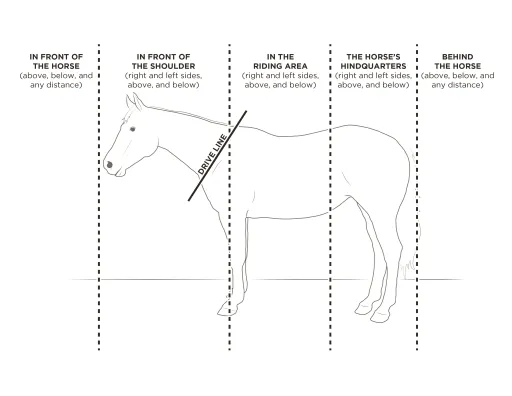 Understanding the Horse's Drive Line
This line indicates where pressure changes direction, influencing the horse’s hindquarters or front end. Being in front of this line can slow a horse or turn them, while being behind it encourages forward movement. Understanding and utilizing the drive line is fundamental to building success in liberty training.
For more detailed instruction on how to begin liberty work, the video from Double Dan is highly recommended. Additionally, exploring connection exercises can further aid your journey. Liberty training is accessible to horsepeople of all levels, requiring only an understanding of a few core concepts to build a stronger bond with your horse. The best way to truly learn is to get outdoors, engage with your horse, and practice these techniques.
