
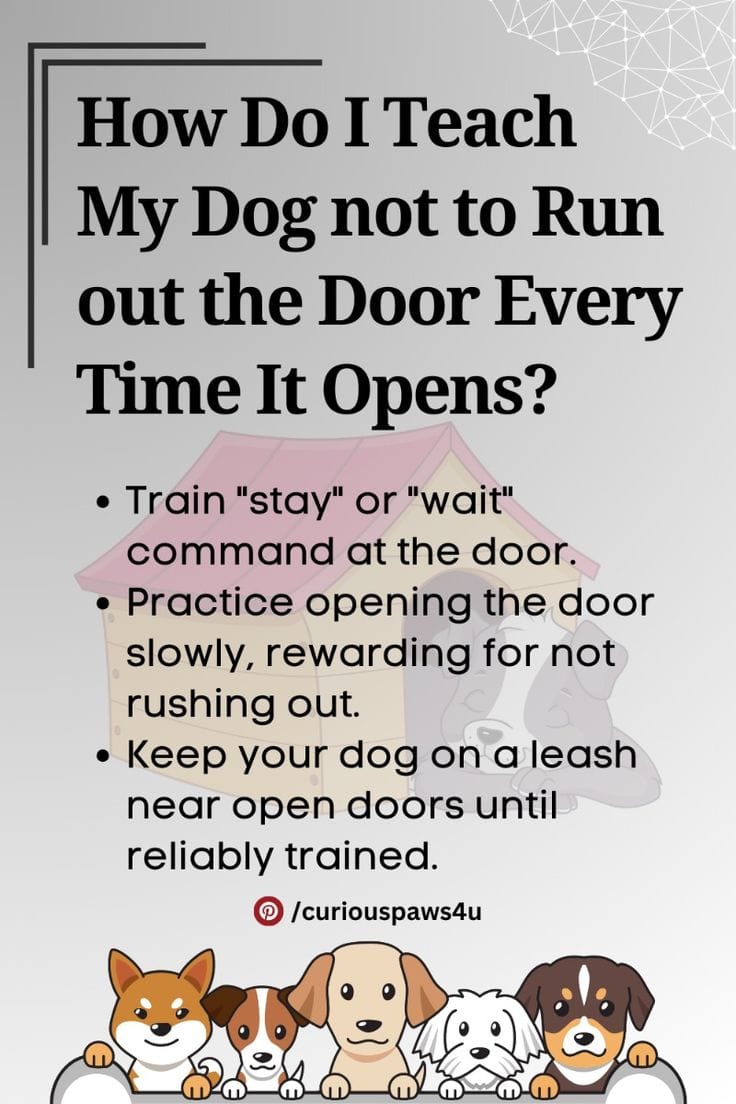
Preventing your dog from dashing out of doors is a crucial aspect of responsible dog ownership, ensuring their safety and preventing potential dangers like traffic accidents, fights with other animals, or getting lost. Many owners and their guests inadvertently allow dogs to escape, creating a cycle of reinforcement for this undesirable behavior. Dogs, by nature, find the freedom of running loose exhilarating, and this immediate self-rewarding experience can override the memory of any negative consequences. This article will guide you through essential strategies and training techniques to instill reliable door manners in your canine companion.
Establishing a House Rule for Doorways
The foundation of teaching your dog not to run out the door is to prevent any successful escapes. This requires a consistent approach involving everyone in the household and any visitors.
Involve the Entire Household and Visitors
Establish a clear agreement with all family members and housemates that preventing escapes is a top priority. This involves not only training the dog but also educating people on proper door etiquette.
The Doggie Doorknob Rule
Educate everyone, especially children, on the “Doggie Doorknob Rule”: never turn the doorknob unless you know where the dog is and can ensure they cannot slip out.
Visitor Protocol
When guests are preparing to leave, remind them to ensure your dog is secured before opening the door. This could mean confining the dog to another room, having them on a leash by your side, or relying on a reliable “stay” or “wait” command.
Foundational Training for Door Manners
Before tackling door-specific training, ensure your dog has a solid understanding of basic obedience commands and has bonded with you.
Mastering Basic Commands: Sit and Stay
Begin by teaching essential commands like “Sit” and “Stay.” Dogs do not inherently understand these cues; they must be explicitly taught. Building a strong relationship with your dog and establishing yourself as a leader are prerequisites for effective obedience training.
Gradual Introduction of Distractions
Initially, practice commands in a quiet environment free from distractions. Once your dog reliably obeys, gradually introduce distractions to help them learn to focus on your cues even in stimulating situations. Practice these commands in various locations, starting with different exit doors in your home.
Ensuring Basic Needs are Met
Always ensure your dog has had the opportunity to relieve themselves before training sessions, especially those involving waiting by the door. Practicing obedience when a dog has an urgent need to go outside is unfair and ineffective.
Maintaining Control
If your dog does not yet reliably obey your commands, maintain physical control through a leash, crate, or baby gates to prevent access to exit doors. When guests arrive, keeping your dog on a leash by your side can help you manage their behavior and prevent them from bolting out the door.
Effective Training Techniques for Doorways
Several proven methods can help your dog learn to wait for permission before exiting through a door.
Teaching “Stay” with Verbal and Hand Signals
Ask your dog to “Sit” at a distance from the door and give the “Stay” command along with an open-palm “Stop” hand signal. As you approach the door, if your dog begins to move, use the “Stop” signal and a firm “No… Stay!” If they break the stay, return them to the original position and repeat the command. Practice until you can open the door without your dog breaking their stay. Remember that the excitement of guests can tempt even well-trained dogs to break their stay, so constant vigilance is key.
The “Wait” Command Using Positive Reinforcement
With your dog on a leash, say “Wait” and reach for the doorknob. If your dog moves forward, remove your hand, pause, and try again. Praise and offer treats when they wait. Progress to opening the door a few inches, rewarding them for waiting. Gradually open the door wider, always rewarding patience. Once your dog consistently waits with the door open, give a release cue like “OK, go ahead.”
“Wait” with Collar Correction
For dogs less motivated by treats, an alternative is to use a training collar and leash. Say “Wait” as you open the door. If the dog attempts to go out, give a leash correction and say “WAIT!” This associates opening the door with waiting. With consistent practice, the command may eventually become unnecessary.
Training Escape Artists with Gradual Time Outs
This method involves letting your dog experience short periods of time outside when they dart through an open door.
Step One: Time Outs
Start by using a leash and collar that prevents escape. Silently open the door and let your dog go out. Close the door and leave them outside for 30 seconds, carefully monitoring the time. Upon their return, make a big fuss over them, acting anxious and sympathetic to create the impression of an unpleasant experience. Double the time they spend outside with each subsequent escape. Eventually, your dog will hesitate to go out, and when they do, celebrate enthusiastically and reward them. The goal is for your dog to wait inside and look to you for permission before exiting.
Step Two: Introducing the Houseline
Let your dog drag a long houseline (8-10 feet) around the house while supervised. Repeat Step One with the houseline dragging, stepping on it to prevent escapes. The goal is for your dog to wait inside even when the door is open.
Step Three: With a Helper
Have a helper pretend to be a guest and walk through the door. If your dog follows, step on the houseline and close the door. Your helper should walk away from the dog. The goal is for your dog to wait for permission to exit, even when someone walks through the door ahead of them.
The Sit-and-Wait Method
This technique, adaptable for both hearing and deaf dogs, conditions your dog to sit before any door is opened.
Consistent Practice
Every time you or your dog goes through a door—any door—ensure they sit first. Open the door while they remain in the sit position. If they stand up, close the door and have them sit again. Continue until they can sit calmly at the open door before you give an “OKAY” signal to proceed together. Apply this to car doors, crates, and gates.
Increasing Difficulty
Once your dog reliably sits at doorways, increase the challenge by using a long lead. Have them sit, open the door, and walk through yourself, leaving them behind. If they follow, restart the exercise. This reinforces that they must wait for your invitation to pass through. Practicing sit-stays and down-stays at doorways further strengthens this behavior.
The Importance of Consistency
Consistently reinforcing this behavior—sitting calmly and waiting for permission to go through a door—is vital for their safety. This routine can prevent dangerous situations, such as a dog darting into traffic or escaping from a car.
Important Considerations
When an escape occurs, never scold your dog upon catching them. Dogs associate reactions with immediate actions, so scolding them when you catch them teaches them to avoid being caught.
Training your dog to wait patiently at doors is not just about good manners; it’s a life-saving measure that ensures their safety in various everyday scenarios.
