
Living with emotional or mental health disorders can be challenging, but incorporating healthy, natural mechanisms into daily life can significantly alleviate symptoms and enhance your quality of life. One of the most effective ways to achieve this is by training a Psychiatric Service Dog (PSD) to support your specific needs. This guide will delve into the process of training a PSD, what it entails, and how it can benefit individuals with various mental health conditions. Learn more about how to get a psychiatric service dog.
Understanding Psychiatric Service Dog Training
Psychiatric service dog training is a specialized process designed to equip dogs with the skills to perform specific tasks that assist individuals with psychiatric conditions. These conditions can range from Post-Traumatic Stress Disorder (PTSD), severe depression, and anxiety disorders to bipolar disorder. The tasks a PSD can be trained to perform are diverse and crucial for their handler’s well-being, such as reminding the owner to take medication, providing deep pressure therapy to alleviate panic attacks, or interrupting harmful behaviors. The core of this training focuses on developing the dog’s ability to sense and respond to their handler’s emotional state and needs, ultimately improving their handler’s quality of life and independence.
How to Train a Psychiatric Service Dog
The training of a PSD is paramount to its role as an assistance animal. The Americans with Disabilities Act (ADA) and other federal regulations recognize legitimate training methods. Here are the primary avenues for training your canine companion:
- Self-Training a Psychiatric Service Dog: For individuals with a natural affinity for dog training or those who prefer a hands-on approach, self-training is an option. This can be done independently or in conjunction with online training programs. While recognized as legitimate, it requires significant time, commitment, and proper knowledge of training techniques.
- Adopting a Trained Service Dog: This is often the most straightforward but also the most expensive option. Purchasing or adopting a dog already trained to perform tasks directly related to your mental health condition saves considerable time. However, this route involves a substantial financial investment and may not foster the same deep bond as training a dog yourself.
- Using a Professional Dog Trainer: Collaborating with a professional trainer offers a balanced approach. This option is typically more expensive than self-training but less costly than acquiring a fully trained PSD. Professional training ensures the dog is properly socialized and equipped with the necessary skills while still allowing for owner involvement and bonding. Discover your personalized PSD training plan.
What is a Psychiatric Service Dog?
Psychiatric service dogs are specifically trained to perform tasks that aid individuals struggling with mental illnesses, including anxiety, panic attacks, PTSD, and depression. Their training is dedicated to their handler’s well-being, with tasks varying based on individual needs. Common PSD tasks include deep pressure therapy, medication reminders, and room clearing to ensure safety.
While often compared to Emotional Support Animals (ESAs), PSDs have distinct roles. ESAs provide comfort through their presence, whereas PSDs undergo rigorous training to perform specific tasks on command and maintain obedience. This specialized training allows PSDs to accompany their handlers to places where ESAs or therapy dogs are not permitted, such as public transportation, stores, and restaurants, and they are protected under the Americans with Disabilities Act (ADA).
 A woman in a park with her psychiatric service dog.
Who Qualifies for Psychiatric Service Dogs?
Eligibility for a psychiatric service dog hinges on having a diagnosed mental health disability that significantly impacts daily life. These disabilities vary in severity, and treatment options are personalized. However, most individuals whose mental illness affects their ability to perform daily tasks can benefit from a PSD. While some owners opt for a PSD letter from a medical professional to document their condition, it’s crucial to understand that the ADA does not mandate specific documentation for service dogs. A PSD letter serves as supporting documentation for a handler’s mental disability.
Any individual with a diagnosed mental health disorder can qualify for a PSD, provided the dog is trained to perform specific tasks related to the condition. Qualifying mental health conditions include, but are not limited to:
- Clinical depression
- Post-traumatic stress disorder (PTSD)
- Bipolar disorder
- Anxiety or panic disorder
- Schizophrenia
- Borderline personality disorder
- Phobias
Consulting with a mental health professional is essential to determine your specific qualification.
Online vs. In-Person Psychiatric Service Dog Training Programs
When seeking a PSD training program, you generally have two options: online or in-person.
Online PSD Training Programs
Online training allows you to train your dog from the comfort of your home, at your own pace, and on a schedule that suits you. This method is often more cost-effective than in-person training. Most online programs provide video lessons led by professional trainers, guiding you through skills progressively. However, this approach may be challenging for dogs who struggle with attention or handlers who find it difficult to maintain a consistent training schedule.
| Pros | Cons |
|---|---|
| – Cost-effective ($100-$200) compared to hiring a trainer. | – Can be more time-consuming. |
| – Train at a comfortable pace. | – Some prior training knowledge is helpful. |
| – Professional advice at a lower cost. | |
| – Permanent access to the training program. |
Get Your PSD Training Plan
In-Person PSD Training Programs
In-person training offers distinct advantages and disadvantages. It allows for close interaction between the trainer and the dog, ensuring proper socialization and task-specific training. Hands-on instruction can benefit both the dog and the owner. However, in-person training can be costly and time-consuming, often requiring travel and a commitment of several weeks or months. Online training provides more flexibility, allowing you to train your pet at a comfortable pace that aligns with your schedule.
| Pros | Cons |
|---|---|
| – Hands-on assistance from a qualified trainer. | – Can be very costly, especially for specialized training. |
| – Trainer handles much of the initial work. | – Less flexible timeline compared to online training. |
| – Beneficial if you lack personal training time. | – May require travel to training sessions. |
Training Requirements for a Psychiatric Service Dog
For your dog to qualify as a service dog, it must meet specific behavioral standards in public. Remember, a PSD does not require official documentation like a PSD letter. Instead, your dog must demonstrate:
- Public Access Behavior: Your PSD must behave appropriately in public settings, causing no disruption or harm to people or property, and must obey commands immediately. Excessive barking is not permitted unless it’s part of their task to alert or assist their handler. Basic obedience training is a foundational element of PSD training.
- Task Performance: The dog must be able to perform specific tasks that alleviate symptoms of the handler’s mental disability. This can include deep pressure therapy, face licking during panic attacks, or other interventions.
Many PSDs assist with “invisible disabilities,” so handlers should be prepared to answer questions about their dog from landlords, store owners, or transportation officials. While not mandatory, service dog vests can help clarify the dog’s role. Some training programs offer completion certificates, but these are not requirements for service animal recognition.
General Public Access Training
Beyond task-specific training, PSDs must undergo general public access training to ensure they exhibit proper behavior in public. This includes:
- Responding reliably to commands such as sit, stay, down, and heel.
- Entering and exiting public spaces or transportation without causing disruption.
- Displaying no aggression towards people or other animals.
- Remaining under the owner’s control at all times.
Specialized Psychiatric Service Dog Tasks
The most critical aspect of a PSD’s role is performing specialized tasks that aid or alleviate their owner’s mental health disorder. These tasks cater to a wide range of needs for specific conditions, such as:
- Reminding the handler to take or fetching medications.
- Responding to emergencies.
- Intervening during potential self-harm episodes.
- Providing tactile stimulation or Deep Pressure Therapy (DPT) before the onset of a panic attack.
Get Your PSD Training Plan
Psychiatric Service Dog Tasks
- Deep Pressure Therapy (DPT): This involves physical stimulation and pressure applied by the service dog, which can alleviate stress, ground an individual during a panic attack, and provide a calming presence. It is commonly used for anxiety, depression, PTSD, and suicidal ideation.
- Medical Alert and Intervention: For individuals requiring medication, a service dog can serve as a reminder to take it on schedule. A PSD can also be trained to recognize emergency signs and intervene during sudden anxiety episodes. This is frequently used for dissociative episodes, panic attacks, insomnia, and medical emergencies.
- Assistive Actions: Some individuals with mental health disorders need assistance with seemingly simple tasks, whether emotional or physical. This can include fetching medications, operating lights, and managing sleep disturbances like insomnia or night terrors. This is often employed for depression-related lethargy, dissociative episodes, and sleep disruptions.
- Grounding: Individuals experiencing sensory or emotional overload can be helped by a PSD that intervenes to ground their owner. This might involve licking the owner’s face, pawing at them, or providing other physical attention. This technique is also effective for managing sensory overload and is commonly used for anxiety, panic attacks, dissociative episodes, sensory overload, and self-harm.
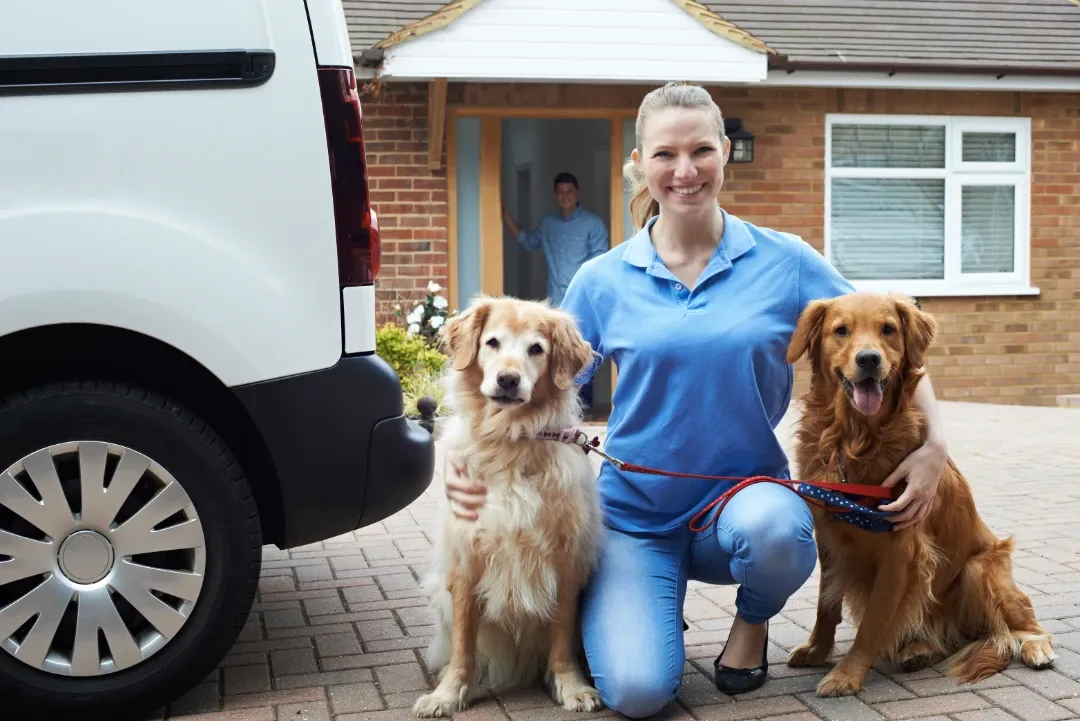 A professional dog trainer with two service dogs in training.
How to Get a Psychiatric Service Animal Certificate?
While not legally required for handling a PSD, many individuals find peace of mind in obtaining a certificate confirming their PSD’s completion of a training program. To obtain such a certificate, follow these steps:
- Seek a Diagnosis: Consult a licensed mental health professional (therapist, psychologist, or psychiatrist) to diagnose your condition as a mental disability recognized by the ADA.
- Determine Your Method: Decide on your preferred approach for acquiring a PSD, considering factors like training costs, purchase price of a trained dog, time commitment, and your existing pet’s suitability for training.
- Enroll in a Program: If training your own pet, enroll it in a certified PSD training program, either online or in-person. Upon completion, your pet may be issued a PSD certificate. If purchasing a pre-trained PSD, you may receive a certificate at the time of purchase.
Get Your PSD Training Plan
Do I Need a Psychiatric Service Dog Letter?
No, a psychiatric service dog letter is not a requirement for handling a PSD. A diagnosis from a mental health professional confirming a qualifying mental health condition is sufficient for eligibility. A dog is considered a PSD once it has completed a PSD training program and actively works to mitigate its handler’s mental condition symptoms. However, many find comfort in possessing a letter, often referred to as a letter of necessity or prescription letter, which can be obtained from a mental health professional. This letter can be helpful when requested by landlords. When traveling with your PSD, you are only required to complete the appropriate paperwork declaring your animal as a PSD.
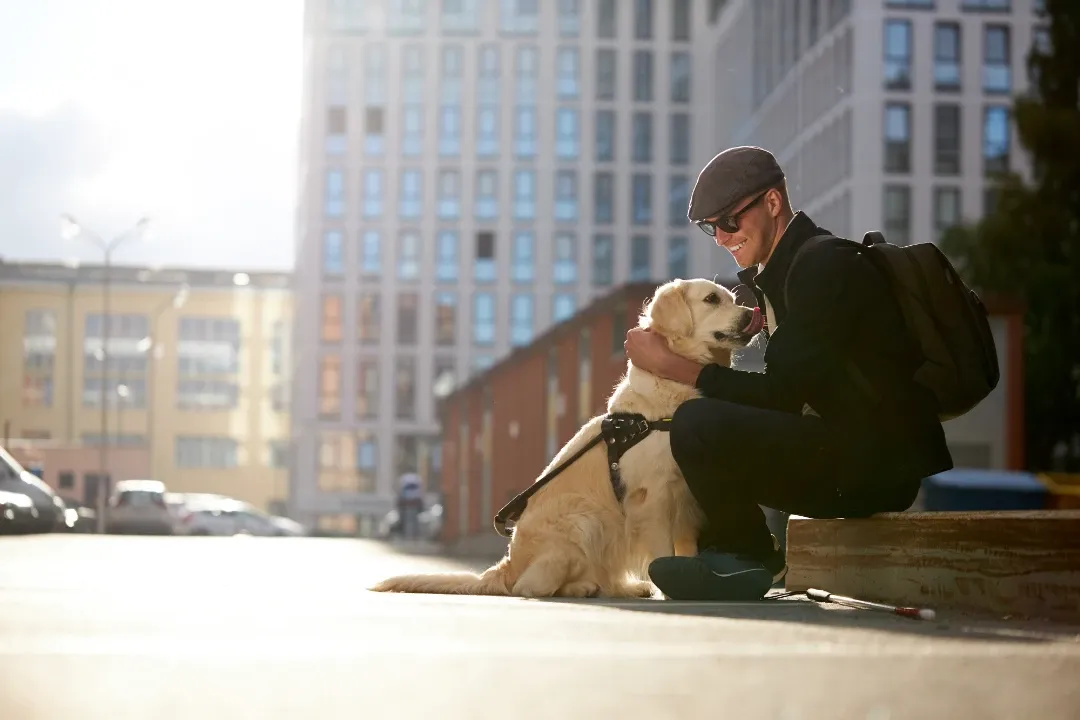 A man in the city with his guide dog.
Frequently Asked Questions (FAQ)
Whether you choose to self-train your PSD or enroll in professional classes, you may have questions. Here are answers to some common inquiries about PSD training:
What commands does a psychiatric service dog need to learn?
The most crucial commands are standard obedience commands like sit, stay, heel, down, and fetch. Additional commands will be tailored to the specific mental health condition the dog is trained to assist with.
How many commands does a psychiatric service dog need to know?
While there’s no set number, the more commands a PSD knows, the better. The primary goal is for the dog to be fully trained to behave appropriately and effectively assist its owner.
Who can train a psychiatric service dog?
PSDs can be trained by professional dog trainers or by their owners. Owners can train independently or utilize guided programs, such as online PSD training offered by Pettable.
How much does psychiatric service dog training cost?
PSD training costs can vary significantly. Professional PSD training programs can range from $15,000 to $30,000. In contrast, guided online training programs are considerably more affordable, sometimes as low as $200.
Get Your PSD Training Plan
