
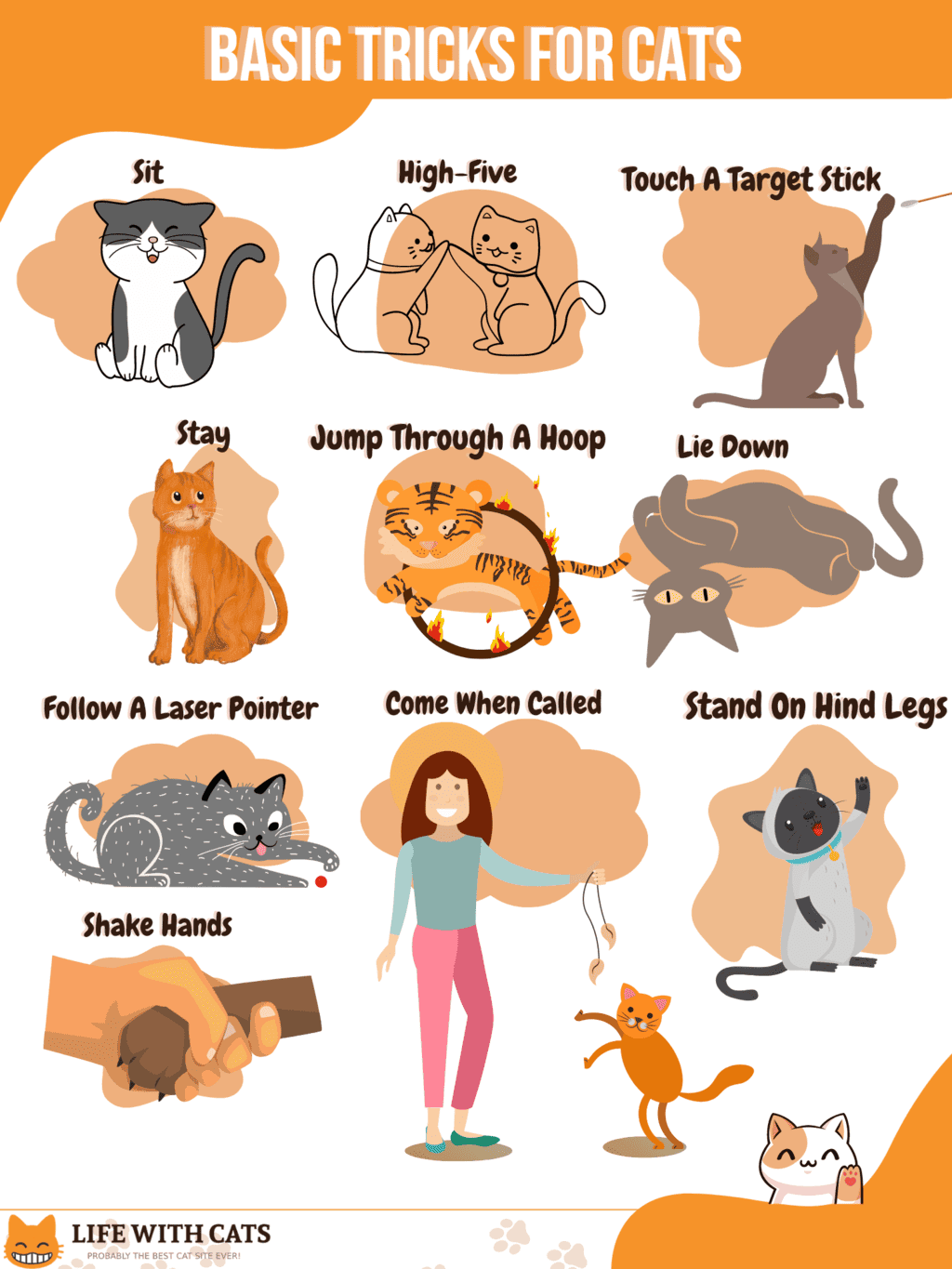
Many cat owners believe their feline companions are untrainable, a common misconception that often prevents them from unlocking their cat’s full potential for learning and companionship. In reality, cats are constantly learning from their interactions with us, whether through positive experiences like being petted on our laps, or negative ones such as associating a carrier with an unpleasant vet trip. By understanding how cats learn and employing humane, positive reinforcement techniques, you can foster a deeper bond, improve their welfare, and equip them with essential life skills. This comprehensive guide will explore the science behind cat training, debunk myths, and provide actionable strategies to transform your cat’s behavior and well-being.
Understanding How Cats Learn
Cats are intelligent creatures whose learning processes are continuously active. They quickly associate events and consequences with behaviors. For example, a cat learns that the rustle of a treat packet often means a tasty reward, or that hiding under the bed will prevent an unwanted trip in the carrier. While teaching fun tricks can be a delightful bonding experience, the most critical aspect of cat training focuses on developing vital life skills. As Dr. Sarah Ellis, co-author of The Trainable Cat and head of cat advocacy at International Cat Care, emphasizes, these skills are “completely within the reach of a cat” and are necessary for them to thrive within a human household.
These essential skills include comfortably entering a cat carrier, tolerating vet examinations, accepting regular brushing, and even having their teeth cleaned. The primary motivator for cats during training is typically food. Unlike dogs, most cats do not possess an inherent “need to please” their owners. Therefore, identifying high-value food rewards—such as small pieces of tuna, prawn, or specialized cat treats—is crucial. Dr. Ellis advises against using treats that are too large; even commercial cat treats should often be broken into much smaller portions to avoid overfeeding and maintain motivation without causing boredom. Presenting treats on a spoon or a small stick can also prevent accidental bites, especially when a cat is not accustomed to taking food directly from a hand.
Training sessions should always be short, typically around five minutes, and kept easy enough to prevent frustration. Allowing your cat to take breaks or even walk away if they lose interest is vital for maintaining a positive association with the training experience. To explore more about [what cats can be trained to do](https://dogcarestory.com/what-can-you-train-cats-to-do/), consider the diverse range of behaviors that can be shaped with patience and the right approach.
Principles of Associative Learning in Cats
The primary ways we train cats involve associative learning, which includes learning by consequence (operant conditioning) and learning by association with events (classical conditioning).
Operant Conditioning: Learning by Consequence
Operant conditioning involves a cat learning that a specific behavior leads to a particular consequence.
- Positive Reinforcement: This is the most effective and recommended method. It involves adding something pleasant (like a treat or praise) after a desired behavior, making the cat more likely to repeat that behavior. Food is an excellent positive reinforcer for cats.
- Negative Punishment: This occurs when something the cat likes is removed to decrease an undesirable behavior. For instance, if your cat nips you while being petted, you might temporarily stop petting them to discourage the nipping.
- Punishment (Positive Punishment & Negative Reinforcement): These methods involve adding something unpleasant or removing something pleasant to decrease a behavior. The article strongly advises against using punishment in cat training due to significant risks to the cat’s welfare and your relationship. Studies have shown that cats whose owners use positive punishment are twelve times more likely to exhibit inappropriate elimination outside the litter box and are more prone to aggression towards new people, objects, or other animals. Experts like Dr. Ellis warn that punishment, especially if perceived as coming from the owner, can damage the human-animal bond, leading to anxiety or even fear in the cat. Using methods like spray bottles to deter undesirable behaviors, for instance, is highly discouraged. For more on this, understand why
[do spray bottles work for training cats](https://dogcarestory.com/do-spray-bottles-work-to-train-cats/)are not an effective or humane solution. Instead, provide alternative desirable behaviors and reward those. - Extinction: If the positive consequences for a learned behavior stop, the behavior will eventually cease. For example, if you stop giving treats when calling your cat, they will eventually stop coming. An “extinction burst” might occur where the cat intensifies the behavior before giving up.
To teach specific behaviors, you can use several techniques:
- Capturing: Waiting for a behavior to occur naturally (e.g., a sit), then adding a verbal cue and reinforcing it.
- Luring: Using a treat to guide the cat into the desired position.
- Shaping: Gradually reinforcing successive approximations of a desired behavior, often using a clicker or a verbal marker.
Classical Conditioning: Learning by Association
Classical conditioning, famously demonstrated by Pavlov’s dogs, involves a cat learning to associate a neutral stimulus with an unconditioned stimulus that naturally elicits a response. For example, if your cat associates the carrier with an unpleasant vet trip, they learn to fear the carrier.
- Counter-conditioning: This technique aims to change a negative association into a positive one. If a cat fears the carrier, consistently pairing its appearance with a high-value treat like tuna can teach the cat that the carrier predicts something good, making them happy to see it. Crucially, the scary item (the carrier) must always predict the treat, not the other way around, and the treats must be highly rewarding.
Other Ways Cats Acquire Knowledge
Beyond associative learning, cats learn in several other ways:
- Single-Event Learning: Cats can learn from a single, impactful experience, such as avoiding a food that made them sick.
- Habituation: This is when a cat gets used to a repeated, harmless stimulus and stops reacting to it (e.g., ignoring dishwasher noises). The opposite, sensitization, occurs when a cat’s response to a benign stimulus intensifies over time, becoming an unnecessary source of stress.
- Social Learning: Cats learn by observing others, especially their mothers, in tasks like hunting or interacting with toys. Positive social experiences during kittenhood are vital for developing confident and friendly cats.
- Modal Action Patterns: These are innate behaviors common to all cats (e.g., the crouch-stalk-pounce of hunting) that can be refined through learning and maternal guidance.
The Transformative Benefits of Cat Training
The benefits of cat training extend far beyond simple tricks, profoundly impacting a cat’s welfare and the human-animal bond. Veterinary behaviorist Dr. Wailani Sung notes that teaching basic commands like “touch” or “go to your mat” significantly strengthens the relationship between cats and their guardians.
One of the most impactful areas is carrier training. A study published in Applied Animal Behaviour Science by scientists in Vienna demonstrated that cats trained to use their carriers experienced significantly less stress during mock vet exams. Trained cats were less likely to pant or hide during car rides, some even eating treats during the journey. Their vet exams were completed much faster, with fewer escape attempts and less hiding, allowing for more comprehensive examinations. These findings underscore the importance of [leash training a cat](https://dogcarestory.com/leash-train-a-cat/) and carrier training for managing stress during veterinary visits.
Research also highlights the positive effects of training on shelter cats. A study in Animals found that trick training (e.g., nose-touch, spin, high-five) improved welfare, even for shy cats, by creating positive associations with people. Another study in Preventive Veterinary Medicine showed that training significantly reduced frustration in shelter cats, leading to more contented behaviors like normal grooming and relaxed postures, and even higher levels of immunoglobulin A, a marker of improved immune function. These findings suggest that training provides cognitive enrichment, reduces stress, and enhances overall well-being.
Practical Tips for Training Your Cat at Home
Implementing effective cat training can be a rewarding experience for both you and your feline friend.
- Focus on Life Skills: Prioritize training for essential activities like carrier entry, toothbrushing, medication administration, and nail clipping. Starting this training when your cat is a kitten can prevent negative associations from developing later in life.
- Positive Reinforcement is Key: Identify what truly motivates your cat (usually high-value food treats) and use it consistently to reward desired behaviors. Don’t expect your cat to “work for free.”
- Keep it Fun and Short: Training sessions should be brief (around 5 minutes) and enjoyable. Allow your cat the choice to participate; if they walk away, respect their decision and try again later.
- Avoid Punishment: As discussed, punishment creates fear, stress, and can damage your relationship. It doesn’t teach your cat what you want them to do.
- Meet Their Needs: Training should complement, not replace, meeting your cat’s natural welfare needs. For example, while you can’t train a cat not to scratch, you can provide appropriate scratching posts in accessible locations and positively reinforce their use. This also applies to situations where
[using training pads for cats](https://dogcarestory.com/training-pads-for-cats/)might be considered, ensuring proper placement and rewarding their use.
By embracing these principles, you can create a positive and enriching training experience that enhances your cat’s quality of life and strengthens the unique bond you share.
Adapted with permission of the publisher from the book Purr: The Science of Making Your Cat Happy written by Zazie Todd and published by Greystone Books in May 2022.
