
Have you ever found yourself dreading the late-night potty run in the pouring rain or blistering cold? For many dog owners, especially those in apartments or with limited mobility, an indoor potty solution can be a lifesaver. While it might sound unconventional, learning how to train a dog to use a litter box is a practical and achievable goal. It offers a convenient, clean, and reliable alternative for your canine companion, providing them with a designated spot to relieve themselves indoors without compromising the cleanliness of your home. This process requires patience and consistency, but the freedom and flexibility it provides for both you and your furry friend are well worth the effort.
While many owners focus on outdoor training, understanding the principles behind indoor methods can be incredibly useful. The core concepts of positive reinforcement are similar to when you learn how to train your dog to go potty outside, just adapted for an indoor environment.
Why Bother With a Litter Box for Your Dog?
The idea of a dog using a litter box often raises eyebrows, as it’s a practice more commonly associated with cats. However, there are numerous practical reasons why this indoor potty solution is gaining popularity among dog owners. It’s not about replacing outdoor walks—which are crucial for exercise and mental stimulation—but about providing a supplementary option that addresses specific needs and lifestyles.
Key Benefits of Indoor Litter Box Training
- Perfect for Apartment Living: For those living in high-rise buildings or homes without easy access to a yard, a litter box eliminates the need for frantic elevator rides and late-night trips outside.
- A Blessing During Extreme Weather: Blizzards, thunderstorms, or heatwaves can make outdoor potty breaks unpleasant and even dangerous for both you and your dog. An indoor option ensures your dog can relieve themselves comfortably and safely.
- Assistance for Senior or Mobility-Impaired Dogs: Older dogs or those with health issues may struggle with frequent trips outdoors. A litter box provides them with an accessible and low-stress option.
- Convenience for Owners with Limited Mobility: For owners who are elderly or have physical disabilities, taking a dog out multiple times a day can be a significant challenge. An indoor potty system can make dog ownership more manageable.
- A Reliable Backup: Even for dogs that are fully potty trained for the outdoors, a litter box can serve as a convenient backup for those times you’re stuck in traffic or a meeting runs late.
This method is particularly effective for smaller breeds, and many owners find that there are plenty of easy to potty train small dogs that adapt quickly to using a litter box.
Choosing the Right Supplies for Success
Before you begin the training process, setting yourself up with the right equipment is crucial. Unlike cats, dogs have different instincts and physical needs, so simply buying feline products won’t cut it. The right supplies will make the process smoother and increase your chances of success.
Selecting the Perfect Dog Litter Box
The “box” itself is your most important piece of equipment. It needs to be inviting and accessible for your dog.
- Size Matters: The box should be large enough for your dog to comfortably step in, turn around completely, and do their business. If it’s too small, they’re more likely to miss.
- Low-Entry Point: Choose a box with at least one low side. This is especially important for puppies, senior dogs, and small breeds who might find it difficult to step over a high wall. Some owners even opt for large, shallow storage containers or custom-made trays.
- Sturdy Material: Ensure the box is made from a durable plastic that’s easy to clean and won’t absorb odors over time.
What’s the Best Litter for Dogs?
This is a critical point: do not use traditional clumping cat litter. Many types of cat litter can be harmful if ingested by dogs, and the dust can cause respiratory issues. Instead, look for dog-specific options.
- Dog-Specific Litter Pellets: The most popular choice is litter made from recycled paper or wood pellets. These are highly absorbent, control odor well, and are non-toxic if accidentally ingested.
- Potty Pads: You can line the bottom of the litter box with a puppy pad. This can be a great transitional tool, as many dogs are already familiar with them.
- Artificial Grass Patches: Another popular option is a tray with a patch of synthetic turf. This mimics the feel of grass and can be very intuitive for dogs to use. It often comes with a pull-out tray for easy cleaning.
To make the designated spot even more appealing, you might consider using an attractant. Many owners have found success with the best dog potty training spray to encourage their pup to use the correct area.
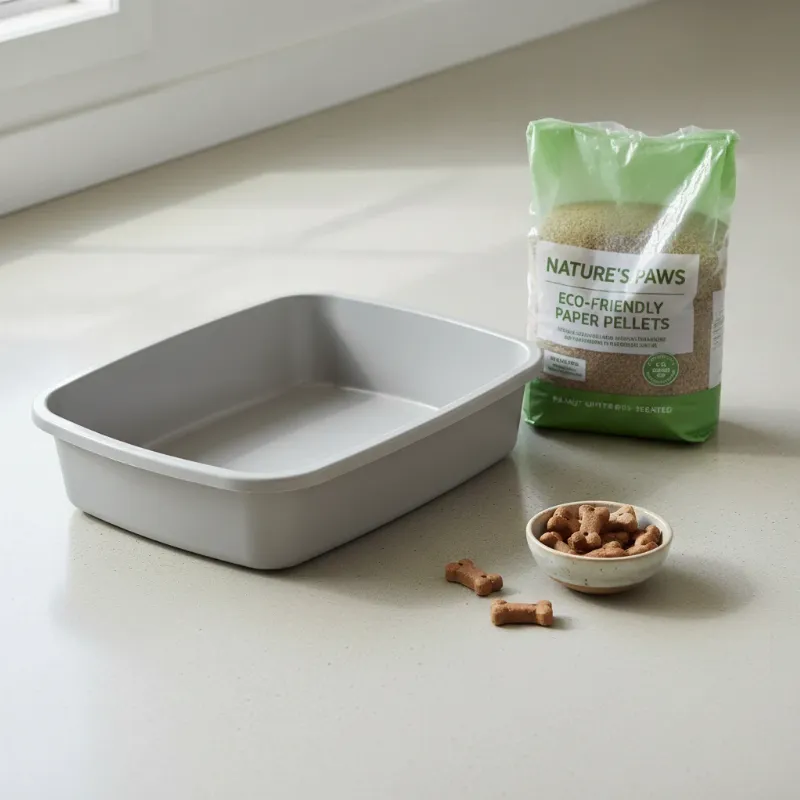 Essential supplies needed to successfully train a dog to use a litter box, including a low-entry pan and a bag of paper-based dog litter pellets
How to Train a Dog to Use a Litter Box: Step-by-Step
Patience and positive reinforcement are the cornerstones of this training method. Your dog is learning a completely new skill, so celebrate small victories and never resort to punishment. Follow these steps consistently for the best results.
Step 1: Introduce the Litter Box
Place the litter box in the area where you want your dog to use it permanently. A quiet, low-traffic area is ideal, perhaps in a bathroom or a utility room. Let your dog sniff and explore the box on their own terms. Toss a few high-value treats into the empty box to help them build a positive association with it from the very beginning. Let them step in and out freely without any pressure.
Step 2: Establish a Command Word
Choose a simple, clear cue word that you will use exclusively for potty time, such as “Go Potty,” “Do Your Business,” or “Hurry Up.” Use this word consistently every time you take your dog to the litter box. This verbal cue will become an invaluable tool for prompting them to go when you’re on a schedule.
Step 3: Create a Consistent Routine
Consistency is everything in potty training. Take your dog to the litter box frequently throughout the day, especially at key times:
- First thing in the morning
- Last thing at night
- After every meal
- After waking up from a nap
- After a play session
When you take them to the box, place them inside gently, give your command word, and wait patiently for a few minutes.
Step 4: Reward Success Lavishly
The moment your dog successfully uses the litter box, reward them immediately and enthusiastically. This is the most critical part of the process. Use a combination of high-value treats (something they absolutely love and don’t get at other times), verbal praise (“Good boy! Yes! Good potty!”), and physical affection. The goal is to make them think that using the litter box is the best thing they’ve ever done. The reward must happen immediately after they finish, so they connect the action with the reward.
According to fictional veterinary behaviorist Dr. Ethan Carter, “The immediacy of the reward is paramount. A dog’s brain forms associations within seconds. If you wait even 30 seconds to give a treat, the connection between the act of elimination and the reward is lost.”
Step 5: Handle Accidents Gracefully
Accidents will happen. It’s a normal part of the learning process. When your dog has an accident, do not scold, punish, or rub their nose in it. This will only create fear and anxiety, which can set your training back significantly. Instead, calmly and quietly clean up the mess using an enzymatic cleaner. These cleaners are designed to completely eliminate the odor molecules, which prevents your dog from being attracted back to the same spot.
If you catch them in the act, make a sharp but not scary noise (like a quick clap) to interrupt them, then immediately scoop them up and place them in the litter box. If they finish in the box, praise and reward them.
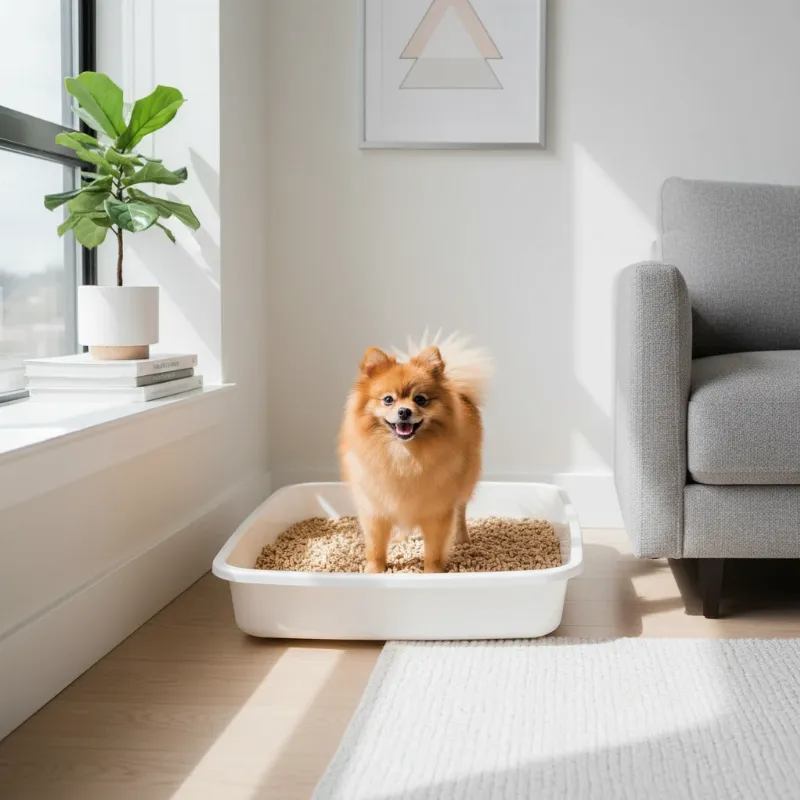 A small, happy dog successfully using its indoor litter pan, a key goal when you train a dog to use a litter box
Common Challenges and How to Solve Them
Even with the best plan, you might run into a few hurdles. Understanding common issues can help you troubleshoot effectively without getting discouraged.
My Dog Just Plays or Sleeps in the Box!
This usually happens at the beginning when the dog has formed a positive association with the box (thanks to the treats!) but doesn’t yet understand its primary purpose. If this happens, gently remove them from the box. The box is only for potty, not for play or naps. Only reward them for the specific action of urinating or defecating in the box.
My Dog Aims, But Misses the Box.
This is often a sign that the litter box is too small. Ensure your dog has enough room to comfortably move around. For male dogs that lift their leg, you may need a box with higher sides or a potty shield to protect your walls. If the issue is minor, simply ensure the area around the box is well-protected and easy to clean.
My Dog Suddenly Stopped Using It!
If a previously well-trained dog regresses, it’s time to play detective. First, rule out any medical issues like a urinary tract infection with a visit to your vet. If they get a clean bill of health, consider other factors. Is the box clean? Dogs are clean animals and won’t want to use a soiled box. Has something in the environment changed that might be scaring them? Sudden regression can be frustrating, and it shares common causes with issues seen in outdoor training, such as when a 2-year old dog regressing potty training might be experiencing stress or a change in routine.
Frequently Asked Questions (FAQ)
Can you train an older dog to use a litter box?
Yes, absolutely. While puppies often learn more quickly, adult and even senior dogs can be taught to use a litter box. The process requires more patience and consistency, as you are working against a lifetime of established habits, but the same positive reinforcement principles apply.
Is cat litter dangerous for dogs?
Clumping cat litter can be dangerous. If a dog ingests it, the litter can “clump” in their digestive tract, leading to a serious blockage. The dust from clay-based litters can also cause respiratory irritation. Always stick to litter specifically made for dogs, such as paper or wood pellets.
How often should I clean the dog litter box?
You should scoop solids out of the box as soon as you notice them, or at least once a day. A full change of the litter and a thorough wash of the box with soap and water should be done at least once a week, or more frequently depending on the size of your dog and how often it’s used.
What’s the difference between training a puppy versus an adult dog?
Puppies have smaller bladders and need to be taken to the box more frequently—sometimes every hour. However, they don’t have pre-existing habits to unlearn. Adult dogs have better bladder control but may be resistant to the new concept. The key with adults is to make the new behavior far more rewarding than the old one.
My dog eats the litter pellets. What should I do?
This is a common behavior, especially for curious puppies. It’s a primary reason to use non-toxic, digestible litter like paper pellets. To discourage it, try to interrupt and redirect the behavior. You can also try a different type of litter or a system with a grate that keeps the dog separated from the pellets.
Your Path to Indoor Potty Success
Successfully teaching your canine companion this new skill is a journey of patience, positive reinforcement, and understanding. By choosing the right supplies, establishing a consistent routine, and celebrating every small success, you can provide a convenient and stress-free potty solution that enhances both your life and your dog’s. Remember that every dog learns at a different pace, so stay positive and adapt your approach as needed. With commitment, you can successfully train a dog to use a litter box and enjoy the incredible convenience it brings.
